
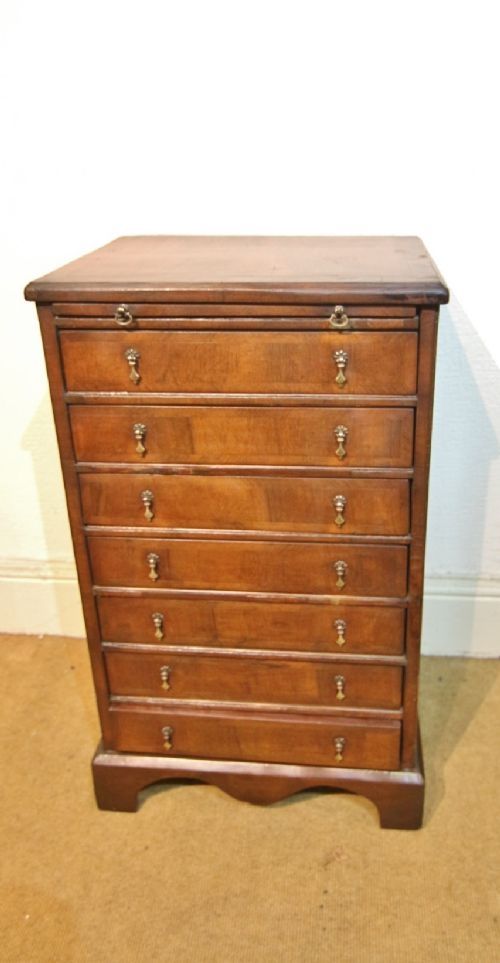
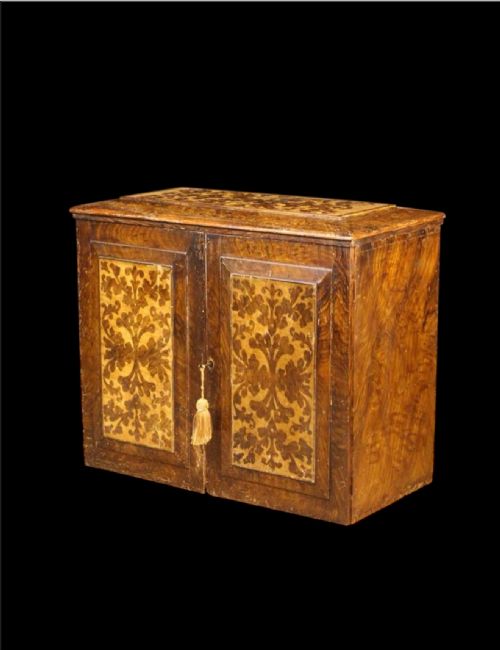
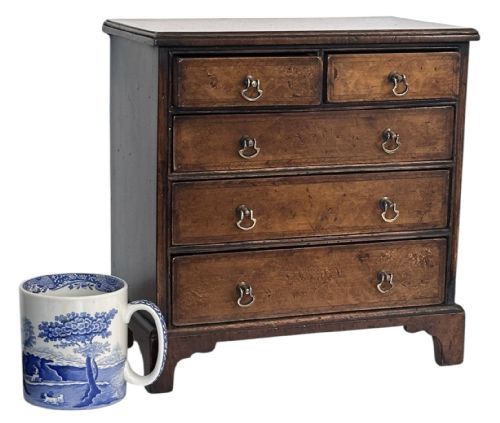


Walnut Specimen Cabinet
A walnut specimen cabinet is a compact, multi-drawer chest designed to house natural history collections and small treasures with absolute precision.

Walnut Specimen Cabinet
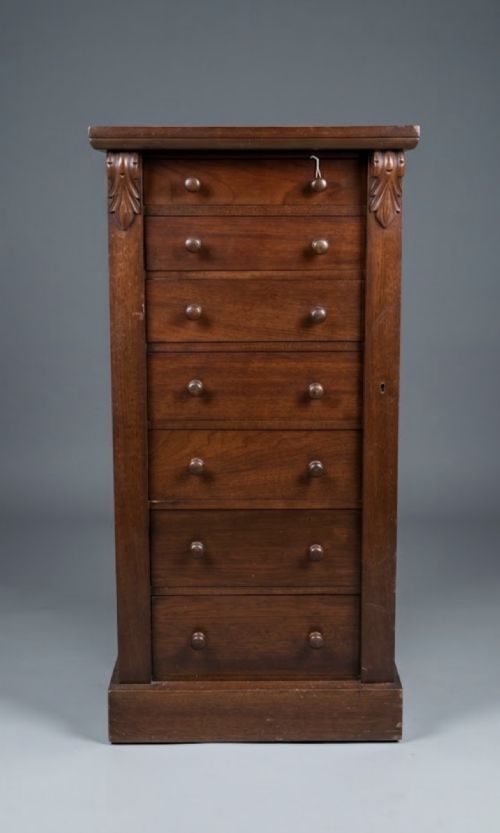
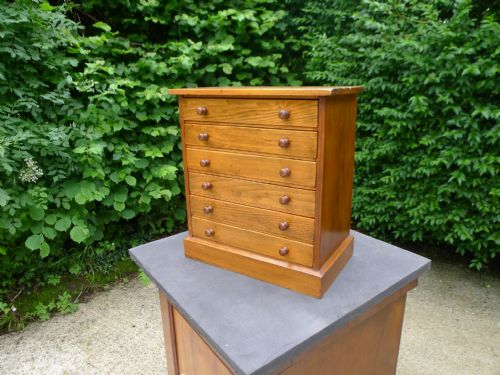
A walnut specimen cabinet provides secure, orderly storage for delicate items through a series of shallow internal drawers. These pieces appear in forms such as Wellington chests, table cabinets, banks of drawers, and chests on stand.
The material range spans standard walnut, burr walnut, satin walnut, and red walnut, often paired with secondary timbers like mahogany and oak. Many examples date from the Victorian and 19th century periods, alongside Regency and 18th century pieces.
Buyers seeking a walnut specimen cabinet will most frequently encounter Victorian configurations featuring multiple fitted drawers behind a locking locking stile or glass door. Miniature furniture and apprentice chests also surface within this category.

What varies in quality
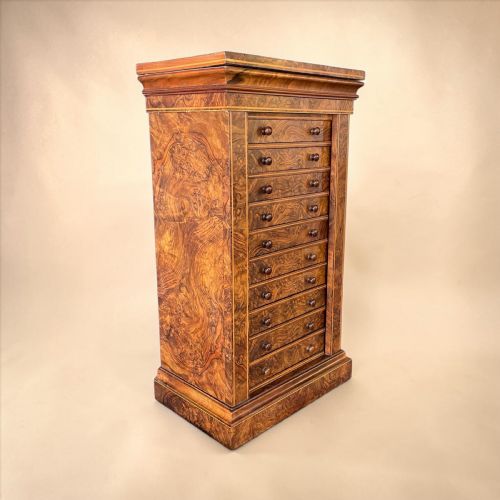
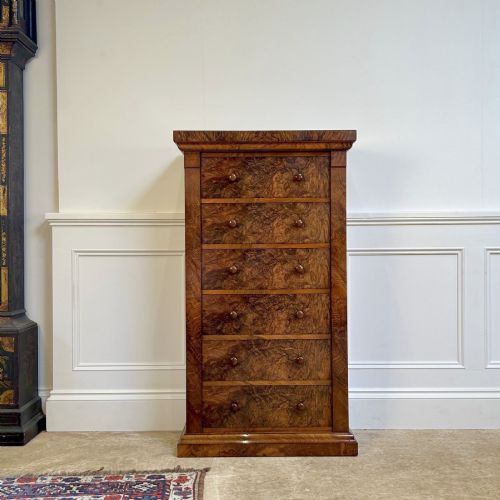
The intricacy and choice of timber figure set individual pieces apart, with rich burr walnut veneers commanding greater visual depth than plain walnut boards. Superior construction is evident in the uniform tightness of the drawer joints and the crispness of any inlaid details.
Completeness and originality of the internal drawer configuration heavily influence the standing of a piece. Cabinets retaining their original brass hardware, locking mechanisms, and undamaged internal partitions represent higher standards of preservation.
Walnut Specimen Cabinet Retail Price Guide 2026
Typical asking prices for walnut specimen cabinet among the pieces listed under this phrase on Sellingantiques today, from the lower quarter to the upper quarter. They describe what is for sale here now, not the wider market.
Listings feature 19th Century, Victorian, Regency, and 18th Century periods in walnut, burr walnut, mahogany, and oak.

Gillows·Watkins and Doncaster
The Walnut Specimen Cabinet Glossary
- Wellington chest
- A tall, slender chest of drawers featuring a hinged locking stile on one side that secures all drawers simultaneously when locked.
- Burr walnut
- A highly figured veneer sliced from walnut tree growths, prized for its swirling, organic grain patterns.
- Specimen cabinet
- A specialised piece of furniture with numerous shallow drawers originally built to hold natural history collections such as insects, minerals, or botanical samples.
- Table cabinet
- A smaller scale cabinet designed to sit upon a desk, table, or stand rather than resting directly on the floor.
- Stile
- A vertical framing member of a door or cabinet carcase that provides structural support and stability.
Walnut Specimen Cabinet: Frequently Asked Questions
What were walnut specimen cabinets originally used for?
These cabinets housed scientific collections, including butterfly specimens, geological samples, microscope slides, and botanical pressings. The shallow drawers kept delicate items flat and organised.
Natural historians and collectors relied on the compartmentalized layout to study and transport fragile specimens safely without causing physical damage.
What is the difference between walnut and burr walnut?
Standard walnut timber displays a relatively straight, uniform grain with deep brown tones and subtle figuring. It provides a classic, understated surface for traditional furniture.
Burr walnut comes from knotty tree growths, producing wild, swirling patterns that create intense visual texture across drawer fronts and table tops.
How should I care for a antique walnut cabinet?
Keep the cabinet away from direct sunlight and sudden temperature shifts to prevent the walnut veneers from drying out or lifting. Dust the timber gently with a dry, soft cloth.
Avoid using silicone-based polishes or harsh chemical sprays, which can damage the aged French polish or wax finish over time.