



Antique Scientific Cabinet
An antique scientific cabinet gathers the instruments, specimens and study aids of earlier centuries into purposeful containers designed for serious inquiry.

Antique Scientific Cabinet
When you search for an antique scientific cabinet, you encounter specialised furniture and instruments spanning from the Georgian period through to the twentieth century. These pieces encompass multi-drawer collectors cabinets built for microscope slides, weather instruments housed in mahogany cases, and opticians lens kits. The selection on this page demonstrates the diverse ways investigators and practitioners organised their instruments and specimens.
The forms vary from large twenty-eight drawer specimen chests in walnut or oak down to travelling compass sundials and barometer stations. Natural history interests appear alongside optical and anatomical apparatus, reflecting the broad scope of historical science. Each piece represents a tangible link to how past generations measured, observed and recorded the physical world.
Materials and construction
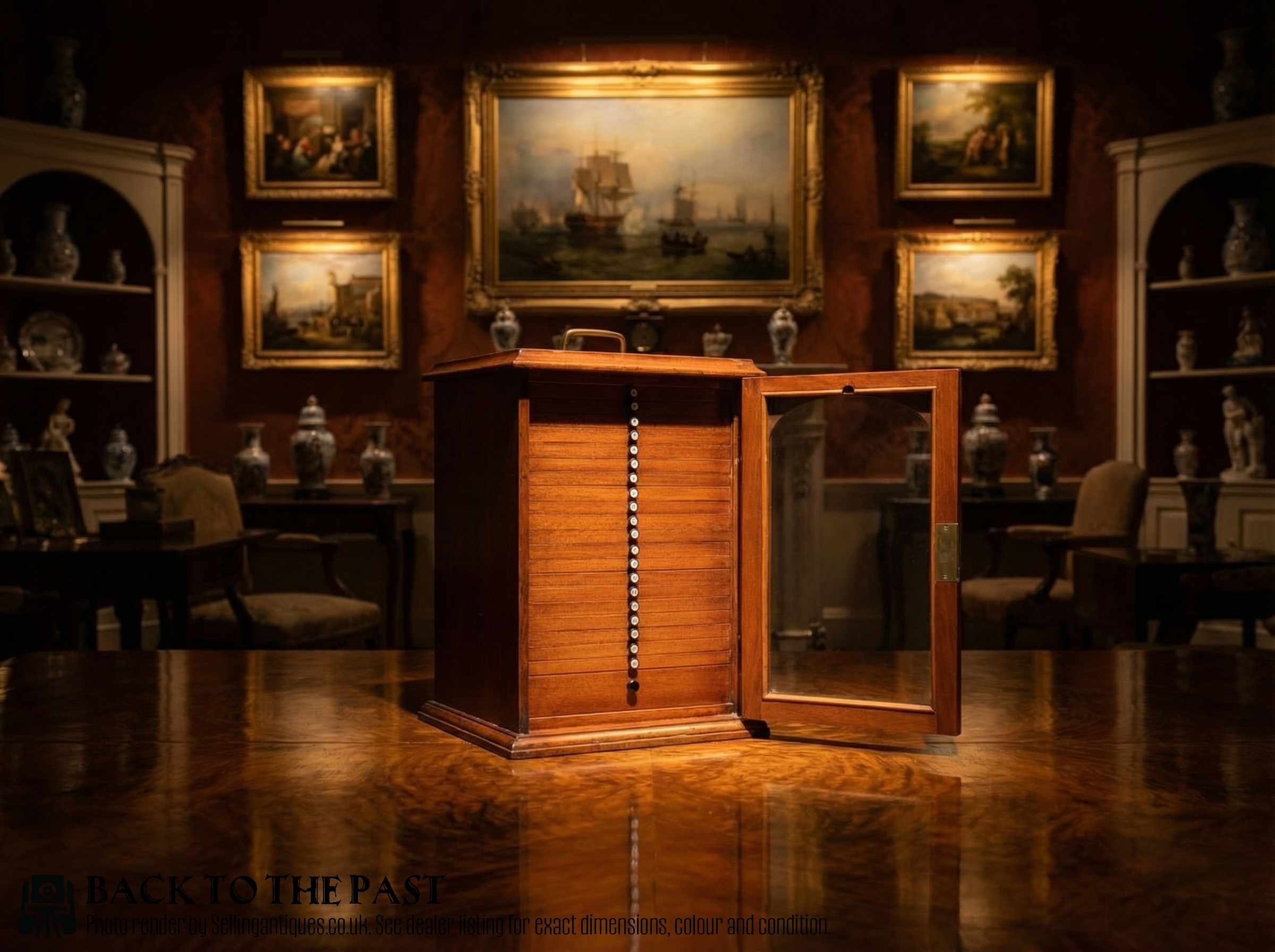
Timber selection dictated the durability and appearance of these enclosures, with dense hardwoods like mahogany and oak providing robust protection for delicate contents. Joinery was executed with precision to ensure tight drawer fits, preventing dust from damaging slides, lenses or paper components. Brass fittings, from campaign handles to hinges, added functional strength and visual contrast to the polished wood surfaces.
Internal elements often incorporated secondary materials such as velvet linings to cushion glass slides and instruments during storage or transit. Glass panels featured in barographs and shop display barometers allowed continuous observation of dials and recording drums without opening the case. Turned wood details and paper charts completed the construction of complex weather stations and test kits.
Listings span from the mid-eighteenth century through the Georgian and Victorian eras to the early twentieth century, incorporating mahogany, oak, brass, and glass.
Distinctions in quality
The division between standard items and the finest examples rests on the complexity of the interior architecture and the grade of timber employed. Cabinets featuring numerous precisely fitted drawers with original pulls demonstrate superior cabinet-making compared to simpler utility boxes. The presence of complete, matching sets of slides, lenses or instruments elevates a piece significantly.
Maker marks and signature brass plates from established scientific retailers denote higher production standards and verifiable provenance. Superior execution shows in the crispness of turned wood components, the unwarped alignment of multi-drawer banks, and the preservation of original interior velvet or paper linings.
William Bird MD FLS·Short Mason London·Aitchison for Zambrene·Jan Wandelaar
The Antique Scientific Cabinet Glossary
- Barograph
- A self-recording aneroid barometer that charts atmospheric pressure over time onto a revolving paper drum. These instruments combine clockwork mechanisms with brass pressure sensors inside a wood and glass housing.
- Collector cabinet
- A specialised piece of case furniture containing multiple shallow drawers designed to hold specimens, slides or small objects systematically. They frequently utilise dense timbers like mahogany or walnut to protect their contents.
- Aneroid barometer
- A device for measuring atmospheric pressure without liquid, using a flexible metal box that expands or contracts with pressure changes. These often appeared in large shop displays or oak weather stations.
- Optician test set
- A portable wooden kit containing precision glass lenses and frames used by practitioners to assess vision. The interiors typically feature fitted velvet or fabric slots to secure each optical component.
- Specimen cabinet
- A housing unit built specifically for the storage and classification of natural history items or microscopic preparations. The internal drawers often feature glass covers or specialised racks for slide organisation.
Antique Scientific Cabinet: Frequently Asked Questions
What fits inside an antique scientific cabinet?
These cabinets house specialised items such as glass microscope slides, opticians lenses, anatomical engravings, and portable compass sundials.
The specific contents depend on the original purpose of the piece, whether intended for medical study, natural history collecting, or meteorological observation.
How do I care for wooden scientific cases?
Keep wooden cases away from direct sunlight and dramatic humidity shifts to preserve the timber and prevent drawer warping.
Regular dusting with a dry cloth protects the polished surfaces and brass fittings without damaging historical finishes.
Were these cabinets made for home use?
Most of these pieces were constructed for professional practitioners, opticians, researchers, or dedicated private natural history collectors.
Their functional design reflects rigorous scientific study rather than purely decorative domestic display.
How do I identify the period of a cabinet?
Dating relies on timber choices, construction techniques, brass hardware styles, and any accompanying maker signatures or labels.
Georgian and Victorian pieces display distinct joinery methods and hardware profiles that separate them from later twentieth-century iterations.