
Small Collector Cabinet
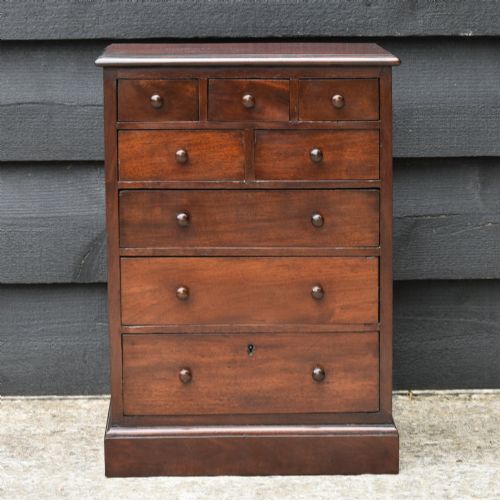
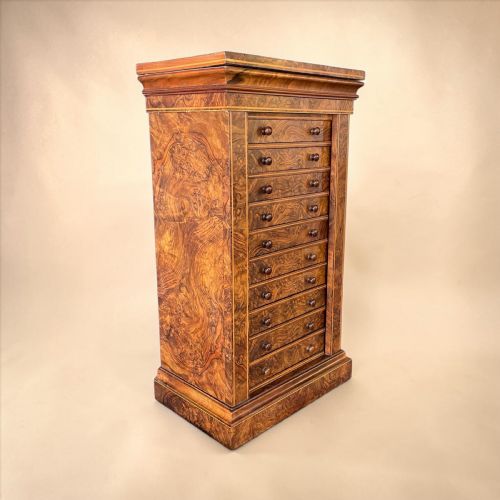
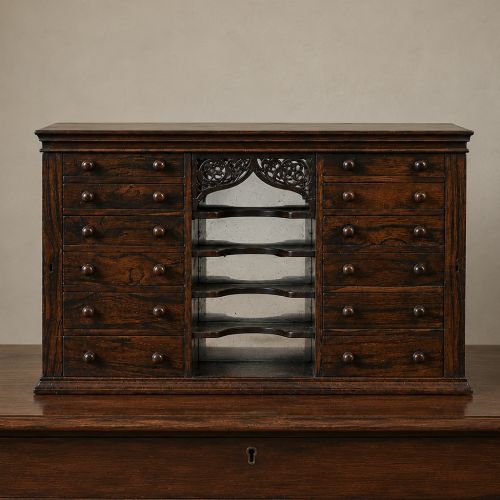
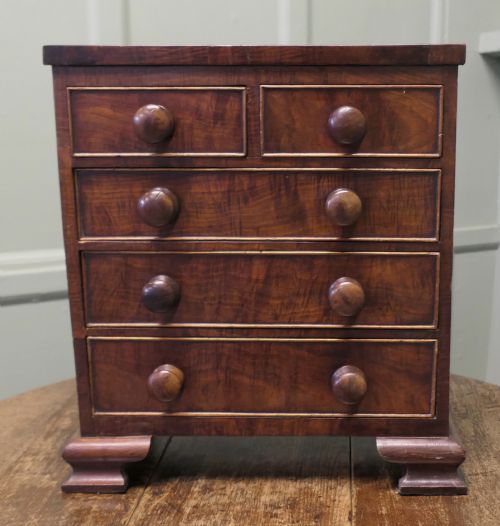
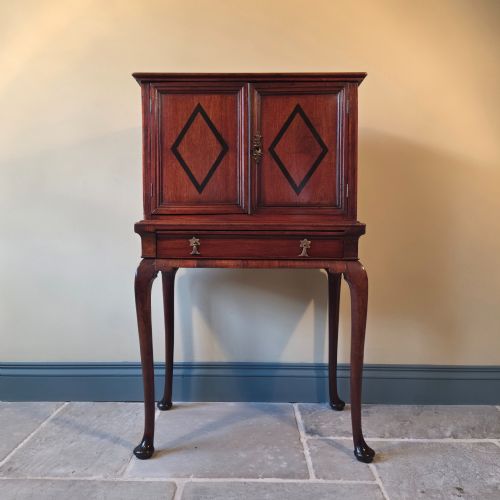
A small collector cabinet is a scaled-down piece designed to house specimens, medals, or miniatures while taking up minimal space on a table or desk.

Small Collector Cabinet
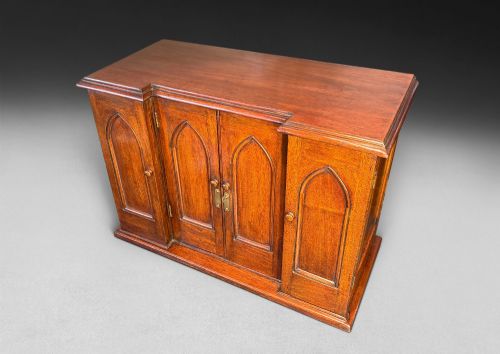
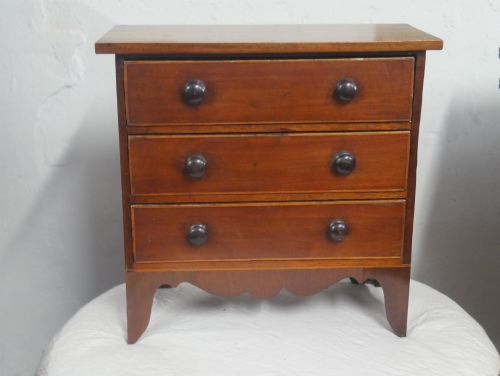
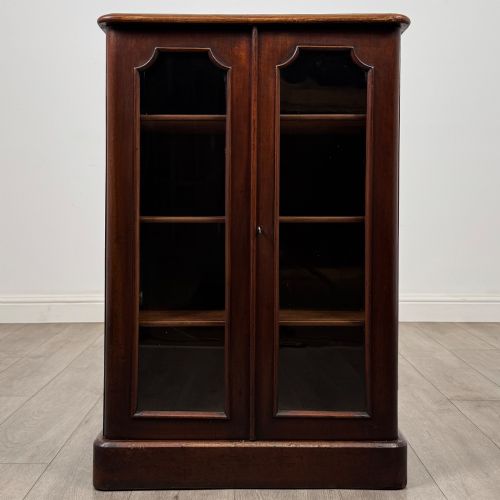
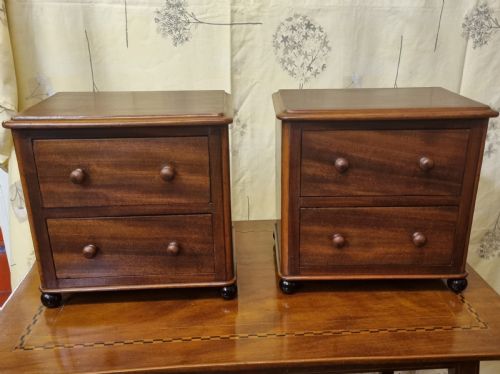
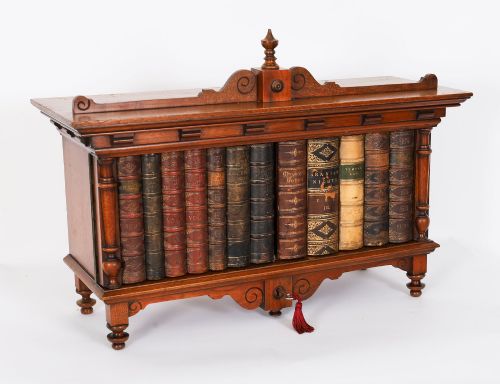
A small collector cabinet brings together several centuries of miniature storage, spanning table-top units, apprentice pieces, and tabletop chests of drawers. You will regularly encounter Victorian walnut and mahogany variations alongside Georgian spice cabinets and Edwardian specimen cases.
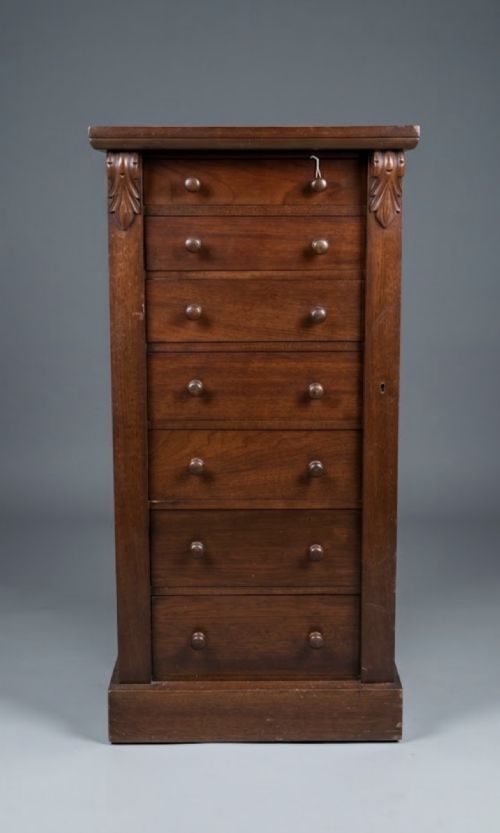
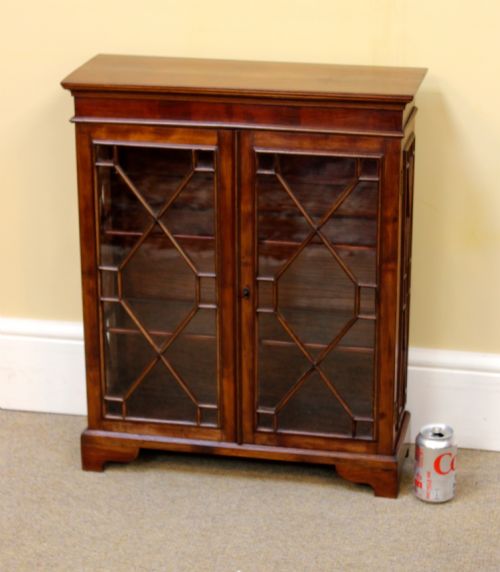
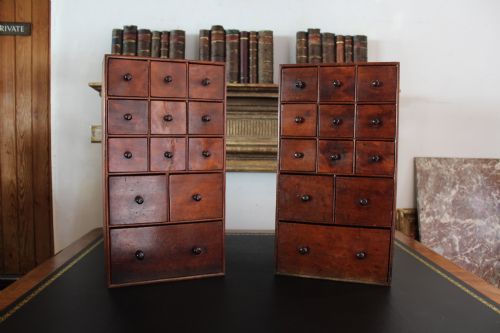
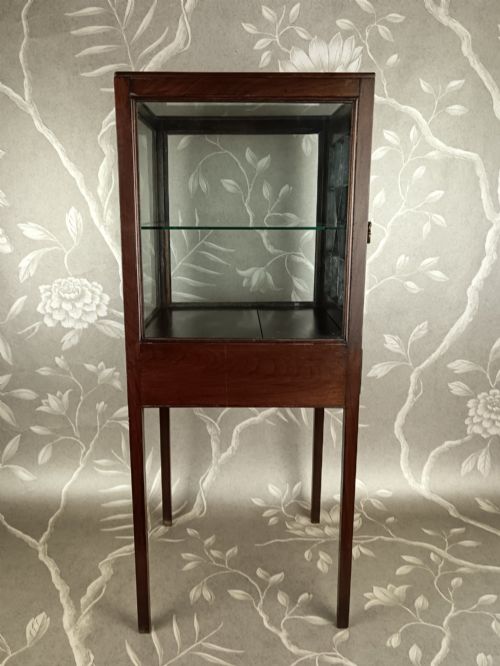
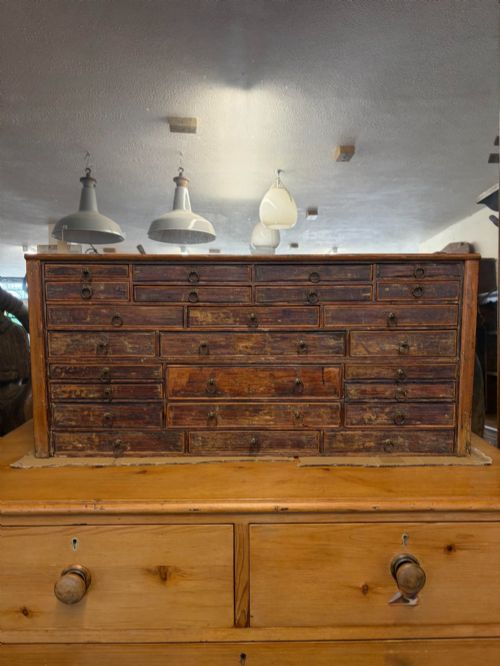
These pieces served practical purposes for naturalists, pharmacists, and collectors who needed to organise delicate items. The format ranges from multi-drawer apothecary banks to glazed display vitrines and campaign-style storage units.
Table-top forms dominate the selection, often resting on a plinth or small stand. The smaller scale allows these cabinets to fit easily into modern domestic settings without dominating a room.
How they were made
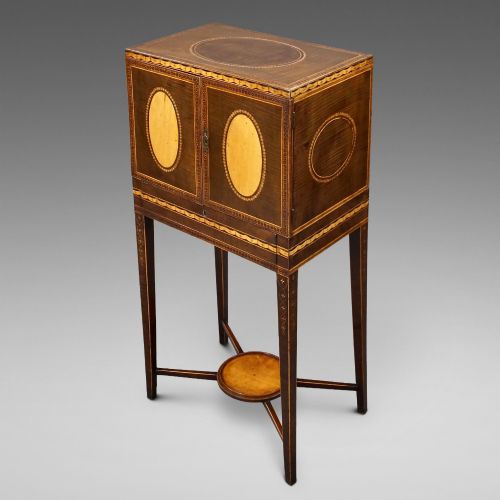
Cabinetmakers utilised dense timbers such as mahogany, walnut, oak, and satinwood to construct the carcase and drawer frames. Inlaid details in brass, harewood, and marquetry frequently decorate the exterior surfaces of finer examples.
Glass panels were incorporated into doors and lids for display purposes, while internal drawers were constructed with fine dovetail joints to withstand frequent opening. Metal fixtures such as brass drop handles and campaign-style mounts provide functional contrast to the timber.
Some nineteenth-century miniature chests served double duty as travelling apothecary stores for homeopathic remedies on the move.
What varies in quality
The sophistication of the timber grain and the precision of the inlay set finer examples apart from utilitarian storage boxes. Marquetry work and matched drawer fronts indicate a higher tier of craftsmanship from specialist workshops.
Hardware selection also dictates the grade of the piece, with substantial brass handles and lock escutcheons reflecting superior original commissioning. The proportion of the miniature scale relative to full-sized furniture demonstrates the maker's skill.
Edwards and Roberts·A W Gamage LTD·D Napier and Sons
The Small Collector Cabinet Glossary
- Apprentice piece
- A miniature item of furniture created by a craftsman to demonstrate skill before attaining master status. These pieces mirror full-scale furniture in every detail.
- Vitrine
- A glass-fronted display cabinet used for showing small objects and curiosities. The term derives from the French word for glass.
- Marquetry
- Decorative veneer work arranged in pictorial or geometric patterns using various coloured woods. It requires precise cutting and fitting into the carcase surface.
Small Collector Cabinet: Frequently Asked Questions
What did people store in these cabinets?
Owners used these small cabinets for natural history specimens, geological samples, insects, coins, and jewellery. Apothecaries and homeopaths also utilised multi-drawer variants for medical supplies and botanical ingredients.
The compartmentalised drawers kept delicate and valuable items separated and protected from dust and light. This made them essential equipment for serious hobbyists and professional researchers alike.
How do I date a small collector cabinet?
Dating relies on observing the secondary timbers, handle styles, and construction methods used in the drawers. Georgian and Victorian pieces often display hand-cut dovetails and distinct wood selections such as flame mahogany or walnut.
Changes in hardware and locking mechanisms also provide reliable chronological markers. Comparing the proportions and decorative motifs against dated examples helps narrow down the period of manufacture.
Are apprentice pieces different from regular miniature chests?
Apprentice pieces were traditionally made by learners to prove their competency across various furniture joints and decorative techniques. They replicate the exact design, timber choices, and construction methods of standard furniture on a reduced scale.
Standard miniature chests were often built as commercial items for specific display tasks rather than tests of skill. Both share a small footprint but differ in their original workshop intention.
Where should I place a table-top cabinet at home?
These cabinets sit comfortably on sturdy sideboards, desks, or dedicated low tables where the drawer contents can be viewed easily. Because they are compact, they occupy little floor space while adding architectural interest to a room.
Keep them away from direct sunlight and sudden temperature changes to protect vulnerable timbers and fragile internal linings. Ensuring a level surface prevents the small drawers from binding in their tracks.