


Antique Desktop Specimen Box
An antique desktop specimen box keeps natural history curiosities and precious small items close at hand, fashioned in rich woods for a gentleman's study.
Antique Desktop Specimen Box
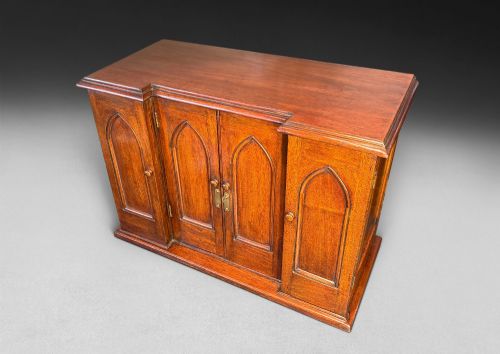
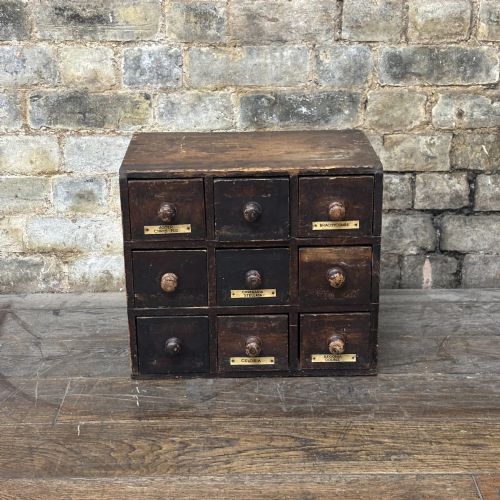
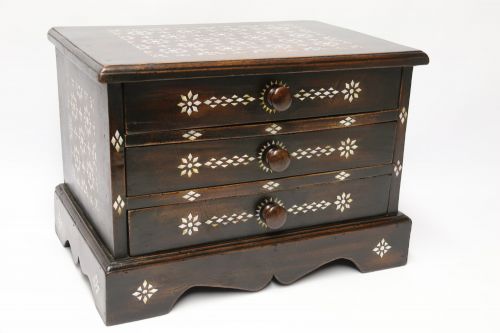
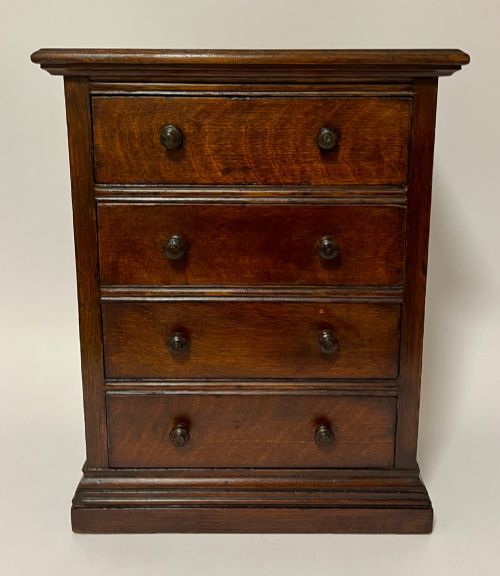
An antique desktop specimen box gathers small drawers and glazed doors designed for housing botanical, geological or entomological collections. These table-top cabinets and miniature chests of drawers sit comfortably on writing desks and library tables.
Most examples found here date from the nineteenth century, spanning Georgian, Regency and Victorian periods up to the Edwardian era. These pieces frequently utilise sturdy oak, figured mahogany or burr walnut to house their contents securely.
Makers produced these desktop cabinets in varied regional styles, including Gothic Revival, Anglo-Indian and Arts & Crafts designs. Each version reflects the specific organisational needs of nineteenth-century collectors and naturalists.
Materials and construction
Cabinet makers constructed these desktop cabinets using dense hardwoods such as oak, mahogany, walnut and satinwood. Many pieces feature hand-cut dovetail joints on the drawers and applied brass handles or escutcheons.
Finer examples incorporate decorative elements like boxwood stringing, brass mounts and burr walnut veneers to enhance the visual appeal of the exterior. Interior drawer runners and linings rely on seasoned pine or oak to ensure smooth operation.
Cabinet forms include table-top chests of drawers, seed chests, cigar humidors and dedicated display storage units with multiple shallow trays.
Judging quality and execution
Quality rests upon the selection of timber veneers and the precision of the drawer construction. Superior cabinets display well-figured burr walnut or satinwood matched symmetrically across the front faces.
Hardware specification also distinguishes standard pieces from finer examples, with heavy cast brass carrying handles and working locks providing functional distinction. The tightness of the joinery and the retention of original interior linings dictate the standing of a cabinet.
The Antique Desktop Specimen Box Glossary
- Escutcheon
- A protective plate surrounding a keyhole, often cast in brass on these cabinets. It prevents the surrounding wood from becoming worn through repeated use of the key.
- Dovetail
- A joint formed by interlocking wedge-shaped fingers, used extensively in the drawer construction of these pieces. This traditional method provides exceptional tensile strength.
- Burr walnut
- Timber taken from a growth on a walnut tree, yielding highly decorative swirling grain patterns. Cabinet makers prized this wood for veneering prominent surfaces.
- Stringing
- Thin inlay work of contrasting wood set into the surface of a panel. It outlines drawer fronts and top surfaces to create a refined border.
- Collector cabinet
- A small piece of furniture fitted with multiple shallow drawers for storing specimens or jewellery. These cabinets protect delicate items from dust and light.
Antique Desktop Specimen Box: Frequently Asked Questions
What were specimen boxes used for?
These boxes served naturalists and collectors as secure storage for butterflies, fossils, minerals and botanical pressings. The shallow drawers kept delicate specimens organised and protected from environmental damage.
Over time, owners also adapted them for jewellery, coins, cigars and writing materials on study desks.
How do I date a Victorian cabinet?
Dating relies on examining the timber species, construction methods and decorative style applied to the exterior. Gothic Revival and heavy brass mounts often point towards the middle decades of the nineteenth century.
Later Victorian and Edwardian examples tend towards simpler utility forms or lighter Arts & Crafts influences.
Can I use these for modern storage?
The shallow drawers suit the organisation of modern small items such as fountain pens, watches, craft supplies or stationery. Their compact footprint allows them to sit neatly on modern desks and sideboards.
Care should be taken to monitor interior humidity if storing organic materials.
Are keys usually included with cabinets?
Original working keys are occasionally present with nineteenth-century cabinets, though many survive without them due to centuries of displacement. Locks can often be worked by a specialist if security is required.
The presence of an original key and working lock adds to the completeness of a piece.