


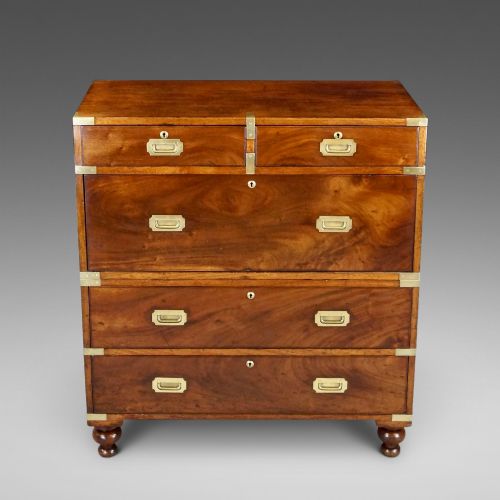
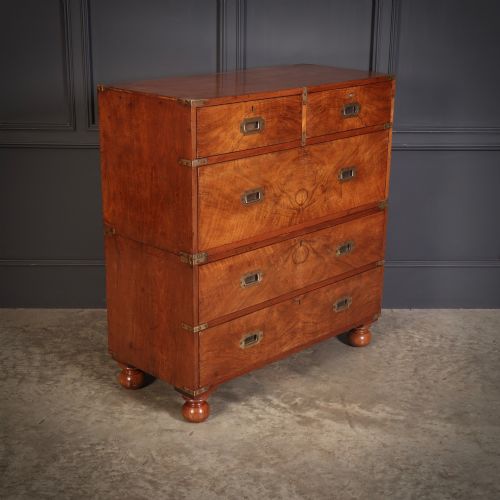


Recessed Brass Handle Chest
These recessed brass handle chest pieces are robust camp and campaign chests built for travel, prized for their flush hardware and clever internal compartments.
Identifying recessed brass handle chest pieces
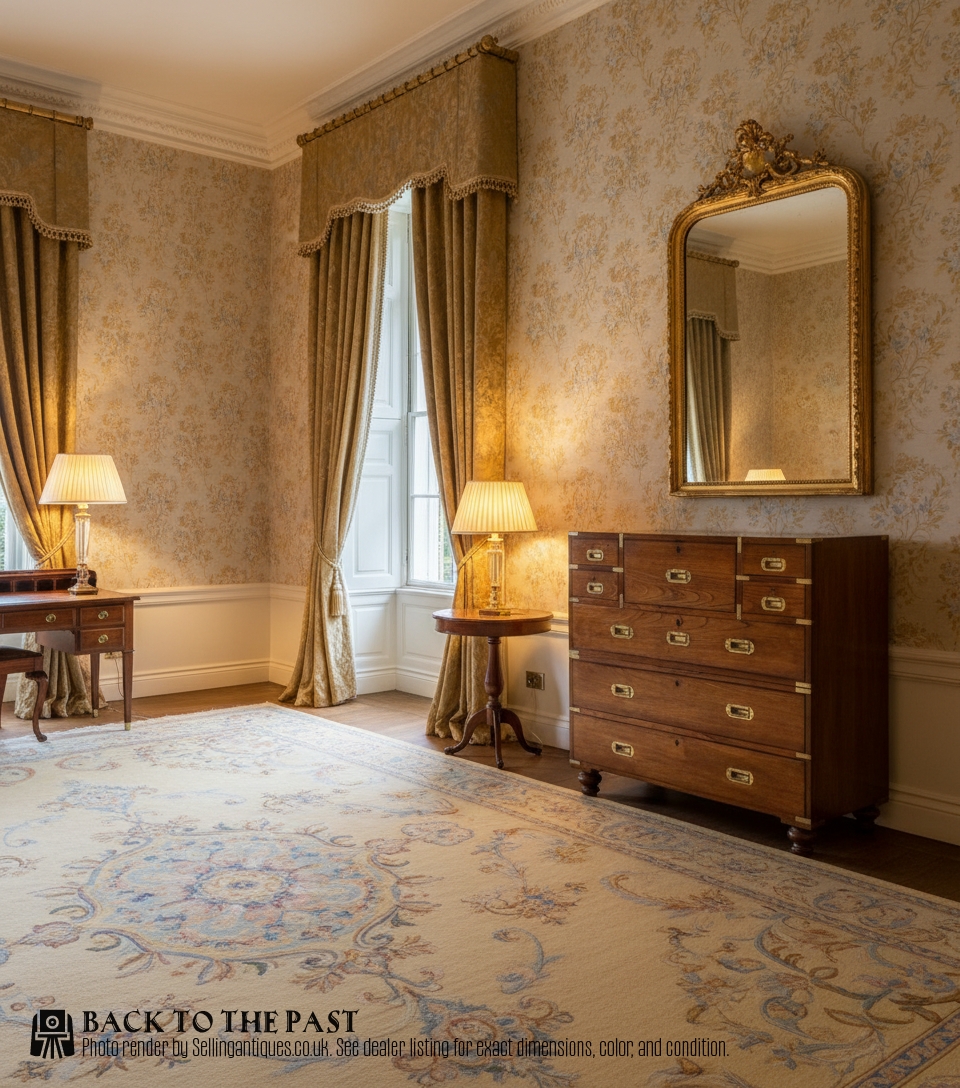
A recessed brass handle chest is a functional storage form designed originally for transport, appearing in variations such as military campaign styles, secretaire chests, and workshop banks of drawers. Buyers searching this phrase encounter nineteenth-century Victorian examples alongside pieces from the 1920s and 1930s.
The inventory on this page shows chests of drawers and cabinets originating from specific eras including the 1860s, the 1880s, and the early twentieth century. Forms range from compact specimen cases to substantial camphorwood, mahogany, oak, and teak carcases.
Military campaign styles and secretaire chests dominate the selection, often featuring fitted writing compartments alongside standard drawer configurations. These pieces combine practicality with distinct period character, suiting studies and living spaces alike.
Materials and construction
The carcases utilise durable timbers recorded in the listings as mahogany, oak, camphorwood, and teak. These woods were chosen for their strength and resistance to splitting during transport.
Hardware consists entirely of brass fittings set flush into the wood to prevent catching during movement. Drawers and cabinets incorporate recessed handles and secure internal mechanisms suited to travel.
Retail Price Guide 2026
Typical UK retail prices for recessed brass handle chest, calculated from the Sellingantiques database of over a million retail prices indexed since 2003. This retail price guide relies exclusively on Sellingantiques data; no external sources or auction records are used, so the figures do not describe the wider market.
Listings feature four timber varieties: mahogany, oak, camphorwood, and teak.
Assessing quality and execution
Quality in a recessed brass handle chest rests on the precision of the joinery and the snugness of the flush brass fit. Finer examples maintain tight corner joints and smooth drawer actions despite shifts in climate.
The choice of timber and the complexity of the interior arrangement, such as a secretaire drop-front with fitted pigeonholes, distinguish standard storage from superior officer-grade furniture.
The Recessed Brass Handle Chest Glossary
- Campaign chest
- A chest of drawers built in two or more sections with inset brass corners and recessed handles for military transport.
- Secretaire chest
- A chest featuring a drawer with a drop-front that conceals a writing surface and small interior compartments.
- Camphorwood
- An aromatic timber frequently used for campaign furniture to protect contents from insects.
- Specimen case
- A small cabinet with shallow drawers designed for storing natural history collections or botanical samples.
Frequently Asked Questions
What is a recessed brass handle chest?
A recessed brass handle chest is a piece of modular furniture designed for easy packing and transport. The hardware sits flush against the timber to avoid snagging.
Such chests typically feature brass corners and folding handles, reflecting their origins as travel furniture for officers and officials.
How were campaign chests used?
These chests served as portable wardrobes and desks during military campaigns and colonial travel. They split into separate sections for loading onto pack animals or wagons.
Inside, officers stored uniforms, documents, and personal valuables safely away from damp conditions.
How do I care for camphorwood or teak?
Keep these timbers away from direct heat sources and sudden humidity changes to prevent the wood from splitting. Dust regularly with a dry cloth.
Avoid heavy liquid polishes that can build up on the grain and dull the natural finish of the timber.
How can I tell the period?
Examine the timber species, construction joints, and the style of the brass recessed hardware. Victorian examples often display hand-cut dovetails and specific secondary woods.
Twentieth-century pieces like workshop banks or later campaign reproductions show different machining marks and timber selections.