

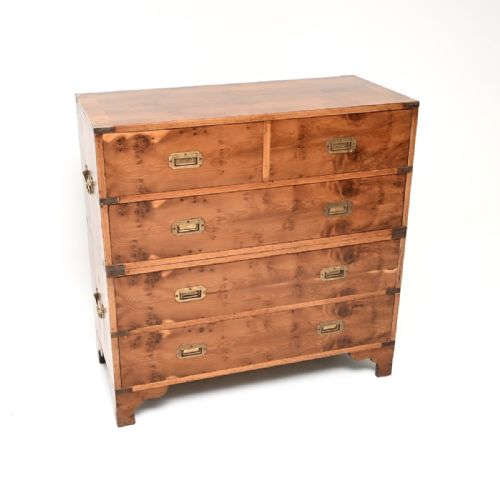
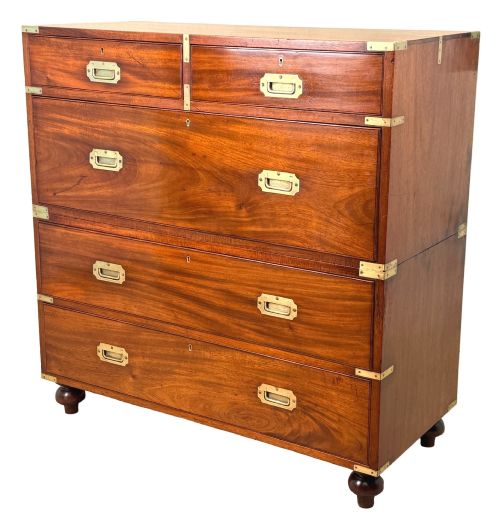
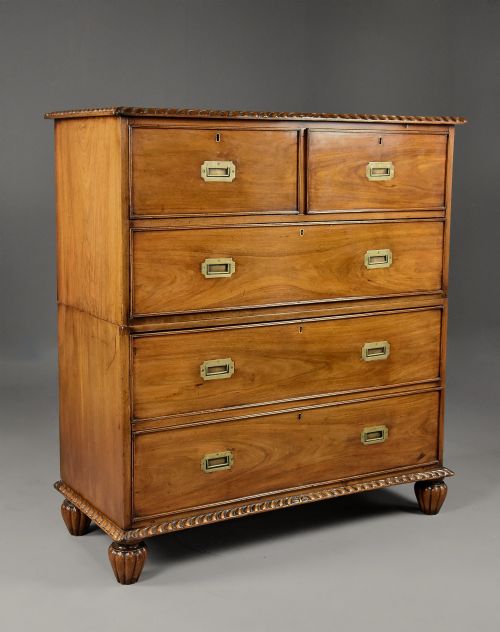
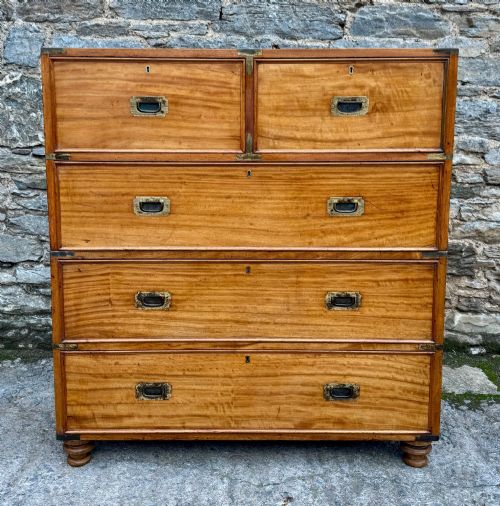
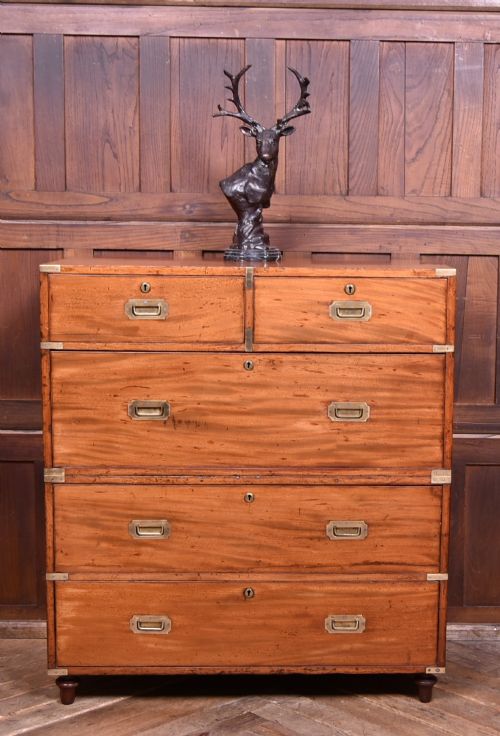
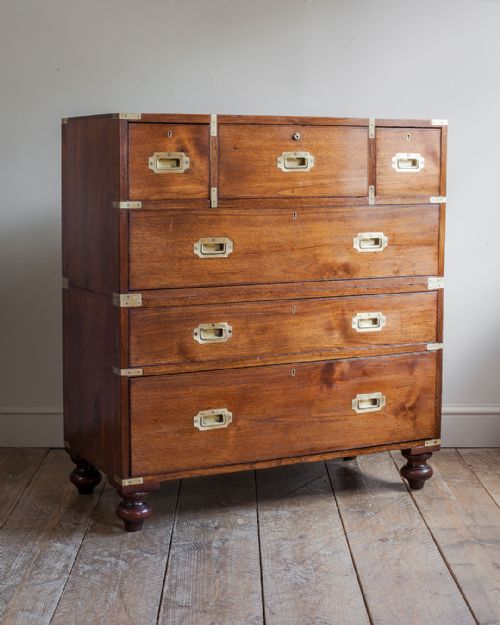
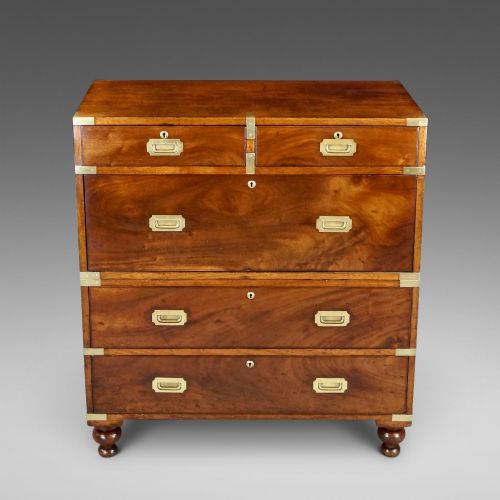
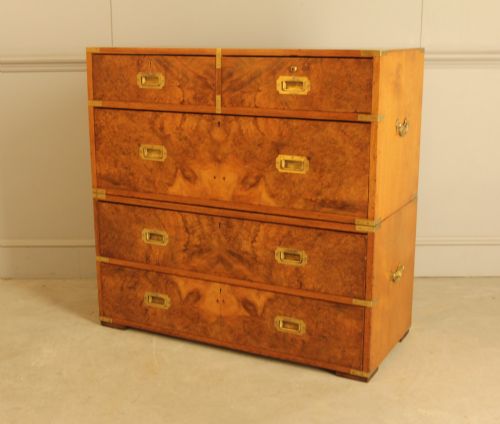




Two Section Campaign Chest
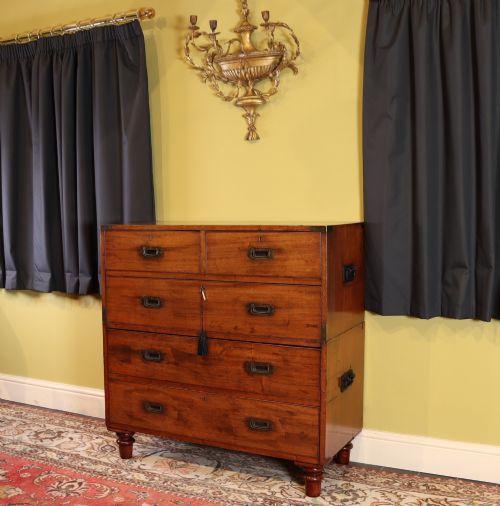
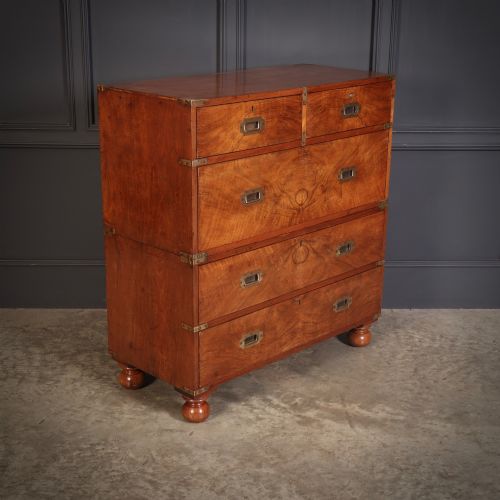
A two section campaign chest is a portable, modular piece of military furniture designed for travel, combining robust construction with clever brass detailing.
Two Section Campaign Chest
A two section campaign chest is a modular chest of drawers built to be dismantled into separate stacked boxes for transport by officers on the move. When you search for a two section campaign chest, you encounter sturdy pieces constructed in two distinct halves, designed to be easily loaded onto ships or carts during the nineteenth century.
The versions most common on this page date from the Victorian era and the nineteenth century, often appearing in rich timbers such as mahogany, teak, and camphor wood. These items usually feature recessed brass corners and flush carrying handles to prevent snagging in tight spaces during travel.
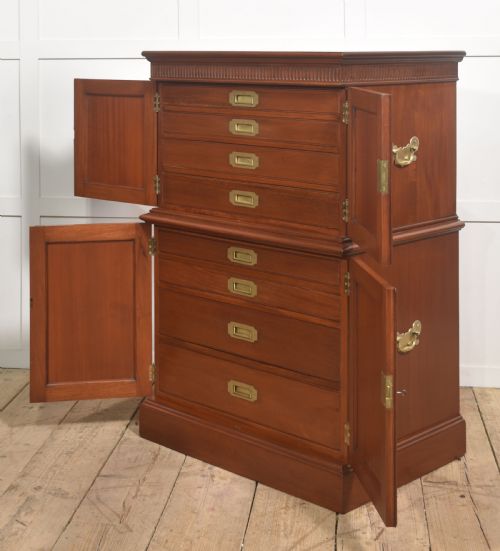
Beyond standard drawer configurations, some examples incorporate secretaire drop-front desks or upper cabinet compartments for paperwork. These variations reflect the practical demands placed upon military personnel who required both storage and a portable writing surface while stationed abroad.
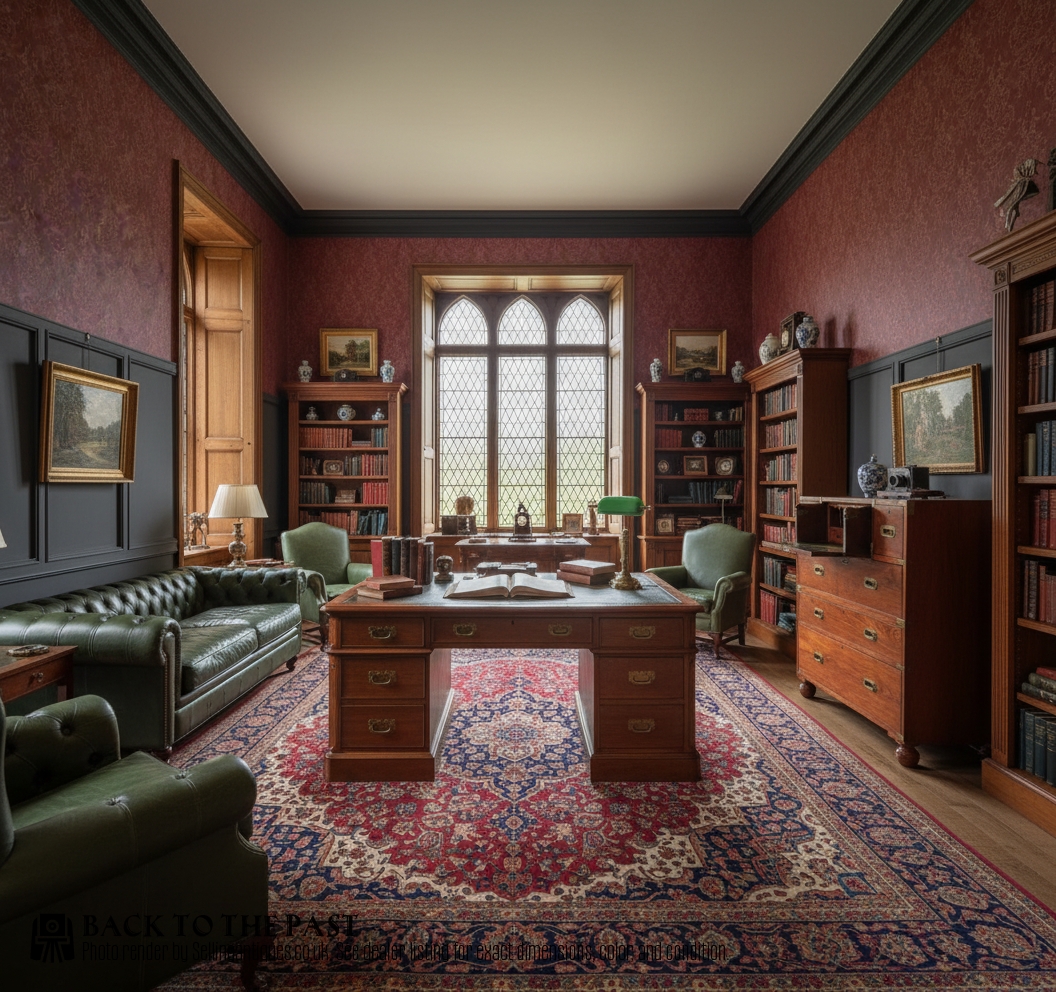
How they were made
Cabinetmakers constructed these chests using dense timbers capable of enduring harsh climates, frequently selecting durable teak, fragrant camphor wood, or figured mahogany. These woods were often reinforced with heavy brass bound edges, straps, and corner brackets screwed directly into the timber to absorb the shocks of frequent transit.
The modular design relied on secure locking mechanisms and flush-fitting hardware, ensuring that the top and bottom sections locked tightly together without protruding parts. Iron or brass carrying handles were deeply recessed into the sides of each individual section so the units could be lifted without damaging adjacent furniture.
Two Section Campaign Chest Retail Price Guide 2026
Typical asking prices for two section campaign chest among the pieces listed under this phrase on Sellingantiques today, from the lower quarter to the upper quarter. They describe what is for sale here now, not the wider market.
Chest configurations include standard drawers, collector's cabinets, tallboys, and secretaire desks equipped with iron or brass carrying handles.
What varies in quality
The grade of timber and the complexity of the internal configuration set the finer pieces apart from standard utility items. Selection of highly figured veneers, such as burr walnut or carefully matched mahogany grains, marks out superior workshops.
The execution of the hardware also indicates distinction, with heavy, hand-beaten brass fittings and dovetail joints showing superior craftsmanship. Simpler pine carcasses coated in paint sit at the more utilitarian end of the spectrum compared to tightly fitted hardwood examples.
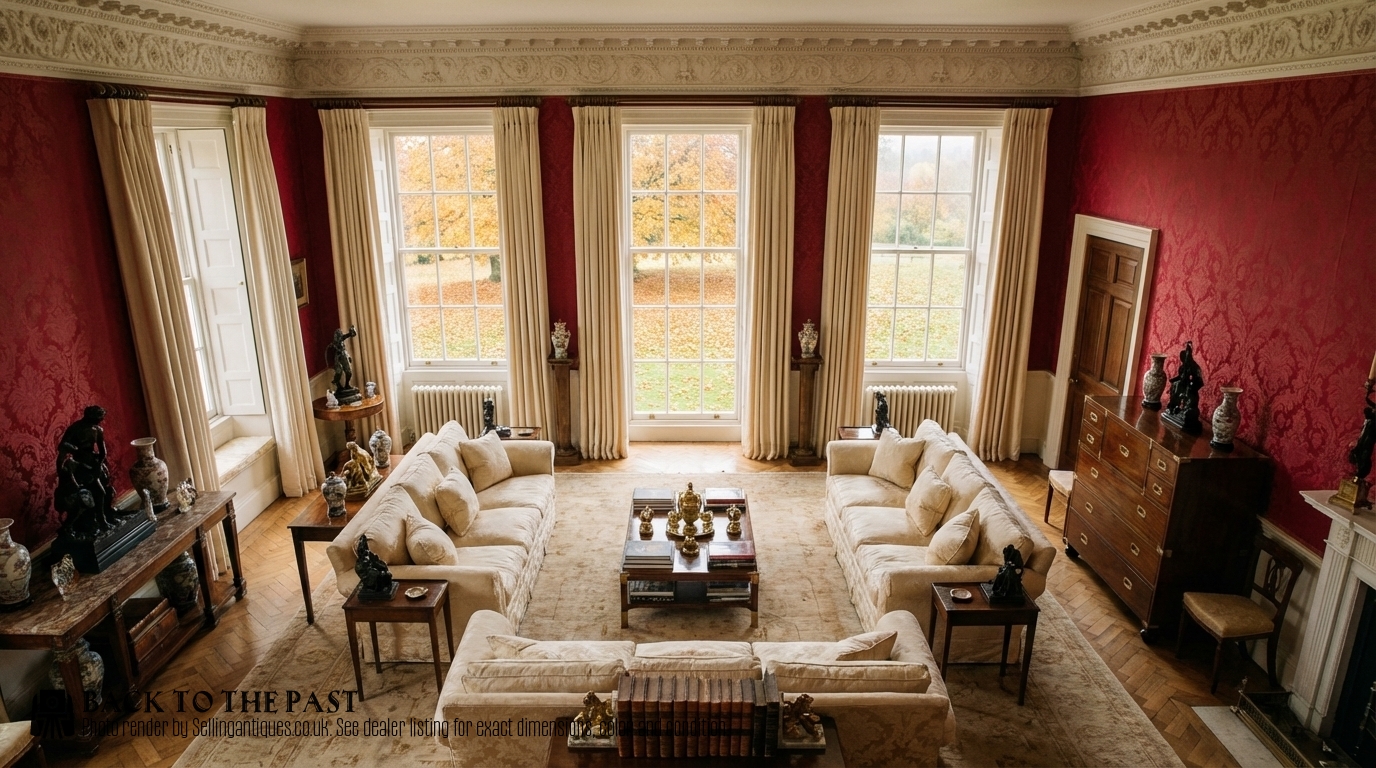
S. W. Silver & Co. London & Liverpool·Army & Navy
The Two Section Campaign Chest Glossary
- Campaign chest
- A modular chest of drawers built in sections with recessed hardware for ease of transport during military deployment. These items were essential equipment for officers on active service.
- Secretaire
- A cabinet or chest featuring a pull-down writing flap that conceals pigeonholes and small drawers. This clever integration provided a portable desk within the main storage unit.
- Flush handle
- A handle inset into the surface of a drawer or cabinet door so it does not project outwards. This design prevents the hardware from catching on ropes or narrow doorways during transit.
- Padouk wood
- A dense, durable tropical timber known for its reddish-brown colour and resistance to decay. Cabinetmakers utilised it frequently for colonial furniture destined for humid climates.
- Dovetail joint
- A traditional interlocking woodworking joint formed by interlocking wedge-shaped fingers. It provides exceptional tensile strength to drawer corners.
Two Section Campaign Chest: Frequently Asked Questions
Why are campaign chests built in two sections?
The two-part construction allowed officers to divide a heavy chest into manageable, lighter loads for packing into wooden crates or canvas travel covers. This modular format made long journeys across rough terrain considerably easier.
Splitting the carcass also reduced the risk of structural twisting when the furniture was loaded onto merchant ships, wagons, or pack animals during colonial campaigns.
How do I distinguish teak from mahogany?
Teak generally displays an oily texture and a medium brown hue that can weather to a golden colour, often showing visible dark grain lines. Mahogany tends to exhibit a smoother, reddish-brown tone that deepens in richness over time.
Examining the weight and grain pattern usually clarifies the distinction between these two primary campaign timbers.
What is a secretaire chest?
A secretaire chest incorporates a specialised middle drawer that pulls out and folds down to reveal a writing surface, small drawers, and pigeonholes. Officers used this compartment to manage correspondence and keep official records while stationed away from home.
When closed, the secretaire drawer looks identical to the standard drawers above and below it, maintaining the clean exterior lines of the campaign chest.
Where were camphor wood chests used?
Camphor wood chests were frequently utilised in tropical and colonial outposts, particularly in India and the Far East. The natural aromatic oil within the timber helped deter insects from damaging uniforms and documents stored inside.
These fragrant chests remain recognisable by their distinct scent and pale brown grain when polished.