



19th Century Military Chest
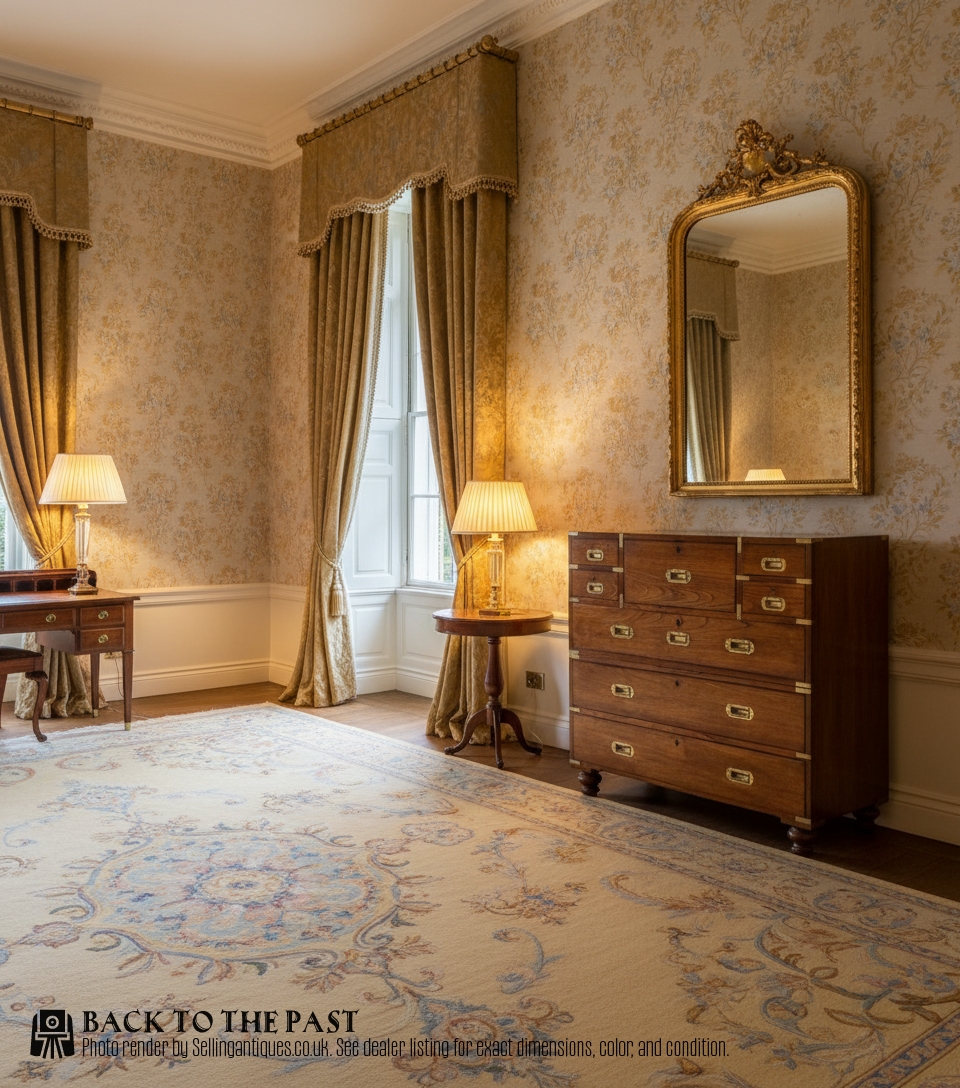
A 19th century military chest offers functional storage built for travel, defined by recessed brass hardware and sectional construction.
19th Century Military Chest
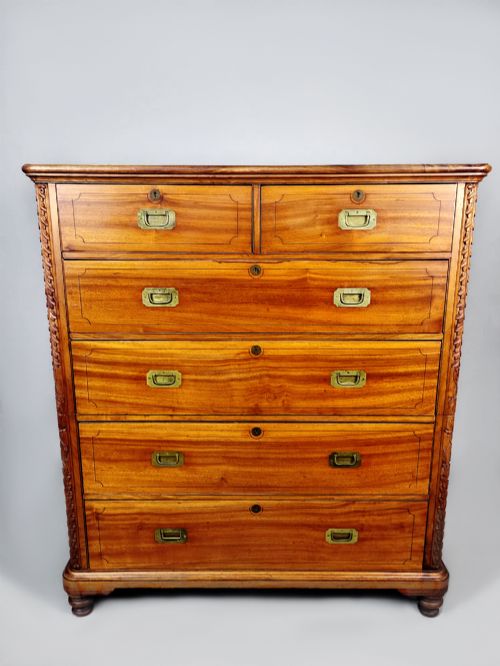
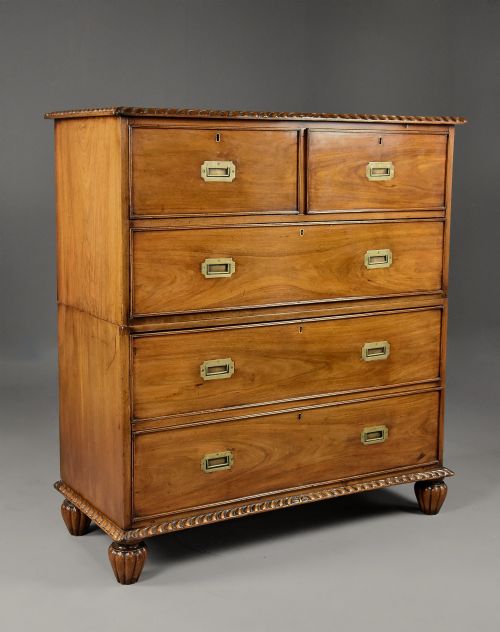
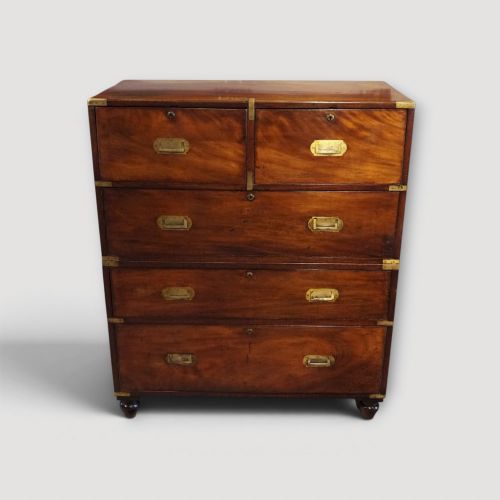
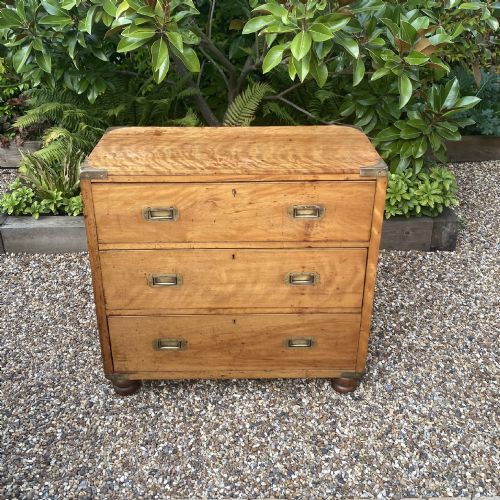
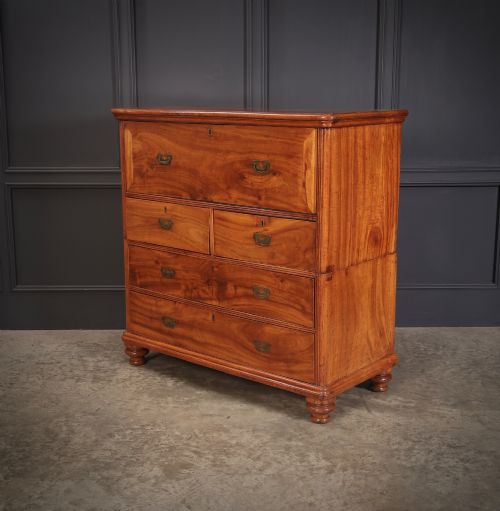
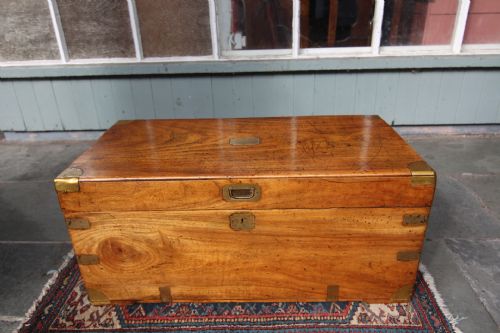
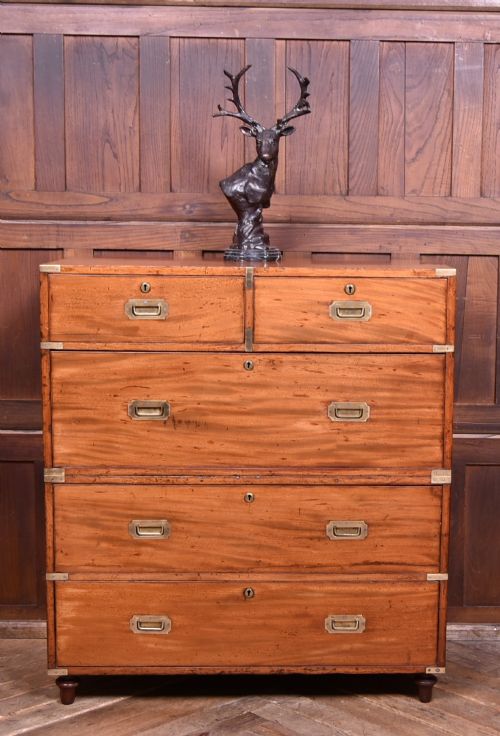
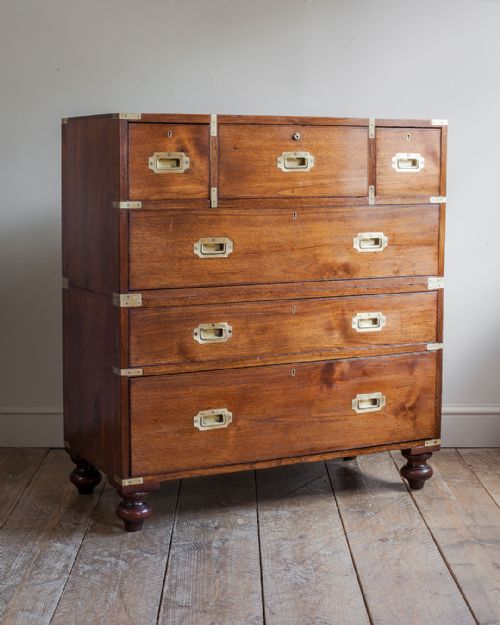
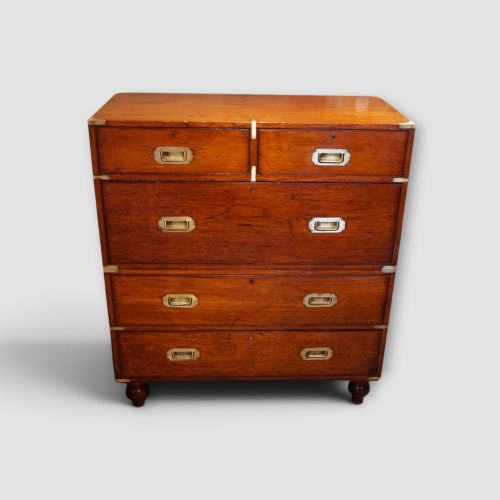
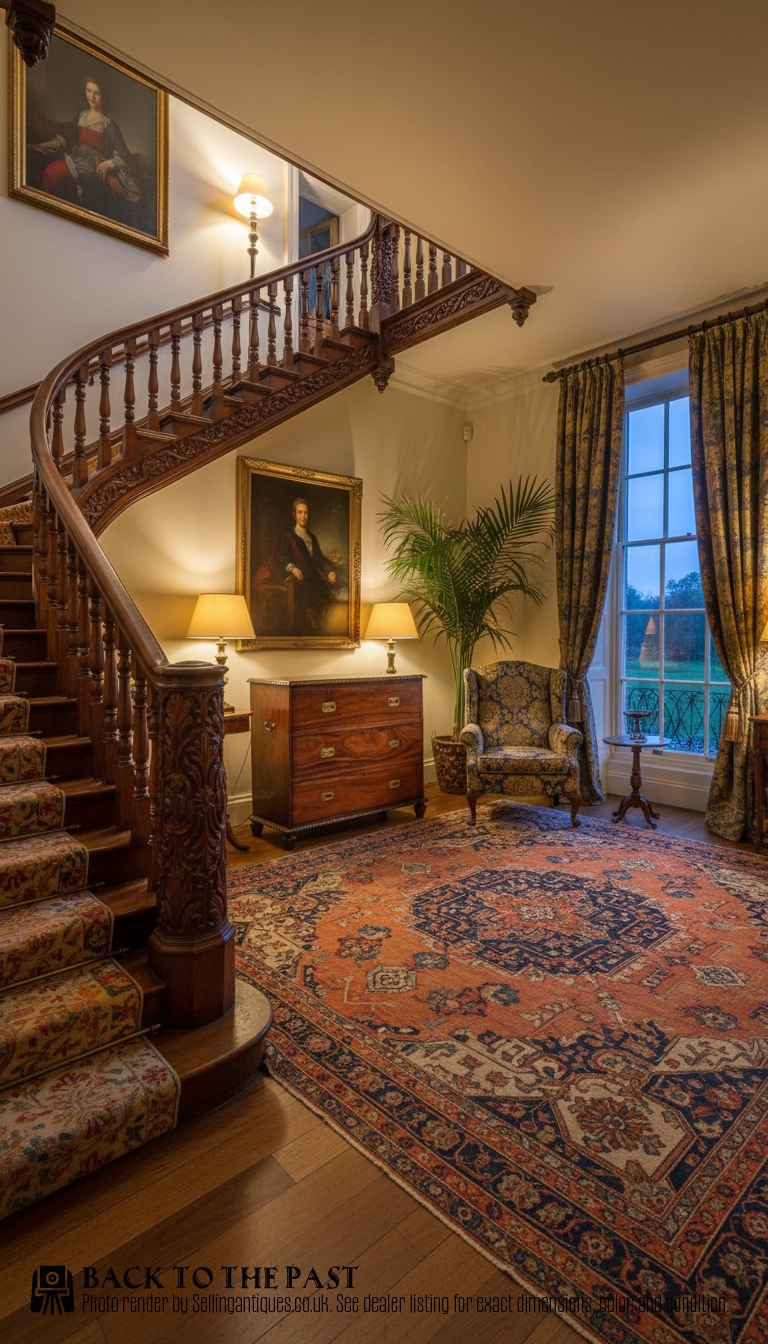
A 19th century military chest is a utilitarian chest of drawers designed for transport by officers on campaign, constructed to withstand arduous journeys. You will most frequently encounter two-part chests made from tropical hardwoods, often fitted with a secretaire drawer for writing.
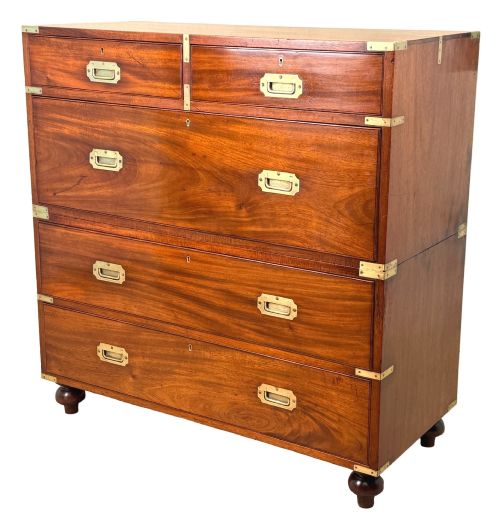
The styles span Regency and Victorian periods, alongside Anglo-Indian Colonial and British Colonial interpretations. These pieces divide neatly into two stacked sections for easy loading on pack animals or ships, held together by brass side brackets.
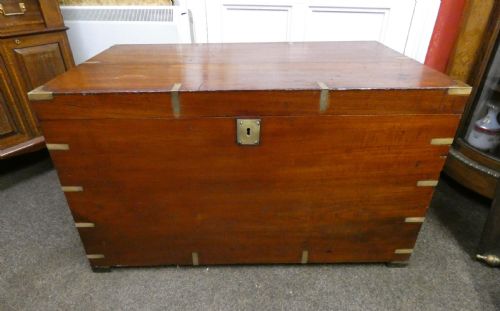
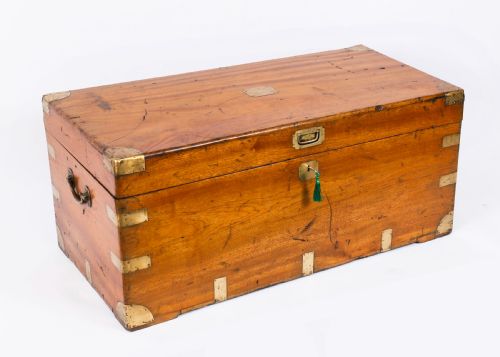
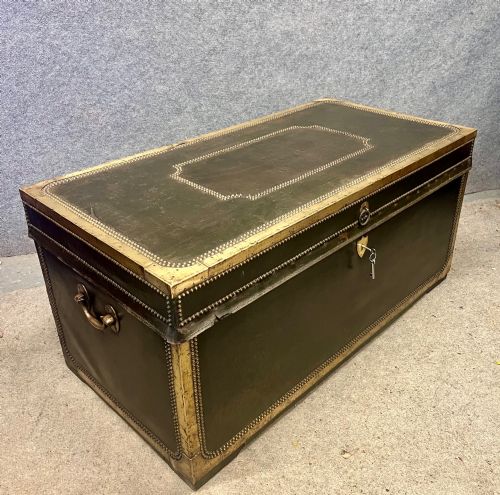
Beyond standard drawer configurations, variations include bureau chests, mule chests, and examples covered in studded leather or crocodile skin. The proportions tend to be neat and compact, designed to maximise utility in restricted spaces.
Materials and Construction
Cabinetmakers utilised durable timbers such as teak, camphor wood, mahogany, padouk, oak, pine, ebony, and burr walnut. Camphor wood and teak provided natural resistance to humidity and insects in tropical postings, while mahogany and walnut suited domestic or formal campaign use.
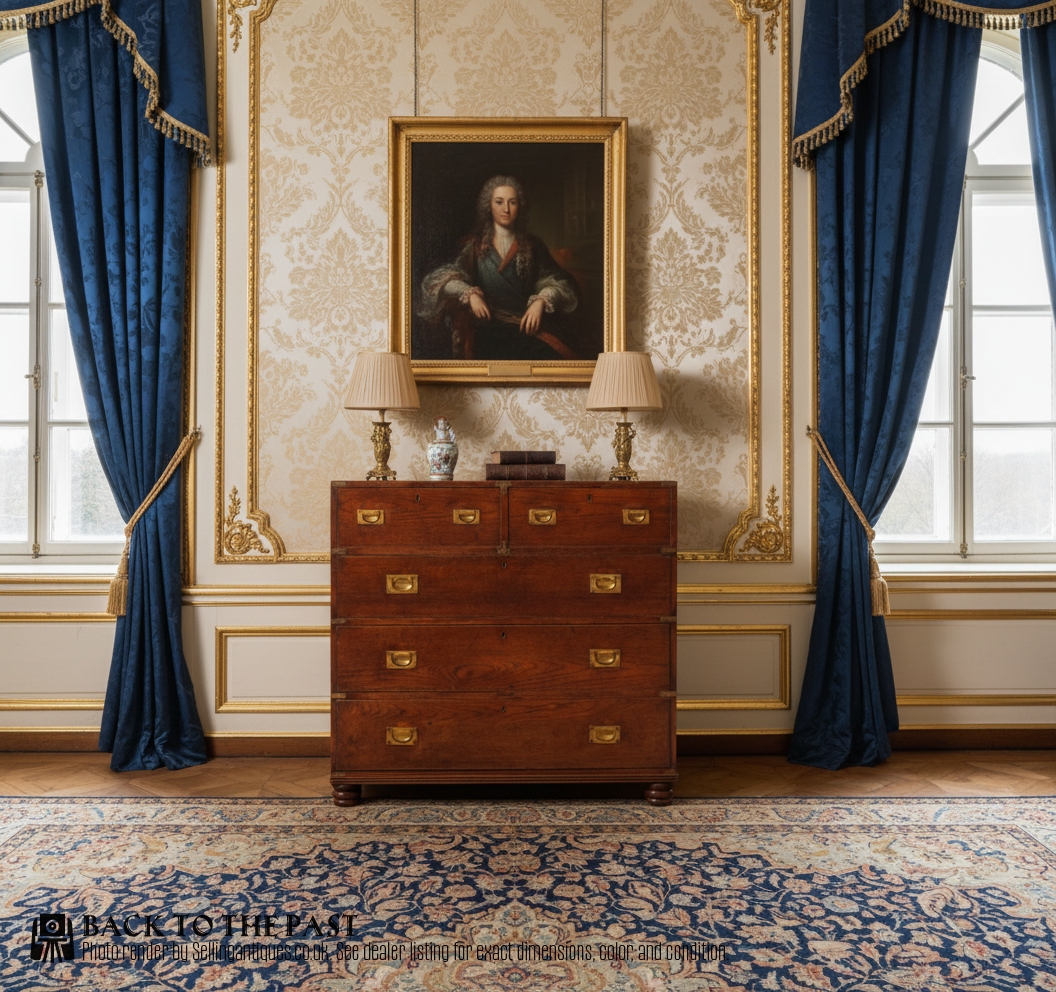
Construction relies on two separate stacking carcases joined by flush side carrying handles. Brass corners, straps, and recessed flush drawer pulls protected the edges from heavy impacts during transit.
Internal fittings incorporate clever engineering, including secretaire drawers with pigeonholes and small compartments. Specialised hardware such as bell locks added security for valuables while on the move.
19th Century Military Chest Retail Price Guide 2026
Typical asking prices for 19th century military chest among the pieces listed under this phrase on Sellingantiques today, from the lower quarter to the upper quarter. They describe what is for sale here now, not the wider market.
Listings feature woods including teak, camphor wood, mahogany, burr walnut, padouk, and oak across nineteenth-century periods.
Defining Quality
The calibre of a 19th century military chest rests on the selection of timber and the precision of the brasswork. Dense, figured hardwoods combined with heavy, hand-beaten flush brass straps separate utilitarian pieces from finer officer commissions.
Integration of the hardware reveals the standard of craftsmanship. In superior examples, brass corners, escutcheons, and flush handles are meticulously sunk into the wood rather than merely surface-mounted.
Internal organisation and secondary timbers dictate the sophistication of the piece. A fitted secretaire drawer with well-turned knobs and secret compartments elevates the execution far above a basic drawer configuration.
The 19th Century Military Chest Glossary
- Campaign chest
- A sectional chest of drawers designed to dismantle into two or more parts for military transport. These pieces utilise recessed brass handles and corner brackets to prevent snagging.
- Secretaire drawer
- A top drawer that drops down on hinges to reveal a writing surface, pigeonholes, and small stationery drawers. This feature converted a standard chest into a portable field desk.
- Two-part chest
- A cabinet built in an upper and lower section that stack together, secured by side brackets and pins. This modular design facilitated handling during long voyages.
- Flush handle
- A metal pull ring or handle set into a recess so it does not project beyond the face of the drawer. This prevented the hardware from catching or damaging neighbouring items.
- Bell lock
- A specialised locking mechanism often found on campaign furniture, named for its distinctive internal shape. It offered enhanced security for an officer's valuables.
19th Century Military Chest: Frequently Asked Questions
Why are they built in two sections?
The two-part construction allowed officers to pack and transport their heavy belongings more easily across rough terrain and cramped ships. Each half served as an independent, manageable load for handlers.
This modular design also protected the chest from twisting or warping when subjected to extreme shifts in climate during long colonial campaigns.
What is a secretaire military chest?
A secretaire military chest incorporates a specialised top drawer that folds outward to create a writing desk. It typically contains internal pigeonholes and small drawers for paperwork.
Officers relied on these built-in desks to manage correspondence and administrative duties while stationed away from permanent barracks.
Which woods were commonly used?
Cabinetmakers utilised durable timbers such as teak, mahogany, camphor wood, oak, and padouk. Camphor wood and teak were particularly favoured for their natural resilience against tropical humidity and insect damage.
More decorative surfaces feature burr walnut or ebony detailing, reflecting the personal taste and rank of the original owner.
How do I spot a reproduction?
Examine the construction methods, drawer linings, and the ageing of the brass hardware. Antique examples display hand-cut dovetails and timber shrinkage consistent with nineteenth-century usage.
Modern copies often use machine-cut joints, uniform modern screws, and lack the genuine wear patterns developed from decades of active service.