

Flush Handle Chest Drawers
These flush handle chest drawers offer practical modular storage built for travel and demanding Victorian rooms.

Flush Handle Chest Drawers
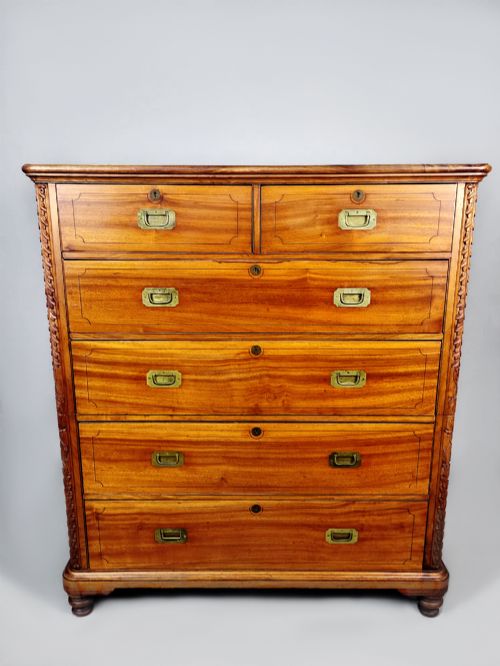
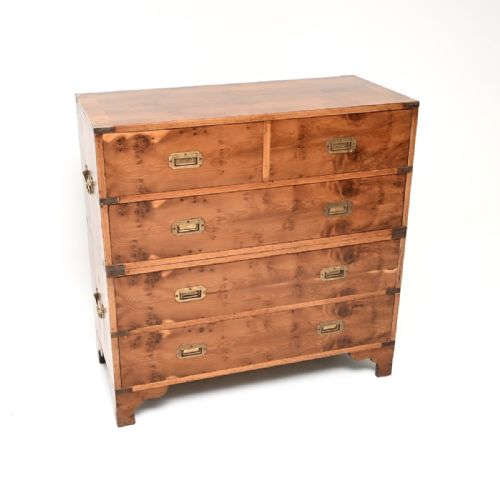
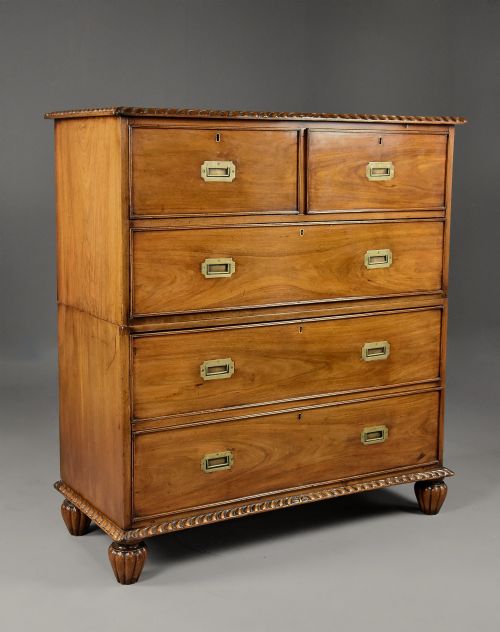
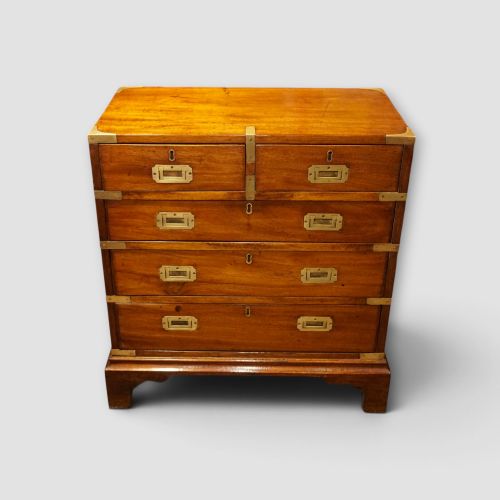
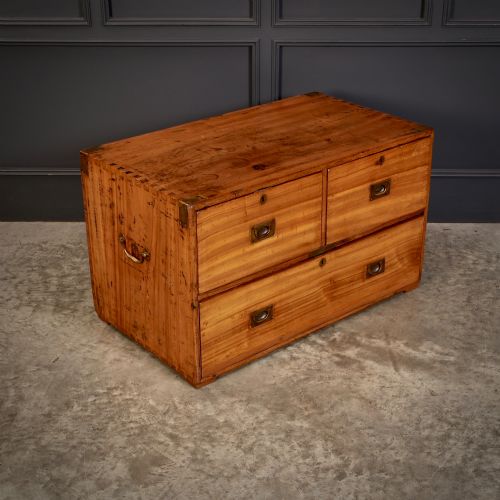
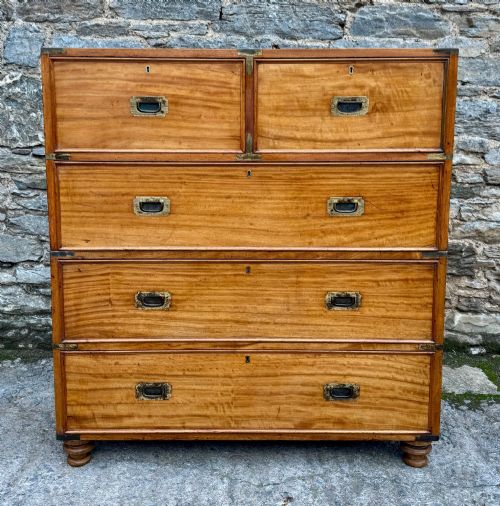
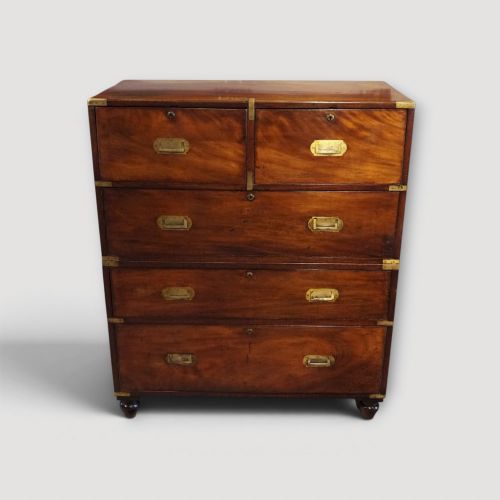
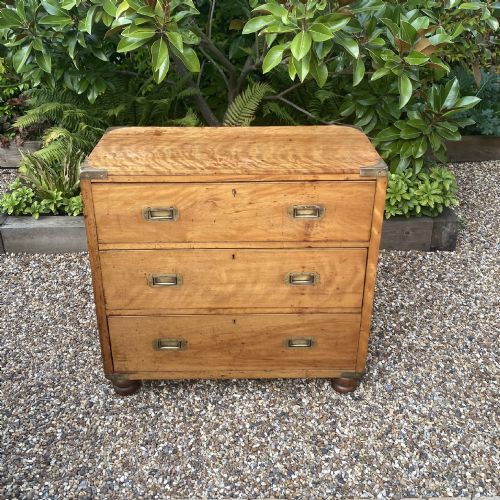
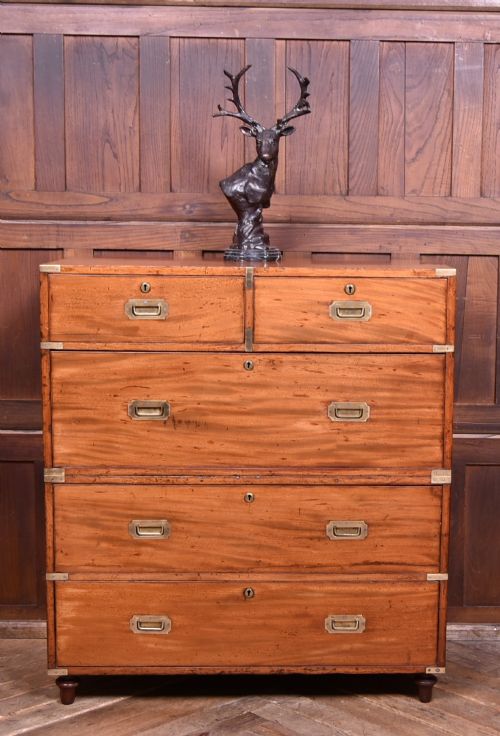
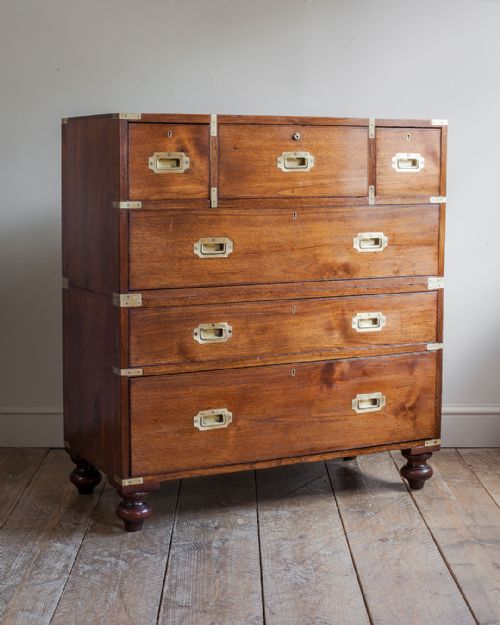
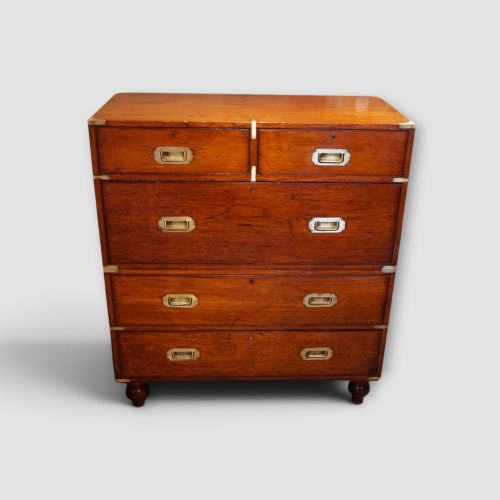
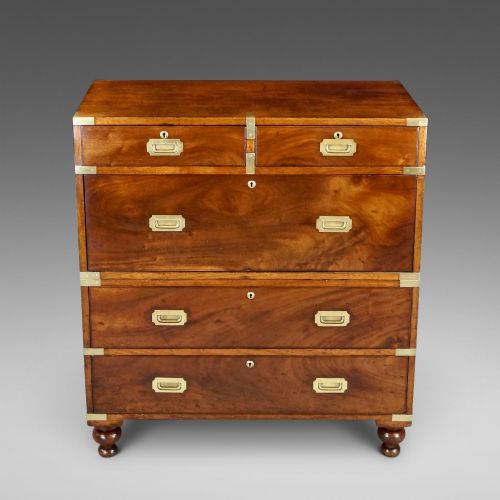
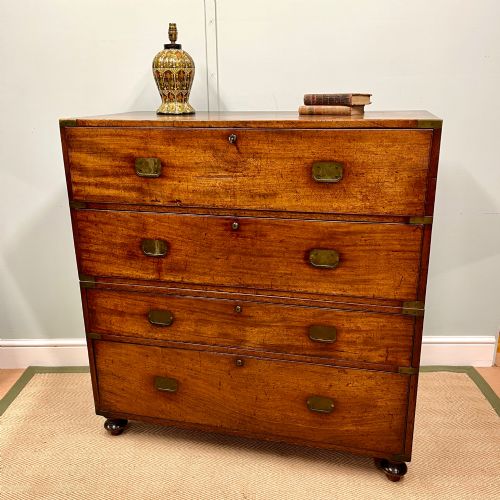
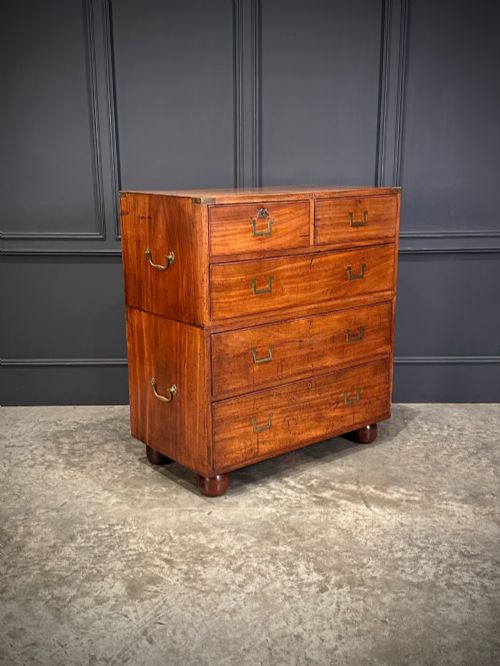
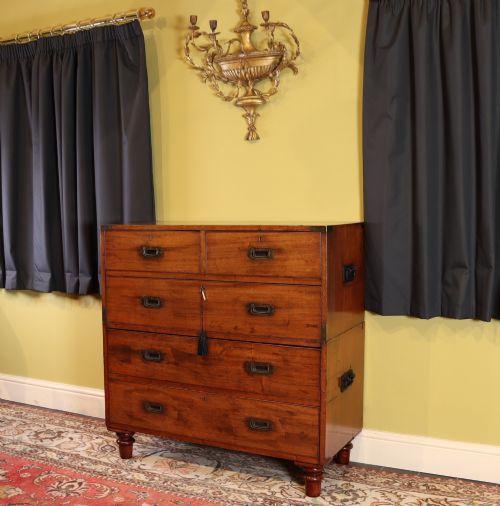
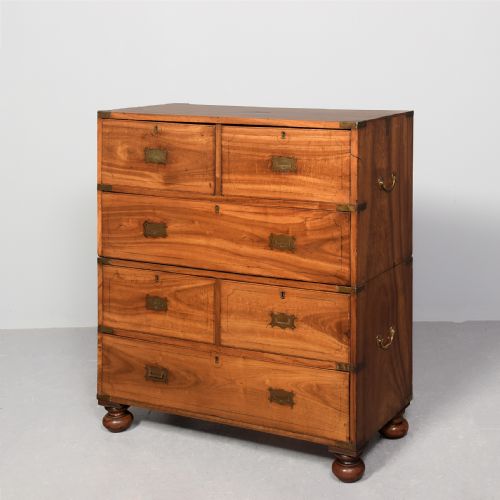
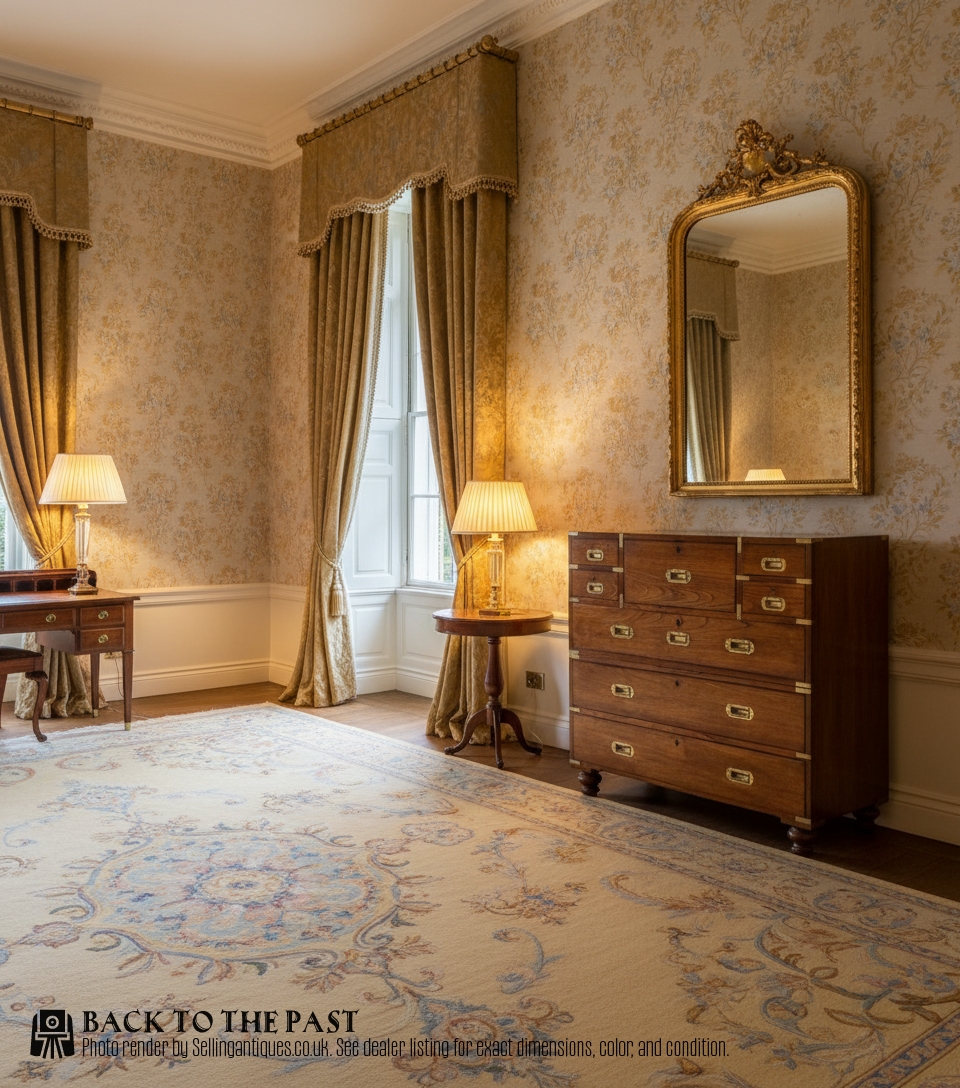
When you search for flush handle chest drawers, you encounter utilitarian campaign furniture designed for transport during the Victorian period. These pieces divide into stacked sections to travel easily, featuring recessed pulls that prevent snagging in tight spaces.
The selections here date across the nineteenth century, including specific years like eighteen fifty, eighteen sixty, and eighteen seventy. You primarily meet mahogany and teak construction, often reinforced with brass corners and straps.
Forms include standard chests of drawers and secretaire variants equipped with fitted writing desks. The defining characteristic across these examples remains the flush handle design, which sits level with the drawer front.
Materials and construction
Cabinet makers utilised dense hardwoods like mahogany and teak to withstand arduous journeys and shifting climates. These timbers provide structural rigidity and rich natural grain patterns that age well over time.
Brass fittings serve both functional and protective roles, binding corners and edging drawers to absorb impacts during transit. Recessed brass handles are mortised directly into the wood so no metal protrudes beyond the face of the furniture.
Flush Handle Chest Drawers Retail Price Guide 2026
Typical asking prices for flush handle chest drawers among the pieces listed under this phrase on Sellingantiques today, from the lower quarter to the upper quarter. They describe what is for sale here now, not the wider market.
Assessing quality
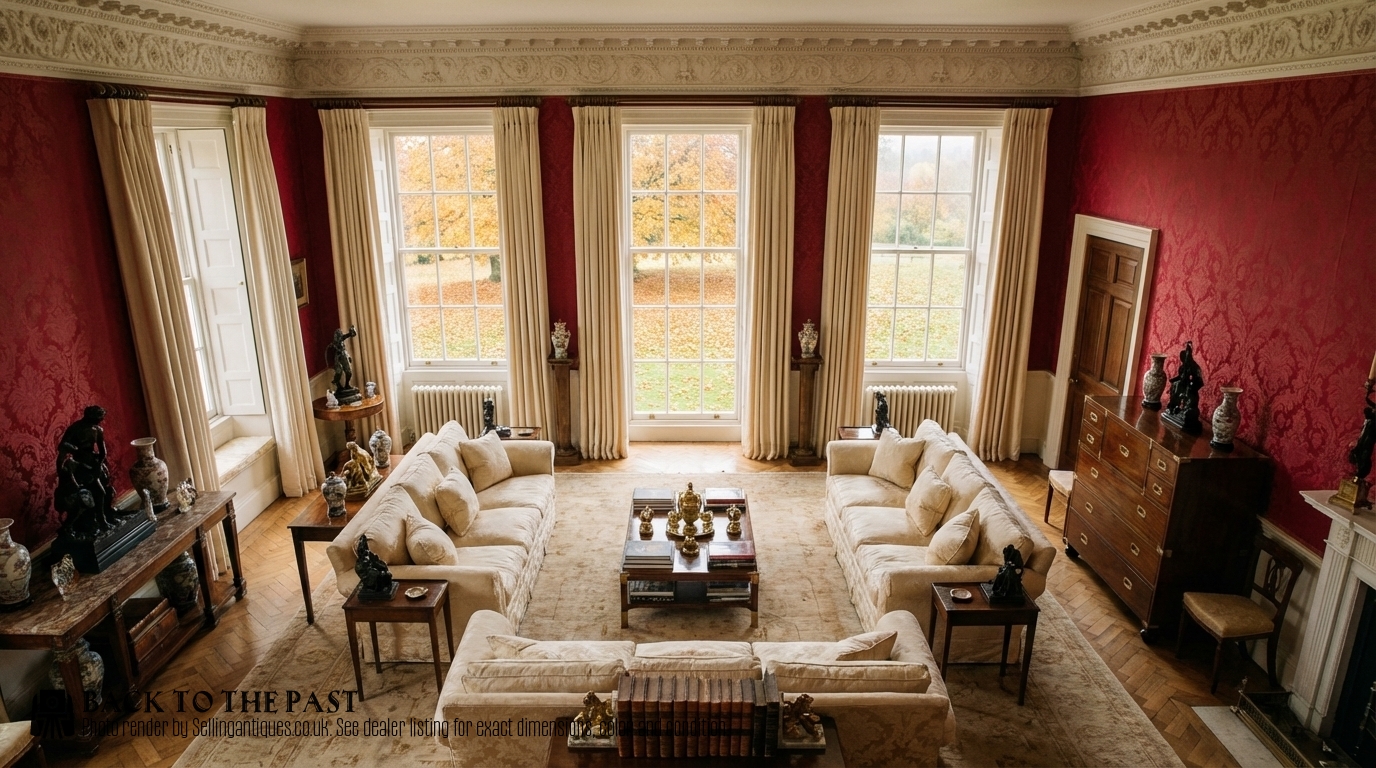
The distinction between ordinary and exceptional pieces lies in the precision of the joinery and the integration of the brass hardware. Superior examples feature seamlessly fitted flush handles and robust internal framing that keeps the modular sections true.
Material selection also dictates the grade of the piece, with well-figured timber and heavy gauge brass indicating higher workshops. The clarity of the secretaire fittings and the smoothness of the two-part separation demonstrate superior craftsmanship.
The Flush Handle Chest Drawers Glossary
- Campaign chest
- A modular chest of drawers built in two or more stacking sections for military officers on the move. These units often feature carrying handles on the sides and removable feet.
- Flush handle
- A recessed pull set level with the drawer surface to avoid catching on clothing or packing crates. This hardware is typically cast in brass.
- Secretaire chest
- A form incorporating a pull-out desk drawer fitted with small compartments and pigeonholes for correspondence. The fall-front doubles as a writing surface.
- Brass-bound
- Furniture reinforced with brass straps and corner brackets screwed into the timber to protect against heavy impact. This detail is characteristic of mid-nineteenth-century travel pieces.
Flush Handle Chest Drawers: Frequently Asked Questions
What are flush handle chest drawers?
These are nineteenth-century modular storage units created for travel, featuring recessed metal pulls that stay flat against the wood. They divide into sections for easier transport.
Cabinet makers built them from dense timbers like mahogany and teak, often adding brass corners for extra durability during military campaigns.
How do campaign chests separate?
Most examples utilise a two-part construction where the upper chest sits securely on top of the lower section via locking pins or brackets. Side carrying handles assist with lifting.
This clever design allowed officers to pack their belongings quickly and load them onto ships or wagons without damaging the furniture.
What is a secretaire chest?
A secretaire variant includes a specialised top drawer that pulls down to reveal a writing desk complete with tiny drawers and pigeonholes. It combines storage with a workspace.
This practical addition meant an officer could manage paperwork and correspondence while stationed away from home.
How do I date these pieces?
Dating relies on stylistic markers and materials spanning the Victorian era, with specific pieces linked to the eighteen fifties, sixties, and seventies. Brass hardware styles and secondary woods provide further clues.
Consulting the listed periods helps place an individual chest within the broader nineteenth-century timeline.