

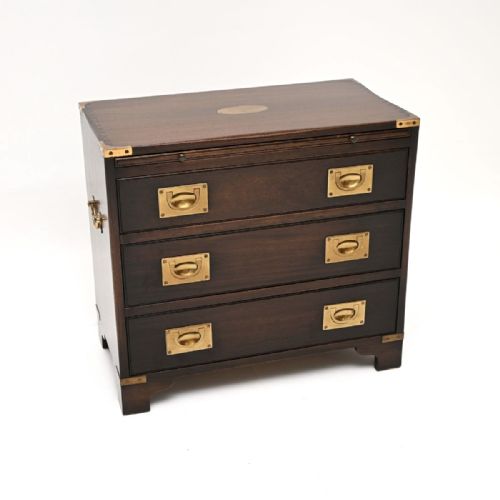
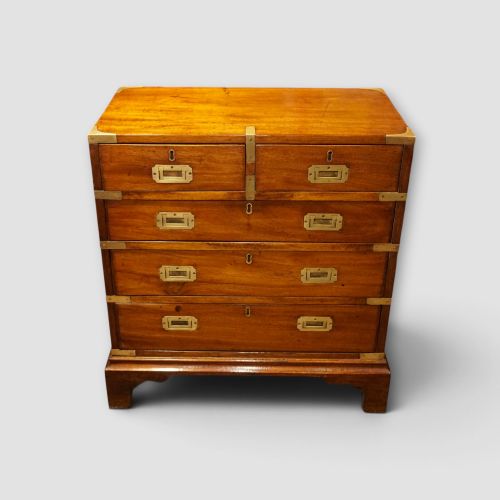
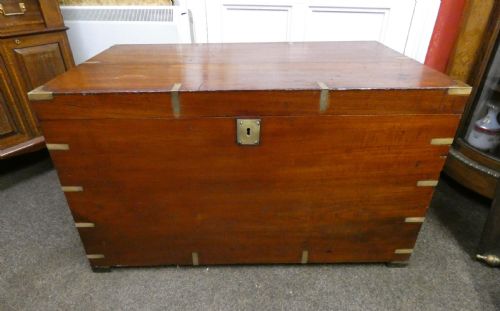
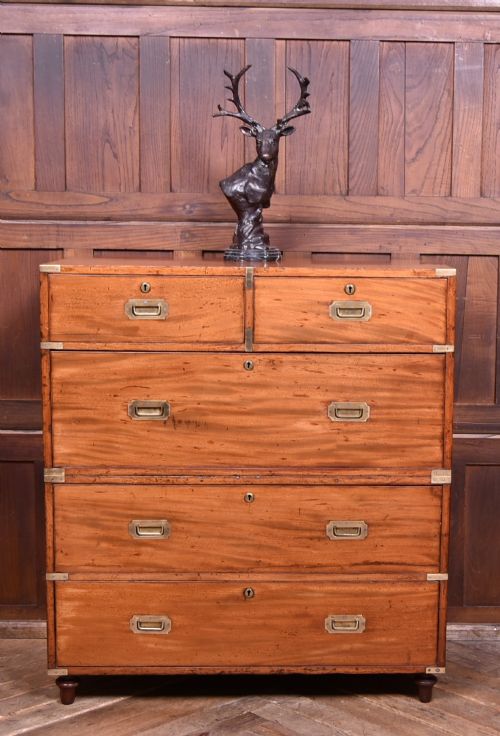


Brass Bound Mahogany Chest
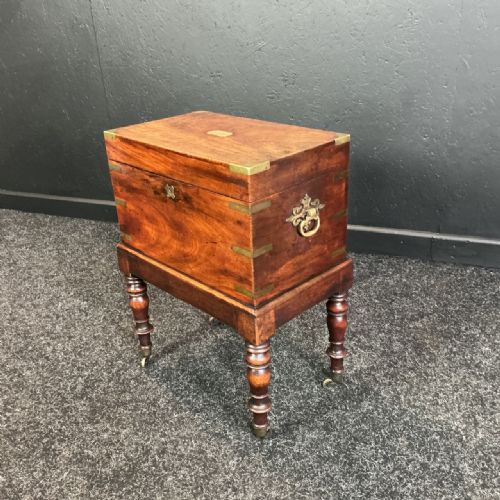
A brass bound mahogany chest brings practical travelling heritage and rich timber grain into a room.

Brass Bound Mahogany Chest
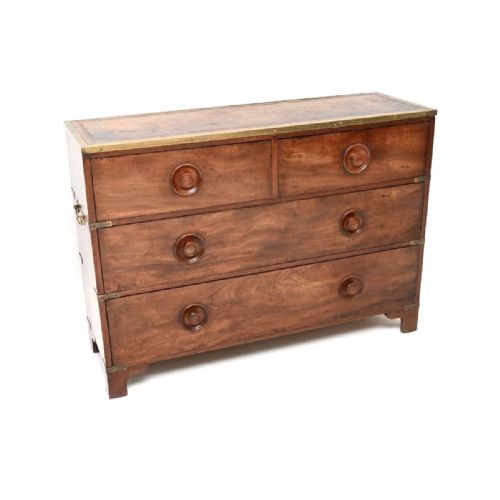
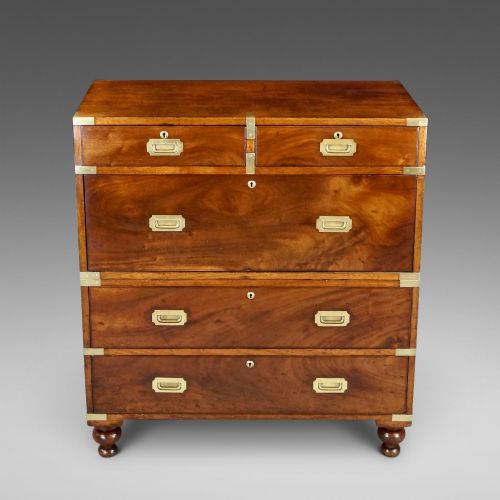
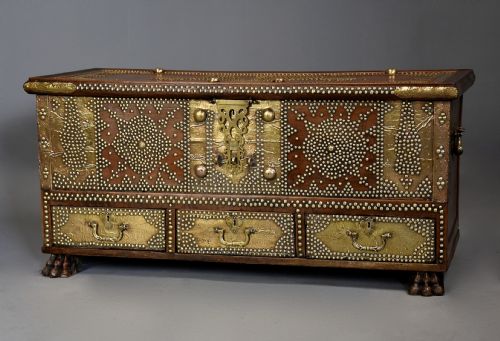
A brass bound mahogany chest is a sturdy portable container built for travel, military service, or storing wine. These pieces span the eighteenth, nineteenth, and early twentieth centuries, with Georgian and Victorian examples appearing most frequently.
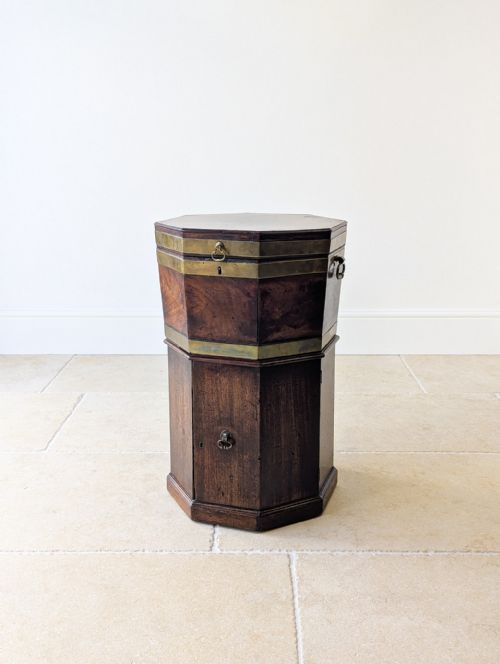
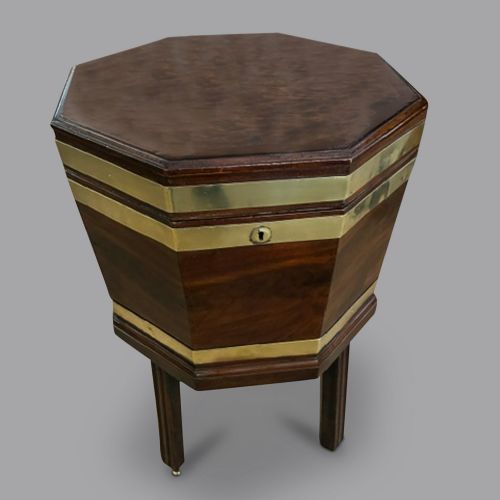
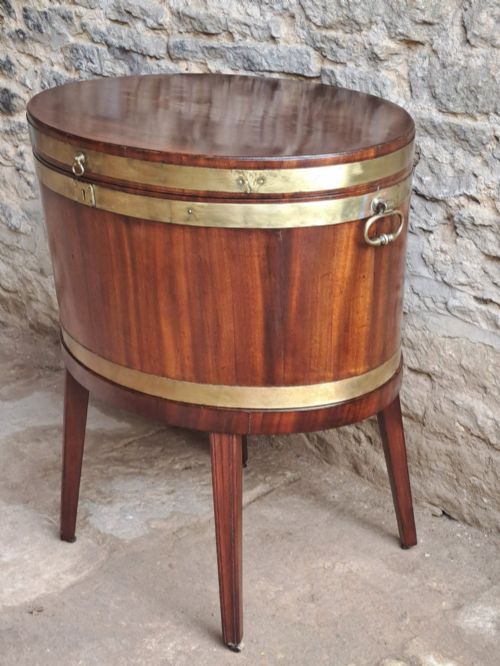
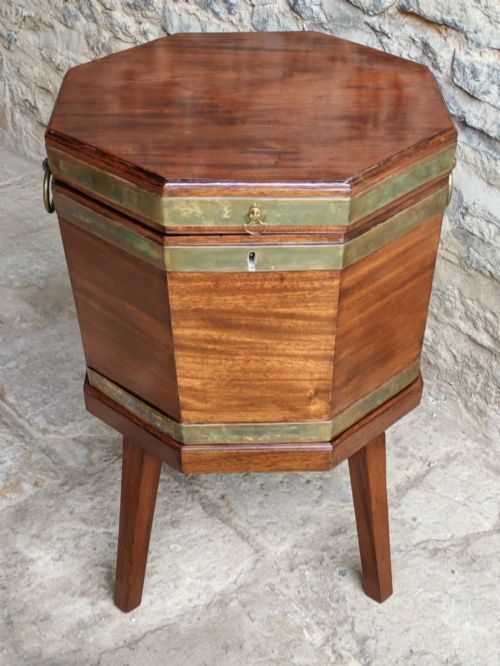
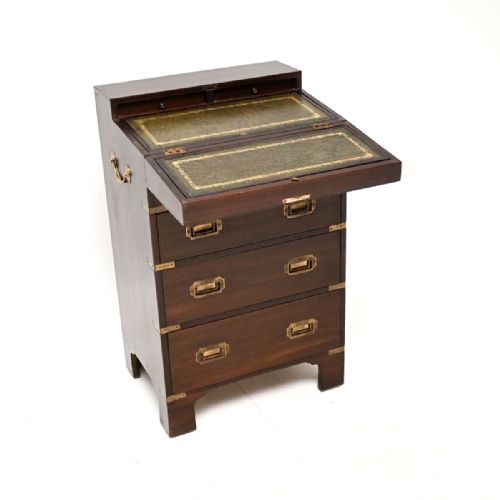
The form divides into multi-part campaign chests of drawers designed to split for transport, and smaller cellarettes or wine coolers made to sit on floors or stands. Most items combine dense mahogany timber with robust brass corners, straps, and flush-fitting handles.
Originating as practical equipment for officers on the move or wealthy households preserving wine, these items now serve as functional furniture in modern homes. The surviving pieces range from utilitarian travelling boxes to grander domestic wine cellarettes.
Materials and construction
Makers constructed these pieces using dense mahogany chosen for durability and rich grain, often pairing it with secondary woods such as oak for internal drawers. Timber selection ensured the heavy stresses of travel did not warp the frame.
Solid brass was utilised for corner brackets, edge binding, strapwork, and recessed drop handles to protect vulnerable edges from knocks. This metalwork was screwed into place by hand, anchoring the sections securely.
Campaign pieces were typically built in two or more stackable parts with removable feet and inset hardware so nothing projected beyond the flat sides. Wine coolers and cellarettes often incorporated lead lining or internal divisions to hold bottles safely.
Brass Bound Mahogany Chest Retail Price Guide 2026
Typical asking prices for brass bound mahogany chest among the pieces listed under this phrase on Sellingantiques today, from the lower quarter to the upper quarter. They describe what is for sale here now, not the wider market.
Some nineteenth-century chests conceal ingenious inkwells and secret compartments beneath sliding trays.
Assessing quality and execution
Quality rests in the precision of the brass work and how cleanly the metal mounts are sunk flush into the wood. Finer examples display meticulous hand-cut dovetail joints in the drawers and retain their original internal fittings and locks.
The choice of timber grain and the depth of the natural polish separate standard utility pieces from exceptional commissions. Superior specimens maintain balanced proportions and complete, matching brass hardware across every section.
S. W. Silver & Co. London & Liverpool·Ross & Co.
The Brass Bound Mahogany Chest Glossary
- Campaign chest
- A modular chest of drawers built in two or more sections with recessed brass handles and corner brackets designed for easy transport on military campaigns.
- Cellarette
- A lockable container or chest lined for cooling and storing wine bottles, often standing on its own legs or a dedicated base frame.
- Secretaire
- A desk drawer fitted with a drop-front writing surface, pigeonholes, and small internal compartments found in several military chests.
- Sarcophagus
- A monumental coffin-like shape with a rounded or steeply sloped lid seen on certain Regency and Georgian wine coolers.
- Flush mount
- A piece of hardware such as a handle or bracket set level into the surrounding wood so it does not project beyond the surface.
Brass Bound Mahogany Chest: Frequently Asked Questions
How do I care for the mahogany and brass?
Dust the mahogany regularly with a soft, dry cloth and nourish the wood occasionally with traditional beeswax to maintain the finish.
Polish the brass sparingly with a gentle cream only when necessary, taking care to avoid getting cleaner onto the surrounding timber.
Were these chests actually used by military officers?
Many of these chests were indeed commissioned by officers, diplomats, and colonial administrators who required durable, modular furniture that could withstand long sea voyages and rough overland journeys.
The sectional design allowed servants to pack, strap, and transport personal belongings with minimal risk of damage to the structure or contents.
Why do some campaign chests divide into two parts?
Dividing a chest into upper and lower halves made it manageable for two porters or pack animals to load onto wagons, ships, or mules during transit.
Removable carrying handles on the sides and threaded brass securing pins kept the separate sections locked firmly together once assembled at the destination.
How can I tell a Georgian chest from a Victorian one?
Georgian pieces, dating from the eighteenth century, frequently display lighter mahogany tones, finer bracket feet, and subtler brass strapwork tailored for domestic or travelling officers.
Victorian examples from the mid-nineteenth century onwards tend to be heavier, utilise two-part modular construction with turned feet, and feature more extensive brass binding across every edge.