

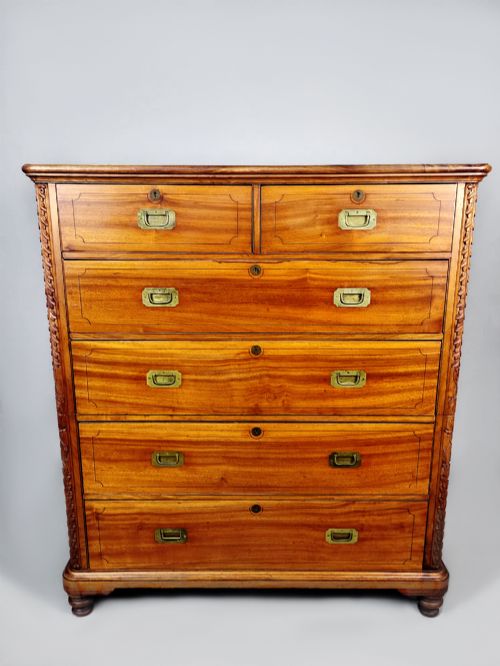
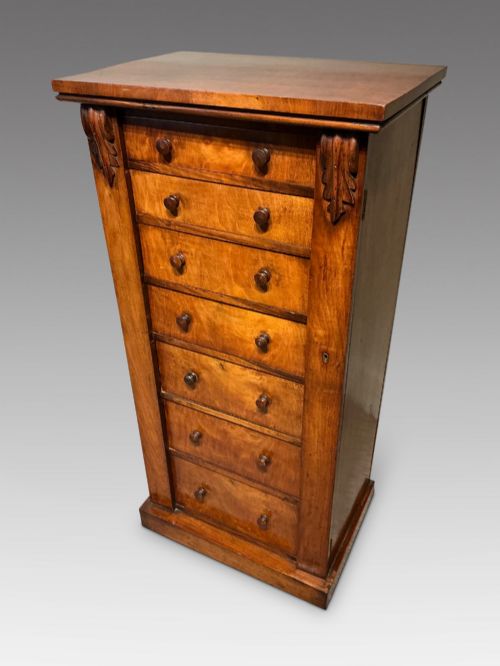
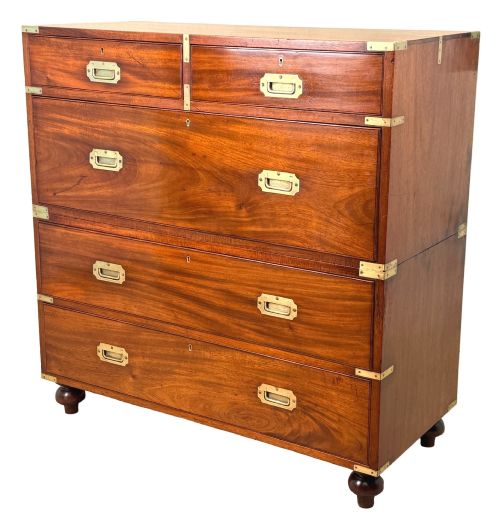
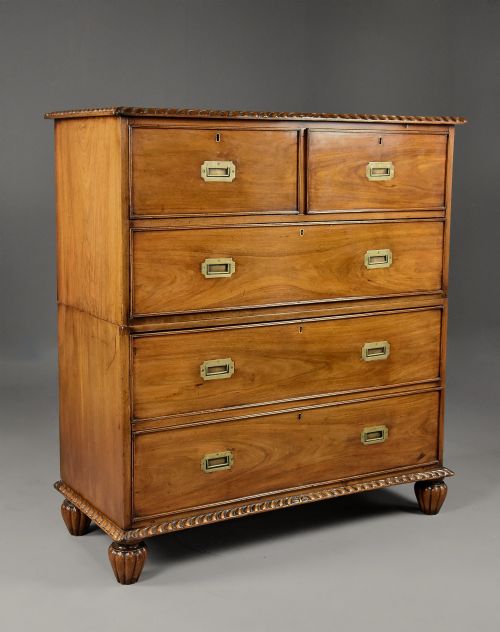

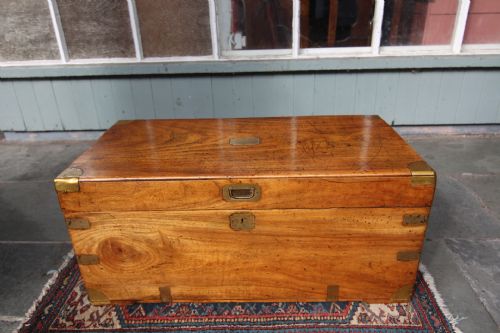

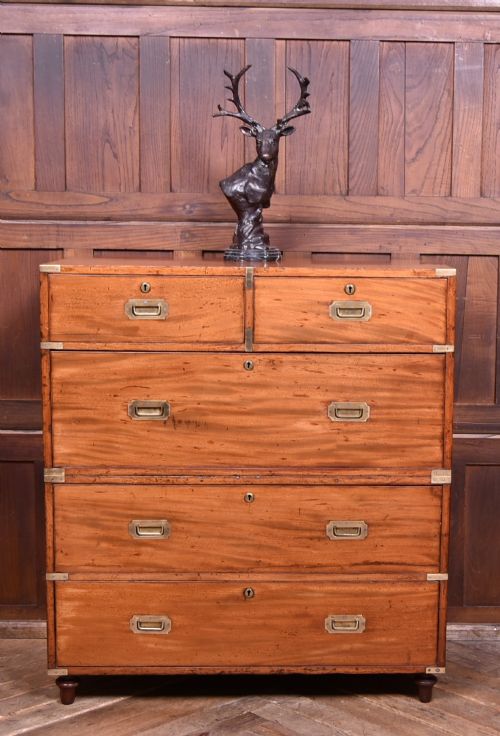
19th Century Campaign Chest
A 19th century campaign chest is a portable, brass-bound piece of military furniture designed for officers on the move, offering robust modular storage that suits modern homes.
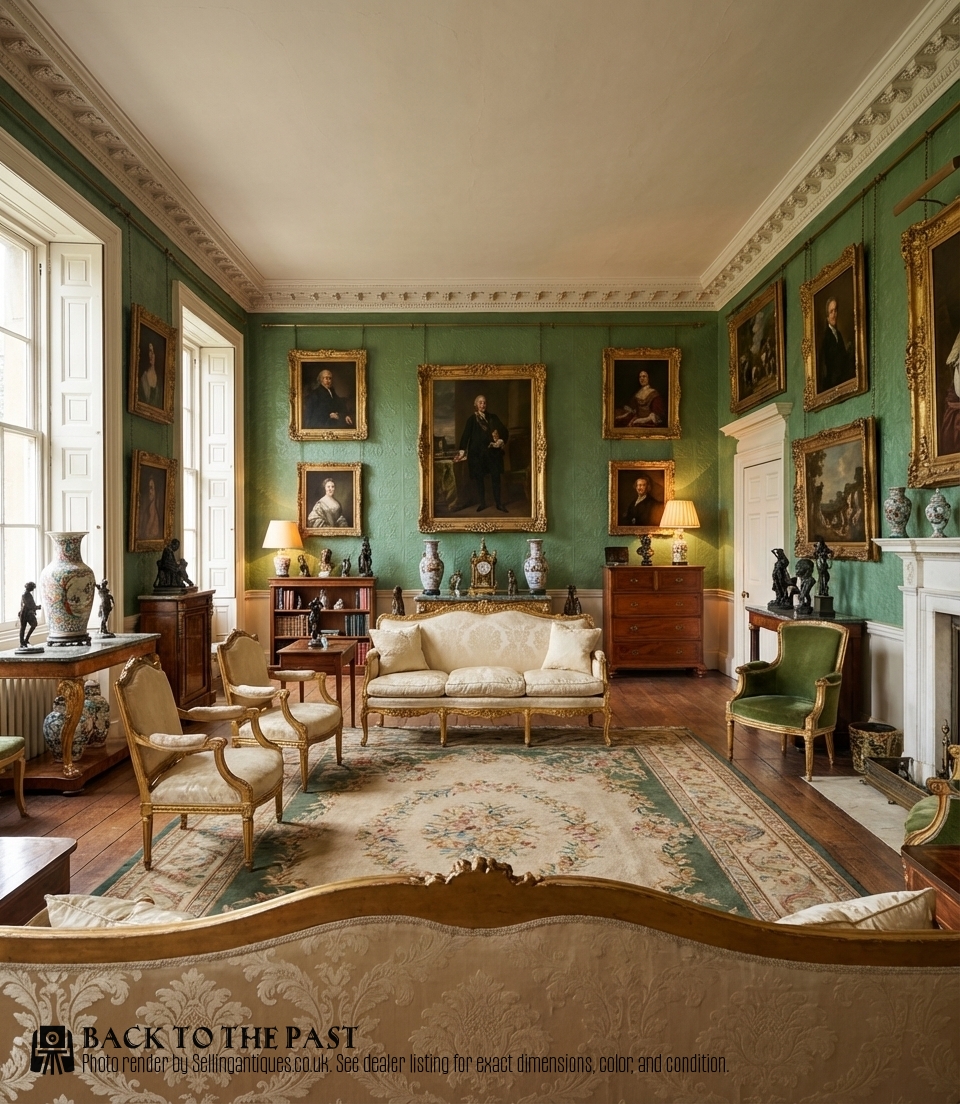
19th Century Campaign Chest
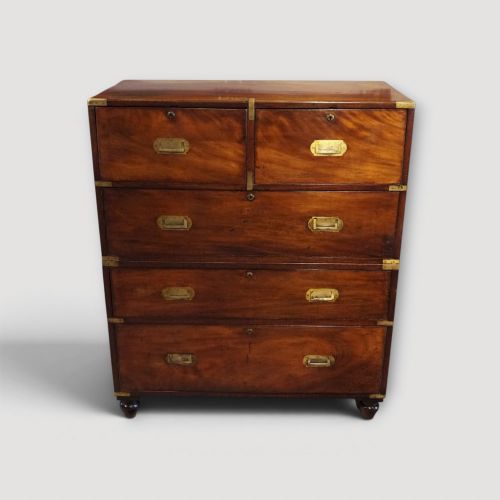
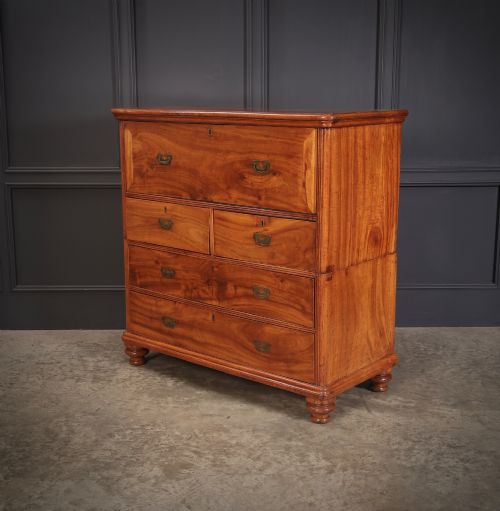
A 19th century campaign chest serves as durable luggage and modular domestic storage built for British officers travelling across the empire. These items split into two or more stacked sections for easy transport on horses, camels or ships.
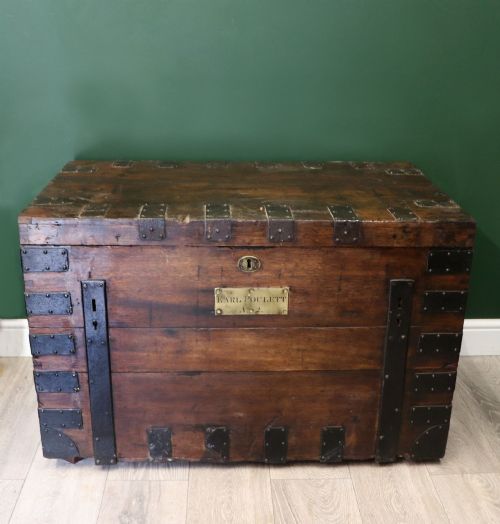
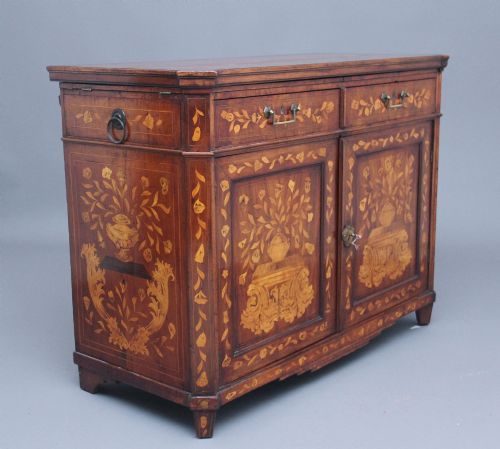
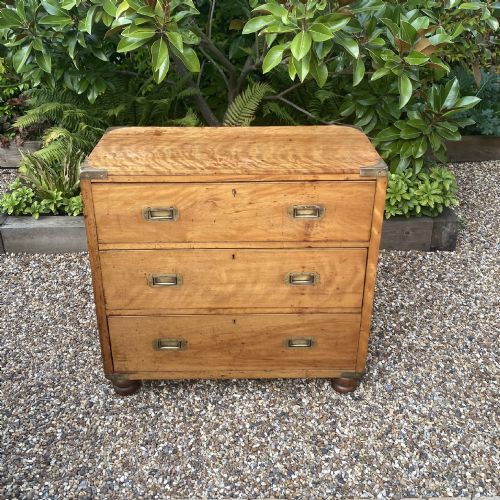
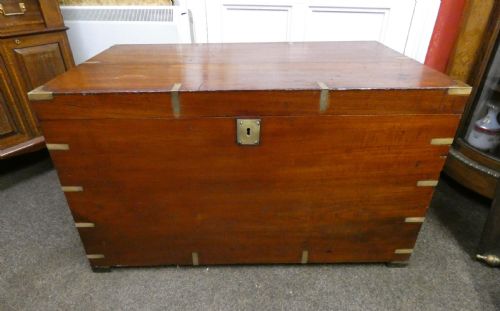
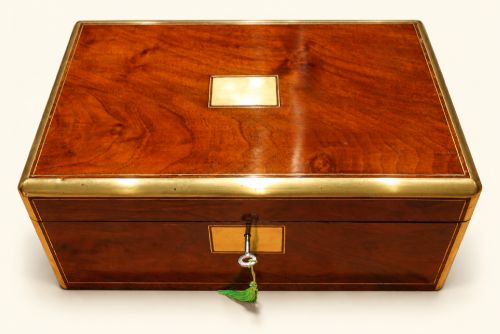
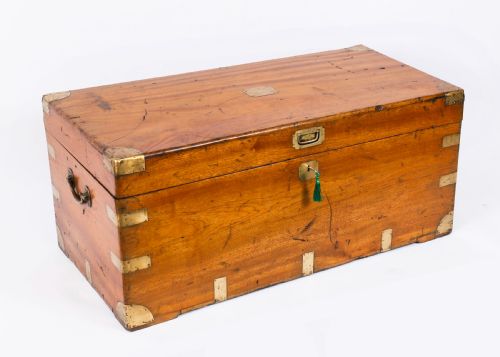
The most common form met on this page is the chest of drawers, alongside simpler trunks, deed boxes and fitted secretaire writing compartments. Woods such as mahogany, teak and camphor wood dominate the selection, often protected by heavy brass corners and straps.
Pieces span the Georgian, Regency and Victorian eras, reflecting shifting military needs from the early 1800s onward. Buyers seek them for their compact proportions, inset flush handles and honest utilitarian construction.
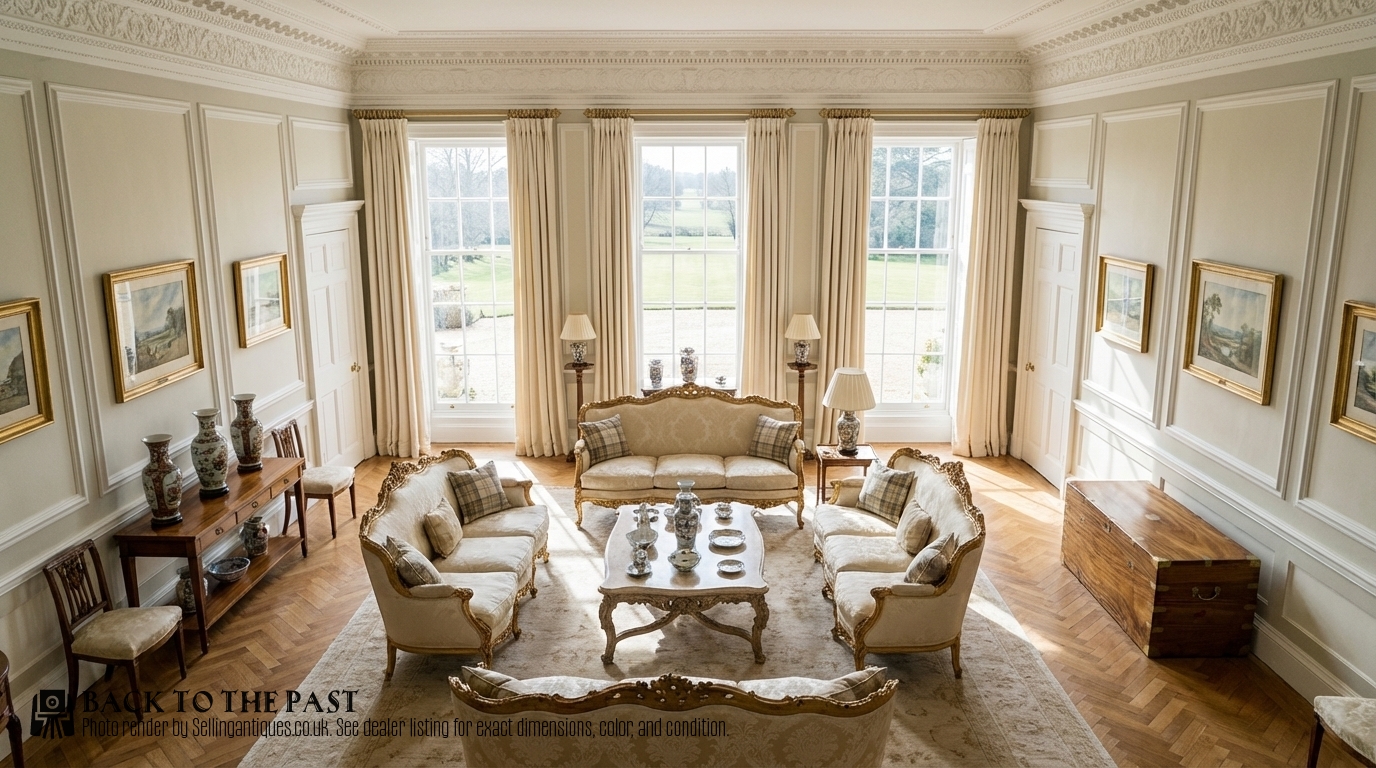
Construction and materials
Cabinetmakers built these chests from dense tropical hardwoods like teak, mahogany, padouk and camphor wood to withstand severe tropical climates and rough transit. Camphor wood served particularly well for trunks because its natural aroma repelled insects from uniforms.
Heavy brass binding, reinforced corners and strapping protected vulnerable edges from impact during active service. Recessed flush brass handles prevented snagging in tight spaces and allowed drawers to sit flat against the exterior.
Chests typically divided into separate upper and lower carcases secured by internal brass hooks or side brackets. This modular design reduced the weight of individual loads and simplified handling for travelling staff.
19th Century Campaign Chest Retail Price Guide 2026
Typical asking prices for 19th century campaign chest among the pieces listed under this phrase on Sellingantiques today, from the lower quarter to the upper quarter. They describe what is for sale here now, not the wider market.
Listings feature woods including mahogany, teak, camphor wood, walnut, padouk, pine and iron.
Quality differences
Quality rests primarily on the integrity of the timber, the thickness of the brass mounts and the precision of the joinery. Superior examples utilise solid hardwoods throughout rather than veneered carcases, ensuring longevity under repeated dismantling.
Refined pieces display hand-cut dovetail joints, well-fitted secretaire drawers with secret compartments, and original locking mechanisms with working brass keys. Secondary woods inside the drawers also indicate the standard of workshop execution.
The degree of original military provenance elevates certain pieces, particularly those bearing named maker stamps or inscriptions relating to specific regiments and officers. Well-preserved brass hardware with minimal replacement parts maintains the historical value.
Samuel Pratt·S. W. Silver & Co.
The 19th Century Campaign Chest Glossary
- Campaign chest
- A modular chest of drawers or trunk designed to be dismantled into sections for military transport.
- Secretaire chest
- A form featuring a fitted pull-out writing drawer containing small pigeonholes and small drawers behind a drop front.
- Flush handle
- A brass handle let into the drawer front so it does not project beyond the surface.
- Corner bracket
- An L-shaped brass plate screwed over the exterior corners of a chest to absorb impacts during transit.
- Camphor wood
- An aromatic Southeast Asian timber frequently utilised for military trunks to protect stored textiles.
19th Century Campaign Chest: Frequently Asked Questions
How do you clean a camphor wood chest?
Wipe surfaces gently with a soft, slightly damp cloth to remove dust without disturbing the timber finish. Avoid harsh chemical polishes that strip natural oils from the wood.
Keep the interior clean by using dry microfiber cloths, preserving the characteristic natural scent that deters moths.
Can these chests be taken apart easily?
Most traditional examples separate into an upper and lower section once internal securing hooks or side brackets are released. This modular construction reflects their original purpose for military transport.
Lifting each half requires two people due to the dense tropical hardwoods and heavy brass mounts used in their manufacture.
Why do some drawers have drop fronts?
Drawers with a fitted writing interior feature a drop-front mechanism that converts the upper drawer into a compact desk. Officers used these spaces for writing dispatches and storing documents while on active service.
Secret compartments and small pigeonholes inside these sections kept sensitive paperwork organised during travel.
Are all campaign chests made of teak?
While teak appears frequently due to its resistance to moisture and warping, cabinetmakers also utilised mahogany, camphor wood, padouk and walnut. Regional availability and the specific requirements of maritime or land campaigns influenced wood selection.
Pine and oak occasionally appear in domestic or later utility versions intended for British barracks.