


Officers Military Chest
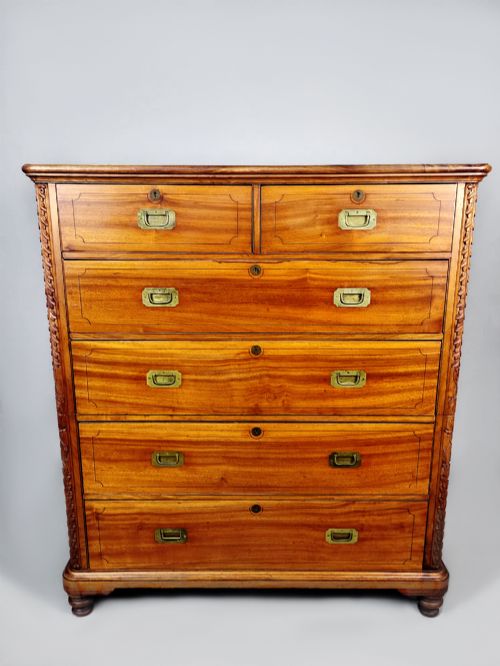
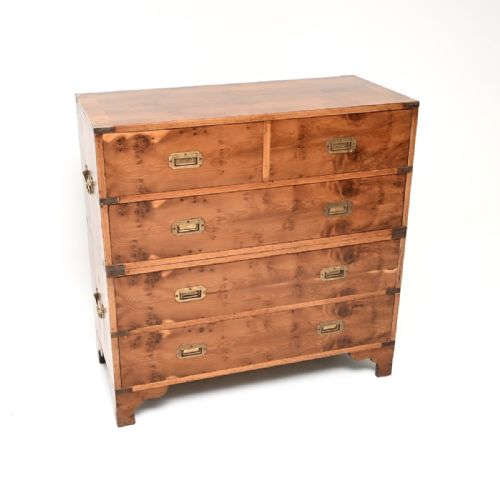
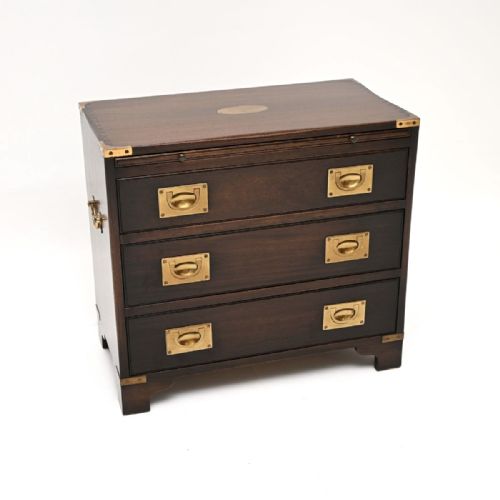
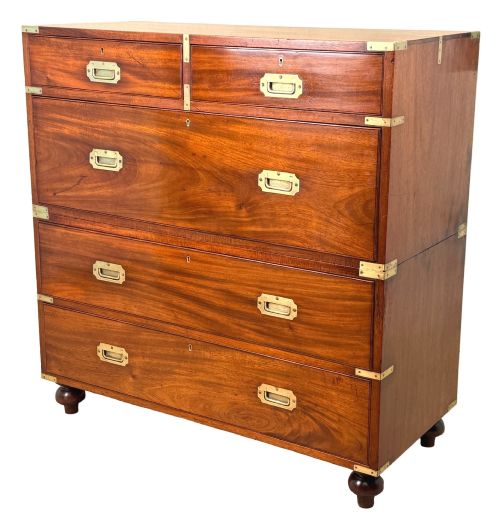
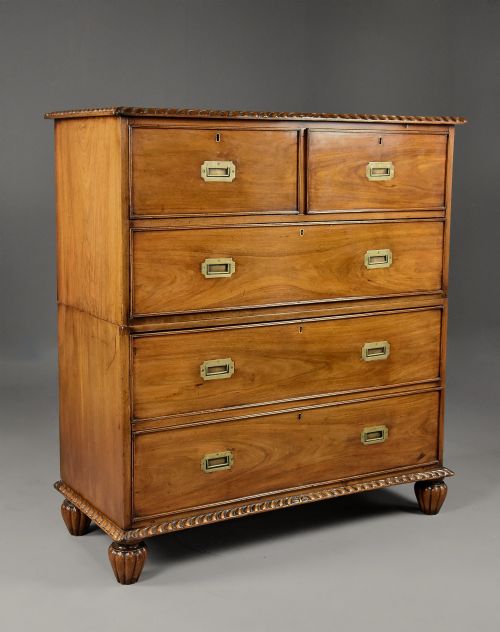
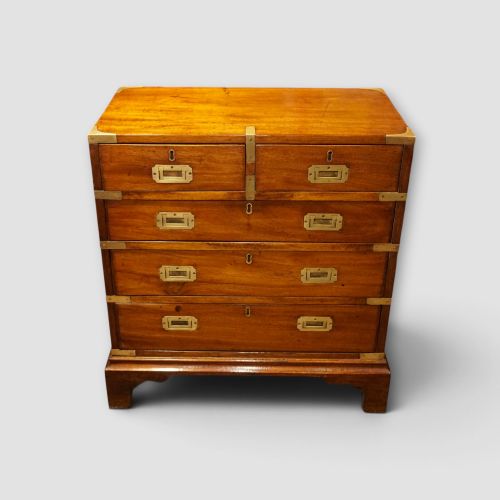
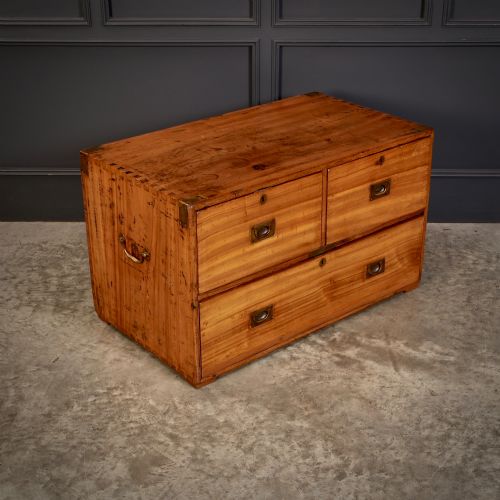
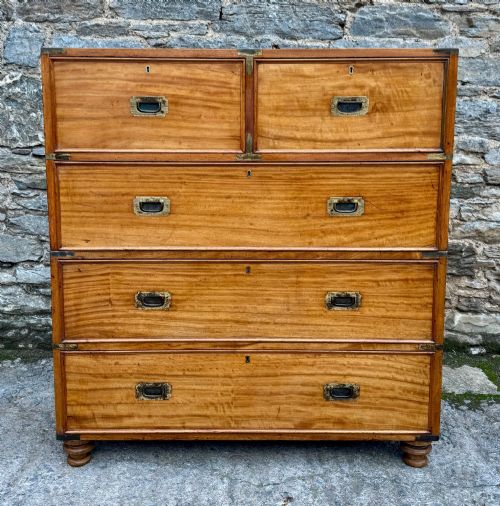
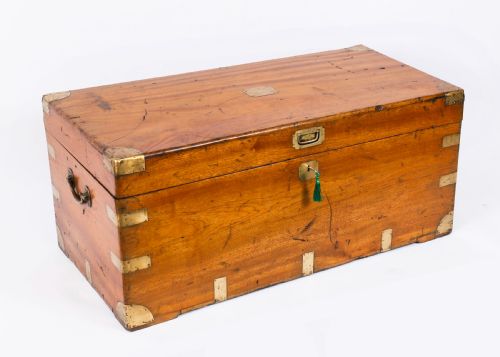
An officers military chest is a portable, brass-bound piece built for active service, prized today for its ingenious modular design and rich timbers.
Officers Military Chest
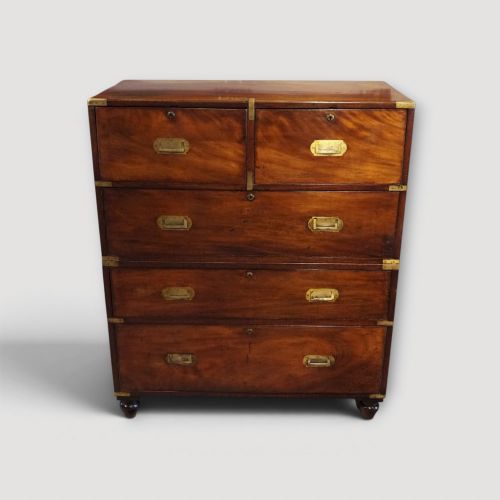
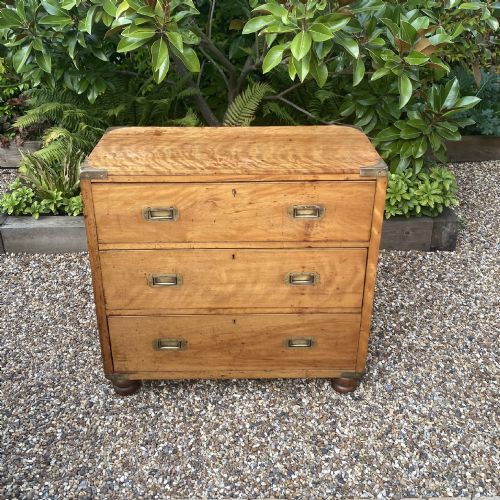
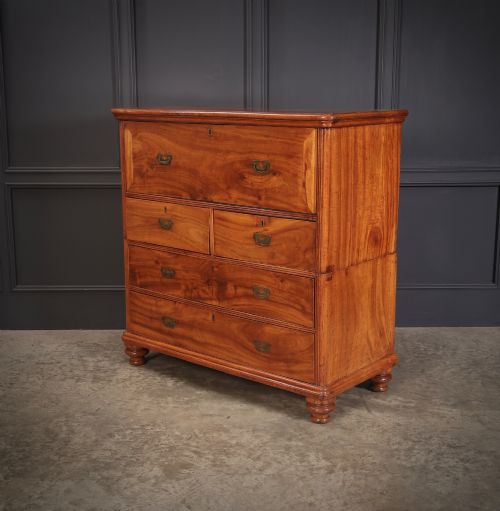
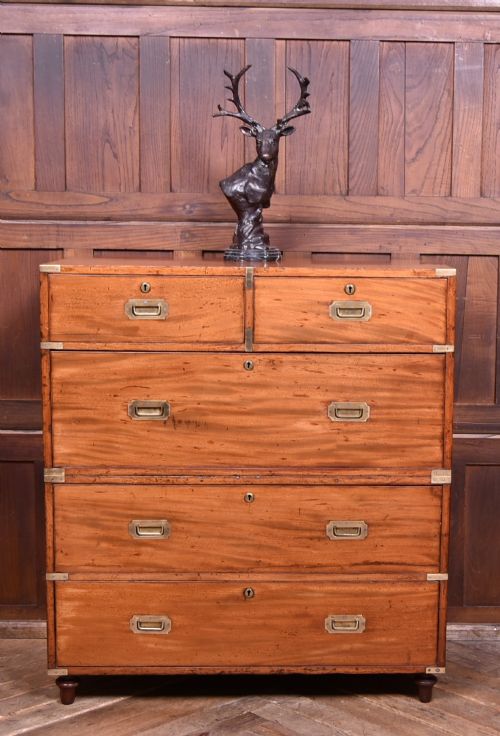
When you search for an officers military chest, you encounter sturdy modular furniture designed to dismantle into two or more sections for transport on campaign. These pieces date principally from the Regency and Victorian eras, spanning the eighteenth, nineteenth, and early twentieth centuries.
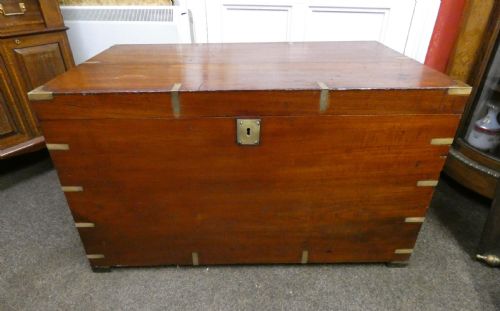
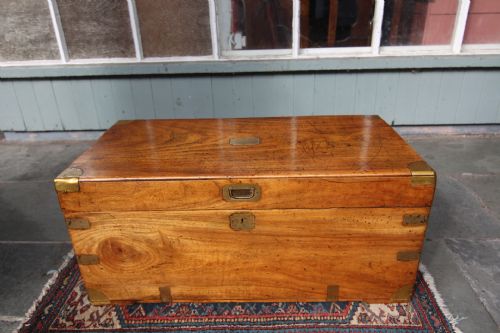
The chests of drawers and secretaire desks on this page commonly appear in dense hardwoods like mahogany, teak, and camphor wood, often fitted with flush brass handles and corner brackets to withstand rough handling.
Makers constructed them so that officers could pack their worldly goods securely and travel across the British Empire without sacrificing the utility of a proper desk or drawer unit.
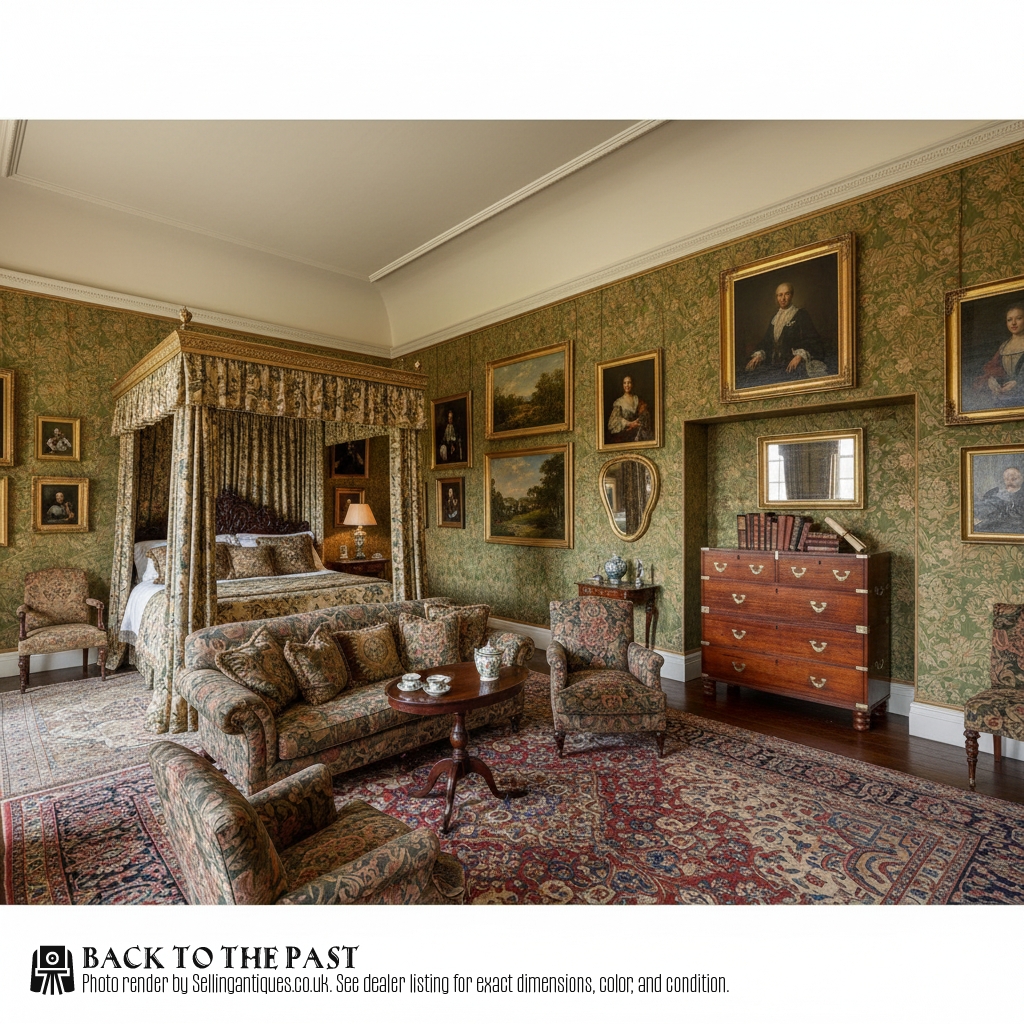
Quality and Proportion
The distinction between standard campaign furniture and superior examples lies in the precision of the joinery and the quality of the timber figure, such as burr walnut or heavily grained mahogany. Finer chests display crisp hand-cut dovetails, tightly fitted brass hardware that sits completely flush with the wood, and original locks bearing maker stamps.
Proportion and interior arrangement further separate the work: standard utility chests provide simple drawer storage, whereas secretaire models combine complex writing compartments with secret drawers, demanding greater skill from the workshop.
Officers Military Chest Retail Price Guide 2026
Typical asking prices for officers military chest among the pieces listed under this phrase on Sellingantiques today, from the lower quarter to the upper quarter. They describe what is for sale here now, not the wider market.
Camphor wood chests still whisper their tropical journeys through a lingering scent that has outlasted the campaigns themselves.
S. W. Silver & Co. London & Liverpool·Ross & Co.·Army & Navy
The Officers Military Chest Glossary
- Campaign Chest
- A modular chest of drawers built in two or more stackable sections with recessed brass handles and corner plates for military transport.
- Secretaire Chest
- A chest featuring a drop-front top drawer that opens to reveal a writing surface, small pigeonholes, and subsidiary stationery drawers.
- Camphor Wood
- An aromatic timber frequently utilised for campaign trunks and chests because its natural scent deters insects and protects stored garments.
- Flush Mount
- Hardware such as a handle or bracket set level into the wood surface so that nothing projects beyond the plane of the cabinet.
- Brass Bound
- Edges and corners reinforced with brass straps and brackets screwed directly into the hardwood carcase to absorb impacts during transit.
Officers Military Chest: Frequently Asked Questions
What is an officers military chest?
An officers military chest is a sectional piece of furniture designed for British military personnel on campaign, built to separate into stackable parts for easy transport.
These chests typically feature brass corners, flush handles, and durable timbers like mahogany, teak, or camphor wood to endure long journeys.
How do you date a military chest?
Dating relies on timber choices, brass hardware styles, and construction methods. Regency and early nineteenth-century pieces often use solid camphor wood or rich mahogany with simple recessed pulls.
Later Victorian examples frequently utilise teak or burr walnut with more complex locking mechanisms and maker stamps from firms such as Ross or the Army & Navy Cooperative Society.
Why are some chests made of camphor wood?
Camphor wood was chosen for campaign trunks and chests because its strong natural aroma repels moths and other insects, protecting uniforms and documents in tropical climates.
These pieces often retain their distinct scent decades later and display a warm, reddish-brown grain.
How were these chests used on campaign?
Officers used them to transport uniforms, maps, and personal valuables while on active service or during postings across the British Empire. The modular two-part design allowed servants to pack and load the units onto mules or wagons quickly.
Secretaire versions also provided a portable field desk for writing reports and correspondence under canvas.