




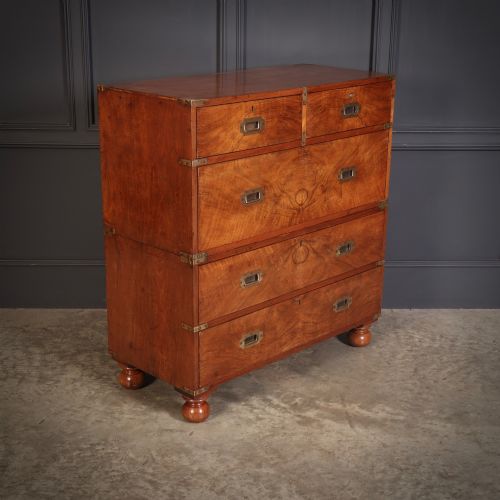
Colonial Military Chest
Colonial military chest designs provide sturdy storage that dismantles cleanly for travel.
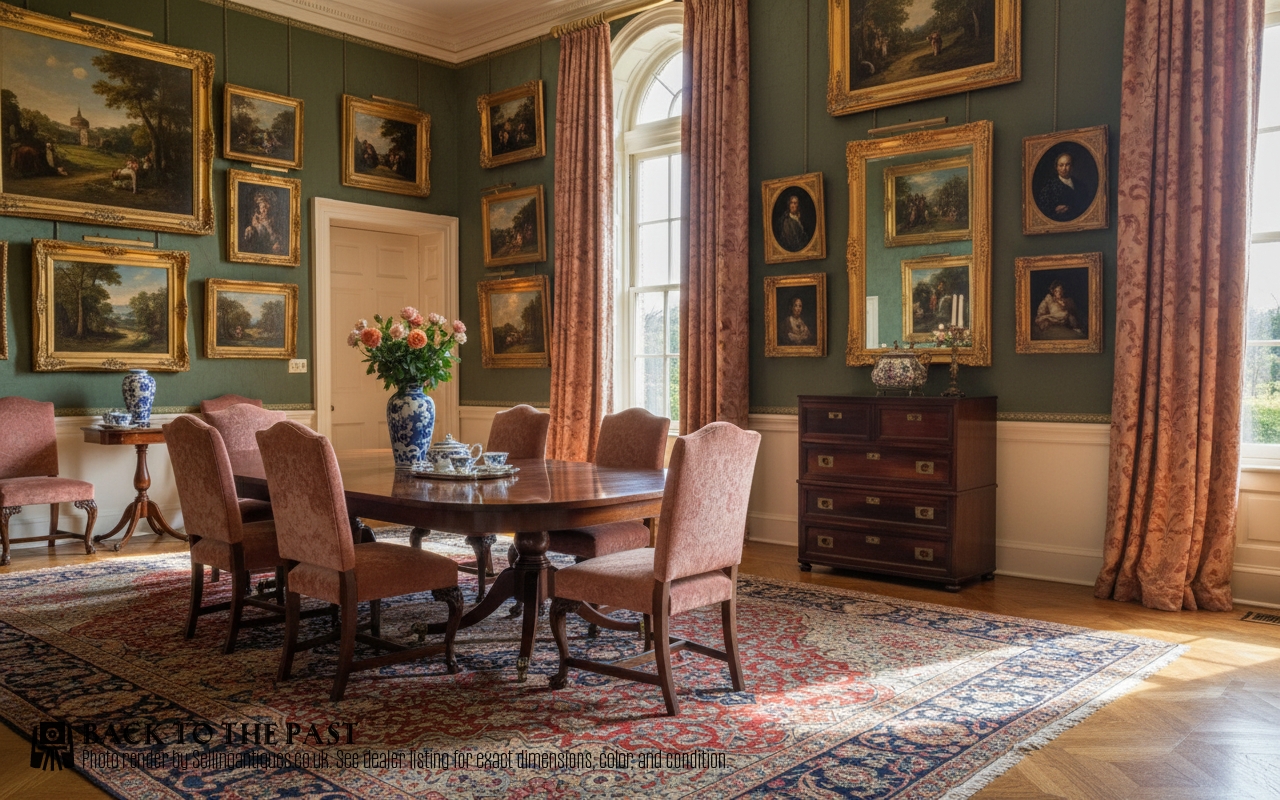
Colonial Military Chest
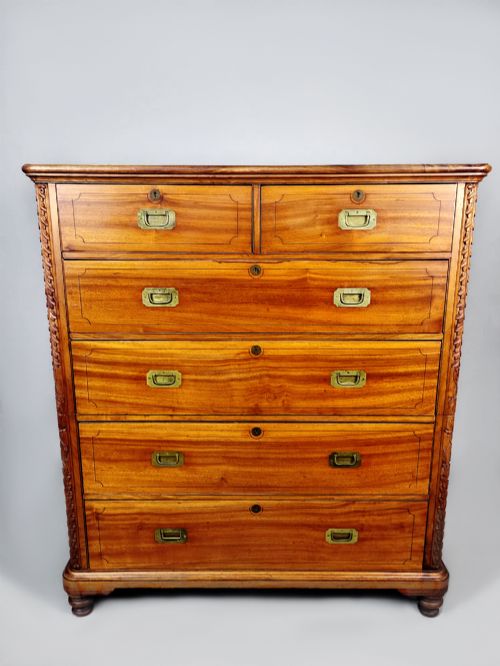
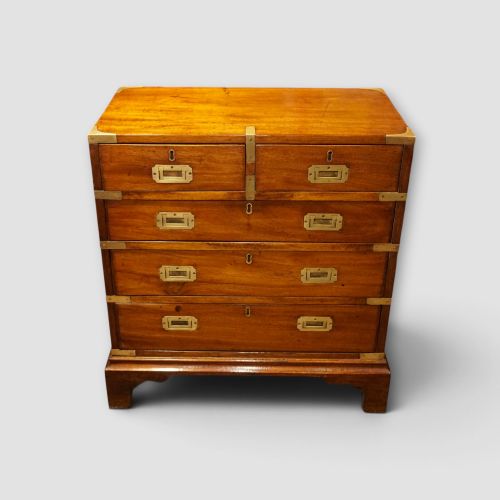
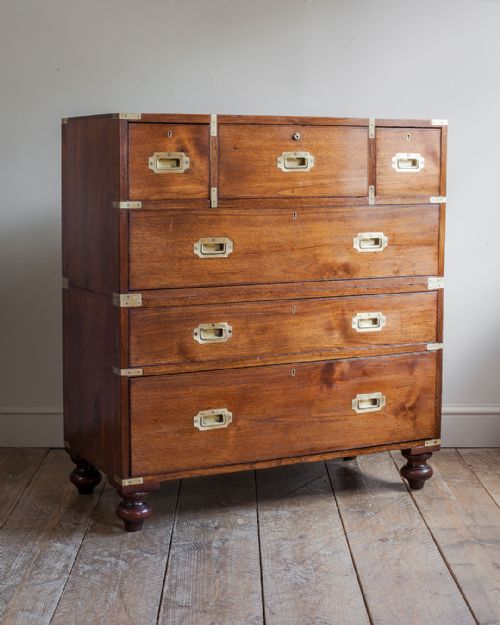
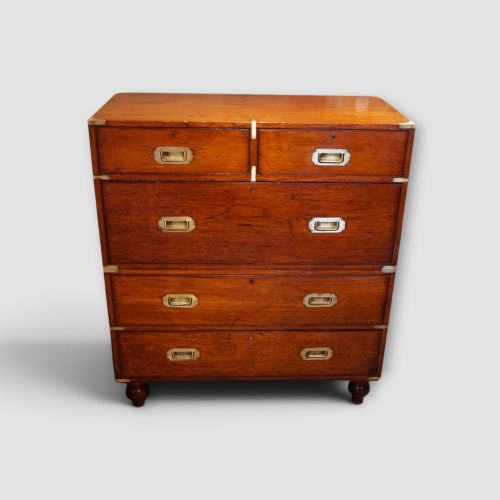
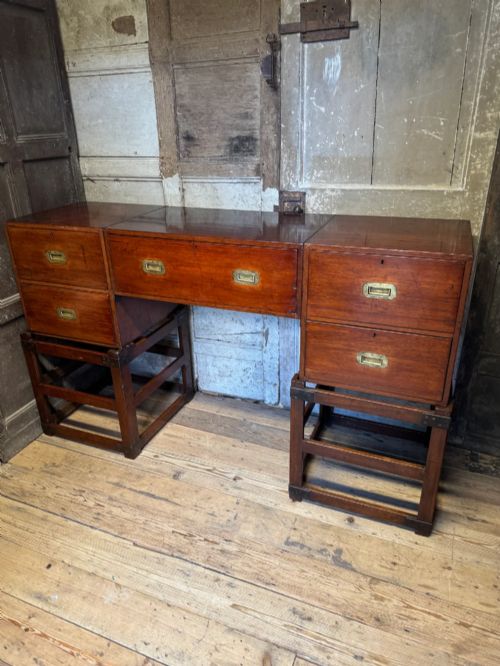
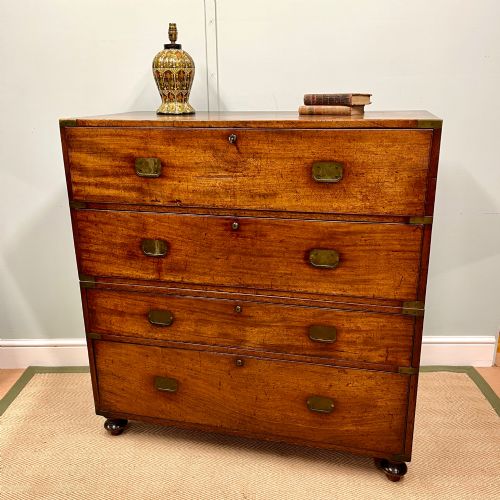
A colonial military chest is a set of drawers built in two separate stacking sections for transport on campaign. These chests appear primarily in nineteenth-century styles, including Victorian and Anglo-Chinese variants.
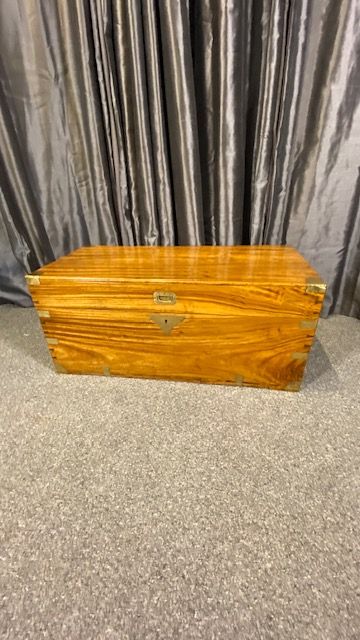
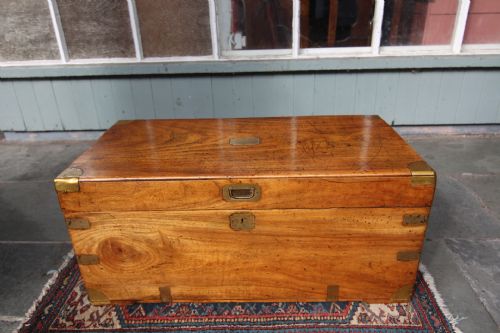
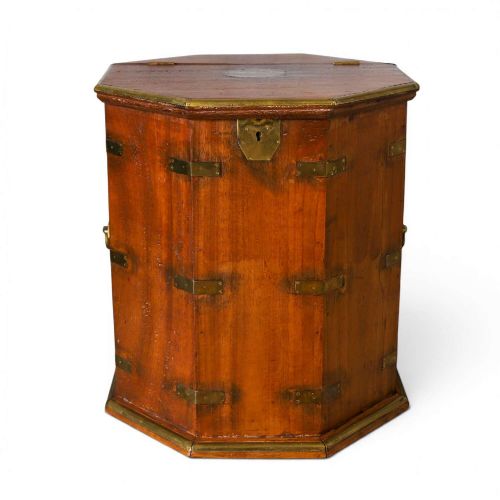
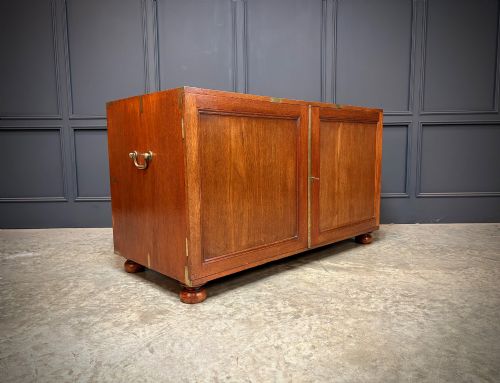
The form separates into two boxes with flush brass handles and corner brackets to withstand rough handling during transit. Most examples encountered here take the form of a chest of drawers, though campaign tallboy formats also exist.
Makers designed these pieces for officers needing robust luggage that functioned as domestic furniture in remote postings. Surviving specimens show construction intended to endure frequent dismantling and maritime journeys.
How they were made
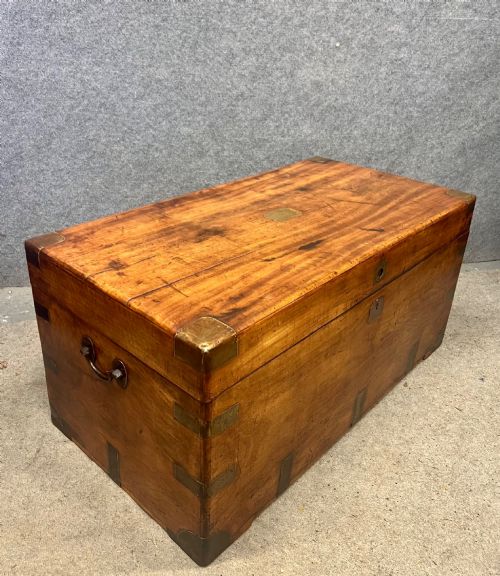
Cabinetmakers utilised dense timbers such as teak, mahogany, walnut, padouk, camphor wood and iron to resist humidity and impact. Brass bound the corners and edges, protecting the wood while adding structural rigidity to each section.
Flush-fitting recessed brass handles allowed the sides to remain entirely flat during packing and transport. Screw-in feet or removable feet often accompanied the base section to keep the lower drawers clear of damp ground.
Colonial Military Chest Retail Price Guide 2026
Typical asking prices for colonial military chest among the pieces listed under this phrase on Sellingantiques today, from the lower quarter to the upper quarter. They describe what is for sale here now, not the wider market.
The archive records campaign chests spanning the decades from eighteen hundred to eighteen ninety.
What varies in quality
The selection of timber grain dictates much of the visual appeal, with figured walnut and richly patinated mahogany sitting at the upper end. Solid camphor wood or heavy teak construction indicates utilitarian deployment in tropical climates.
Hardware quality distinguishes standard supply pieces from bespoke officer commissions. Thick, hand-cast brass mounts and well-fitted internal locking mechanisms show superior workshop standards.
Graves and Sons of Devonport·Arthur Foley and Son of Salisbury
The Colonial Military Chest Glossary
- Campaign chest
- A modular chest of drawers built in two sections with recessed brass hardware for easy transport. This design allowed British officers to move their personal belongings across distant territories.
- Two-part
- A cabinet constructed as two distinct horizontal boxes that stack together to form a single tall chest. Metal brackets on the sides secure the upper and lower halves firmly in place.
- Brass-bound
- Furniture reinforced along corners and edges with brass strips and corner pieces. This metal reinforcement protected the wooden joints from splitting during rough transit.
- Padouk
- A heavy, durable exotic timber with a distinctive reddish-brown colour used in colonial cabinetmaking. It resisted warping and insect damage in tropical environments.
- Tallboy
- A tall chest of drawers formed by stacking one tall chest upon another. In campaign furniture, this meant two massive sections designed for maximum storage capacity.
Colonial Military Chest: Frequently Asked Questions
How do you clean teak wood safely?
Wipe surfaces using a slightly damp cloth to remove dust without stripping natural oils. Avoid harsh chemical polishes that can damage antique finishes.
Dry the wood thoroughly afterwards to prevent moisture damage.
Why are some chests made of camphor wood?
Camphor wood naturally repels insects and moths, making it ideal for storing uniforms in humid climates. Its strong aromatic scent protected textiles during long sea voyages.
Chests built from this timber often retain their distinct herbal fragrance.
Can you separate the two sections?
Yes, these chests split into an upper and a lower box by releasing internal brass hooks or side latches. Lifting handles on the sides facilitate carrying each half independently.
They lock securely back together when placed in a static room setting.
What is the difference between Victorian and Anglo-Chinese styles?
Victorian models follow standard British cabinet proportions with straightforward brass corner reinforcements. Anglo-Chinese pieces incorporate regional carving techniques and timber selections from Asian workshops.
Both serve the same primary function as modular campaign furniture.