


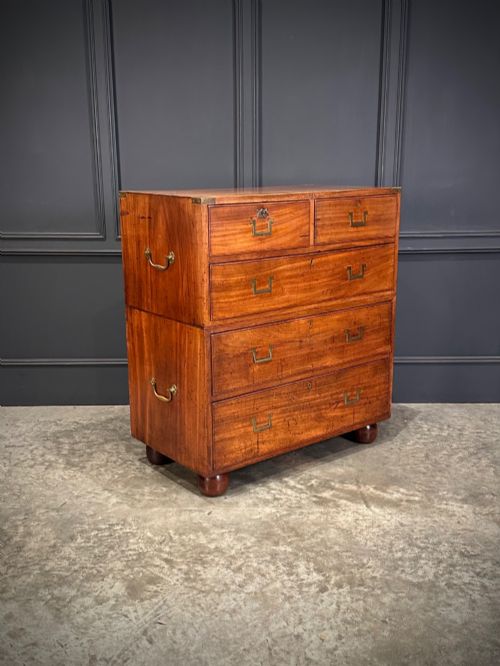
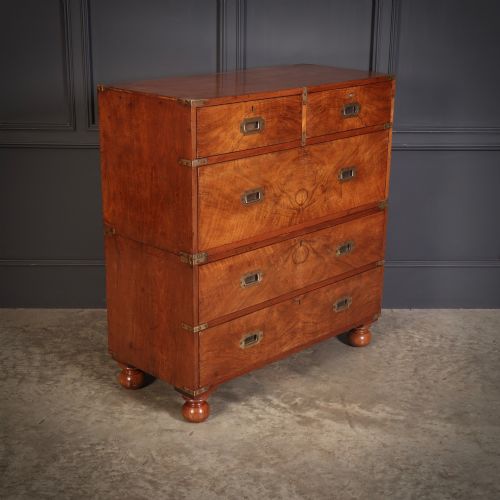
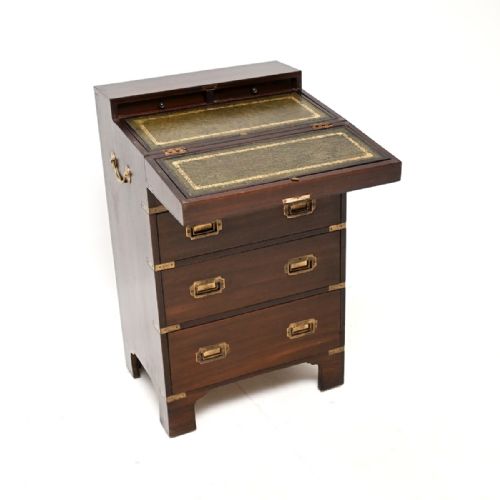


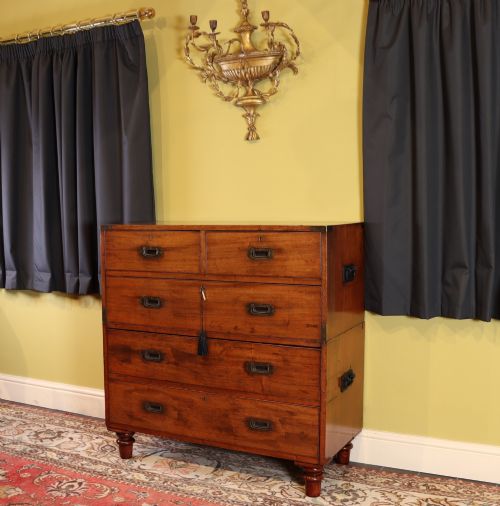
Officer Campaign Chest
Officer campaign chest pieces are modular portable desks and drawers built for colonial service, offering solid timber construction and brass fittings that appeal to collectors of military antiques.
What an officer campaign chest is
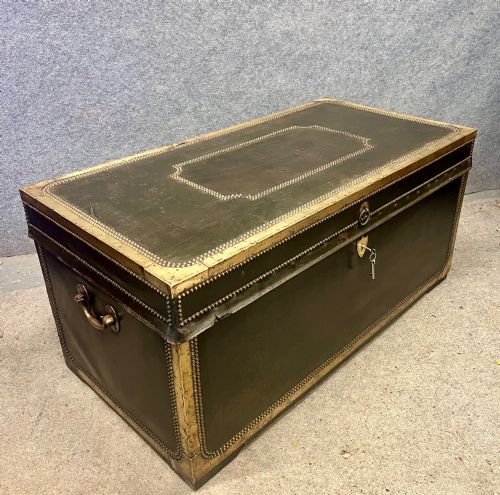
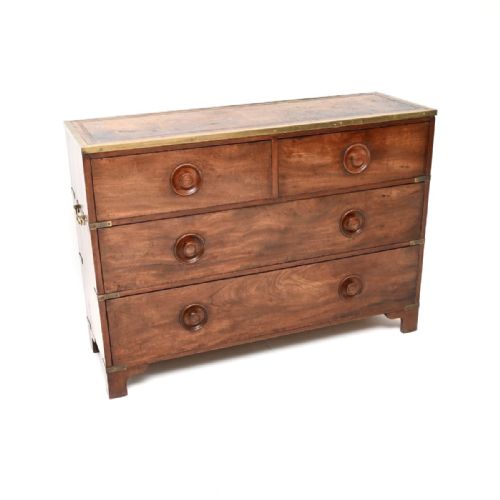
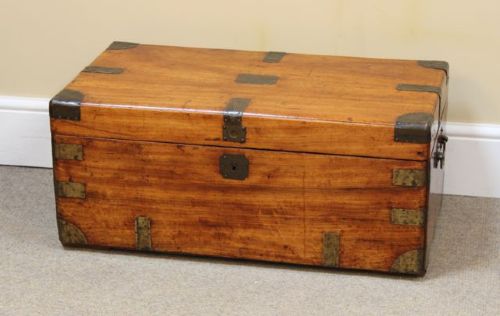
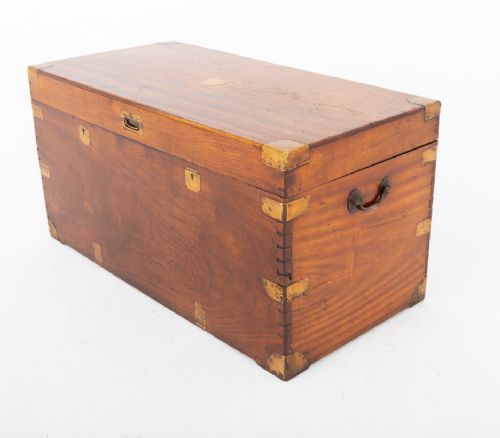
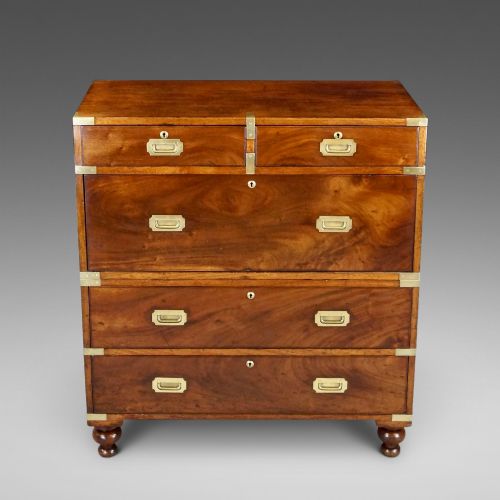
An officer campaign chest is a modular storage piece designed to dismantle into two or more sections for easy transport during military deployment. The chests seen here span the Regency, Victorian, and Edwardian eras, encompassing colonial postings and maritime service.
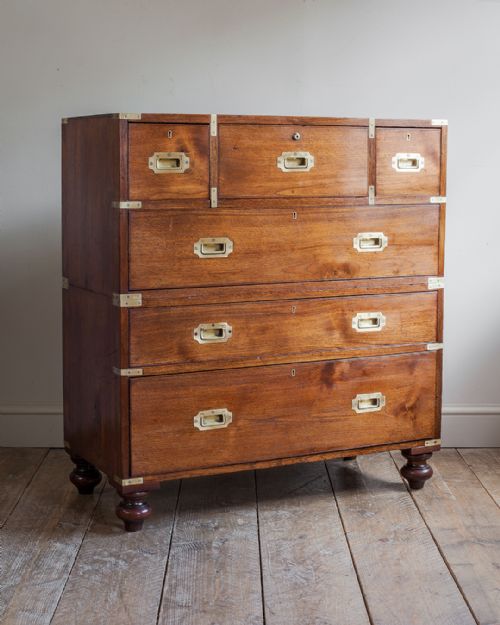
Most examples appear as chests of drawers, frequently incorporating secretaire drawers fitted with writing surfaces and small compartments. Buyers commonly encounter mahogany and teak versions, often constructed in two stacked sections with flush brass handles and corner brackets.
Origins stretch from English workshops to China Trade production and Anglo-Indian colonial outposts. The forms range from simple trunks to sophisticated dressing chests combined with writing slopes.
How they were made
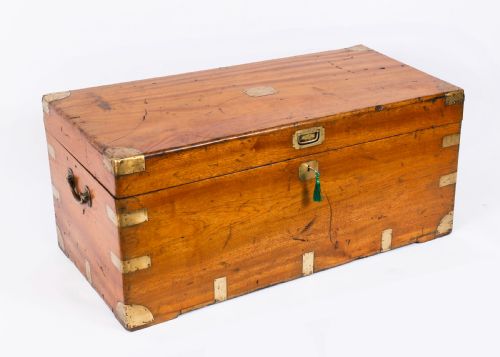
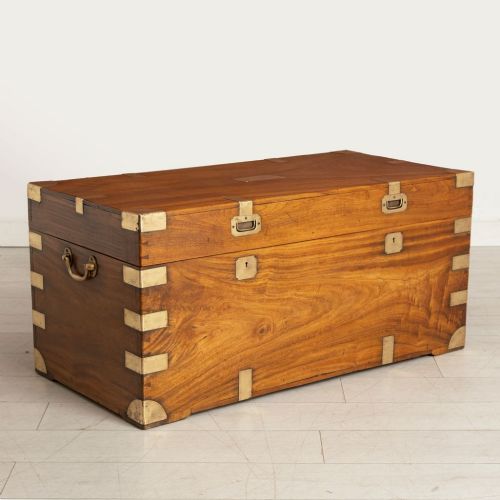
Carpenters utilised dense timbers such as mahogany, teak, camphor wood, and walnut to withstand harsh travel conditions and humidity. Camphor wood was frequently chosen for its natural insect-repellent properties.
Joints and carcass structures were reinforced with brass binding, straps, and corner plates to absorb the shocks of transit. Recessed drop handles in cast brass or iron prevented snagging when the sections were packed or moved.
Retail Price Guide 2026
Typical UK retail prices for officer campaign chest, calculated from the Sellingantiques database of over a million retail prices indexed since 2003. This retail price guide relies exclusively on Sellingantiques data; no external sources or auction records are used, so the figures do not describe the wider market.
The archive and current listings record campaign chests constructed from mahogany, teak, camphor wood, walnut, and ebony.
What varies in quality
The sophistication of the internal fittings defines the tier of a piece, particularly where secretaire drawers feature secret compartments, pigeonholes, and fitted leather writing surfaces. Superior examples integrate cabinetry that functions smoothly even after repeated dismantling.
The choice of secondary woods and the precision of the brass work separate standard regimental pieces from high-status officer commissions. Solid timber construction throughout, rather than veneered secondary surfaces, marks the better end of the scale.
Arthur Foley and Son
The Officer Campaign Chest Glossary
- Secretaire
- A drawer that pulls out and drops down to reveal a writing desk fitted with small drawers and pigeonholes. It allowed officers to maintain correspondence in the field.
- Brass bound
- The reinforcement of edges, corners, and joints with recessed brass strips and brackets. This technique protected the timber from heavy handling during transport.
- Two-part chest
- A chest constructed in vertically stacked upper and lower sections designed to separate for packing. Each section typically includes side carrying handles.
- China Trade
- Furniture produced in treaty ports along the Chinese coast for European markets, often utilising local camphor wood. These pieces combined Western cabinet forms with regional materials.
- Flush handle
- A metal handle set into a recess so it does not project beyond the face of the drawer. This prevented damage and allowed multiple chests to sit tightly together.
Frequently Asked Questions
Why do these chests split in two?
The two-part design allowed officers to pack their belongings into manageable units for mule, cart, or ship transport.
Once loaded into separate canvas or leather covers, the modular sections survived rough journeys across colonies.
How do I identify camphor wood?
Camphor wood emits a distinct aromatic scent that remains active even in antique examples.
The timber often shows a pale honey tone with subtle figuring, frequently found in pieces associated with maritime trade.
Were these chests only for military use?
While commissioned by army officers and naval personnel, colonial administrators also utilised them during postings abroad.
The portable design suited anyone travelling frequently within the British Empire.
What is the difference between teak and mahogany versions?
Teak was selected for its oily, water-resistant grain, making it ideal for humid colonial climates and naval service.
Mahogany offered a denser, darker finish favoured by officers serving in domestic postings or drier regions.