

Brass Studded Chest
A brass studded chest is a travel container or storage box defined by metal nailwork and hide or wood, prized for both utility and decorative presence.
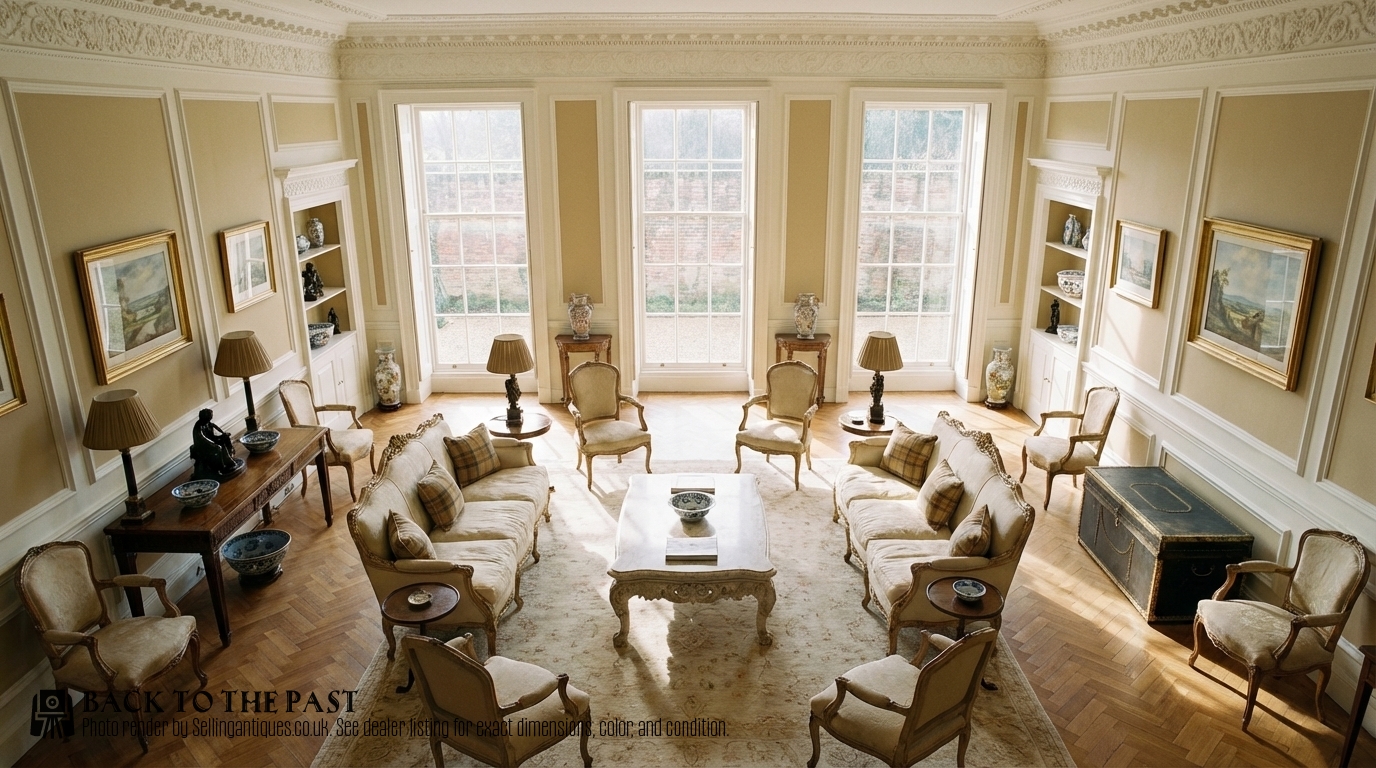
Brass Studded Chest
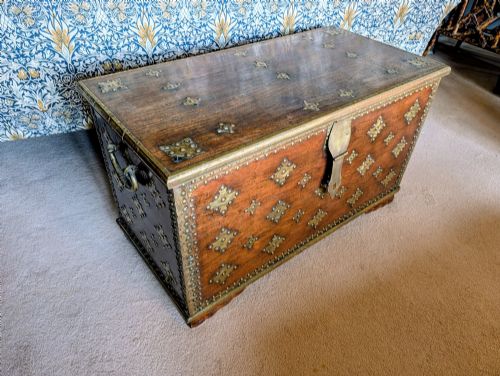
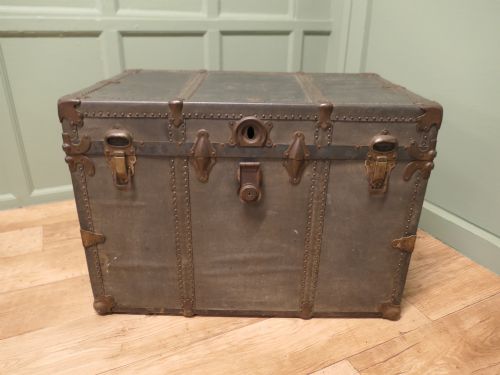
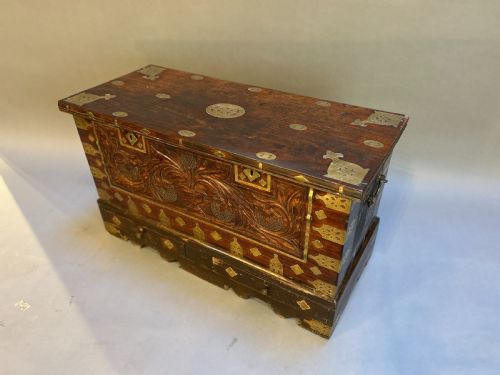
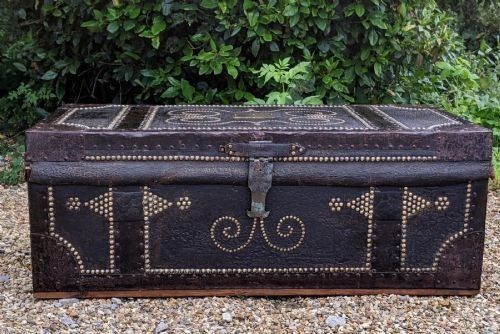
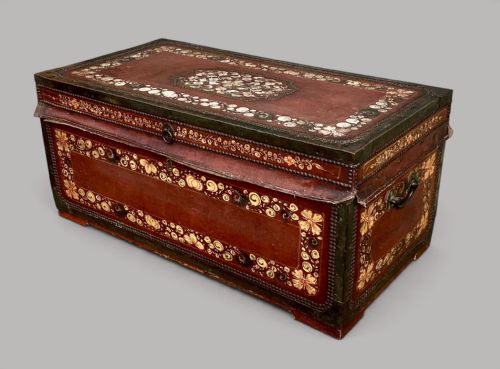
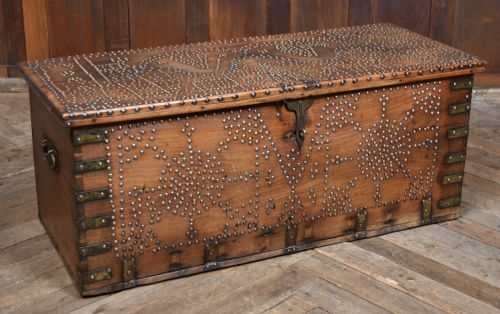
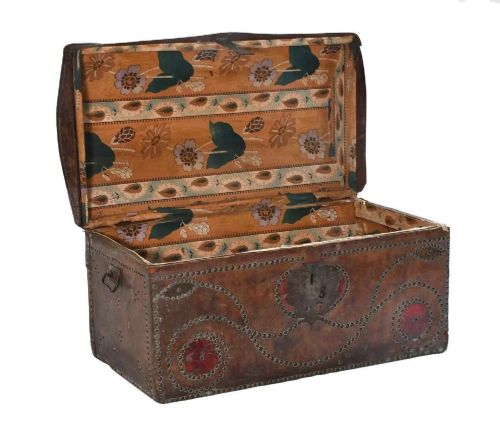
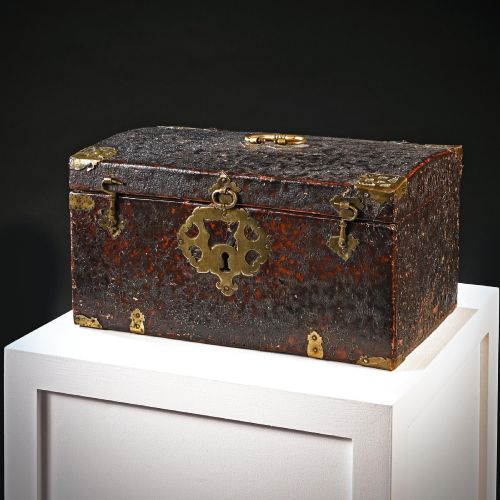
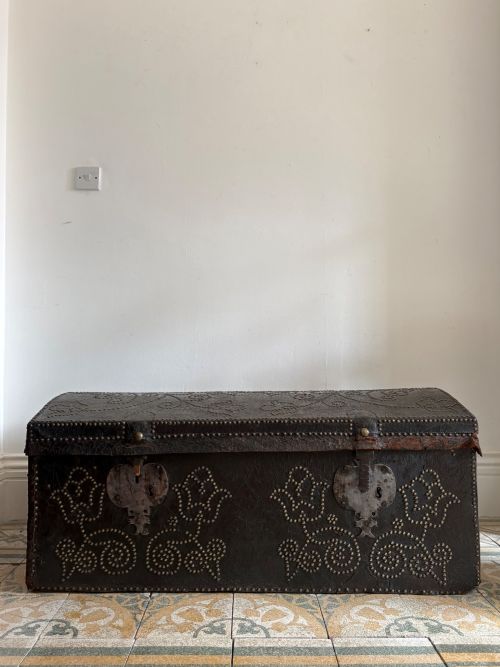
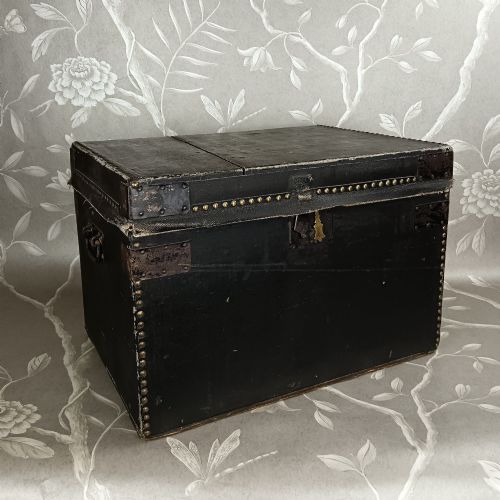
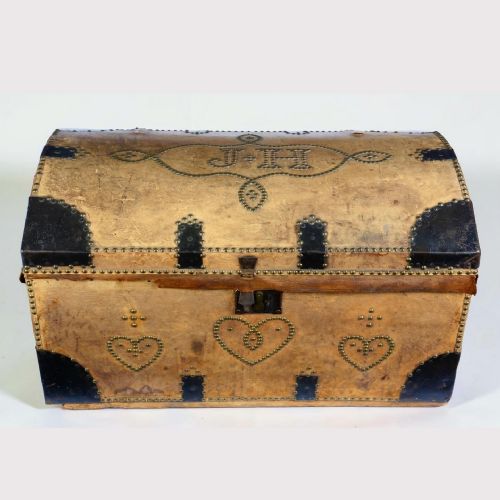
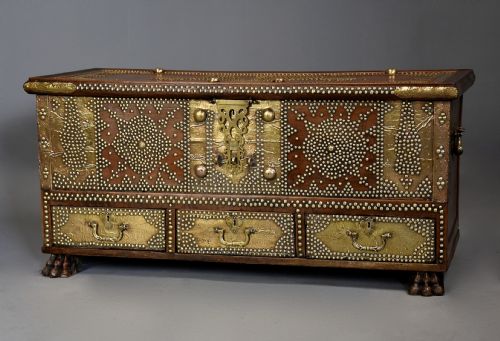
A brass studded chest encompasses travel trunks, blanket boxes, and domed coffers originating from the seventeenth century through to the Edwardian period. Buyers searching for a brass studded chest will frequently encounter variants such as Zanzibar trade boxes, campaign trunks, and leather-clad Spanish or French marriage coffers.
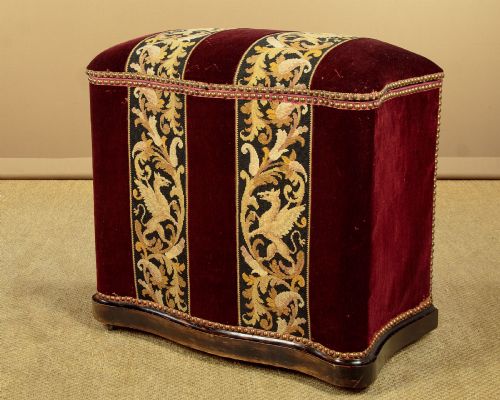
The forms vary from large country house ottomans and heavy wooden storage boxes to small travel caskets and fitted steamer trunks. Many examples reflect global trade routes, spanning Anglo-Indian workshops, China Trade manufacture, and European domestic craftsmanship.
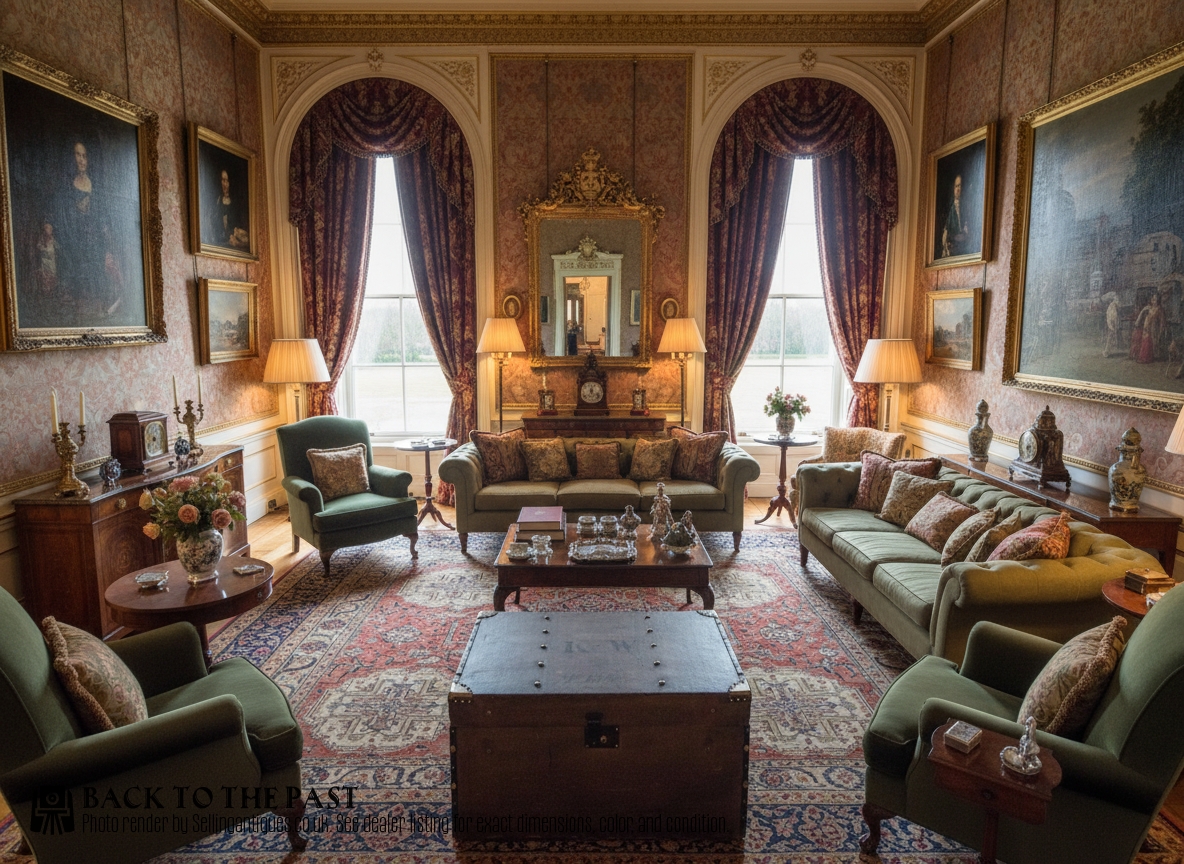
How They Were Made
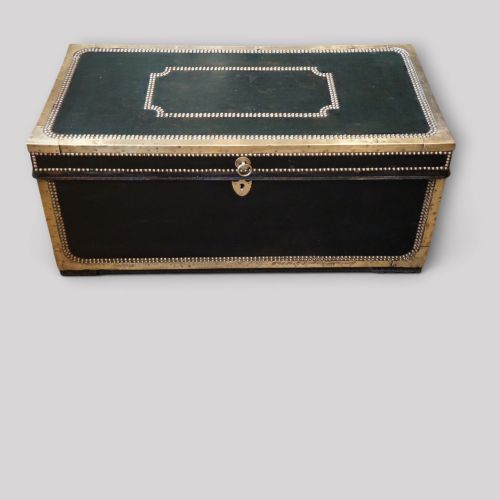
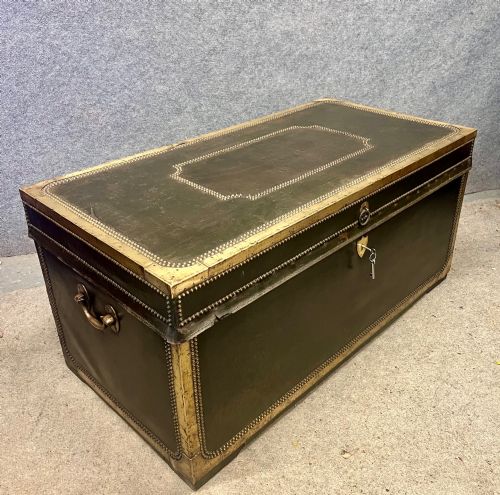
These pieces rely on robust timber carcasses constructed from hardwoods like teak, padouk, shisham, and camphor wood, frequently clad in hide or leather. Metal binding and individual brass studs are applied by hand using tacks or nails to secure the leather and reinforce the structural corners.
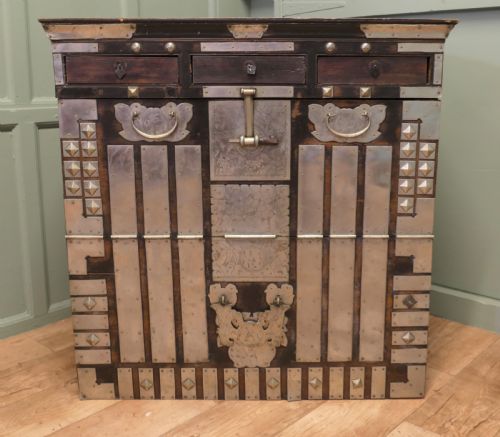
Detailing often includes iron or brass carrying handles, decorative lock plates, and geometric stud patterns that double as structural fastenings. Leather surfaces are sometimes hand-dyed or painted, while interior compartments may feature fabric linings or fitted trays.
Brass Studded Chest Retail Price Guide 2026
Typical asking prices for brass studded chest among the pieces listed under this phrase on Sellingantiques today, from the lower quarter to the upper quarter. They describe what is for sale here now, not the wider market.
The archive includes domestic blanket boxes alongside maritime travel trunks spanning multiple centuries.
What Varies in Quality
Quality rests primarily on the integrity of the original construction and the complexity of the brass studwork. Finer examples display dense, evenly spaced brass stud patterns and substantial hardwood or heavy leather foundations rather than purely cosmetic surface nailing.
The survival of original hardware, including handles, hinges, and locks, marks the distinction between standard utility items and high-status pieces. The choice of timber also dictates grade, with dense tropical hardwoods and well-preserved early leather retaining greater physical substance.
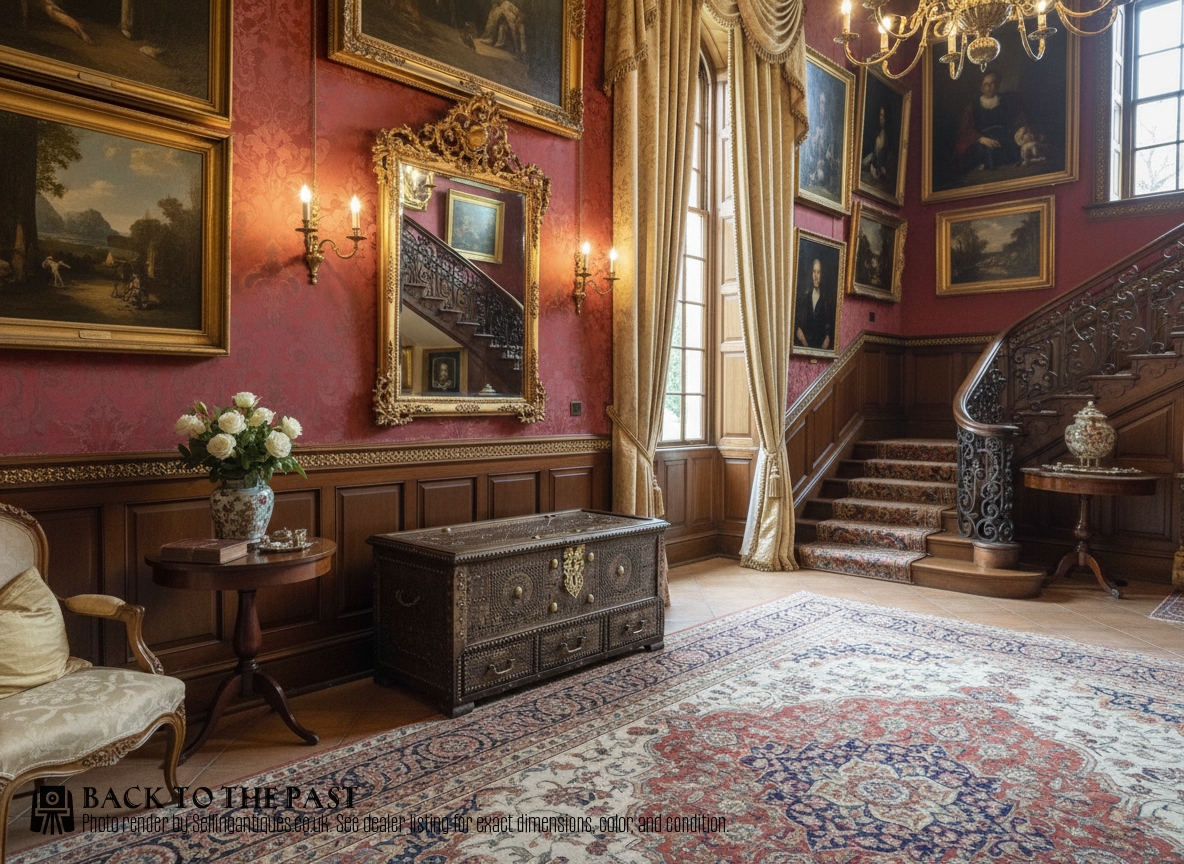
Samuel Pratt·Wm Insall of Bristol·Arthur Wannop·Chapple & Sons·Seabrook of St Pauls
The Brass Studded Chest Glossary
- Zanzibar chest
- A heavy hardwood storage box decorated with brass studding and strapwork, associated with East African trade routes. These pieces often incorporate compartments and elaborate metal mounts.
- Campaign trunk
- A portable storage container designed for military officers or travellers during the eighteenth and nineteenth centuries. They typically feature recessed brass handles and reinforced corners for transit.
- Coffer
- A heavy wooden chest, frequently domed or flat-topped, used for storing valuables or household goods. Early versions are often covered in leather and secured with metal straps.
- Ottoman
- A low upholstered or leather-covered seat featuring internal storage space. In earlier periods, these functioned as large domestic storage boxes.
- Shisham
- A dense Indian hardwood belonging to the rosewood family, utilised in nineteenth-century cabinet making and trunk construction. It provides a durable and heavy carcass for trade chests.
Brass Studded Chest: Frequently Asked Questions
What is a brass studded chest?
A brass studded chest is a functional storage container or travel trunk reinforced with metal studs, leather, and wood. These pieces were utilised for shipping goods, military travel, and domestic storage across centuries.
Examples range from heavy East African trade boxes to European leather-clad coffers and campaign cases.
How were these chests used?
They served primarily as secure containers for personal belongings, valuables, and clothing during long sea voyages and land journeys. Their robust construction allowed them to withstand rough handling in transit.
In domestic settings, they transitioned into blanket boxes, coffee tables, and stationary storage furniture.
How do I date a brass studded chest?
Dating relies upon timber selection, construction methods, and the style of the brass and iron hardware. Earlier pieces from the seventeenth and eighteenth centuries often feature domed lids and heavy leather cladding.
Nineteenth-century examples frequently include standardised campaign brasses, camphor wood linings, or specific regional trade characteristics.
How do I care for leather and wood?
Preserving these pieces involves keeping them away from direct heat sources and drastic humidity changes to protect the wood and leather. Gentle dusting and occasional specialist conditioning help maintain the surface texture.
Avoiding excessive moisture protects the underlying iron components and keeps the brass studding stable.