


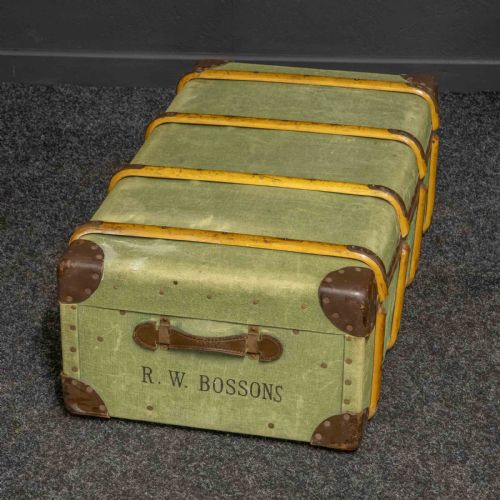


Green Leather Trunk
A green leather trunk brings character and utility to any room, offering robust storage wrapped in rich historical hide.
Green Leather Trunk
A green leather trunk encompasses portable storage chests and luggage pieces fashioned from hide and often finished with painted or dyed green surfaces. Buyers searching this phrase encounter travel pieces spanning the Georgian, Regency, Victorian, and Edwardian eras.
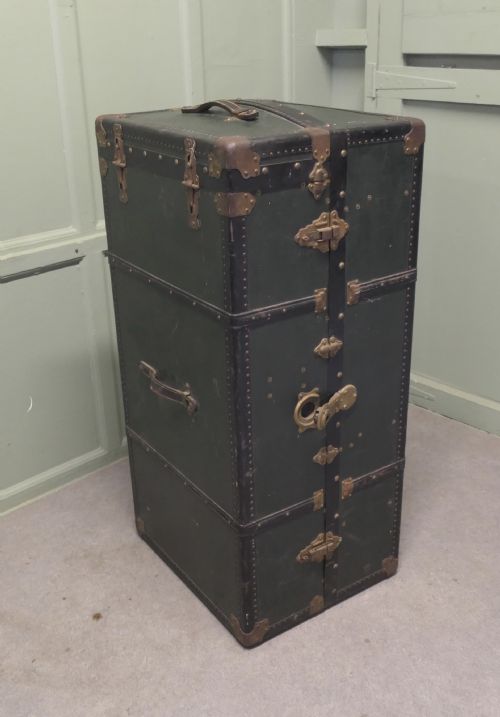
The selection on this page regularly highlights specialised forms, including campaign trunks, coaching trunks, hat boxes, and picnic cases. Many examples incorporate camphor wood or pine structures alongside brass mounts.
Origin points vary across these listings, featuring English workshops, French makers, and China Trade or Chinese Export productions. The pieces range from large storage chests down to smaller vanity and travel suitcases.
Materials and construction
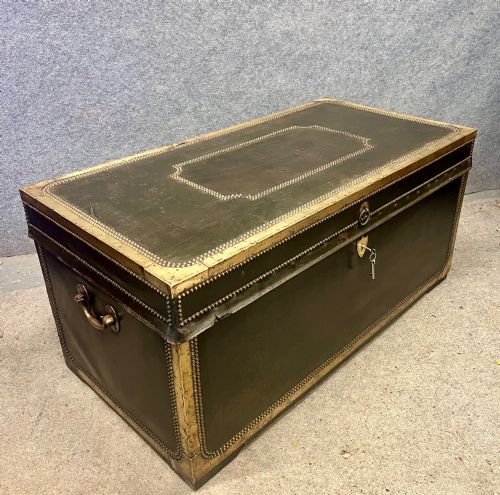
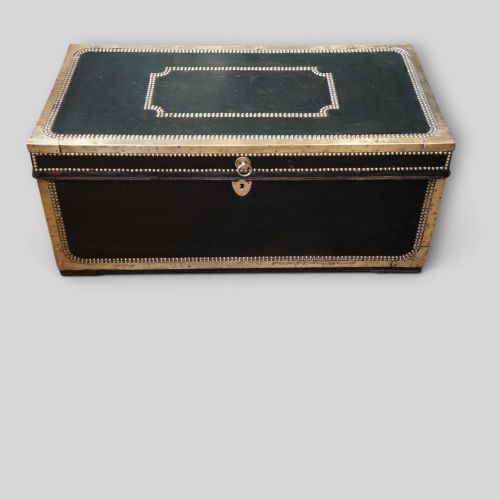
Makers built these trunks using sturdy internal carcases of camphor wood, pine, or general timber before wrapping them in leather. The outer hides frequently received green paint or dye treatments.
Brass studs, bound corners, and substantial locks provide structural reinforcement and decorative contrast against the green leather surfaces. Metal handles and hinges completed the heavy construction required for frequent travel.
Listings feature camphor wood, pine, and brass components across Georgian, Regency, and Victorian periods.
What separates the finest examples
Quality rests upon the integrity of the internal wooden structure, particularly when fragrant camphor wood or sound pine forms the base beneath the leather. Finer pieces retain their original brass mounts and structural studs without heavy replacement.
The condition and application of the green leather covering dictate aesthetic standing, alongside the presence of fitted interior compartments or specialist maker details.
John Pound
The Green Leather Trunk Glossary
- Campaign trunk
- A portable chest constructed for military officers or travellers on the move. These pieces usually feature recessed brass handles and reinforced corners for transit.
- Camphor wood
- An aromatic timber frequently utilised in overseas trade trunks. Its natural scent helped deter insects from stored textiles during long voyages.
- Coaching trunk
- A heavy storage chest designed to strap to the roof or boot of a horse-drawn coach. They prioritise deep storage capacities and weather-resistant leather exteriors.
- Hat box
- A specialist rigid container fashioned to protect headwear during travel. Examples often feature tailored internal spaces to secure tall hats safely.
- Brass-bound
- A descriptor for boxes and trunks edged or reinforced with brass strips. This technique protected vulnerable wooden corners from heavy impact.
Green Leather Trunk: Frequently Asked Questions
What is a green leather trunk used for today?
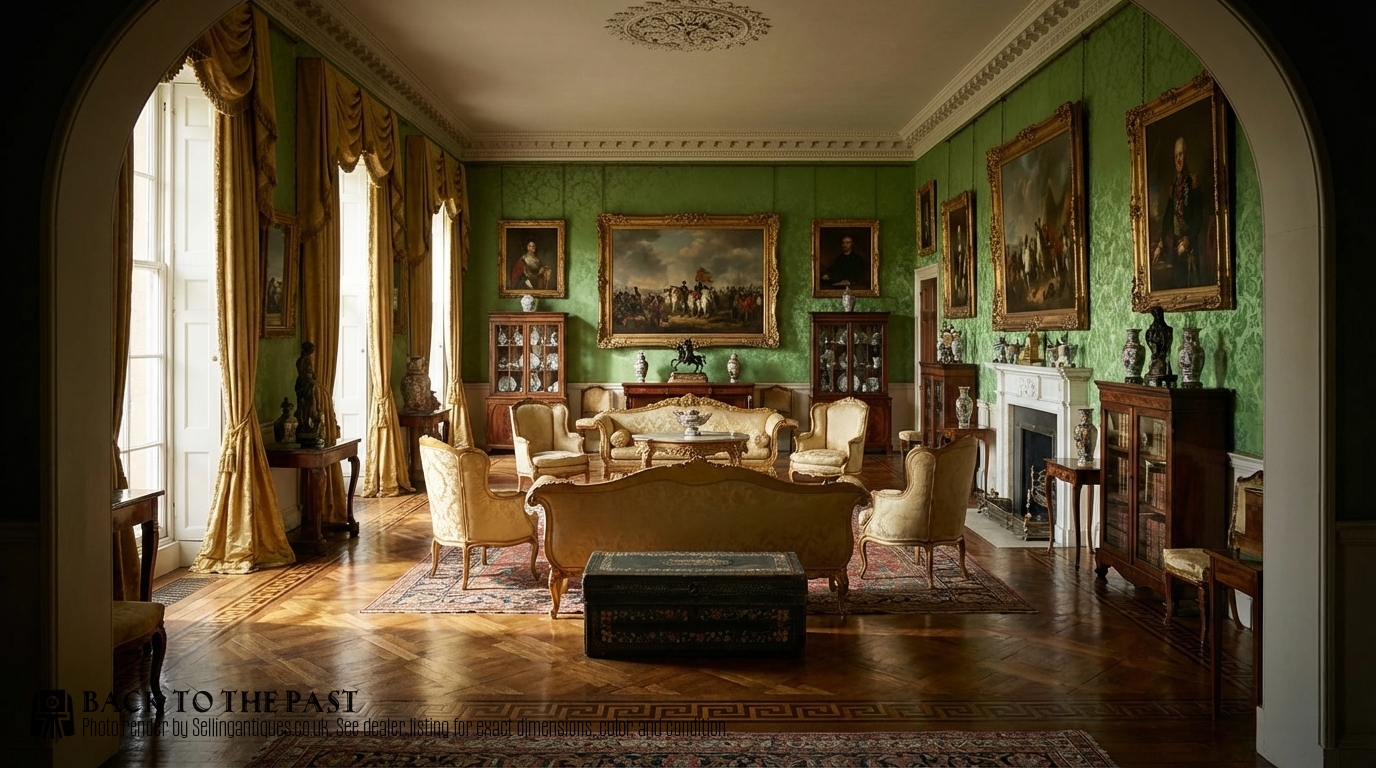
These trunks function brilliantly as living room coffee tables, bedroom storage chests, or decorative statement pieces. They offer concealed space for blankets, books, and household items.
The sturdy construction allows them to support everyday items on top while keeping clutter hidden inside.
How do I date a green leather trunk?
Dating relies on examining the construction methods, materials, and hardware styles. Regency and Georgian pieces often feature hand-hammered brass studs and camphor wood interiors.
Later Victorian and Edwardian examples incorporate machine-made components, different interior paper linings, and modified lock mechanisms.
Are these trunks waterproof?
While historic travel trunks utilised treated leather and overlapping edges to shed rain during transit, they are not modern waterproof containers. Humidity and standing water can damage the historic hide and internal wood.
Keep them in stable indoor environments away from damp conditions to preserve the materials.
What is China Trade furniture?
China Trade pieces refer to items manufactured in China during the nineteenth century specifically for export to Western markets. They frequently combine Asian timber species like camphor wood with European furniture forms.
These trunks reflect cross-cultural exchange through unique decorative treatments and regional construction techniques.