

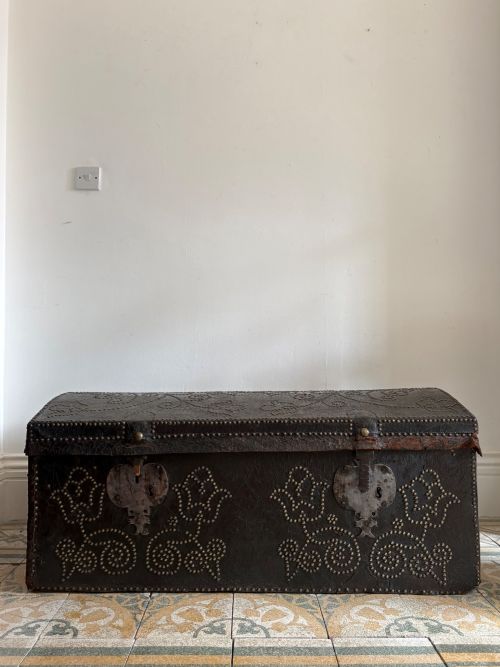
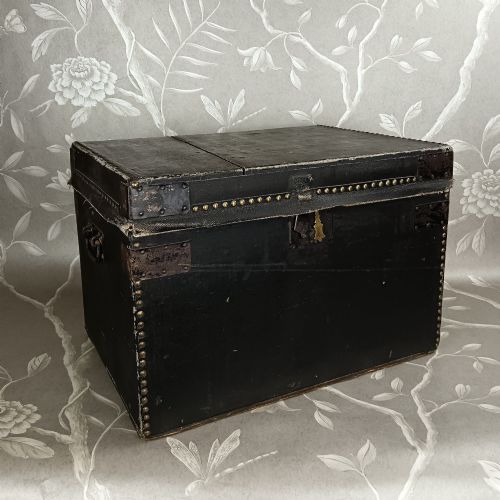
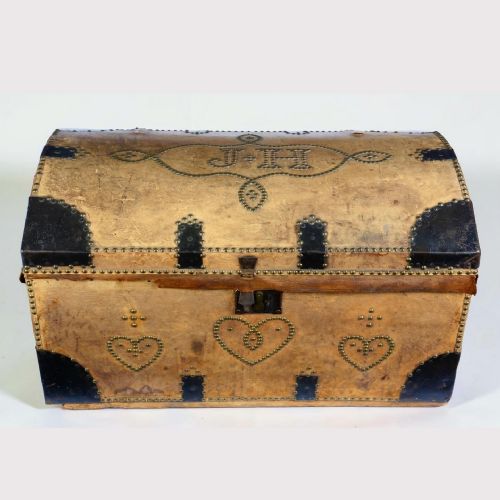


Leather Blanket Box
These leather blanket boxes are sturdy travel chests and ottomans offering generous storage, built across centuries to hold household textiles and personal luggage.
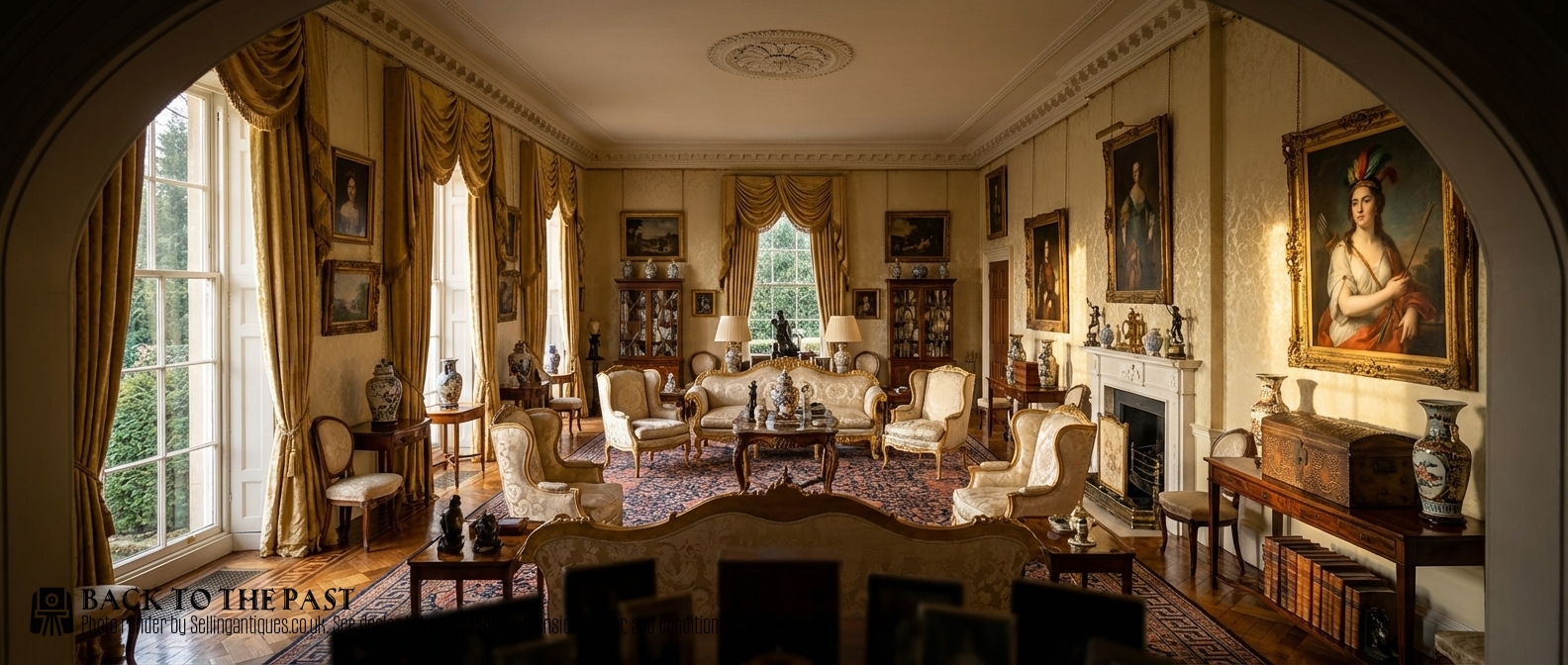
Leather Blanket Box
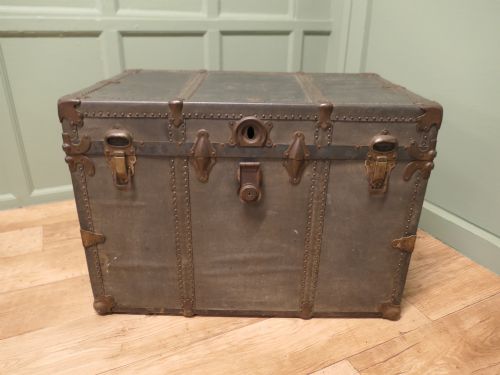
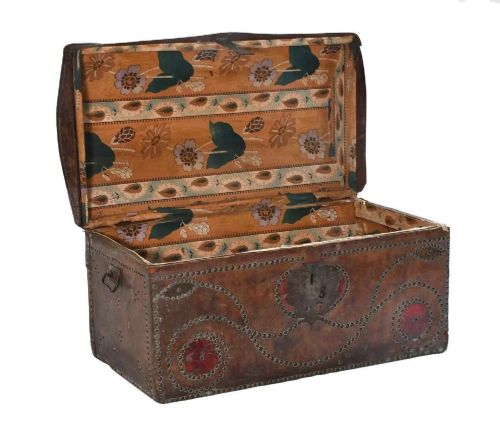
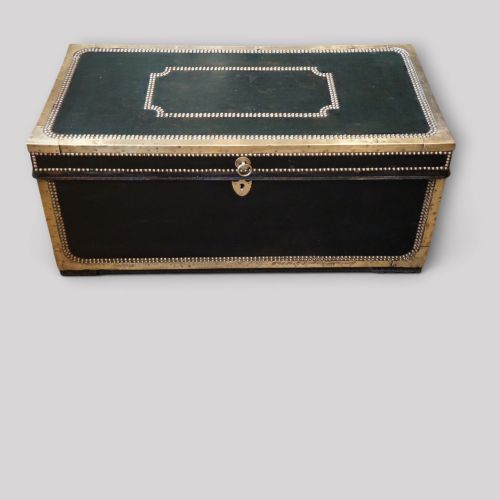
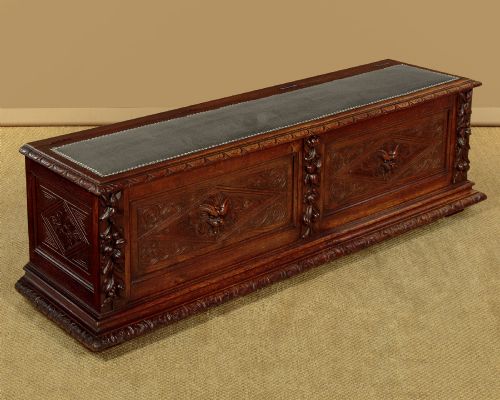
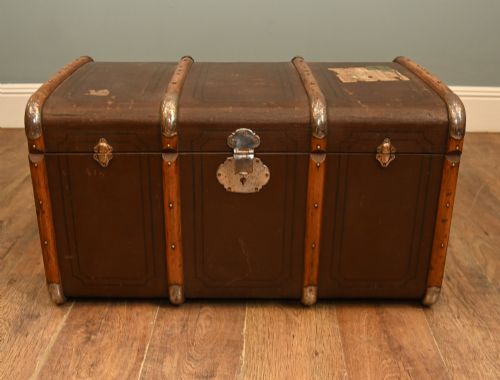
A leather blanket box functions primarily as a substantial storage trunk, coffer, or ottoman designed to hold textiles and personal effects. These pieces emerge in various forms, including domed travel trunks, flat-topped campaign chests, and low ottoman seats suitable for domestic interiors.
The selection spans several centuries, drawing heavily on examples from the seventeenth, eighteenth, nineteenth, and early twentieth centuries. Makers across England, Spain, China, and the Netherlands produced these containers for travel and domestic utility.
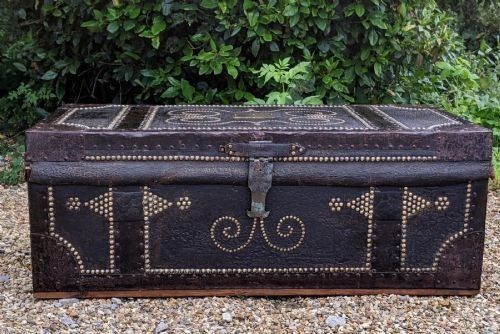
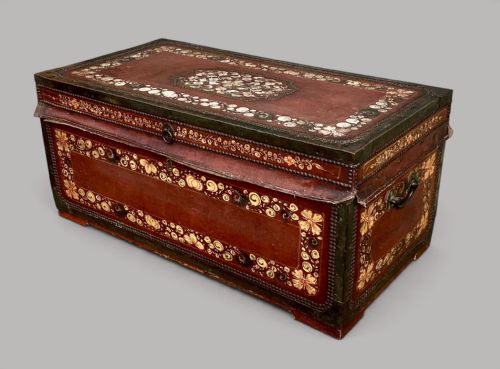
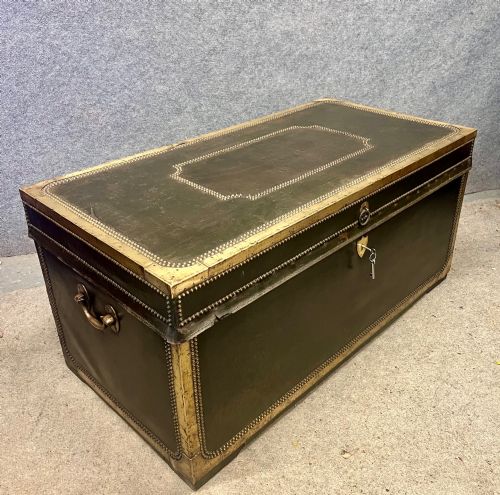
Buyers will encounter items ranging from brass-studded Regency travel chests and China Trade camphor wood trunks to sturdy Victorian pine and mahogany ottomans. Each variation reflects the specific transit or domestic requirements of its original period.
Materials and Construction
Makers built these pieces using a wooden carcass - frequently oak, pine, camphor wood, or mahogany - then clad the exterior in leather, hide, or canvas. This outer covering provided essential protection against the rigours of travel and domestic wear.
Metal components played a critical structural and decorative role, with iron, brass, and canvas bindings reinforcing corners and edges. Brass studwork and nailhead details secured the leather to the wood while adding linear ornamentation across domed and flat lids.
Many items incorporate functional elements such as side carry handles for transport and internal fitted compartments designed for specific luggage storage. Woods like camphor wood offered natural insect-resistant properties ideal for protecting stored woollens and blankets.
Leather Blanket Box Retail Price Guide 2026
Typical asking prices for leather blanket box among the pieces listed under this phrase on Sellingantiques today, from the lower quarter to the upper quarter. They describe what is for sale here now, not the wider market.
Listings feature items spanning from pre-sixteenth century panels to early twentieth-century steamer trunks, constructed in leather, hide, canvas, brass, and camphor wood.
Assessing Craftsmanship
Quality rests significantly in the integrity of the underlying woodwork and the resilience of the outer leather or hide cladding. Pieces retaining their original brass mountings, studwork, and robust carry handles demonstrate superior original manufacture.
The sophistication of the internal fitting and the choice of secondary timbers, such as fragrant camphor wood or dense mahogany, distinguish standard utility containers from finer domestic ottomans and branded travel chests. Details like hand-stitched seams and original maker labels elevate the standing of a piece.
Samuel Pratt·Wm Insall of Bristol·Arthur Wannop·Seabrook of St.Pauls London·Aux Etats Unis of Paris
The Leather Blanket Box Glossary
- Campaign chest
- A portable trunk or chest made in sections with recessed brass handles, designed for military officers on active service.
- Camphor wood
- An aromatic Asian timber frequently utilised in trade trunks to protect stored textiles from insects.
- Coffer
- A heavy wooden chest, often leather-clad and studded, traditionally used for storing valuables and household goods.
- Ottoman
- A low, upholstered or leather-covered seat with a hollow interior for blanket and linen storage.
- Studwork
- Decorative rows of brass or iron nails driven through leather to secure the covering and reinforce structural edges.
Leather Blanket Box: Frequently Asked Questions
How were leather blanket boxes originally used?
These chests served primarily as durable luggage for coaches and ships, protecting clothing and personal belongings during transit.
Over time, many found a permanent home in domestic interiors, transitioning into blanket boxes and ottomans for bedrooms and living spaces.
What woods are found inside these chests?
Carpenters utilised regional and imported timbers depending on the origin and purpose of the trunk. Oak, pine, birch, and mahogany appear frequently in domestic ottomans.
China trade chests often feature camphor wood, selected specifically for its pleasant scent and natural resistance to moths.
How do I care for antique leather?
Keep leather surfaces clean by dusting gently with a dry cloth and avoiding direct exposure to strong heat sources.
Allow the natural patina to remain without applying modern synthetic dressings unless advised by a professional conservator.
Can I use a travel trunk as a coffee table?
Flat-topped trunks and low ottomans work well as functional surface tables in modern sitting rooms while concealing household storage.
Ensure the lid structure remains stable and supportive before placing heavy objects on top.