

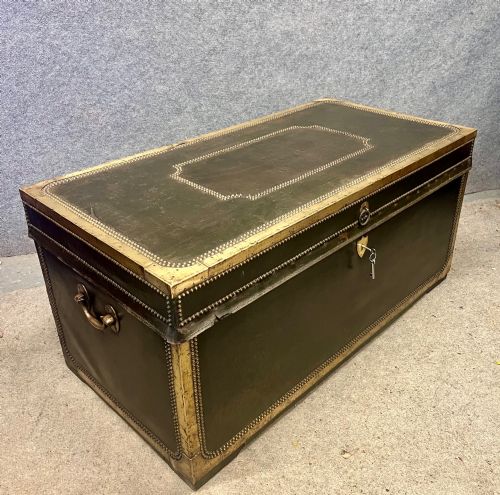
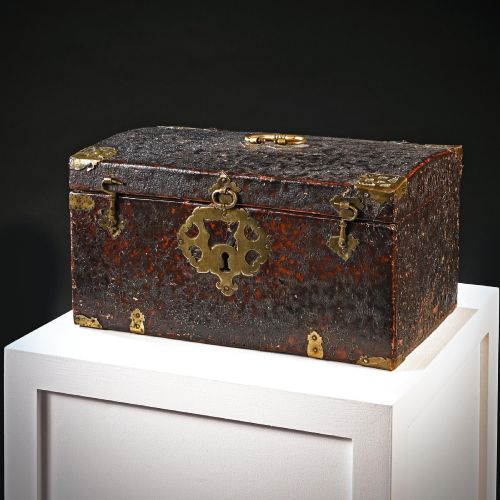
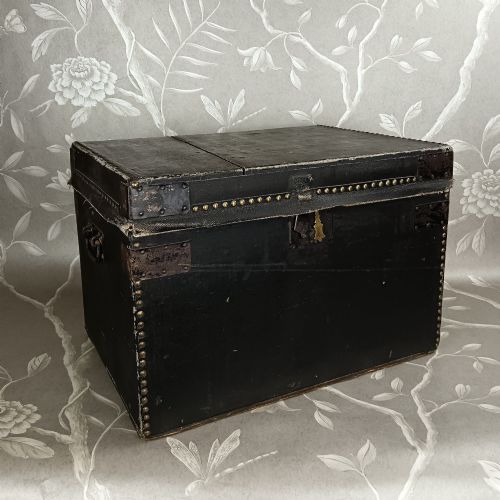
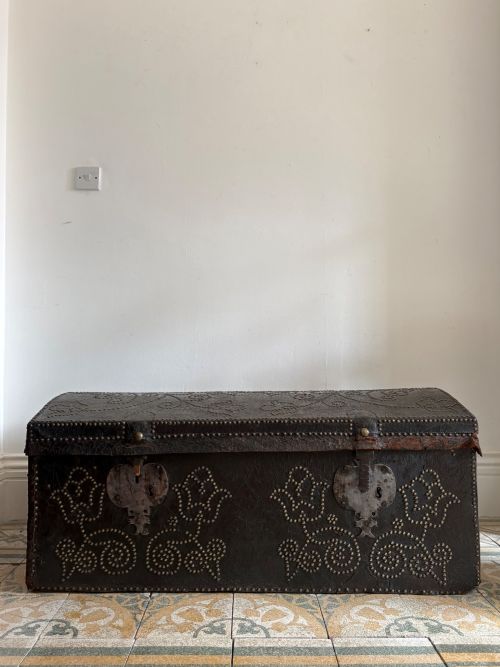
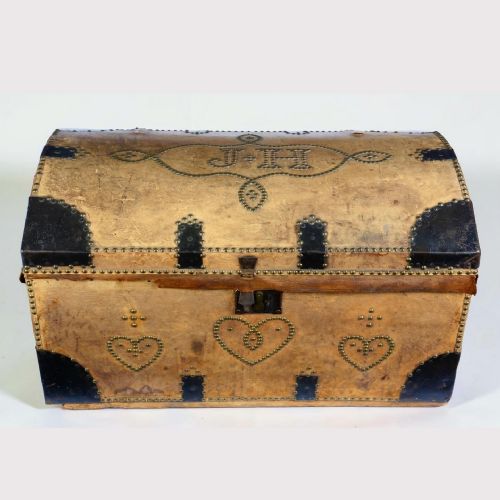
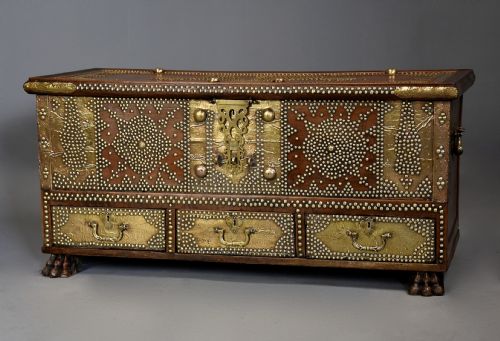
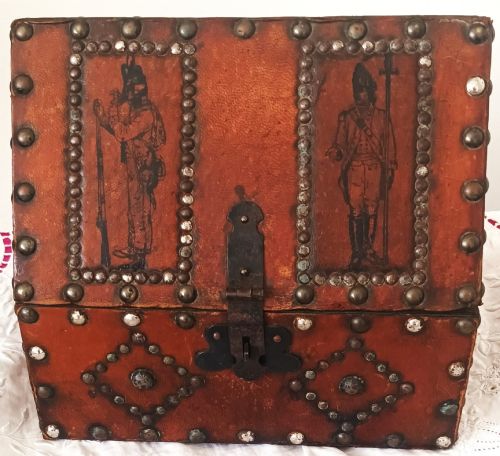

Brass Studded Coffer
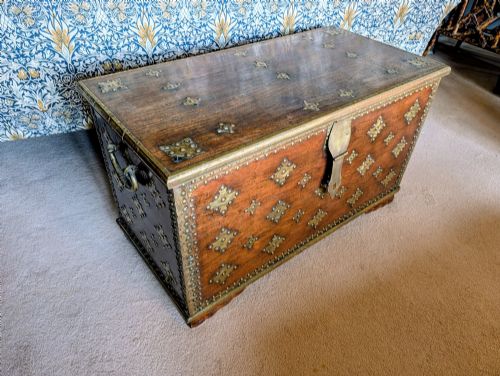
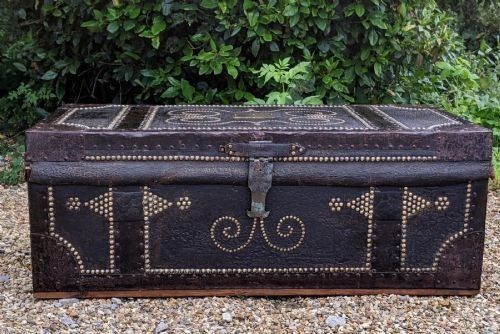
A brass studded coffer provides robust storage, built from timber and leather with metal work that marks centuries of travel and trade.
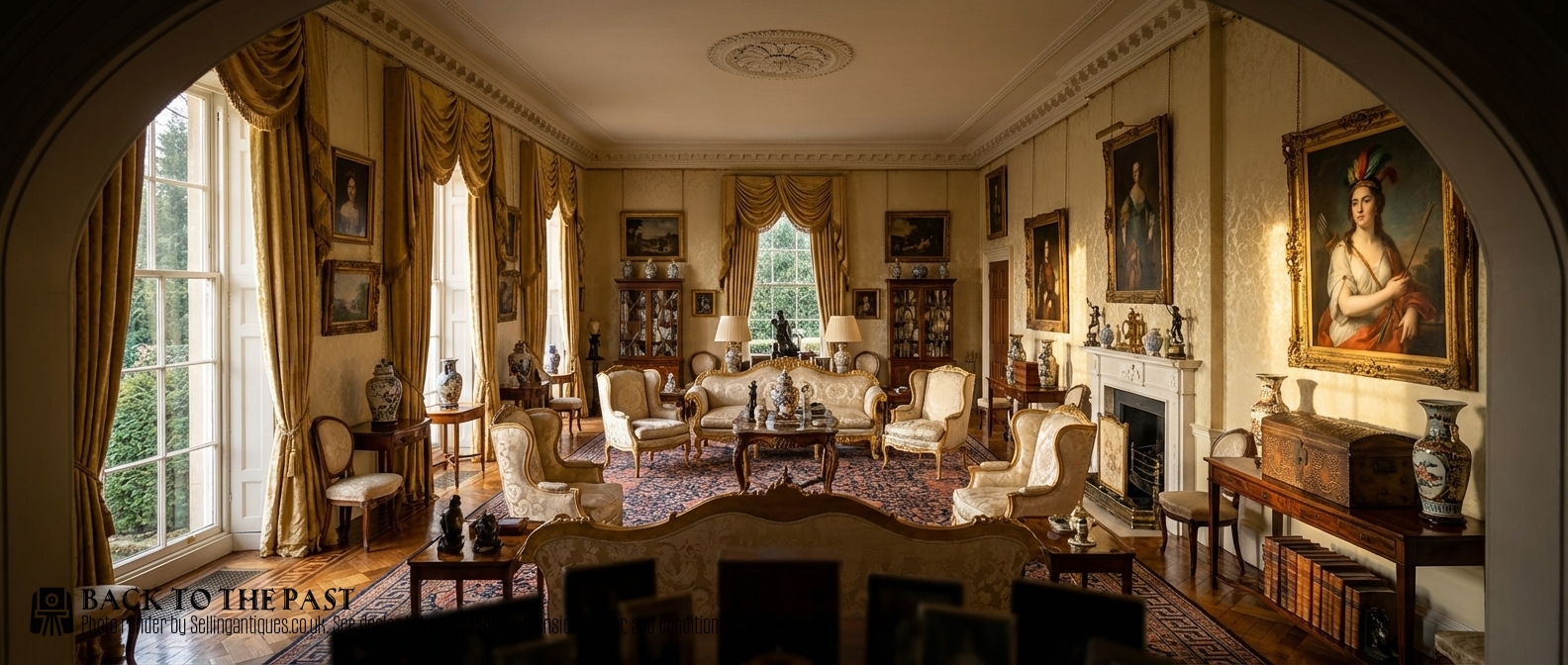
Brass Studded Coffer
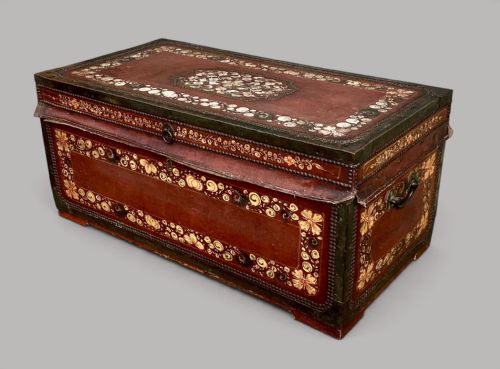
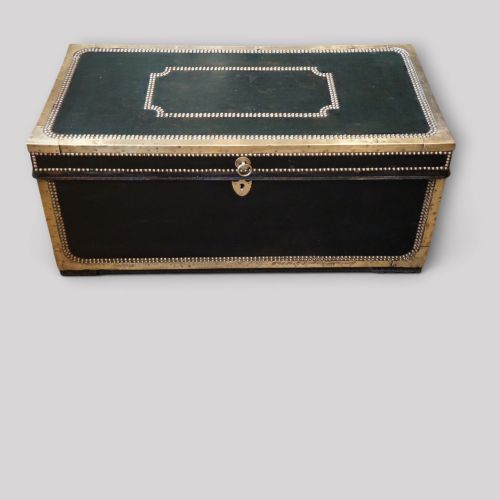
A brass studded coffer is a heavy storage trunk or travel case designed for portability and security. These pieces appear across multiple periods, most frequently from the nineteenth century, including Victorian and Regency examples.
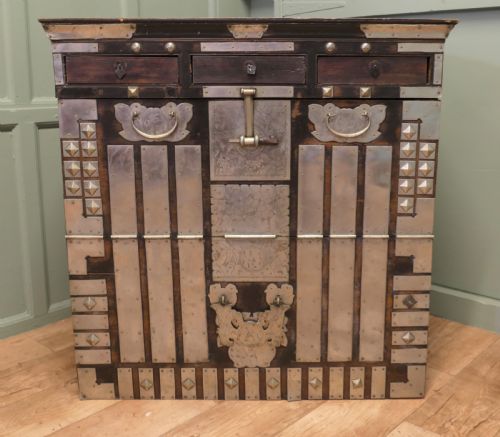
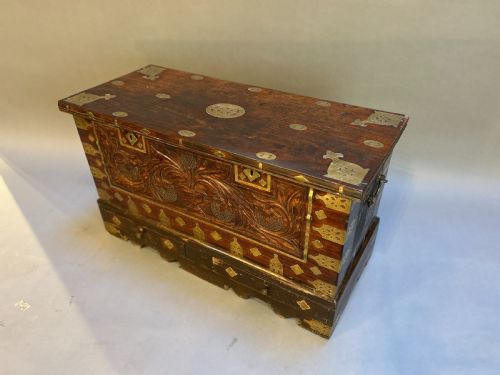
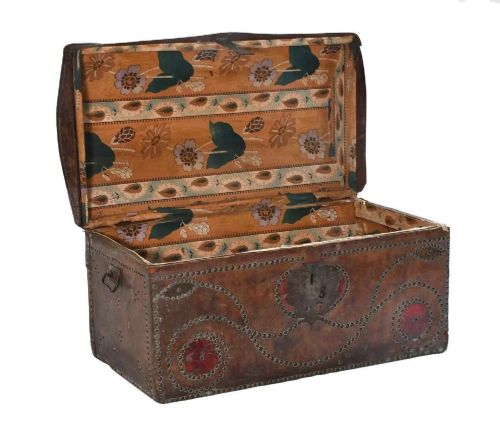
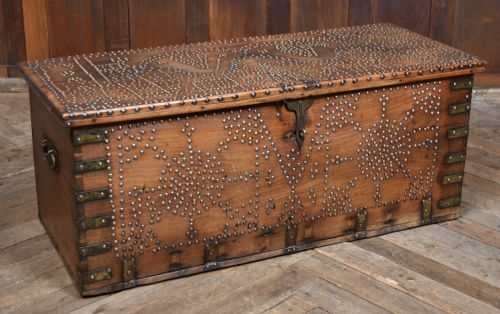
The selection includes Zanzibar chests, campaign trunks, and dome-top coffers intended for domestic storage or long journeys. Formats range from compact caskets to large country house ottomans and blanket boxes.
Origins span across English workshops, Dutch makers, Spanish contexts, and trade routes linking China and East Africa. Buyers encounter both flat-topped travel cases and domed storage chests.
How they were made
Construction relies on durable hardwoods such as padouk, camphor wood, teak, rosewood, shisham, and mahogany, reinforced with iron and bound in hide or leather. Artisans applied brass studs and nailhead details in intricate patterns across the exterior surfaces.
Metal carrying handles, strapwork, and bound edges provided structural strength for carriage and sea voyages. Interiors often remained unadorned timber, built to house garments and valuables safely.
Brass Studded Coffer Retail Price Guide 2026
Typical asking prices for brass studded coffer among the pieces listed under this phrase on Sellingantiques today, from the lower quarter to the upper quarter. They describe what is for sale here now, not the wider market.
Recorded forms include campaign trunks, Zanzibar chests, country house ottomans, dome-top coffers, and travel cases built by English, Dutch, and Spanish makers.
What varies in quality
Quality depends on the integrity of the timber frame, the density of the hardwood, and the precision of the brass studwork. Finer examples retain their original hand-dyed leather coverings, secure metal mounts, and working locks.
The sophistication of the brass decoration and the provenance indicated by maker signatures or specific regional styles distinguish standard utility trunks from high-status merchant chests.
Samuel Pratt·Wm. Insall of Bristol·Arthur Wannop·Chapple & Sons·Seabrook of St.Pauls
The Brass Studded Coffer Glossary
- Campaign trunk
- A portable storage chest designed for military officers or travellers, often featuring drop handles and reinforced corners. These pieces break down or travel easily.
- Zanzibar chest
- A distinct form of trade chest featuring heavy brass studding, strapwork, and compartments, often made from teak or shisham wood. They reflect East African and Indian Ocean trade connections.
- Casket
- A small, highly decorative box or chest used for storing valuables, documents, or jewellery. They frequently feature detailed leather cladding and metal bindings.
- Ottoman
- A large upholstered or covered storage box functioning as both seating and furniture. These pieces appear in nineteenth-century country house interiors.
Brass Studded Coffer: Frequently Asked Questions
What is a brass studded coffer used for?
These pieces serve as practical storage chests for blankets, clothing, and household items. They function effectively as coffee tables or statement furniture in living spaces.
Historically, they carried personal belongings during travel by coach, ship, or rail. Their sturdy construction protects contents while adding a decorative focal point to a room.
How do I identify a Victorian trunk?
Victorian trunks often display dark hardwoods, heavy brass studwork, and domed leather lids. Maker labels or stamps inside the lid frequently confirm the period.
They align with nineteenth-century manufacturing techniques, incorporating iron bindings and leather cladding. Examining the interior construction helps verify the age and origin.
What woods are used in these chests?
Makers utilised durable timbers suited to travel and maritime environments, including teak, camphor wood, padouk, rosewood, and shisham. These dense hardwoods resisted humidity and pests during long voyages.
Secondary woods and structural frames provided stability beneath leather or hide exteriors. Each timber type reflects the regional workshop or trade route of origin.
How do I care for leather and brass?
Maintain leather surfaces by cleaning gently and applying suitable conservation waxes to prevent drying. Avoid placing pieces in direct sunlight or damp conditions.
Polish brass studs sparingly to preserve their natural patina. Regular dusting keeps the metalwork and decorative nailheads secure within the hide.