

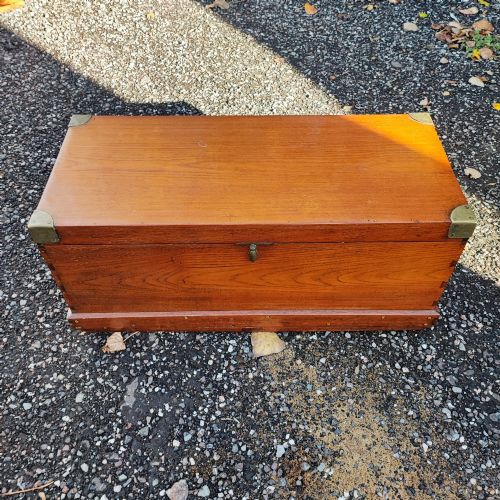
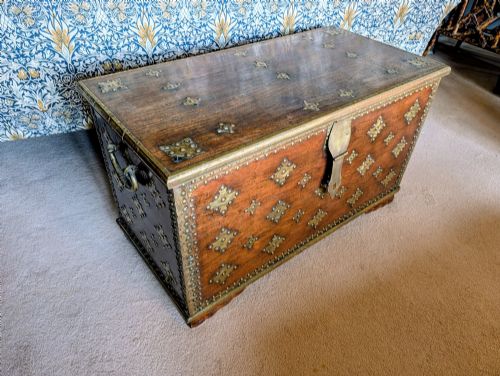
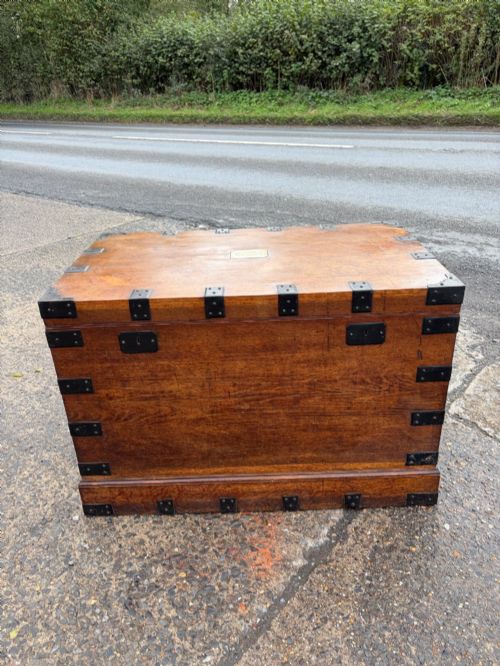
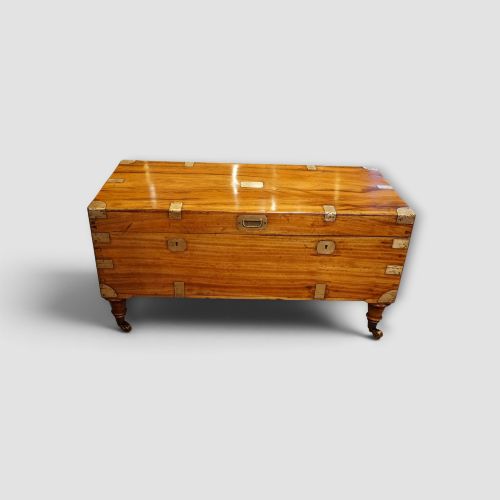

Brass Bound Coffer
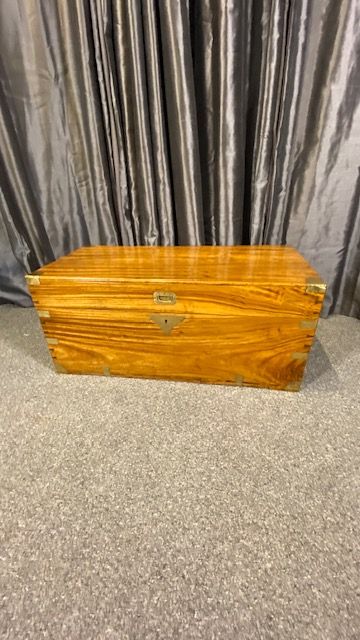
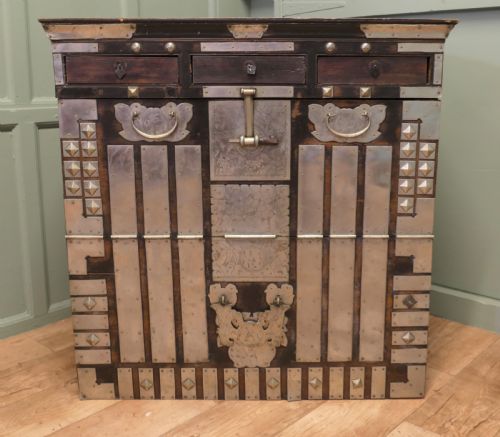
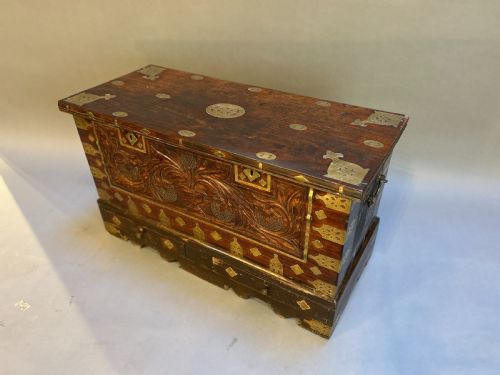
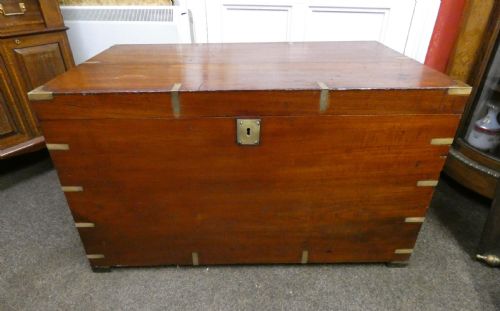
A brass bound coffer offers substantial storage built for travel, combining robust timber with protective metalwork.

Brass Bound Coffer
A brass bound coffer is a heavy storage chest reinforced with metal banding, designed to secure possessions during transit. Buyers searching for a brass bound coffer encounter sturdy trunks constructed for military officers, merchants, and travellers across distant colonies.
The versions most common on this page date predominantly from the nineteenth century, with Victorian campaign pieces appearing frequently. These examples often utilise aromatic timbers like camphor wood or dense hardwoods such as teak and padouk to withstand tropical climates.
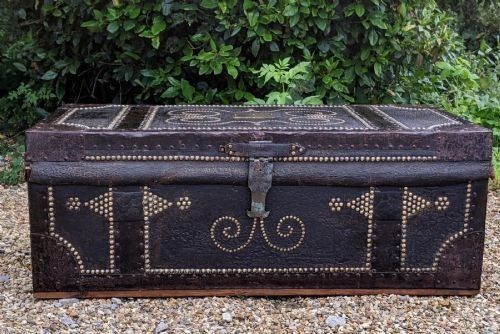
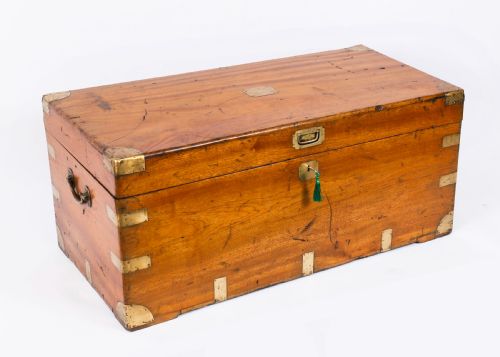
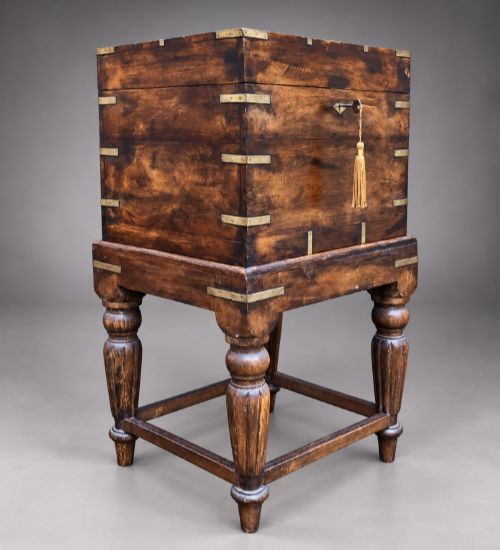
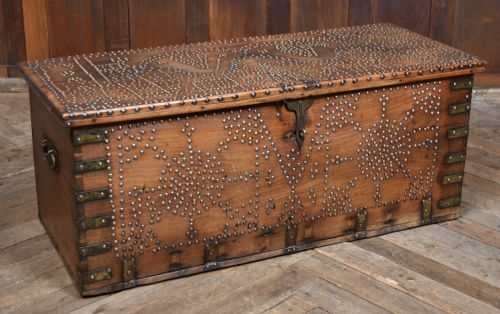
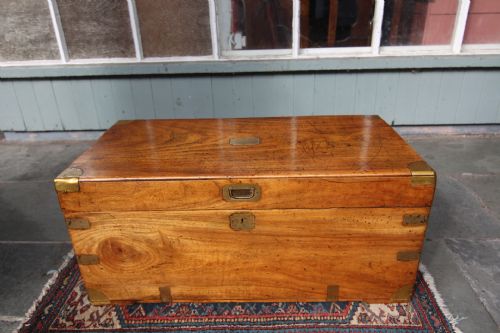
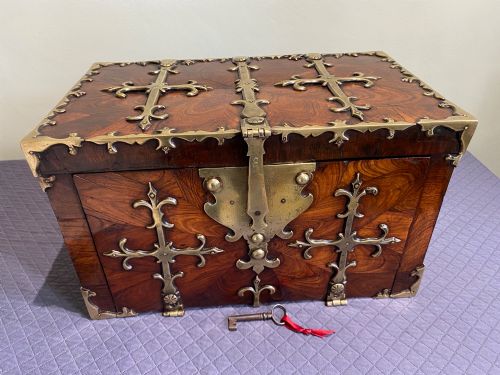
Forms range from compact deed boxes and cellarettes to large blanket chests and dome-topped trunks. Many retain original recessed brass carrying handles, corner brackets, and intricate lock plates intended for secure maritime or overland journeys.

How they were made
Carpenters constructed these chests using durable tropical woods, notably camphor wood, teak, padouk, and mahogany, frequently pairing them with secondary pine or walnut. These timbers resisted insect damage and warping in humid environments.
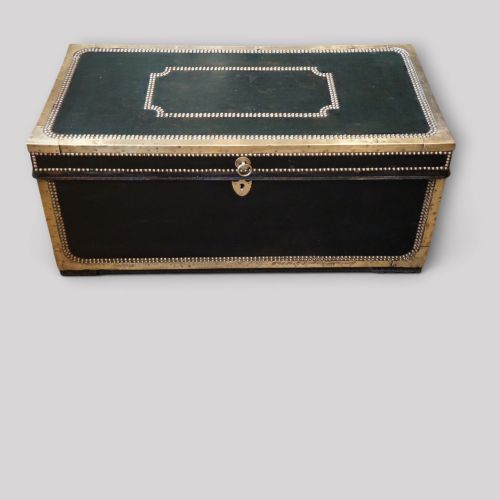
Protective sheets, straps, and decorative studs of brass, iron, or metal secured the structural joints and corners against the rigours of transport. Flush-fitting brass handles and inset key escutcheons allowed the boxes to pack tightly into ships and carriages.
Brass Bound Coffer Retail Price Guide 2026
Typical asking prices for brass bound coffer among the pieces listed under this phrase on Sellingantiques today, from the lower quarter to the upper quarter. They describe what is for sale here now, not the wider market.
Periods represented span from the seventeenth century through to the late Victorian era.
What varies in quality
The standard of a brass bound coffer depends on the integrity of its joinery, the thickness of its metal mounts, and the preservation of its original hardware. Finer examples retain working locks with matching keys, original leather linings, and untouched patination on the timber.
Construction details such as dovetailed corners, heavy-gauge brass strapwork, and secondary internal compartments separate utilitarian travelling pieces from high-status commissioned officer chests or luxury export items.

Samuel Pratt·Chapple And Sons
The Brass Bound Coffer Glossary
- Campaign trunk
- A portable chest built in sections or with folding elements for military officers on active service. These pieces typically feature recessed brass handles to prevent snagging.
- Camphor wood
- An aromatic timber native to Asia, prized for its insect-repellent properties and distinct scent. It forms the primary body of many colonial storage chests.
- Coffre forte
- A strongbox or reinforced coffer used for storing valuables, documents, or currency securely. These often incorporate complex internal locking mechanisms.
- Cellarette
- A specialised chest or box designed to hold wine bottles securely during transport. They frequently appear lined or divided for individual bottles.
- Padouk
- A heavy, dense exotic hardwood exhibiting a rich reddish hue, utilised for durable furniture and export trunks. It offers exceptional resistance to decay.
Brass Bound Coffer: Frequently Asked Questions
What is a brass bound coffer used for?
These chests served primarily for transporting uniforms, documents, and personal valuables during military campaigns or maritime voyages.
Today, they function domestically as coffee tables, blanket boxes, or statement storage furniture in living spaces.
How do I identify a campaign trunk?
Campaign trunks display distinctive flush-fitting brass hardware, reinforced corners, and side carrying handles designed for efficient packing.
Many examples also divide into two stacked sections or utilise lightweight yet durable timbers like camphor wood.
Are these chests made of solid camphor wood?
Most campaign chests utilise solid camphor wood for its insect-repellent qualities and pleasant fragrance, which protected stored textiles from moths.
Some larger export pieces combine solid framing with thick panels designed to withstand severe humidity and handling.
How should I clean a leather bound trunk?
Leather surfaces require gentle dusting with a soft cloth followed by occasional application of appropriate conservation wax.
Avoid using modern liquid cleaners or excessive moisture, which can damage aged hides and historic metal studs.