


Dark Wood Trunk
A dark wood trunk is a heavy timber storage piece built to hold household valuables, bringing centuries of grounded character into a modern room.
What a dark wood trunk is
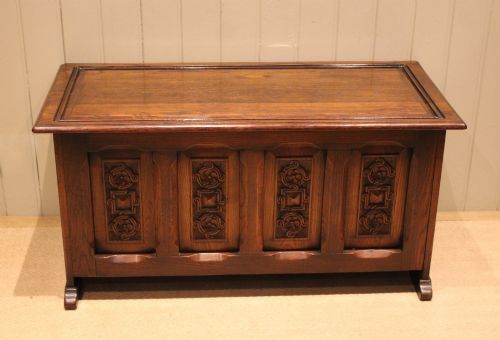
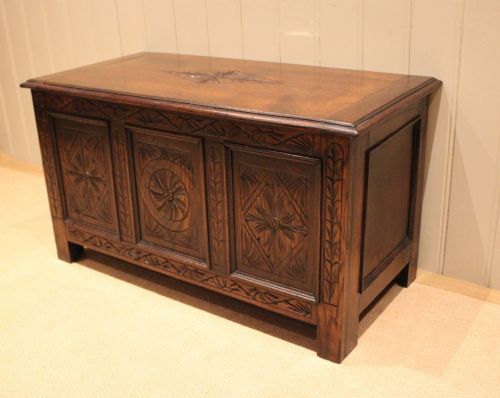
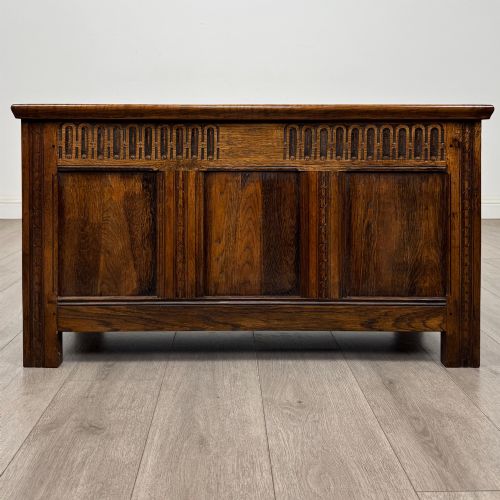
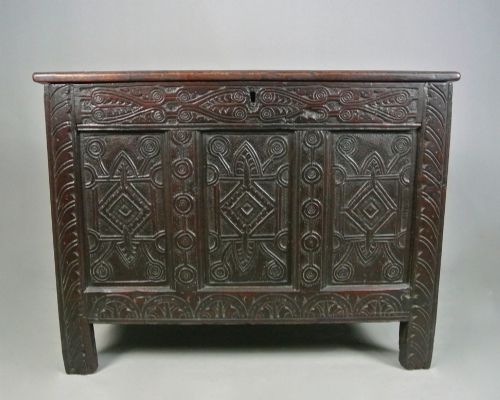
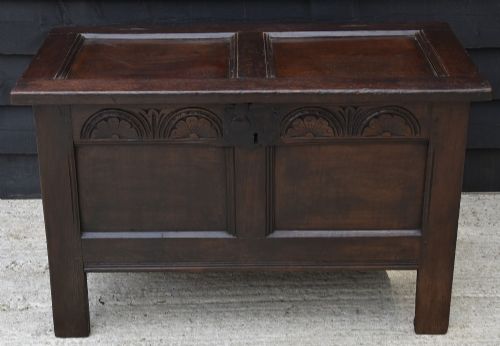
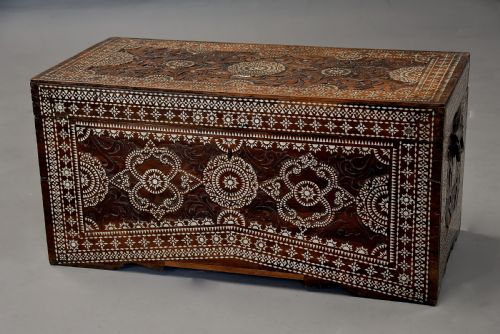
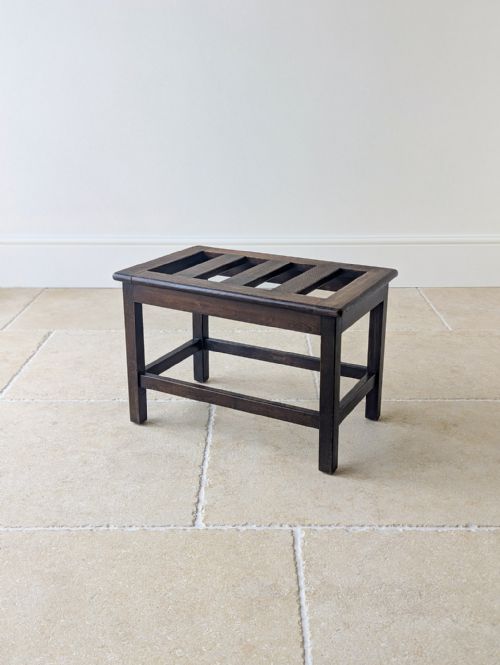
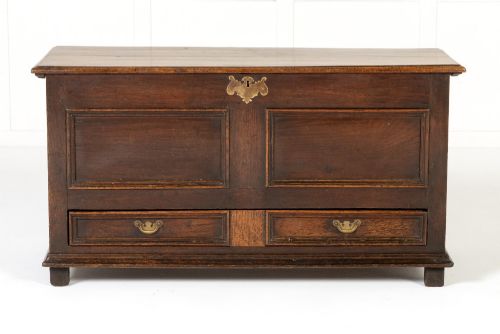
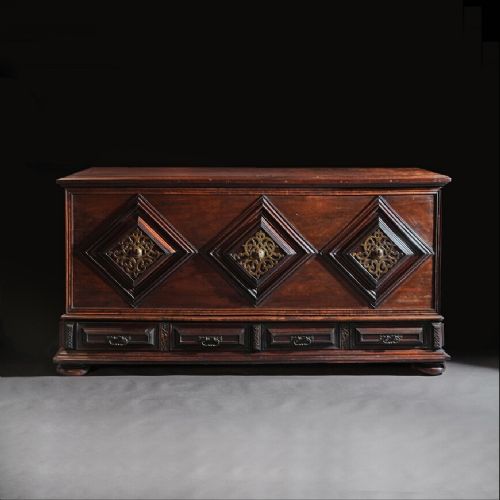
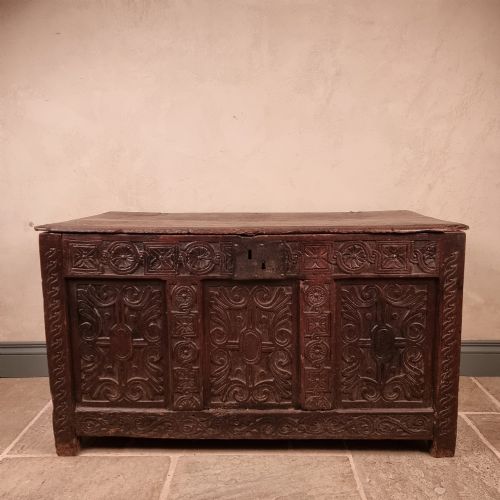
When you search for a dark wood trunk, you encounter robust timber chests and coffers created for secure storage across domestic and travel contexts. The pieces on this page span several centuries, featuring regional vernacular items alongside heavily mounted colonial examples.
You are most likely to meet oak and mahogany forms, ranging from early Welsh vernacular coffers to studded Victorian travel trunks. These heavy pieces served as portable wardrobes or secure containers for family linen and valuables before fitted furniture became common.
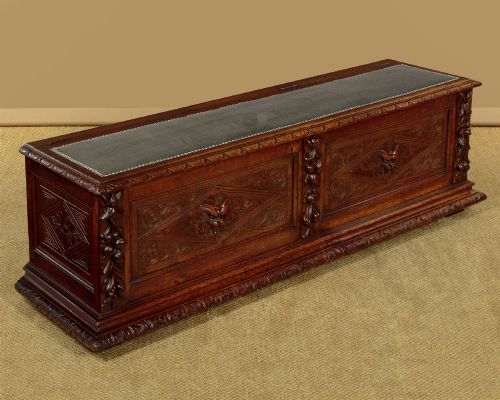
The selection includes low coffer bach forms alongside monumental Portuguese and African carriage trunks. Each item displays the distinct construction habits of its period, from primitive pegged joints to brass-studded leather and iron reinforcement.
How they were made
Maker-joiners built these trunks from dense hardwoods including oak and mahogany, relying on sturdy pegged frame-and-panel construction or solid board assembly. Hand-carving adorned the front panels of vernacular pieces, while structural integrity came from substantial timber thickness.
Metalwork formed an essential part of the manufacture, with blacksmith-forged iron hinges, latches, and corner brackets securing the heavy lids. Studded decoration using brass nails added both surface pattern and reinforcement to leather-covered travel trunks.
Retail Price Guide 2026
Typical UK retail prices for dark wood trunk, calculated from the Sellingantiques database of over a million retail prices indexed since 2003. This retail price guide relies exclusively on Sellingantiques data; no external sources or auction records are used, so the figures do not describe the wider market.
Studded carriage trunks crossed oceans on ships before finishing their journeys as staunch guardians of household blankets.
What varies in quality
Quality rests in the integrity of the original timber and the ambition of the hand-carved or metal-studded ornamentation. Early vernacular pieces derive their appeal from untouched surface patination and honest regional construction methods.
Sophistication of hardware distinguishes standard utilitarian boxes from high-status colonial and travel chests. Heavy brass mounts and intricate decorative studwork indicate a piece commissioned for wealthy households or long-distance transit.
The Dark Wood Trunk Glossary
- Coffer
- A heavy wooden chest traditionally used for storing valuables and documents. These pieces often feature hinged lids and sturdy boarded construction.
- Coffer bach
- A small Welsh chest, translating literally as little coffer. These miniature versions served specific domestic storage needs in regional households.
- Vernacular
- Architecture and furniture built by local craftsmen using traditional regional styles and native materials. Such items reflect the specific character of their geographic origin.
- Carriage trunk
- A durable container designed for travel by horse-drawn transport or ship. These items utilised robust hardware to withstand the rigours of transit.
Frequently Asked Questions
What were dark wood trunks used for?
These heavy timber chests served as secure storage for household linens, valuable documents, and personal possessions before fitted wardrobes existed.
Travellers also utilised reinforced versions as luggage for long journeys by sea and carriage.
How do I date an old wooden chest?
Dating relies on observing construction methods, timber species, and original hardware. Early pieces show pegged joints and hand-carving, while later Victorian items often feature machine-sawn boards and industrial fixings.
Stylistic details like vernacular motifs or colonial brass studwork also point to specific periods and regions.
Where should I place a trunk in my home?
A sturdy timber trunk works well as a coffee table in a living room, providing hidden storage for blankets and books.
They also sit effectively at the foot of a bed or in a hallway as a striking focal point.
How do I care for antique dark wood?
Maintain the timber by keeping it away from direct heat sources and sudden humidity changes that cause wood to split. Feed the surface occasionally with traditional beeswax to preserve the natural lustre of the aged grain.
Avoid harsh chemical cleaning products that strip the historic patination.