





Welsh Oak Coffer
Discover the character of a genuine welsh oak coffer, built to hold household textiles and valuables through centuries of domestic life.
Welsh Oak Coffer
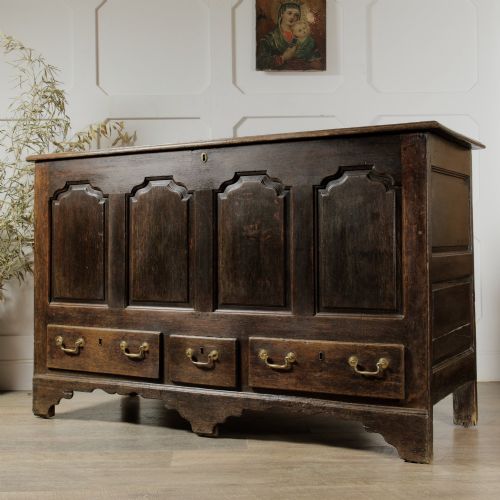
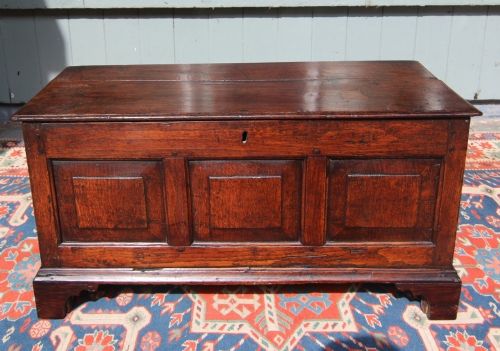
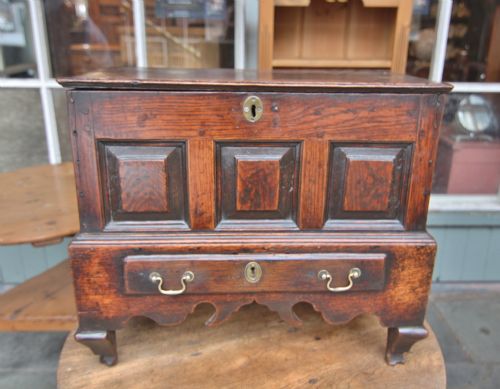
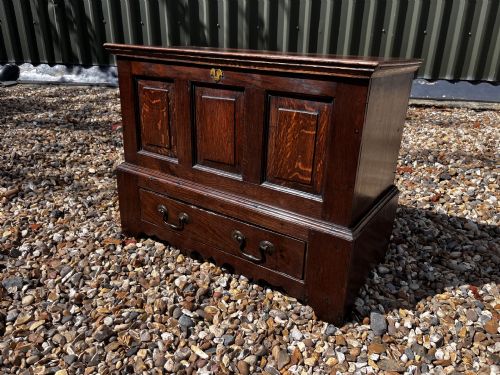
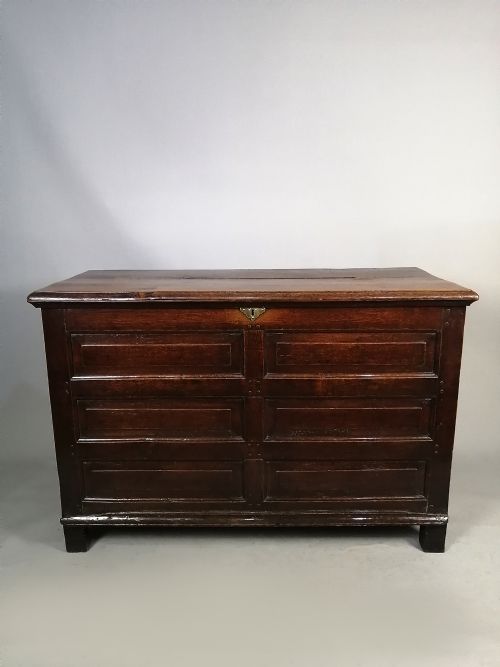
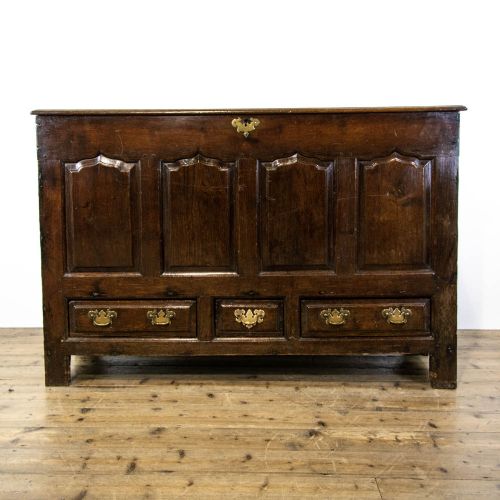
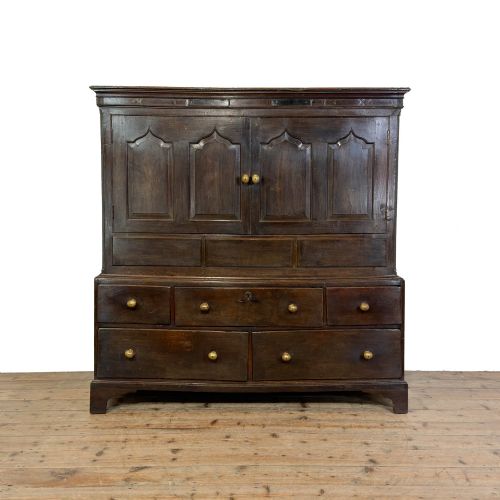
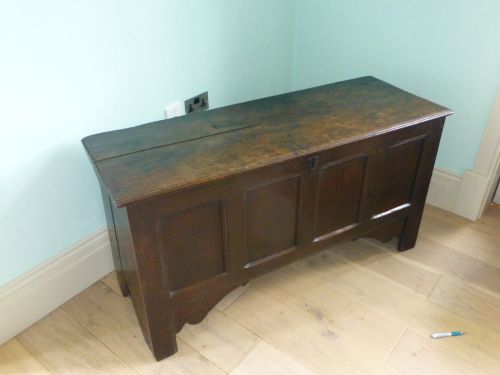
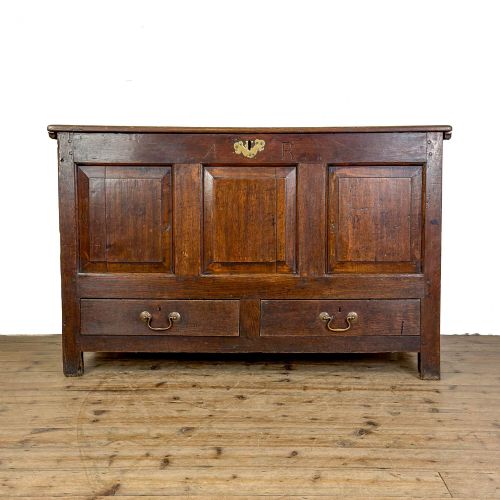
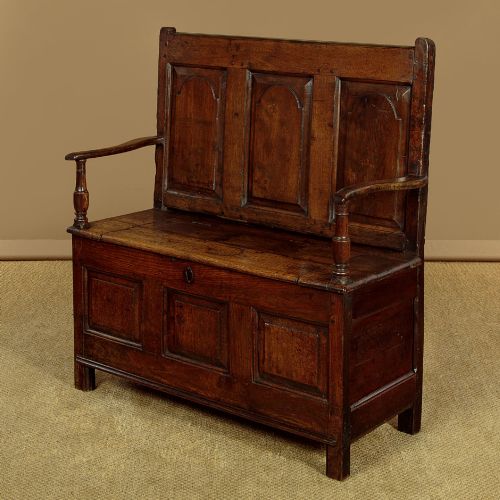
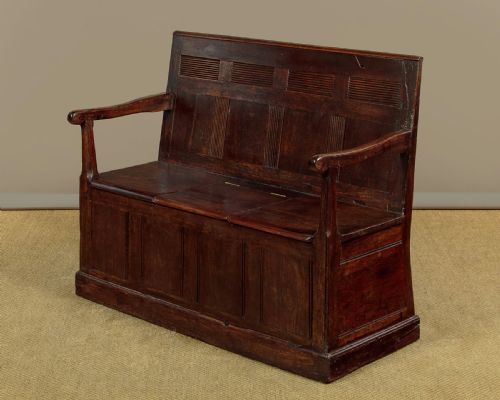
A welsh oak coffer is a sturdy storage chest constructed for domestic utility, frequently appearing on this page as full-sized blanket boxes or smaller miniature versions known as coffer bach. The pieces span periods from the sixteenth century through the Georgian era and into the nineteenth century, reflecting vernacular workshop traditions across regions such as Carmarthenshire and Snowdonia. Collectors also encounter related forms including mule chests fitted with lower drawers, box settles, and livery cupboards.
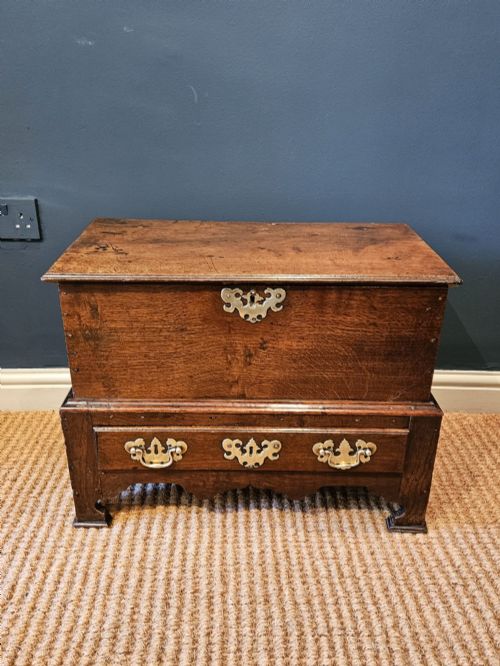
The regional vernacular style often displays panelled construction, straightforward joinery, and occasionally carved details or fruitwood inlay. Smaller coffer bach examples sit on bracket or turned feet, designed to rest upon tables or side surfaces for storing personal valuables. Larger full-sized coffers served primary roles as blanket chests, marriage coffers, and general storage for household linens.
How They Were Made
Construction relies heavily on native oak timber, chosen for durability and strength, frequently complemented by secondary woods like fruitwood for decorative inlay work. Panels are pegged into joined frames, allowing the timber to expand and contract naturally through seasonal temperature shifts without cracking the structure.
Hardware such as hinges, latches, and lock plates utilise wrought iron and brass, often secured by hand-hammered nails or screws specific to the period of manufacture.
Welsh Oak Coffer Retail Price Guide 2026
Typical asking prices for welsh oak coffer among the pieces listed under this phrase on Sellingantiques today, from the lower quarter to the upper quarter. They describe what is for sale here now, not the wider market.
Certain early seventeenth-century pieces preserve original owner initials and dates carved directly into the oak framework by the maker.
What Varies in Quality
The distinction between standard examples and exceptional pieces rests in the depth of surface patina achieved through generations of handling and polishing. Original feet, hinges, and timber lids carry significantly more weight than replacements fitted during later centuries.
Proportion and regional carving detail elevate certain pieces, particularly where vernacular flourishes like fruitwood inlay or early seventeenth-century panels remain intact and undisturbed by aggressive restoration.
The Welsh Oak Coffer Glossary
- Coffer bach
- A small miniature chest or box originating from Wales, typically fitted with a single drawer beneath the main compartment and raised on feet. These smaller receptacles were frequently made as marriage gifts or presentation pieces.
- Mule chest
- A storage chest featuring one or more drawers built into the base beneath the primary compartment. This form bridges the traditional chest and the modern chest of drawers.
- Box settle
- A wooden bench incorporating a high panelled back and a hinged seat concealing a storage box underneath. They were placed near hearths to block draughts in traditional homes.
- Livery cupboard
- A ventilated storage piece used originally for keeping food or provisions, constructed with turned spindles or pierced panels for air circulation. Surviving examples date primarily from the seventeenth and eighteenth centuries.
- Vernacular furniture
- Domestic items built by local regional craftsmen using native materials rather than adhering to formal metropolitan design styles. This tradition defines the character of Welsh cabinet-making.
Welsh Oak Coffer: Frequently Asked Questions
What is a coffer bach used for?
A coffer bach served as a miniature storage chest for precious items, documents, or textiles within the home. Their compact size allowed them to sit safely on top of tables or sideboards.
Many were commissioned to mark significant life events such as marriages or births, functioning as personal heirloom pieces within Welsh families.
How do I date an oak coffer?
Dating relies on examining the construction methods, such as hand-split oak panels, pegged joinery, and the style of any carved motifs. Early pieces from the sixteenth and seventeenth centuries tend to show heavier framework and simpler, deeper mouldings.
Hardware components like wrought iron strap hinges and original locks also provide strong chronological clues when compared against documented regional examples.
Where were these coffers made?
These pieces were produced across various Welsh regions, with distinct characteristics emerging from areas like Snowdonia, Carmarthenshire, and the Gower Peninsula. Local rural workshops adapted standard cabinet-making techniques to suit available materials and regional tastes.
Makers utilised local oak timber and occasionally incorporated fruitwood inlay to distinguish their output from English equivalents.
How do I care for antique oak?
Antique oak benefits from stable indoor humidity levels and protection from direct sunlight, which can dry out and fade the timber. Maintaining a consistent environment prevents the wood panels from splitting along historical joinery lines.
Applying traditional beeswax polish occasionally helps nourish the surface and preserve the deep natural patina accumulated over centuries.