
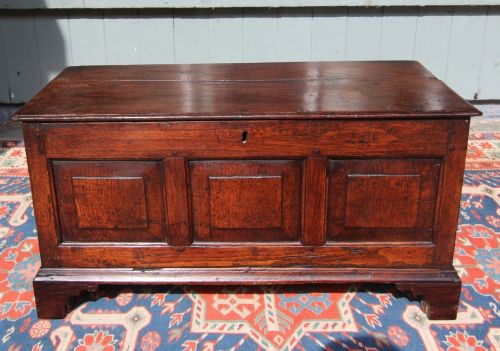


Fielded Panel Chest
A fielded panel chest is a sturdy timber storage piece built to hold household textiles and valuables, offering both rugged utility and honest craft.
Fielded Panel Chest
When you search for a fielded panel chest, you are looking at substantial storage furniture built primarily from native hardwoods during the seventeenth and eighteenth centuries. These pieces appear in regional forms such as the Welsh vernacular and rustic English country styles, carrying the marks of vernacular cabinet making.
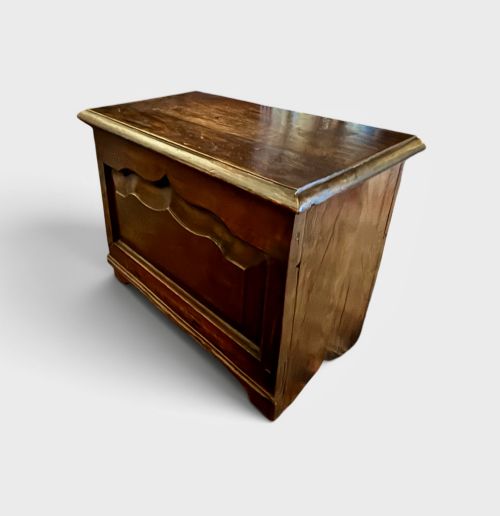
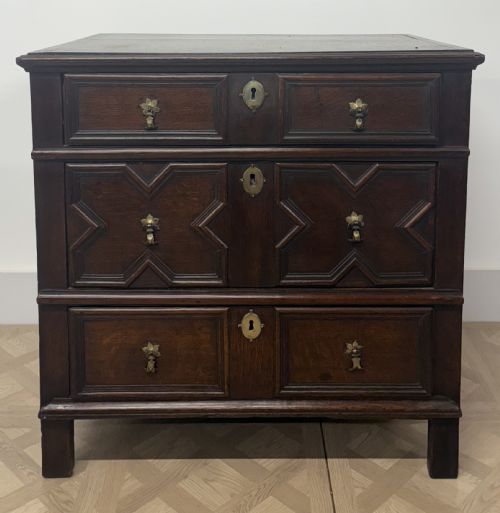
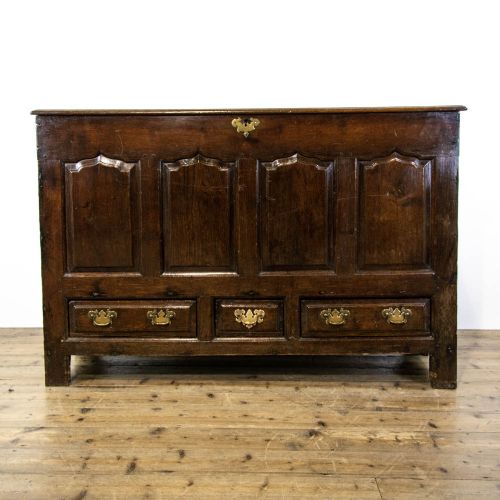
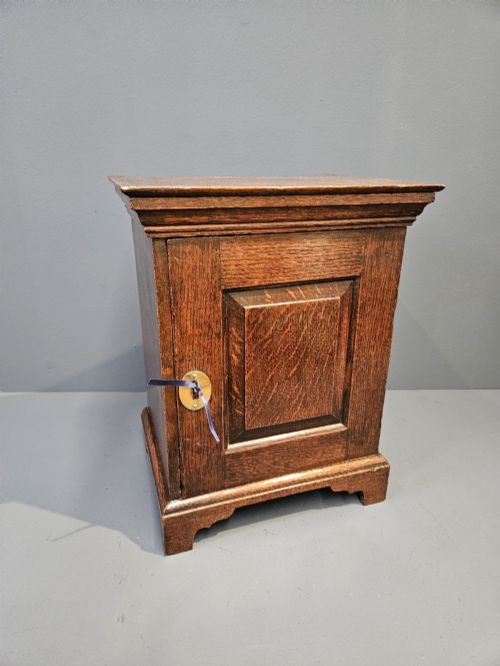
The versions you are most likely to meet on this page span the 17th Century, the Georgian era, and the 19th Century, frequently taking the form of mule chests, coffers, and spice cupboards. Many incorporate lower drawer arrangements beneath the primary storage well, combining blanket storage with compartmentalised organisation.
The construction of a fielded panel chest relies on frame and panel joinery, allowing the timber to expand and contract naturally with seasonal humidity changes. This method defines the visual rhythm of the facade, where central panels are bevelled down to fit securely into grooved framing members.
How they were made
Makers built these pieces predominantly using solid oak, supplemented by walnut for specific decorative surfaces and supported by iron hinges, locks, and brasses. The primary timber was cleft and sawn from local trees, ensuring deep grain patterns and dense structural integrity that survived centuries of domestic use.
Joinery techniques depended on mortise and tenon joints secured with wooden pins, creating rigid frameworks without relying on modern adhesives. Panels were bevelled at the edges to create the characteristic fielded profile, fitting loosely within the surrounding stiles and rails to accommodate wood movement.
Listings span the 17th Century, 18th Century, Georgian period, and 19th Century, executed in oak, walnut, brass, and iron.
What varies in quality
Quality in a fielded panel chest rests upon the selection of timber and the precision of the joinery rather than surface ornamentation. Finer examples display carefully matched grain across the fielded panels and tight, flush joints in the framing.
Proportion and structural retention dictate the upper tier of these pieces, where original brass hardware, ironwork, and untouched timber surfaces remain intact. Lesser examples show extensive timber replacement, clumsy hardware substitutions, or poorly refitted panels that disrupt the original tactile balance.
The Fielded Panel Chest Glossary
- Fielded panel
- A wooden panel with bevelled edges that thin out toward the perimeter so the centre sits proud within the surrounding frame. This technique reduces overall weight while adding structural stability and depth.
- Mule chest
- A storage chest featuring one or more drawers built into the base beneath the main compartment. It bridges the design gap between a simple coffer and a full chest of drawers.
- Coffer
- A heavy wooden box with a hinged lid used historically for storing valuables, documents, or garments. These represent the earliest ancestors of domestic case furniture.
- Stile
- The vertical upright member in a frame and panel construction. It houses the mortises that receive the horizontal rails.
- Vernacular
- Furniture designed and built by local tradesmen for domestic use rather than following high-style metropolitan fashions. These pieces reflect regional materials and practical community needs.
Fielded Panel Chest: Frequently Asked Questions
What is a fielded panel chest used for?
These chests served historically to store household textiles, blankets, clothing, and valuable documents away from damp floors. Today, they function well as blanket boxes at the foot of a bed or as living room storage.
Their robust timber construction allows them to double as occasional surface tables or seating benches while concealing everyday clutter inside.
How do I date a fielded panel chest?
Dating relies on examining the joinery methods, timber species, and overall proportions of the piece. Seventeenth-century examples often feature heavier oak frames with peg construction, while Georgian and later pieces incorporate finer mouldings and integrated drawers.
Hardware styles and tool marks left on the interior boards also provide clear clues to the manufacturing era.
What is the difference between a coffer and a mule chest?
A traditional coffer consists of a simple box with a lid and no drawers beneath the main storage cavity. A mule chest adds one or more drawers to the base of the structure.
This evolutionary step made frequently used items accessible without needing to lift the heavy top lid.
How should I care for an antique oak chest?
Keep wooden chests away from direct heat sources and dramatic humidity fluctuations to prevent the oak panels from splitting. Apply a traditional beeswax polish occasionally to nourish the timber and maintain a soft lustre.
Avoid using modern silicone sprays or harsh chemical cleaners that strip the historic surface finish.