
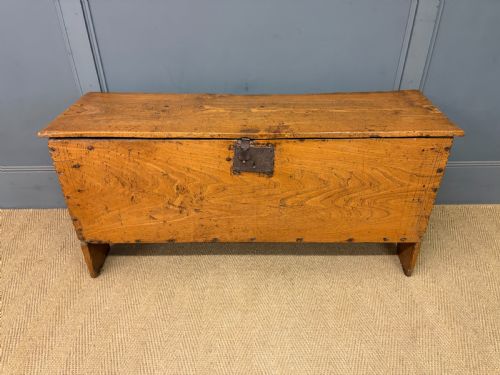
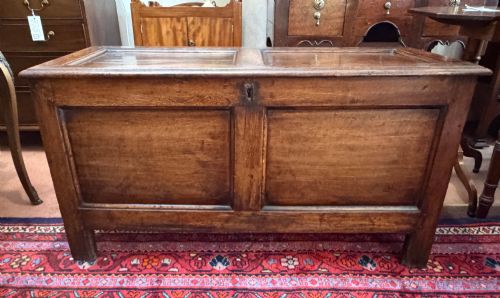
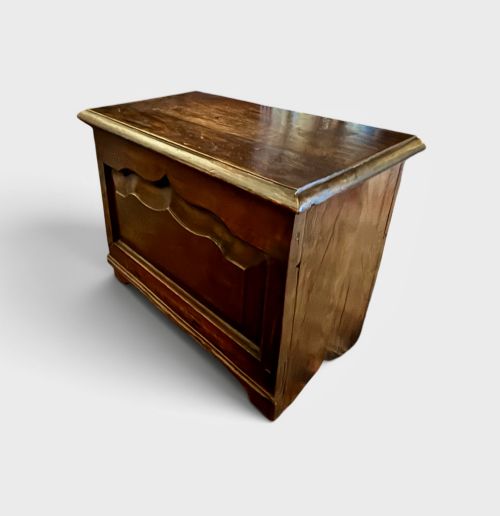
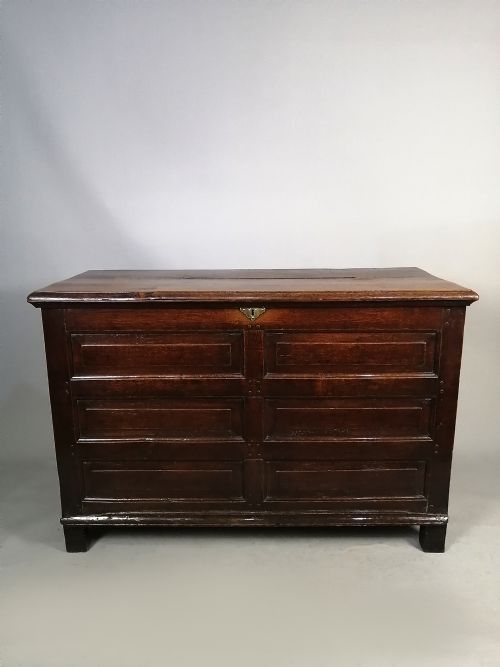
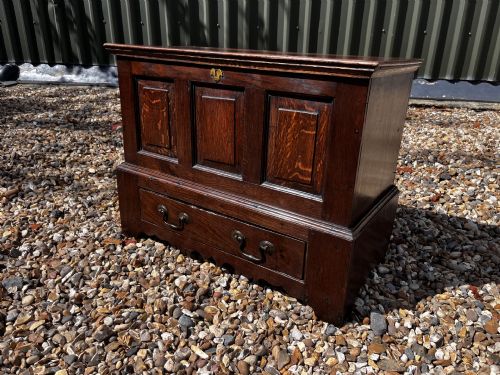
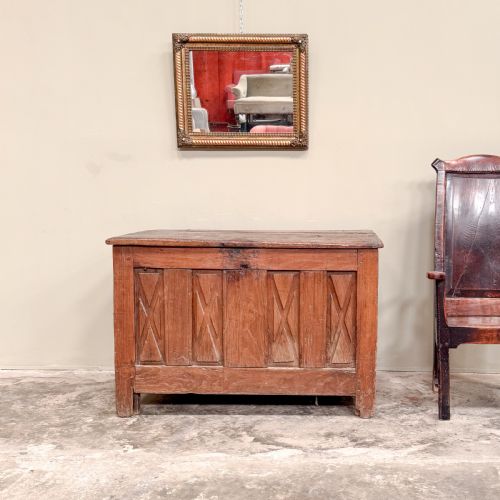
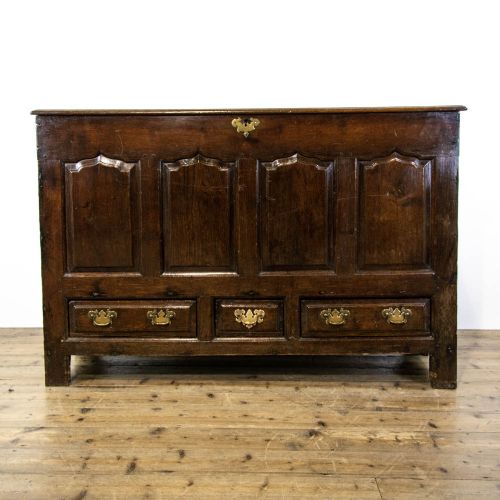
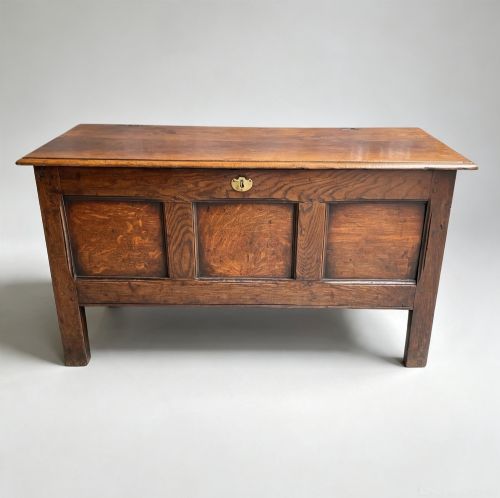

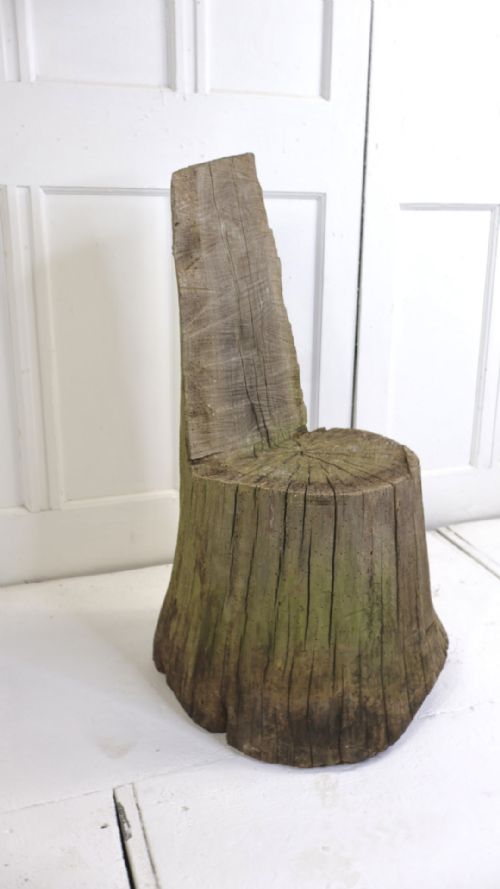
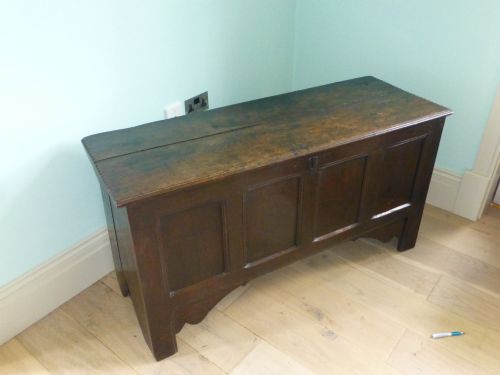
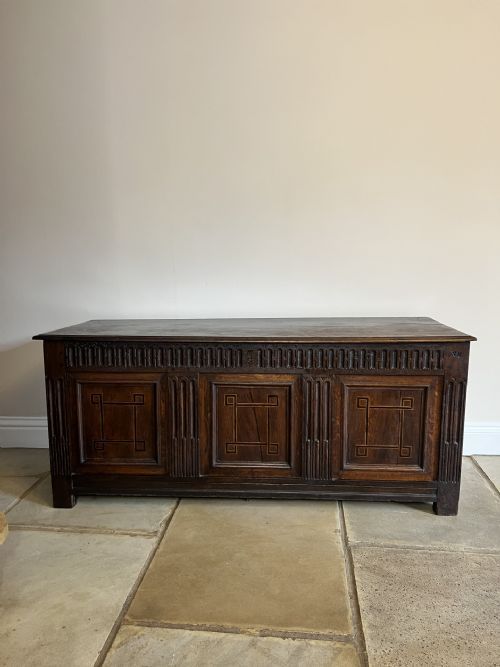
Country Oak Trunk
A country oak trunk brings honest utility and centuries of patination straight into a room, offering robust storage built for daily service.
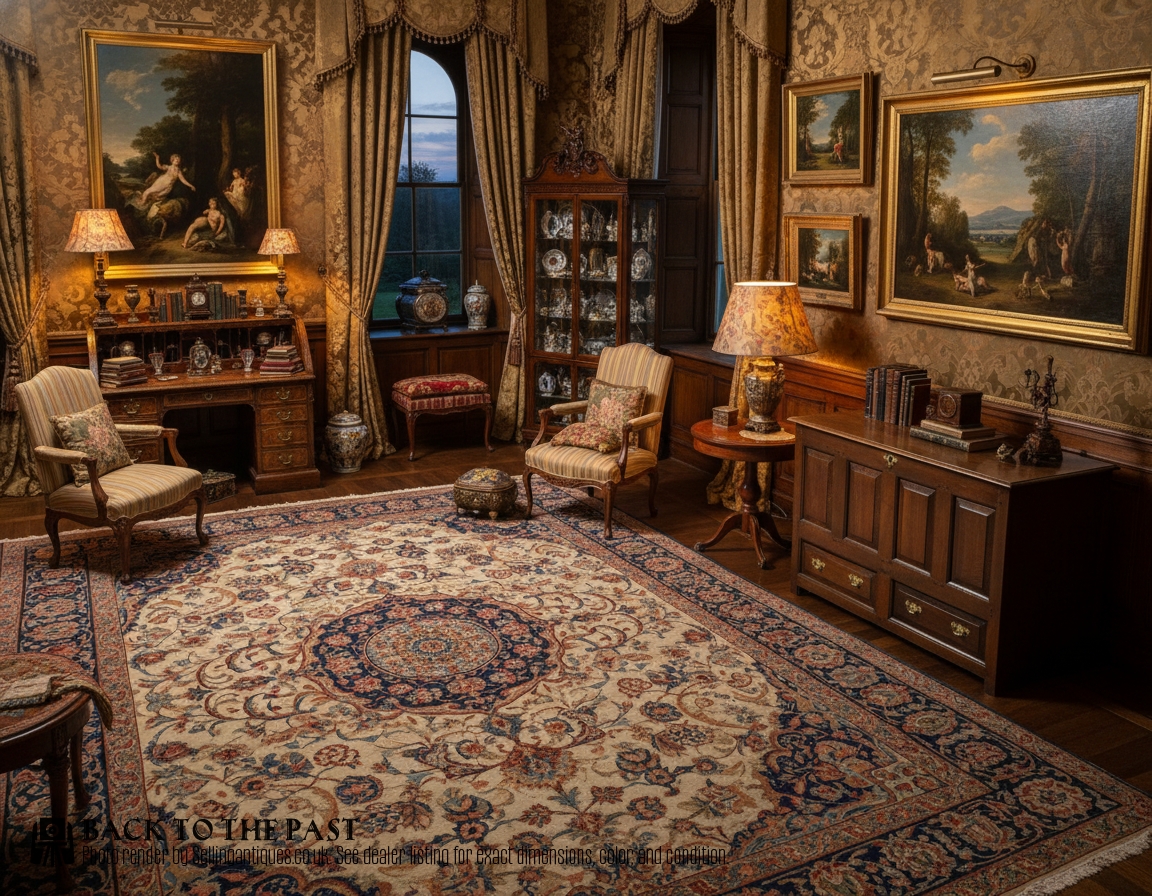
What a country oak trunk is
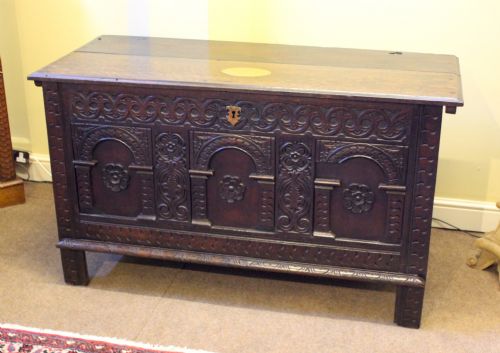
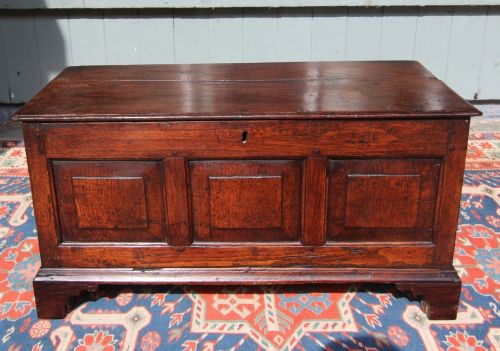
A country oak trunk encompasses utilitarian coffers, storage chests, and mule chests designed for household containment. These pieces serve as blanket boxes, storage trunks, and provincial furniture built for rural domestic life.
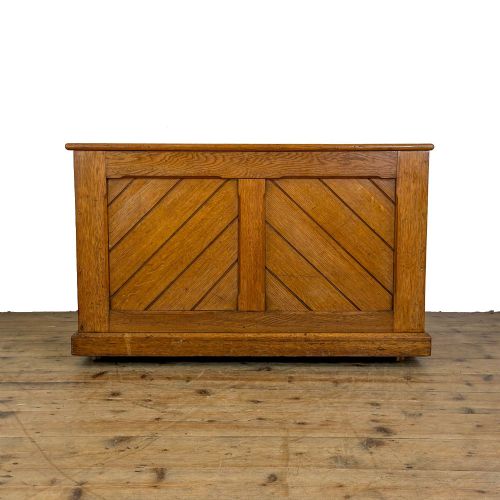
The versions most commonly met span the seventeenth century through to the Edwardian period, alongside examples dated around nineteen hundred and nineteen ten. Styles range from rustic English country and farmhouse to Georgian provincial and Jacobean forms.
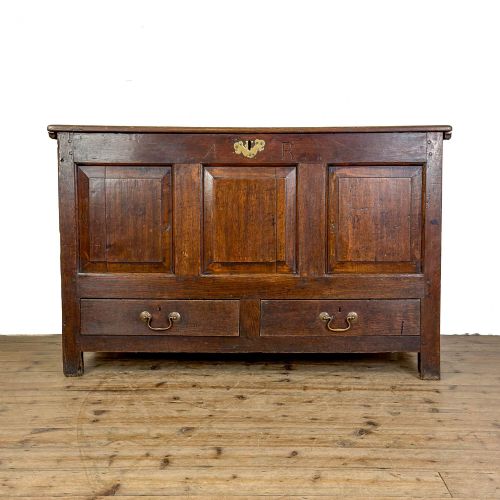
Mule chests and panel chests feature prominently in the record, showing standard regional variations in domestic storage. The construction demonstrates straightforward vernacular woodworking traditions without unnecessary ornament.
How they were made
Construction relies primarily upon solid oak timbers, paired with functional hardware forged from brass and iron. Woodworkers utilised local hardwoods to form sturdy panelled walls and heavy lids capable of withstanding heavy domestic use.
Joinery methods reflect traditional regional techniques, bringing together thick planks and structural frames to ensure longevity. Metal components such as iron hinges and brass fastenings secure the lids and add utilitarian detail.
Retail Price Guide 2026
Typical UK retail prices for country oak trunk, calculated from the Sellingantiques database of over a million retail prices indexed since 2003. This retail price guide relies exclusively on Sellingantiques data; no external sources or auction records are used, so the figures do not describe the wider market.
Listings span periods from the seventeenth century through to the Edwardian era, employing solid oak with iron and brass hardware.
What varies in quality
Quality separates through the integrity of the timber selection and the retention of original structural surfaces. Pieces displaying deep, untouched surface patination and honest proportions sit well above later or heavily altered examples.
The sophistication of the provincial joinery and the survival of period brass or iron hardware determine the standing of each chest. Earlier seventeenth and eighteenth century pieces display distinct hand-worked characteristics that elevate their standing against later twentieth-century interpretations.
The Country Oak Trunk Glossary
- Oak
- A hard, durable timber native to Britain, prized for its strength and prominent grain patterns in vernacular furniture.
- Mule chest
- A storage chest featuring one or more drawers beneath the main internal compartment, bridging the form of a coffer and a chest of drawers.
- Coffer
- A traditional box or chest used for storing valuables, linen, or documents, usually fitted with a hinged lid.
- Panelling
- A method of construction where vertical stiles and horizontal rails frame thinner central boards to accommodate seasonal wood movement.
- Patina
- The surface sheen and colour developed over decades and centuries of handling, polishing, and environmental exposure.
Frequently Asked Questions
What is a country oak trunk used for?
These pieces function primarily as deep storage vessels for blankets, heavy textiles, and household goods. They sit easily at the foot of a bed or within a living space.
Their sturdy flat lids also allow them to double as occasional side tables or window seats while keeping contents securely enclosed.
How do I date a country oak trunk?
Dating relies on observing construction methods, timber preparation, and stylistic cues from periods such as the seventeenth or eighteenth century. Hand-tooled markings and early panel assembly indicate greater age.
Later Edwardian or twentieth-century pieces often show more uniform machine-sawn timber preparation and standardised hardware fittings.
Are mule chests different from standard trunks?
Mule chests incorporate one or more functional drawers beneath the main lifting lid compartment. This hybrid design evolved to provide easier access to smaller items without disturbing the contents piled above.
Standard trunks and coffers rely purely on top-opening lids for access to a single internal well.
How should I care for antique oak?
Maintain the timber by keeping it away from direct heat sources and sudden humidity shifts that cause wood to split. Regular dusting with a dry cloth preserves the dry finish.
Avoid modern silicone polishes, applying traditional beeswax sparingly only when the surface appears dry to the touch.