
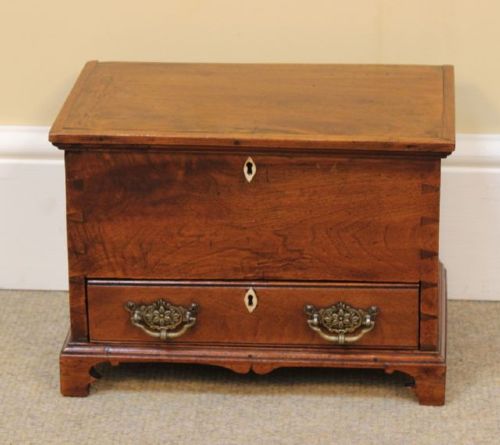
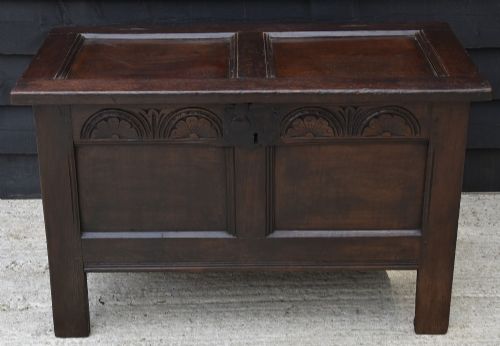
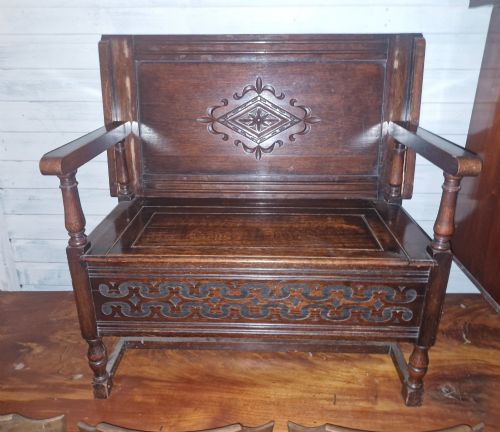
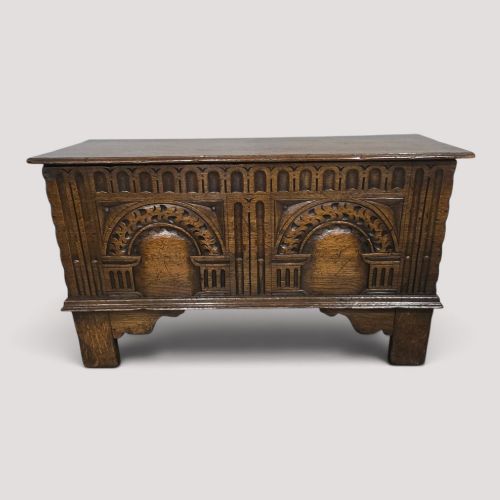
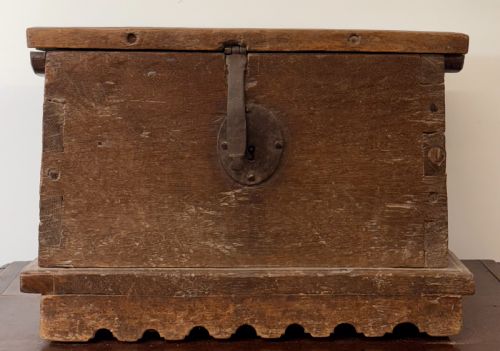
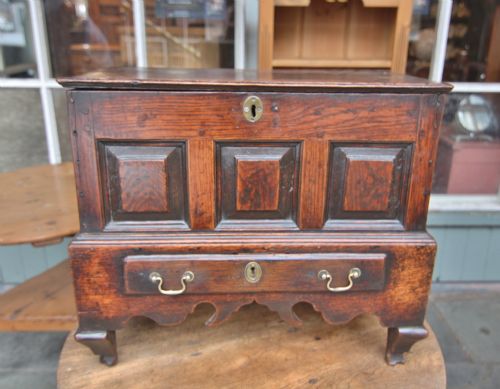
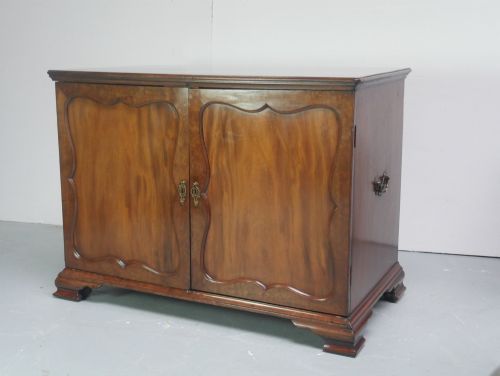
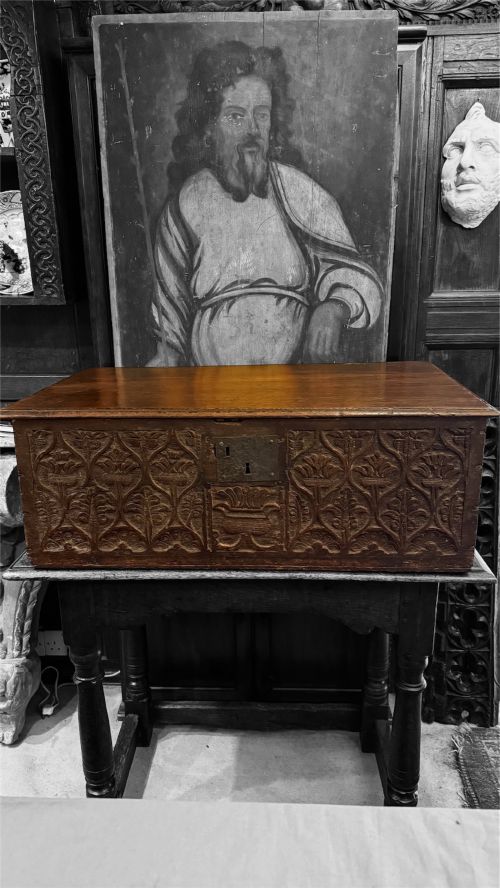
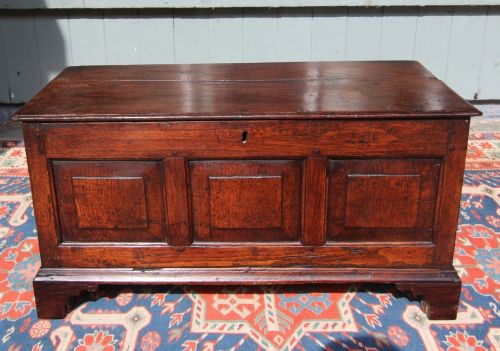
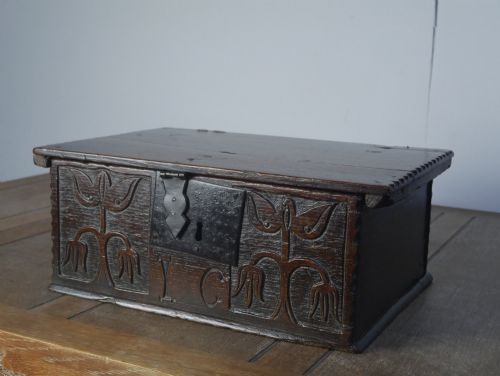
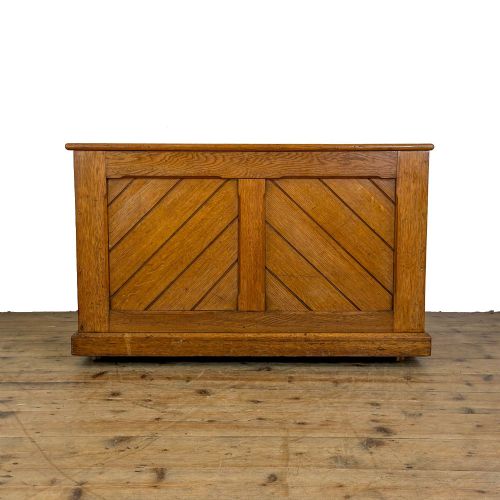
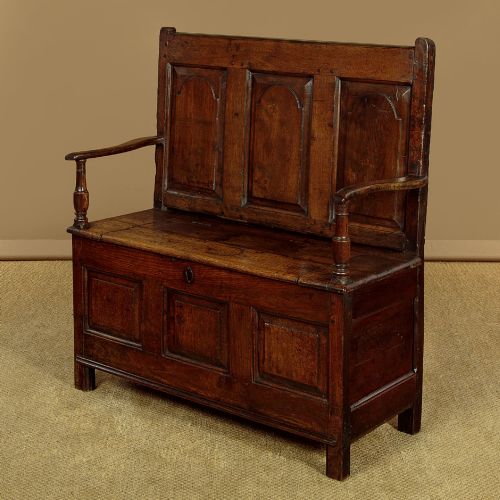
Small Wooden Coffer
A small wooden coffer offers compact storage with centuries of domestic craft behind it.
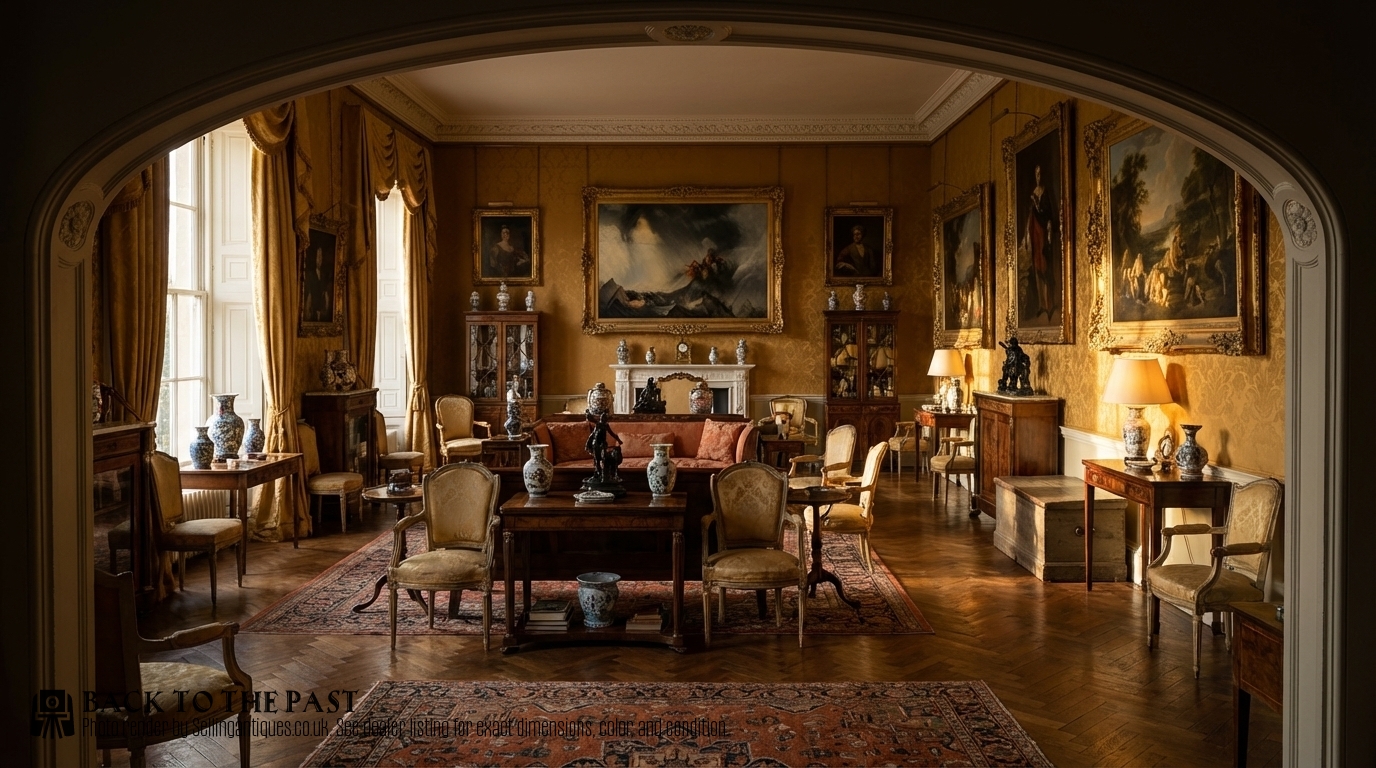
Understanding a small wooden coffer
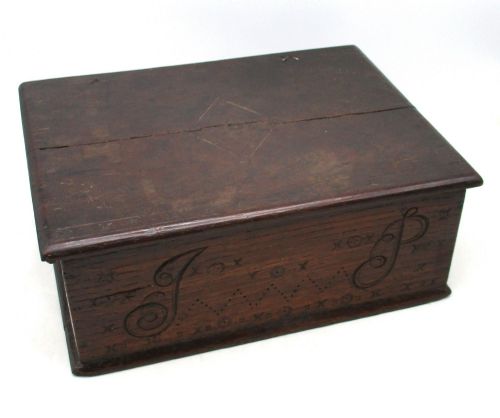
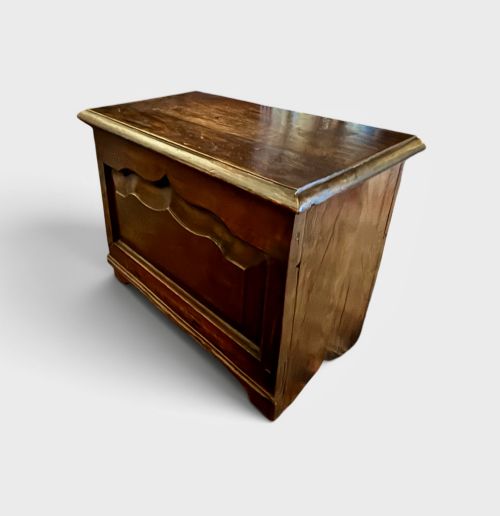
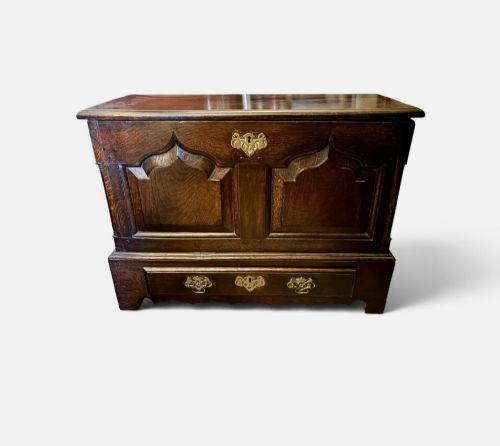
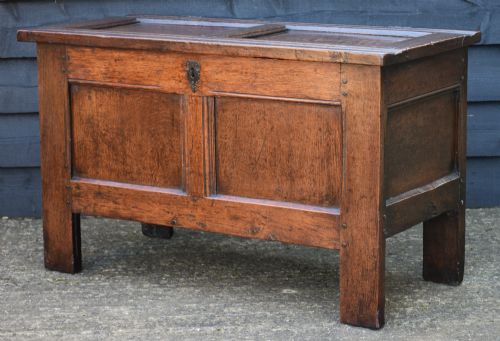
A small wooden coffer functions primarily as a compact storage chest for domestic valuables, textiles, or documents. Pieces matching this description appear across the eighteenth and nineteenth centuries, including regional Welsh forms and Victorian examples.
Buyers encounter distinct forms ranging from tea caddies and dome boxes to miniature coffers and artisan chests. These pieces span the eighteenth century, the nineteenth century, and Victorian production.
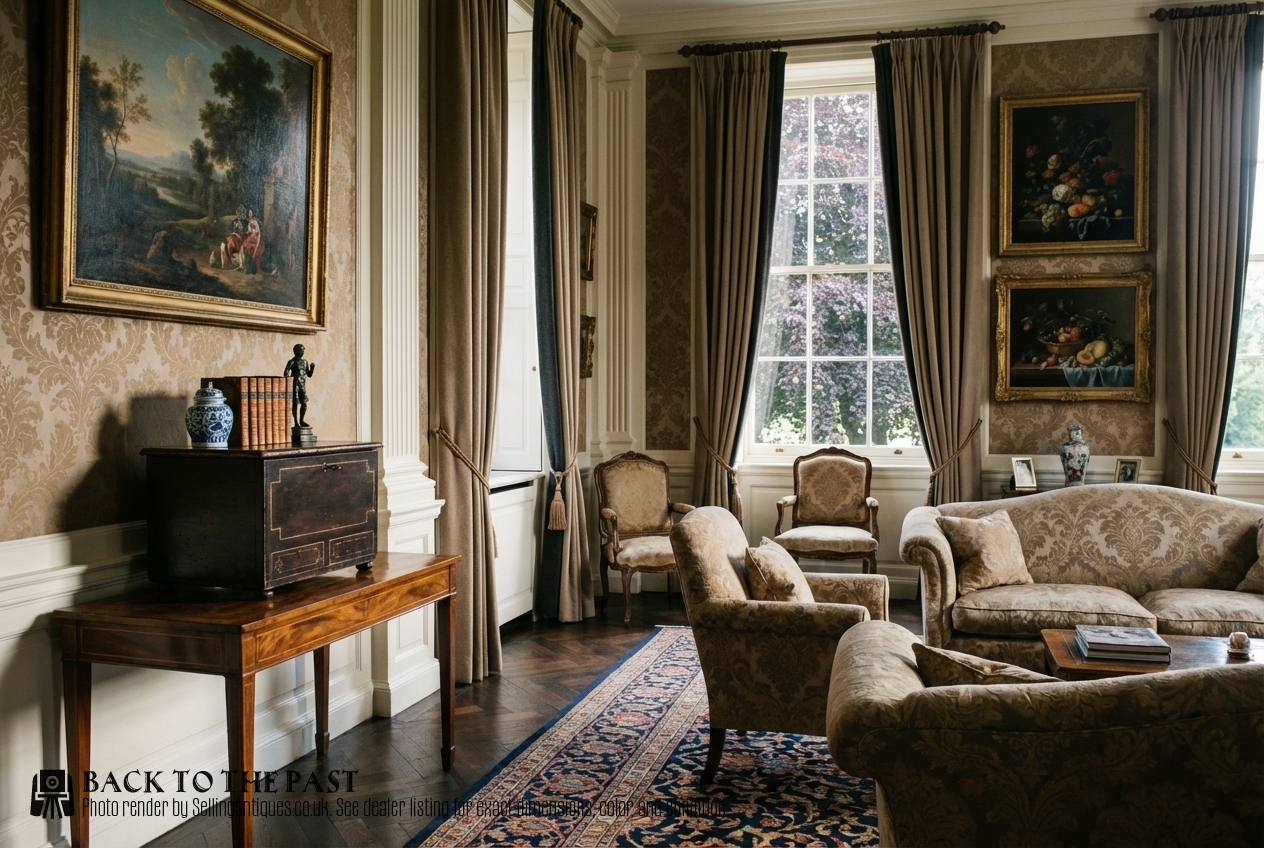
Materials and construction methods
Joiners and makers utilised hardwoods and softwoods including oak, mahogany, elm, camphor wood, and painted pine. Metal elements such as brass and iron provide structural reinforcement and functional hardware.
Construction techniques reflect period vernacular traditions, employing solid timber panels for dome chests, tea caddies, and storage trunks. Painted finishes appear on specific regional pieces alongside natural wood grains.
Retail Price Guide 2026
Typical UK retail prices for small wooden coffer, calculated from the Sellingantiques database of over a million retail prices indexed since 2003. This retail price guide relies exclusively on Sellingantiques data; no external sources or auction records are used, so the figures do not describe the wider market.
Current listings span the eighteenth century, the nineteenth century, and the Victorian era, utilising oak, mahogany, elm, camphor wood, and pine.
Assessing quality and character
Quality rests in the selection of timber, the integrity of the joints, and the retention of original surface treatments. Finer examples display thoughtful proportion and careful handling of materials like camphor wood or figured mahogany.
Regional identity and original paint or hardware elevate certain vernacular pieces above standard utility items. The relationship between timber choice and the intended domestic function defines the upper tier of these objects.
The Small Wooden Coffer Glossary
- Coffer bach
- A small Welsh storage chest, traditionally used for linen or valuables. These pieces often feature local timbers and distinctive regional proportions.
- Vernacular
- Objects built by local craftsmen using traditional regional styles and available materials rather than formal metropolitan designs. This term applies widely to country furniture.
- Tea caddy
- A small box designed to store loose tea leaves, often fitted with internal compartments and a lock. Surviving examples frequently date from the Victorian period.
- Bible box
- A small sloped or flat-topped desk box used to hold sacred texts and writing materials. These compact items sit easily on tables.
Frequently Asked Questions
What did people store inside a small wooden coffer?
These boxes held domestic valuables, personal documents, linens, and small precious items.
In some regional instances, smaller chests served specific household storage needs like bedding or tea.
How do I date a small wooden coffer?
Dating relies on observing timber types, construction joints, and characteristic period styles.
Changes in hardware, such as brass or iron mounts, also offer clues to the century of manufacture.
Where were these coffers originally made?
Production occurred across various regions, with notable examples originating from Welsh and English rural workshops.
Some pieces reflect international trade influences, particularly camphor wood chests from overseas sources.
How do I care for antique wood surfaces?
Keep wooden surfaces away from direct heat sources and dramatic fluctuations in room humidity.
Regular, gentle dusting preserves the natural patina without stripping historic finishes.