




Camphor Wood Blanket Box
A camphor wood blanket box provides practical storage while bringing distinct historical character and a familiar aromatic scent into a room.
Camphor Wood Blanket Box
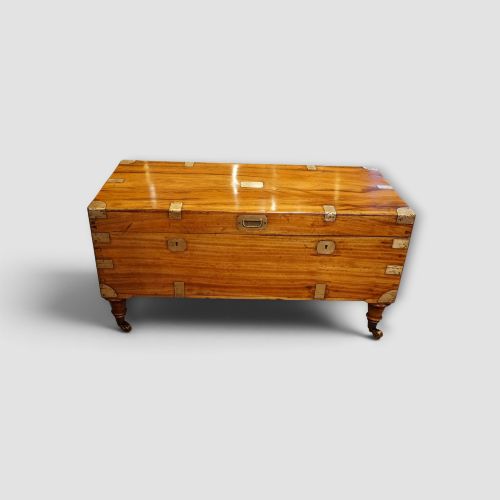
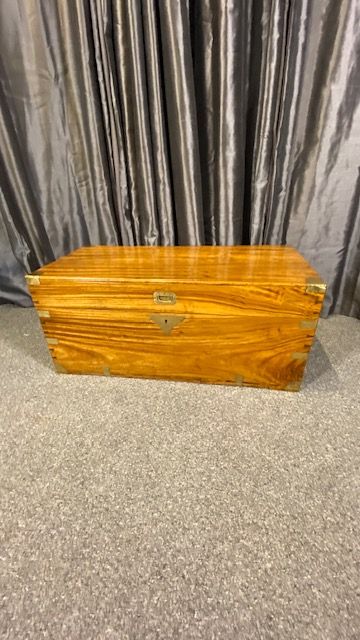
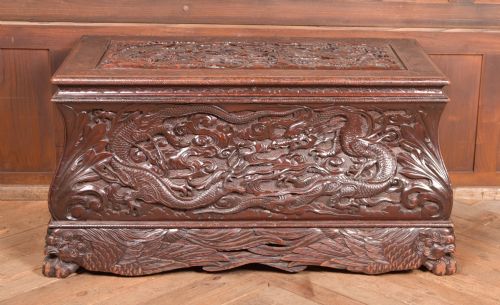
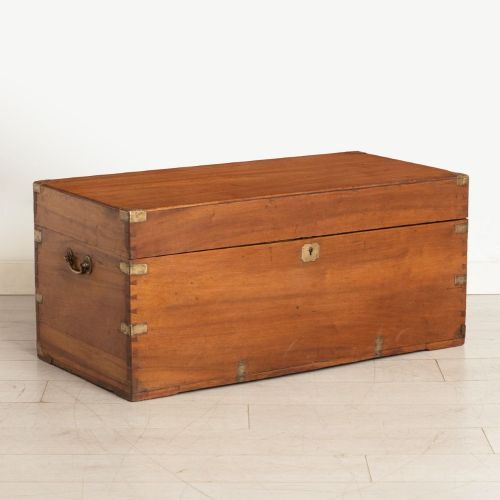
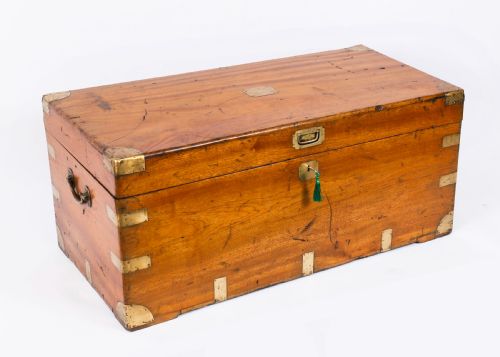
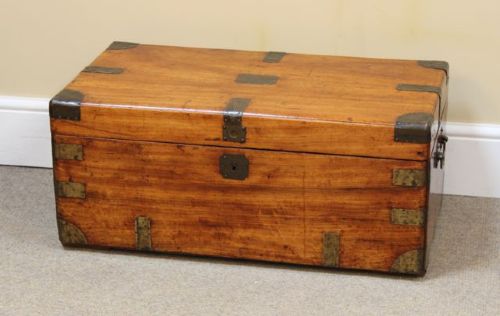
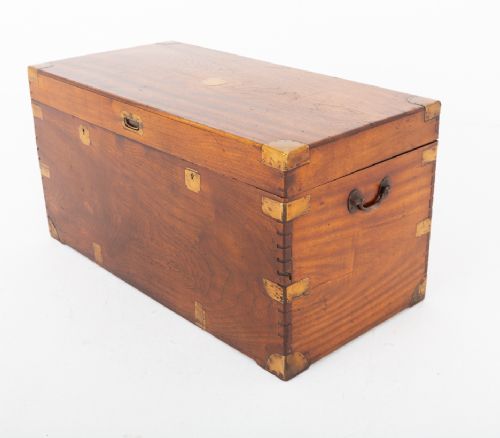
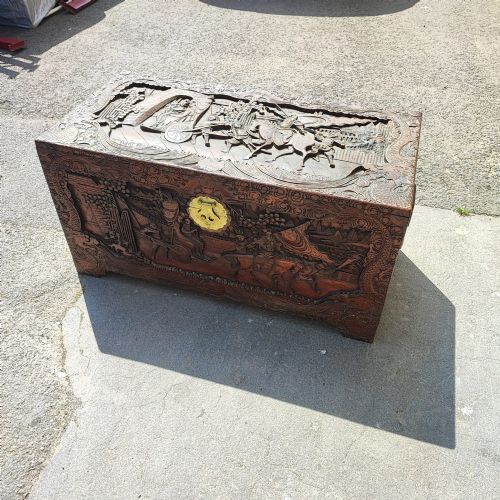
A camphor wood blanket box serves as a robust storage chest, frequently constructed for travel or trade during the nineteenth century. These trunks appear in various forms, including plain campaign models with protective metal mounts and intricately carved Chinese export pieces.
The pieces on this page span the Victorian era, the nineteenth century generally, and early twentieth-century decades up to the 1930s. Trunks associated with military campaigns, China trade, and colonial use dominate the selection alongside traditional carved storage boxes.
How they were made
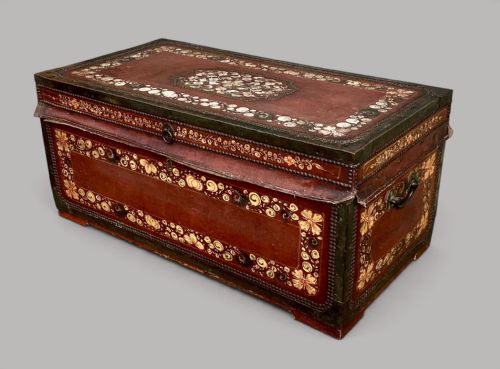
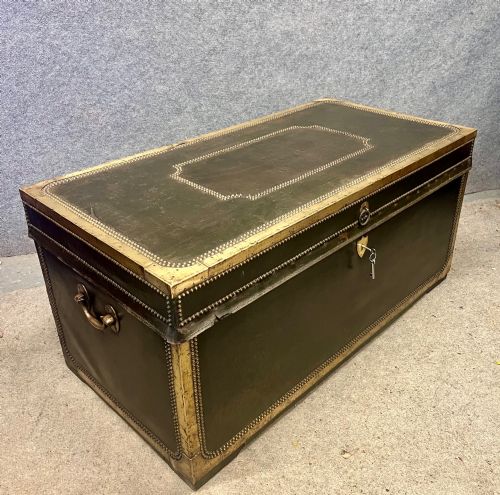
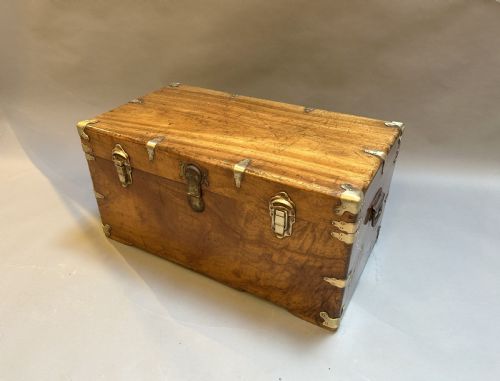
Carpenters utilised durable camphor wood for its natural insect-repelling properties, frequently pairing the timber with brass banding, corner brackets, and recessed carrying handles for travel resilience. Some examples incorporate leather coverings, iron elements, or contrasting ebony details.
Surface treatments range from plain polished wood and painted finishes to deep, detailed carving depicting oriental motifs. Hardware such as original brass locks and hardware remains an integral part of the construction.
Camphor Wood Blanket Box Retail Price Guide 2026
Typical asking prices for camphor wood blanket box among the pieces listed under this phrase on Sellingantiques today, from the lower quarter to the upper quarter. They describe what is for sale here now, not the wider market.
The enduring aromatic oil inside the wood means these nineteenth-century travellers still smell faintly of the forest.
What varies in quality
The refinement of the brass hardware and the crispness of any exterior carving set different examples apart. Solid timber construction and intact original fittings distinguish higher-grade trunks from simpler utility boxes.
Proportion and scale also influence distinction, with smaller chests and larger fitted campaign trunks representing different tiers of original commission and utility.
The Camphor Wood Blanket Box Glossary
- Campaign trunk
- A sturdy chest designed for military officers or travellers, built with recessed handles and reinforced corners to withstand frequent transit.
- China trade
- Goods produced in China during the nineteenth century specifically for export to Western markets, often combining local materials with European forms.
- Brass bound
- Furniture reinforced with brass strips and corners to protect edges from impact during movement and shipping.
- Coffer
- A large box or chest used historically for holding valuables, textiles, or documents.
- Regency
- The British stylistic period spanning the early nineteenth century, noted for classical influences and refined proportions.
Camphor Wood Blanket Box: Frequently Asked Questions
How do I use a camphor wood box at home?
These chests function effectively as living room coffee tables, end-of-bed blanket storage, or hallway statement pieces. The natural aroma helps keep stored woollens and linens fresh.
Ensure adequate ventilation around the chest and avoid placing delicate modern synthetics directly against untreated interior wood if the scent is particularly strong.
Why do these chests smell so strong?
Camphor wood naturally contains aromatic oils that protect the living tree from pests and decay. This inherent scent persists for decades within the timber.
Leaving the lid open in a well-ventilated room for a short period will gently reduce the intensity of the aroma without harming the wood.
Are campaign chests different from regular blanket boxes?
Campaign chests feature specific travel hardware including flush-fitting brass handles, reinforced corners, and sometimes sectional interiors designed for packing officers' belongings. Standard blanket boxes focus primarily on domestic storage.
Both types utilise camphor wood, but campaign pieces carry the distinct aesthetic of nineteenth-century military travel.
How can I tell the age of a camphor chest?
Dating relies on construction methods, hardware style, and recorded periods such as Victorian or Georgian eras. Plain brass-bound campaign models frequently date to the mid-nineteenth century, while heavily carved decorative chests often point towards the late nineteenth or early twentieth century.
Examine the type of screws, locks, and interior hinges to gather additional clues regarding the manufacturing date.