



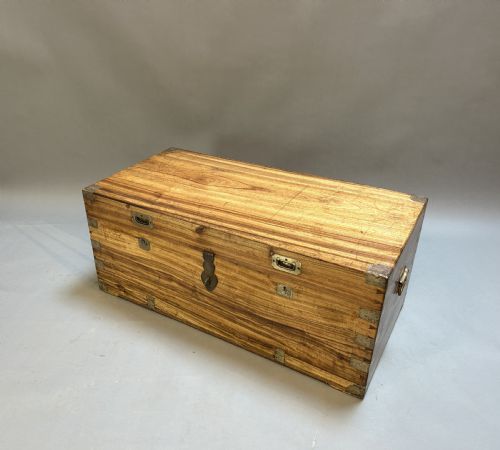
Camphor Wood Storage Trunk
A camphor wood storage trunk brings a distinctive aroma and robust travel-ready construction into the home, designed originally to protect contents during transit.
Camphor Wood Storage Trunk
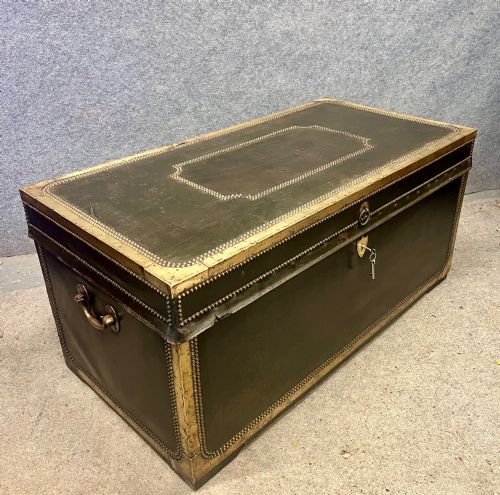
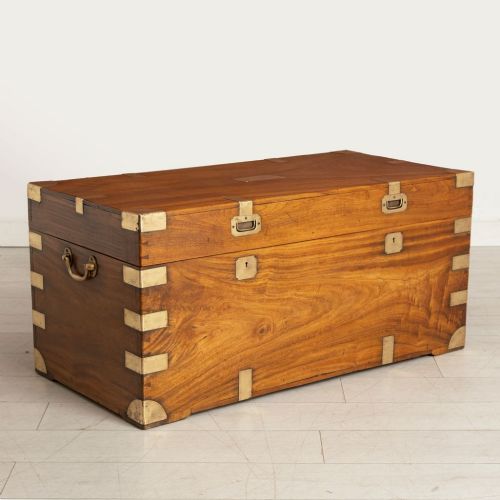
When you examine a camphor wood storage trunk, you encounter pieces primarily originating from nineteenth-century trade and military campaigns. These chests served officers and merchants moving belongings across continents, requiring sturdy timber that resisted pests.
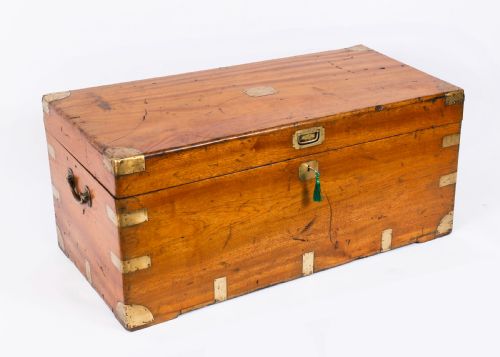
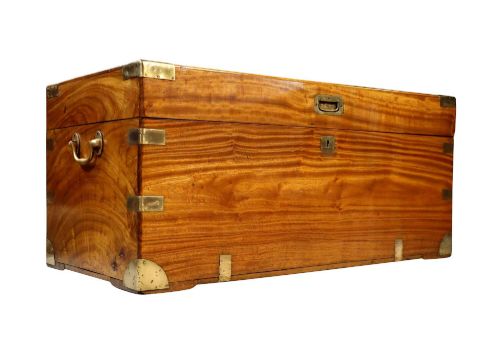
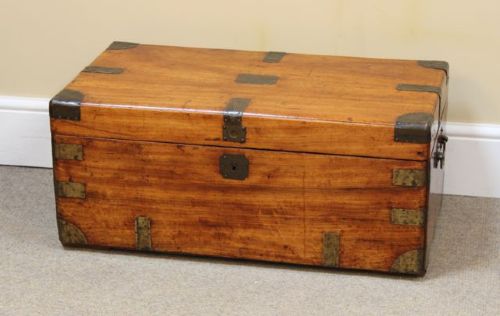
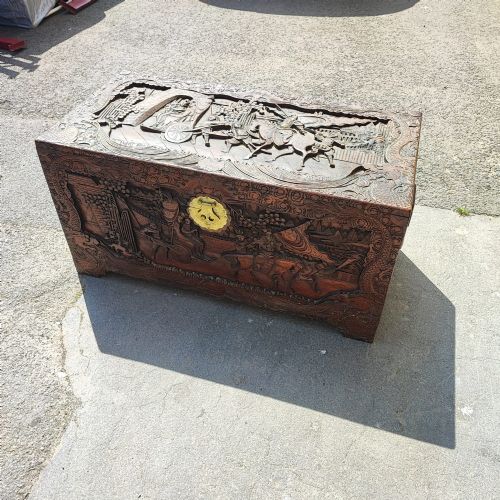
The most common examples on this page are utilitarian campaign chests and Chinese export pieces built for travel. You will also find carved blanket boxes and sea chests spanning the Victorian era and early twentieth century.
These storage trunks range from plain brass-bound military boxes to richly carved oriental chests. Their enduring appeal lies in the fragrant timber combined with durable metal hardware designed to withstand long journeys.
Materials and construction
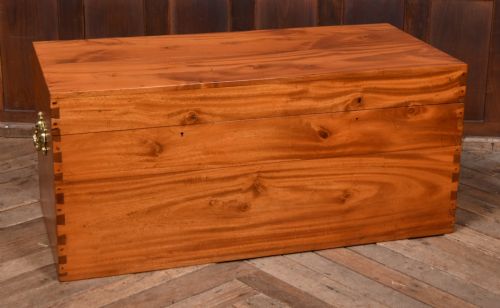
Makers utilised solid camphor wood for its natural insect-repellent properties, often selecting boards with a pronounced grain. This timber forms the primary body of each chest, chosen for stability and distinctive scent.
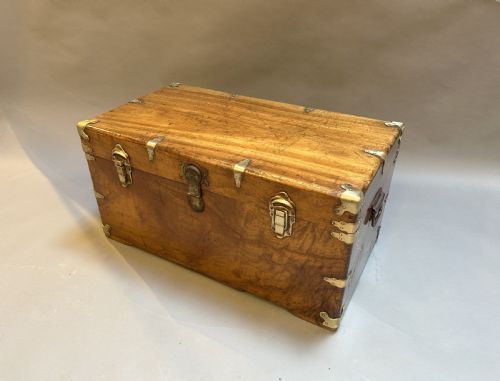
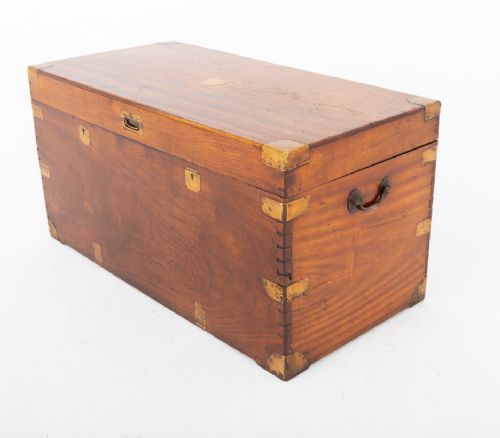
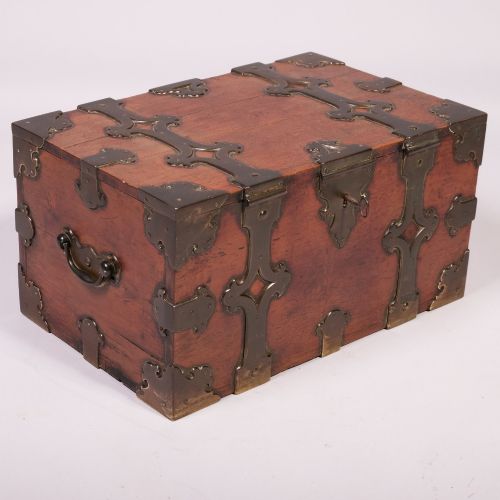
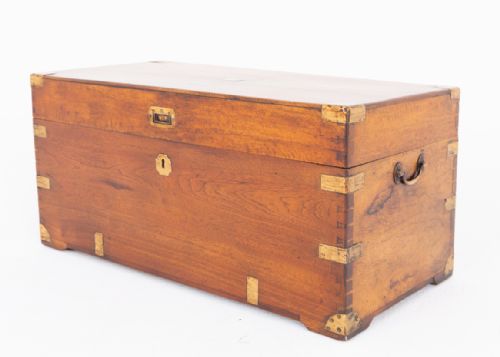
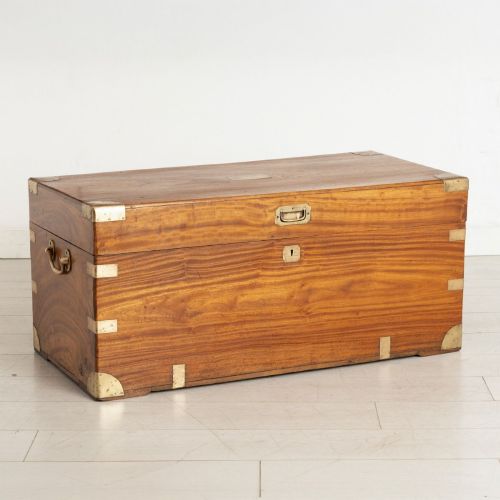
To reinforce the structure for transit, artisans added brass corners, straps, and flush-fitting drop handles. Iron and leather elements appear alongside rope and ebony details, securing the joints against the strains of travel.
Surface finishes vary from plain polished wood and leather coverings to intricate hand carvings and painted Chinese export decoration. Original hardware such as strap hinges and inset locks completes the construction.
Listings feature camphor wood storage trunks spanning the eighteenth century through the twentieth century, incorporating Victorian campaign and Chinese export styles.
Gradations of quality
Quality in these trunks rests upon the robustness of the brass hardware and the precision of its integration into the timber. Top-tier pieces retain original inset brass handles, working locks, and heavy corner brackets.
The fineness of the carved decoration distinguishes standard utility boxes from superior export pieces. Crisp, deep carving on oriental chests shows a master hand compared to shallow, mechanical scoring.
The integrity of the solid camphor wood construction and the survival of secondary elements such as interior trays determine the standing of a trunk. Unaltered surfaces and honest wear outweigh modern restoration.
The Camphor Wood Storage Trunk Glossary
- China trade
- Goods manufactured in China during the nineteenth century specifically for export to Western markets. These items often combined traditional local craftsmanship with European forms.
- Brass bound
- Furniture strengthened on the edges and corners with brass plates and strips. This protected the timber from the knocks of frequent transit.
- Casket
- A small decorative box or chest used for valuables rather than bulk storage. They frequently feature refined mounts and internal compartments.
- Coffer
- A heavy wooden chest traditionally used for storing precious items. In this context, it describes deep storage trunks with solid lids.
Camphor Wood Storage Trunk: Frequently Asked Questions
What is a camphor wood storage trunk?
A camphor wood storage trunk is a robust chest constructed from aromatic timber, historically used for travel and shipping. The natural oils in the wood protect stored textiles from insects.
These pieces range from plain military campaign boxes with brass bindings to heavily carved Chinese export chests. Their durable build allowed them to survive long journeys across the seas.
How were camphor trunks used?
Officers and merchants utilised these trunks to pack uniforms, documents, and personal belongings during nineteenth-century voyages. The heavy-duty construction protected contents from moisture and handling.
In modern interiors, they function effectively as blanket boxes, coffee tables, or general storage chests. Their fragrant wood continues to keep stored garments fresh.
How do I date a camphor chest?
Dating relies on examining the construction methods, hardware style, and finish. Nineteenth-century campaign pieces typically feature dovetail joints and recessed brass military handles.
Carved oriental chests from the early twentieth century often display deep relief carving and distinct brass hasps. Comparing the patination of the wood and metal helps establish age.
Are these trunks waterproof?
While tight-fitting lids and metal bindings offered protection against spray and rain during transit, these trunks are not hermetically sealed. They were built to withstand rough handling rather than submersion.
Camphor wood naturally resists humidity and deter insects, making them ideal for indoor storage of woollens and linens. Ensure the room environment remains stable to protect the antique timber.