

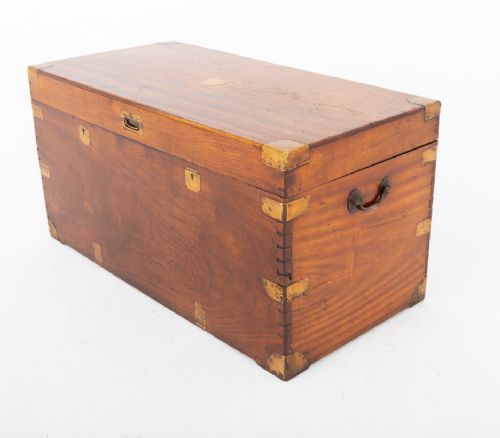
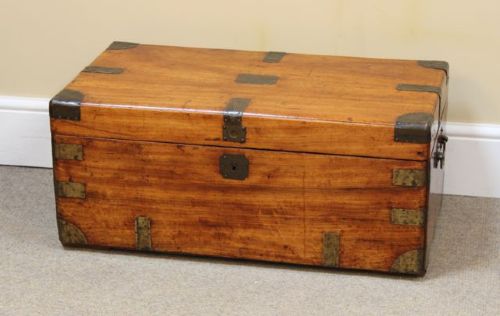


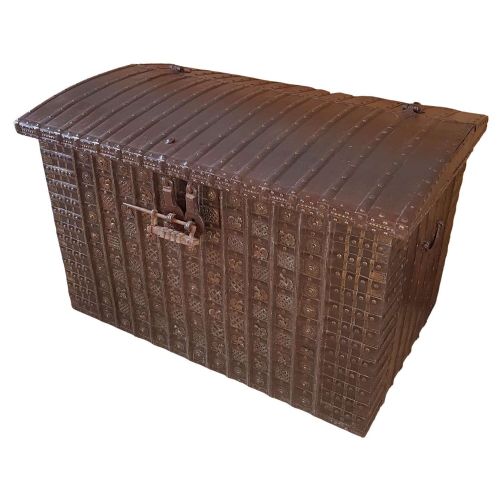


Brass Strapped Coffer
These brass strapped coffer examples are heavy-duty storage trunks built for travel or secure holding, offering rugged charm and robust timber construction.
Brass Strapped Coffer
A brass strapped coffer is a sturdy storage chest strengthened with metal bands and corner brackets. Buyers searching for a brass strapped coffer will find pieces ranging from utilitarian military campaign trunks to decorative dowry chests.
The selections span multiple centuries and origins, with nineteenth-century examples and Victorian pieces appearing frequently alongside Georgian works. Timbers such as teak, oak, camphor wood, and walnut form the primary bodies of these trunks.
Many items reflect travel and global trade, including Anglo-Indian, Chinese export, and Rajasthani designs. These boxes served officers, merchants, and travellers who needed to protect valuables on long journeys.
Materials and construction
Carpenters constructed these chests using dense hardwoods like teak and camphor wood, or domestic timbers such as oak and pitch pine. These woods provided the necessary strength to endure heavy handling during transport.
Brass strapping and iron banding were riveted or screwed across the exterior to reinforce the joints and edges against splitting. Handles, corner plates, and heavy locks were cast or hammered to secure the contents.
Brass Strapped Coffer Retail Price Guide 2026
Typical asking prices for brass strapped coffer among the pieces listed under this phrase on Sellingantiques today, from the lower quarter to the upper quarter. They describe what is for sale here now, not the wider market.
Current listings feature pieces spanning the eighteenth, nineteenth, and twentieth centuries, constructed from teak, oak, camphor wood, and iron-bound pine.
Assessing quality and finish
Quality rests in the precision of the joinery and the gauge of the metalwork used for the straps and mounts. Superior pieces utilise thicker brass plates and dovetail joints that remain tight after decades of movement.
Original inscriptions, retaining pins, and working locks with functional keys elevate a chest's character. The choice of secondary woods and the condition of the polished or natural timber surface also define the standard.
The Brass Strapped Coffer Glossary
- Campaign trunk
- A sectional or portable chest built for military officers on the move. These often feature recessed handles and reinforced corners.
- Camphor wood
- An aromatic timber frequently used in maritime and tropical chests. Its natural scent helped deter insects from stored textiles.
- Dovetail
- A traditional joint formed by interlocking wedge-shaped fingers. This method provides immense tensile strength to the corners of a box.
- Strapwork
- Metal bands or straps applied to the exterior of a chest. They distribute impact shock and reinforce the wooden panels.
- Dome top
- A curved lid style often found on older coffers and trunks. This shape helped shed water during transit.
Brass Strapped Coffer: Frequently Asked Questions
What were brass strapped coffers used for?
These chests were primarily utilised for transporting personal belongings, uniforms, or trade goods during long journeys by land or sea. Officers, merchants, and travellers relied on their robust construction to keep valuables safe from moisture and rough handling.
Over time, many transitioned into static household furniture, serving as blanket boxes, coffee tables, or secure storage in domestic hallways and bedrooms.
How do I care for a wooden trunk?
Keep the timber conditioned by avoiding direct sunlight and excessive heat fluctuations that can cause wood to dry and split. A light application of beeswax helps nourish polished surfaces without harming the grain.
Inspect the metal straps periodically and keep hinges lightly oiled to ensure moving parts remain functional and free from stiffness.
How can I tell the age of a chest?
Examine the construction methods, such as hand-cut dovetails, handmade screws, and forged iron or brass fittings. Tool marks and the type of secondary wood used inside often point towards a specific century.
Styles also offer clues, as campaign furniture typically emerged during periods of active military expansion, while domestic dowry chests followed regional decorative traditions.
Are camphor wood trunks safe for clothing?
Camphor wood is traditionally valued for storing textiles because its natural aroma repels moths and other pests. Generations utilised these fragrant chests specifically to protect woollens and linens.
Ensure the interior is clean and free from old dust or residue before placing modern garments inside.