




Carved Camphor Coffer
A carved camphor coffer is a fragrant storage trunk designed for travel and domestic use, offering deep protection for textiles.
Carved Camphor Coffer
A carved camphor coffer provides sturdy storage while releasing a distinct aromatic scent that naturally protects woollens and linens from pests. These trunks appear in various formats, functioning traditionally as blanket boxes or travel luggage and occasionally doubling as low coffee tables in contemporary rooms.
Most examples found on this page hail from the nineteenth century and the early decades of the twentieth century. The forms range from plain brass-bound utility chests to heavily carved export pieces originating from Chinese and Ceylonese workshops.
Materials and construction
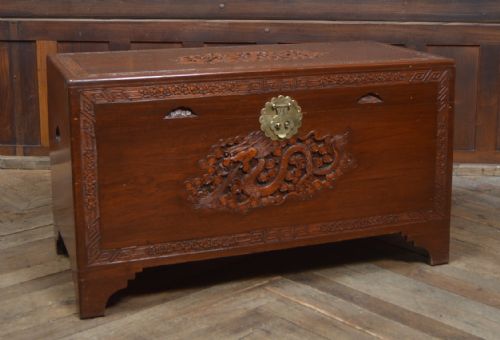
Makers utilised resilient camphor wood for its natural insect-repelling properties and stable grain, often pairing it with contrasting timbers such as ebony or oak. Metal reinforcement proved essential for travel, with brass bindings, handles and corner plates securing the structural joints.
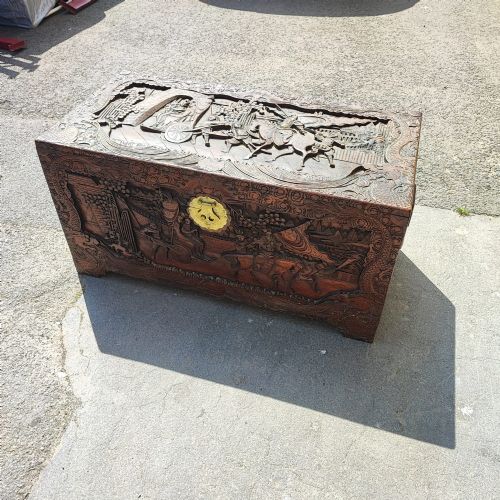
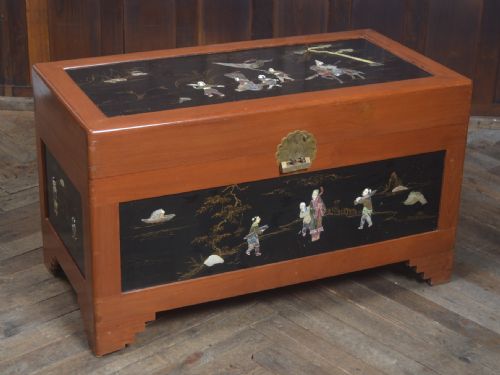
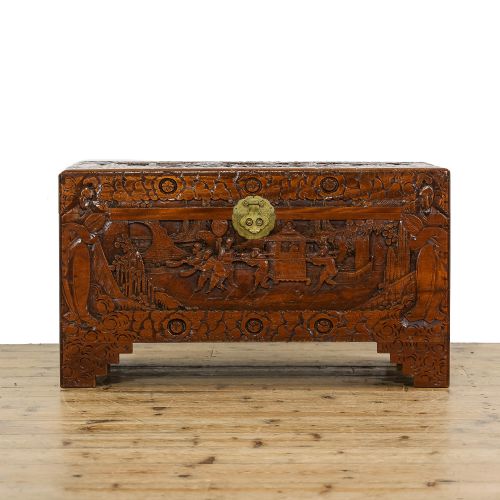
Surface ornamentation relied on meticulous hand carving, depicting traditional floral motifs, figures and landscapes in high relief. Certain variants incorporate lacquered finishes or inlaid mother of pearl details to enrich the exterior surfaces.
The lingering aromatic scent acts as an invisible time capsule, smelling faintly of old voyages every time the heavy lid is lifted.
Assessing quality and craftsmanship
Quality reveals itself in the crispness of the hand carving and the depth of the relief work across the panels. Superior chests display balanced proportions and tight joinery that maintains the structural integrity of the timber over generations.
The choice of secondary materials also dictates the grade of a piece. Finer items incorporate heavy brass hardware, secure internal fittings and contrasting woods like ebony rather than relying solely on standard camphor construction.
The Carved Camphor Coffer Glossary
- Camphor wood
- A durable, aromatic timber native to Asia that repels insects and resists moisture. Its characteristic scent remains potent decades after manufacture.
- Coffer
- A large box or chest traditionally used for storing valuables, linen or documents. These pieces often feature hinged lids and sturdy fastening hardware.
- Chinese Export
- Goods manufactured in China specifically for Western markets during the nineteenth and early twentieth centuries. These items blend local craftsmanship with European stylistic demands.
- Anglo-Indian Colonial
- Furniture produced in the Indian subcontinent under British rule, often combining local timbers like ebony with traditional European cabinet forms.
- Brass-bound
- A method of reinforcing chest corners and edges with brass strips and corner brackets. This hardware protected luggage during maritime transport.
Carved Camphor Coffer: Frequently Asked Questions
What is a carved camphor coffer used for?
These chests serve primarily as deep storage containers for blankets, woollens and winter garments. The natural fragrance of the wood protects textiles from moths and dampness.
In modern interiors, many people adapt these sturdy trunks to function as low coffee tables or hallway benches while keeping the internal storage space accessible.
How do I care for camphor wood?
Keep the wood away from direct heat sources and intense sunlight to prevent the natural oils from drying out and the timber from splitting. Dust the carved exterior gently with a dry cloth.
Avoid applying heavy polishes or oils, as the camphor wood retains its own protective properties and distinct aroma naturally.
How can I date a camphor trunk?
Dating relies on examining the construction methods, the style of the brass hardware and the nature of the exterior carving. Nineteenth-century examples often feature heavy brass bindings and hand-cut dovetail joints.
Later pieces from the early twentieth century may display different relief patterns or incorporate limed oak elements, reflecting changing decorative tastes.
Are all these chests from China?
While the majority originate from Chinese export workshops, the selection also includes examples from Ceylonese makers reflecting Anglo-Indian colonial styles. Each region utilised local techniques and secondary woods alongside the primary camphor.
Examining the specific motifs in the carvings and the accompanying materials helps distinguish the various regional origins.