

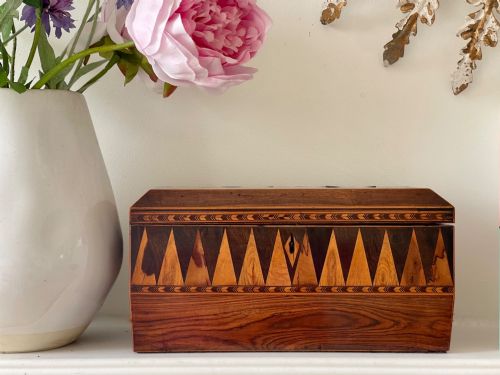

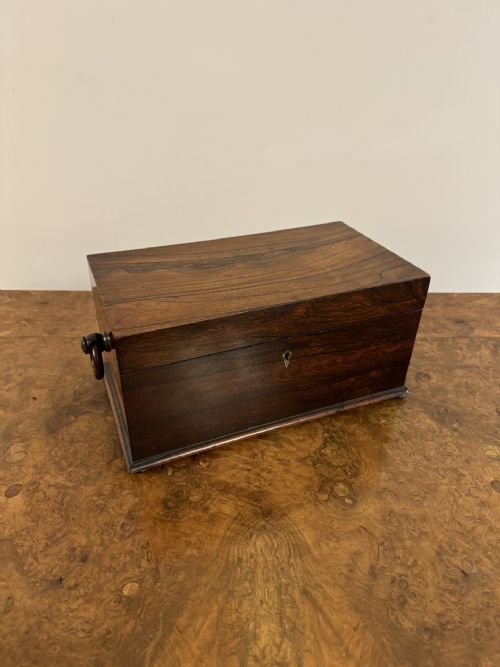
Brown Wooden Caddy
A brown wooden caddy offers a tactile piece of domestic history, designed to safeguard precious dry leaves with craftsmanship that endures.
Brown Wooden Caddy
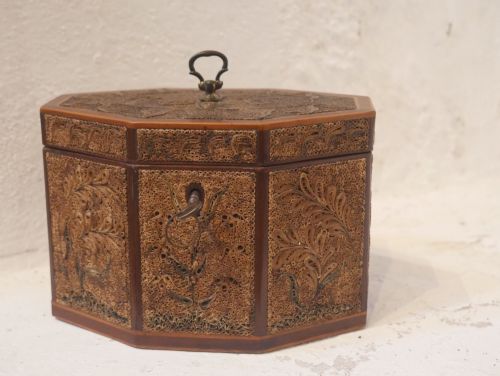
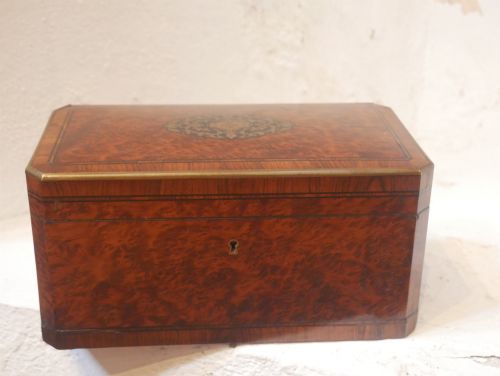
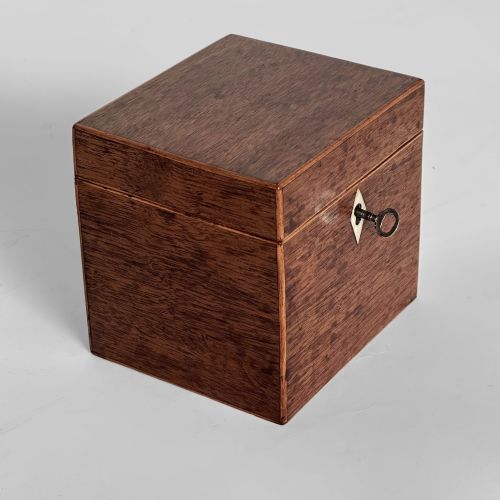
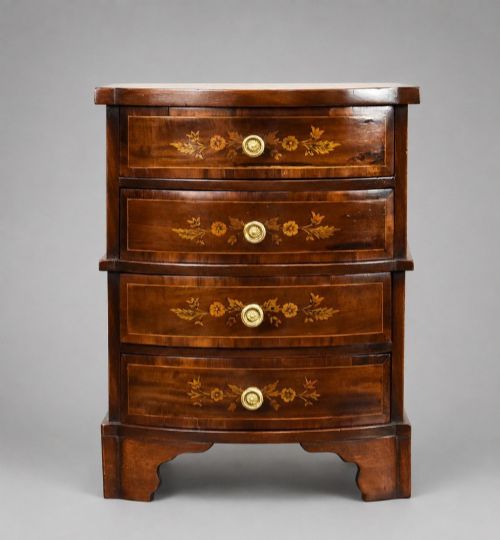
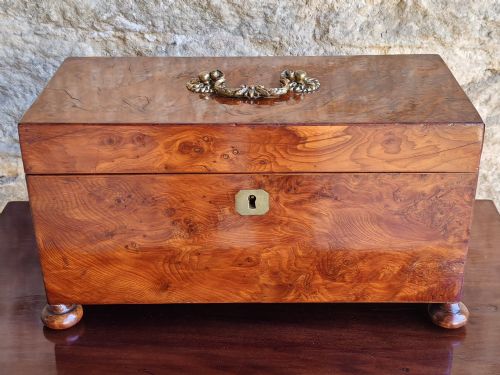
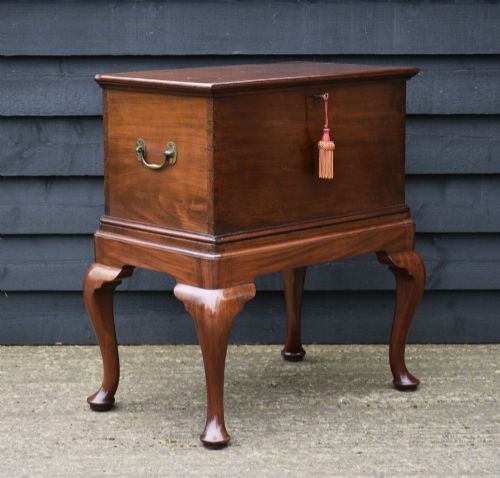
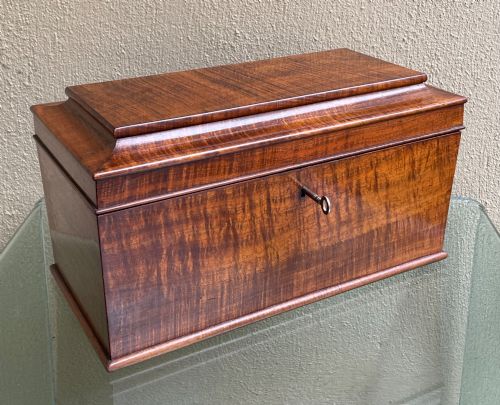
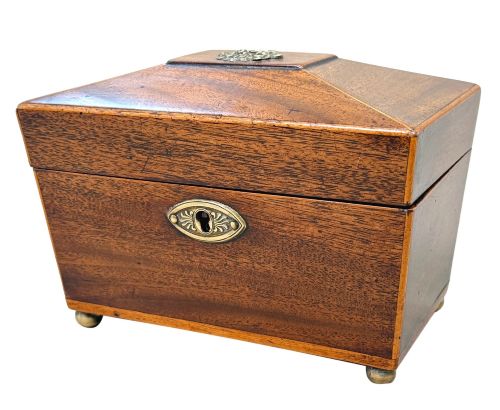
A brown wooden caddy primarily takes the form of a tea caddy, alongside related decorative boxes, miniature furniture, and small chests from the Georgian, Regency, and Victorian periods. Buyers exploring this category encounter domestic containers originating from the eighteenth and nineteenth centuries, spanning styles such as George III, Regency, and Victorian.
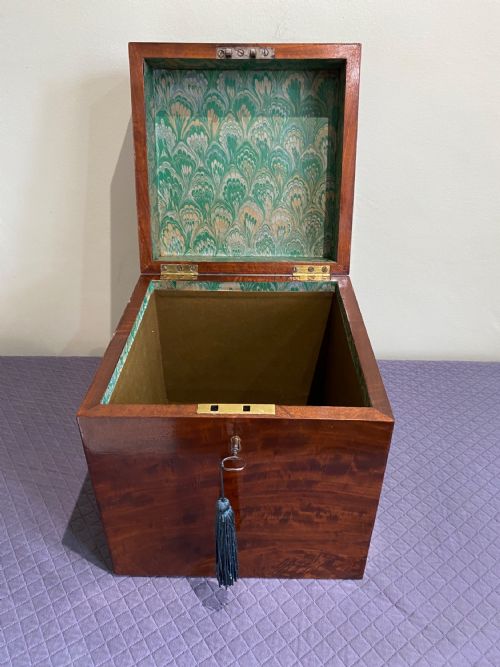
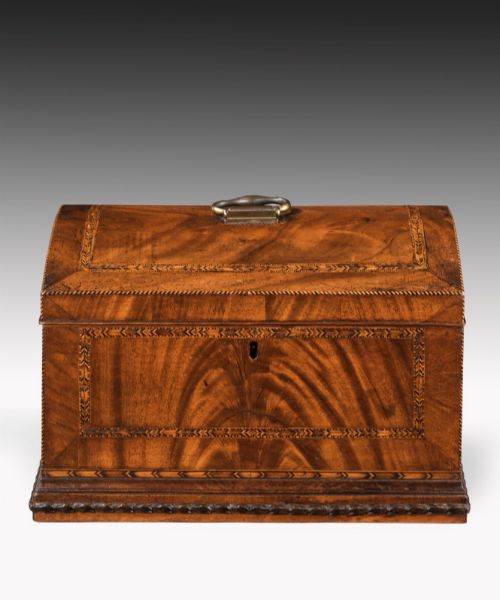
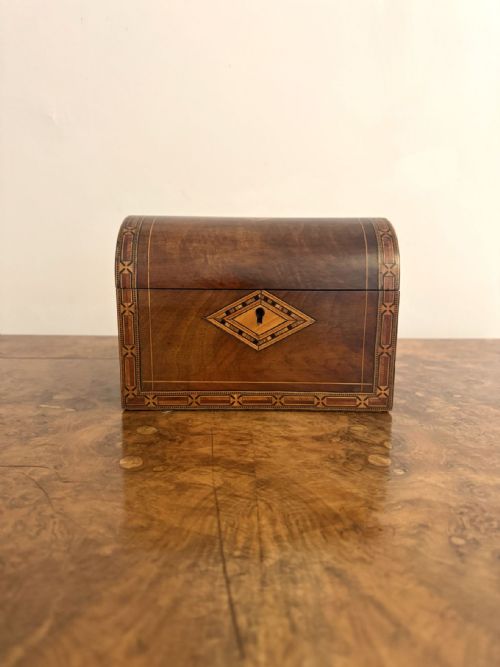
The selection ranges from simple rectangular and hexagonal mahogany containers to sarcophagus-shaped boxes, dome-topped examples, and intricate pieces featuring Tunbridge inlay. Many of these wooden vessels retain functional interior compartments or fitted sections intended originally for separating loose tea leaves.
Materials and construction methods
Cabinetmakers utilised a variety of dense timbers including mahogany, walnut, yew, rosewood, and satinwood, frequently enhanced with boxwood, bone, and metal stringing. Artisans applied advanced woodworking techniques such as marquetry, paper filigree, and wood inlay to decorate the exterior surfaces of the containers.
Makers constructed these sturdy boxes using precise joinery to ensure stability, often incorporating fitted interiors and working brass locks with keys. Specialised decorative treatments like Tunbridge ware mosaic patterns and carved bamboo further demonstrate the technical skill applied during production.
Brown Wooden Caddy Retail Price Guide 2026
Typical asking prices for brown wooden caddy among the pieces listed under this phrase on Sellingantiques today, from the lower quarter to the upper quarter. They describe what is for sale here now, not the wider market.
Distinctions in craftsmanship and design
Superior examples exhibit refined timber selection, such as figured burr walnut, burr yew, or well-matched mahogany grains that catch the light evenly. The precision of the wood inlay, the crispness of any carved details, and the integrity of the fitted interior compartments set finer pieces apart.
The overall proportion and architectural harmony of the box shape indicate the maker's skill, alongside original brass hardware and working locks with intact keys. Finer items display meticulous attention to interior detail, including secondary timbers and preserved linings.
Tahan Paris·Mappin & Webb·Henry Hollamby
The Brown Wooden Caddy Glossary
- Caddy
- A small container or box originally made for storing tea leaves. These receptacles often featured internal lids or divided compartments to keep different tea varieties separate.
- Tunbridge ware
- A type of decorative woodwork characterised by mosaic patterns formed from tiny pieces of naturally coloured woods. This technique created detailed pictorial or geometric designs on the exterior of boxes.
- Sarcophagus
- A box shape featuring a sloping or domed lid reminiscent of an ancient stone coffin. Cabinetmakers frequently applied this prestigious form to larger nineteenth-century tea caddies and wine coolers.
- Marquetry
- The art of applying thin pieces of wood veneer to a structure to form decorative patterns or pictures. Craftsmen used contrasting timbers to achieve complex pictorial motifs on box lids.
- Navette
- A pointed, boat-shaped design outline utilised for the horizontal profile of specific Georgian tea caddies. This elegant geometry provided a distinct alternative to standard rectangular or square containers.
Brown Wooden Caddy: Frequently Asked Questions
What were tea caddies used for?
Tea caddies served as secure storage containers for loose tea leaves when tea was an expensive commodity. They often included internal partitions and locking lids to restrict access by household servants.
Today, these lidded boxes function well as decorative display pieces on desks or side tables, or for holding small personal items.
How do I identify a Georgian caddy?
Georgian pieces typically exhibit clean architectural proportions, simple rectangular or hexagonal geometries, and restrained timber choices such as mahogany or walnut. Look for period characteristics like hand-cut dovetails and period brasses.
Later Victorian versions frequently embrace heavier sarcophagus shapes and more elaborate surface decoration like Tunbridge inlay or burr veneers.
How should I care for wooden caddies?
Keep wooden containers away from direct sunlight and steady heat sources to prevent the timber from drying out or warping. Maintain stable indoor humidity to protect delicate veneers and wood inlay.
Dust the exterior gently with a dry cloth and avoid harsh chemical polishes that might damage aged finishes.