



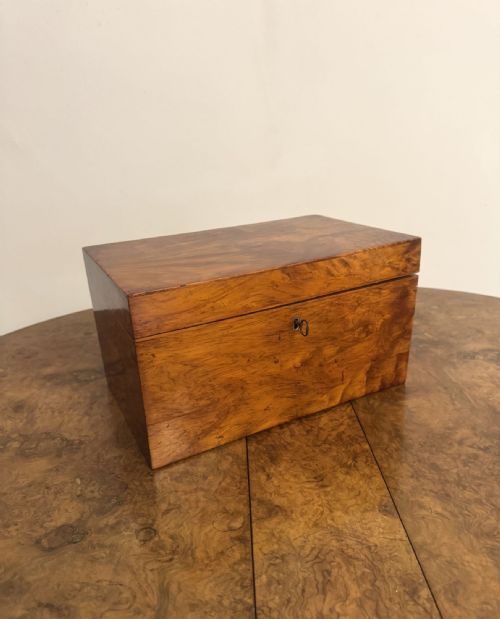

Regency Tea Chest
A regency tea chest brings domestic order to dry leaf, combining architectural boxes with fitted interiors designed for preservation.
Regency Tea Chest
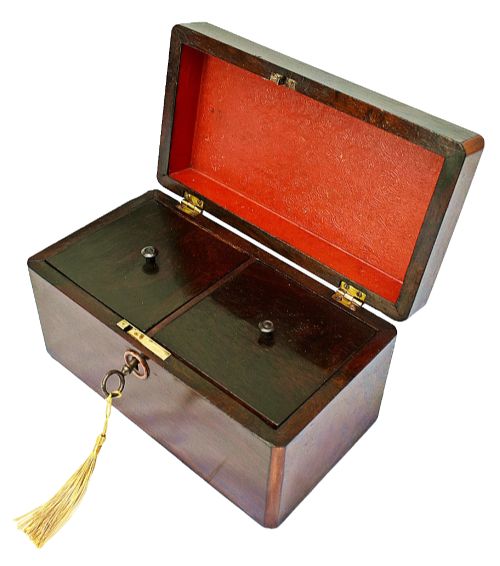
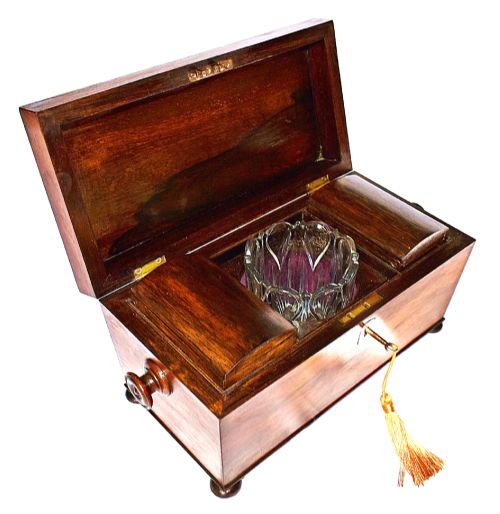
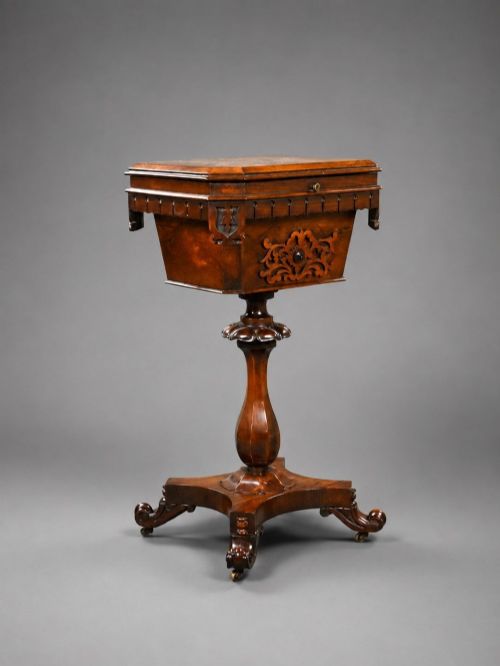
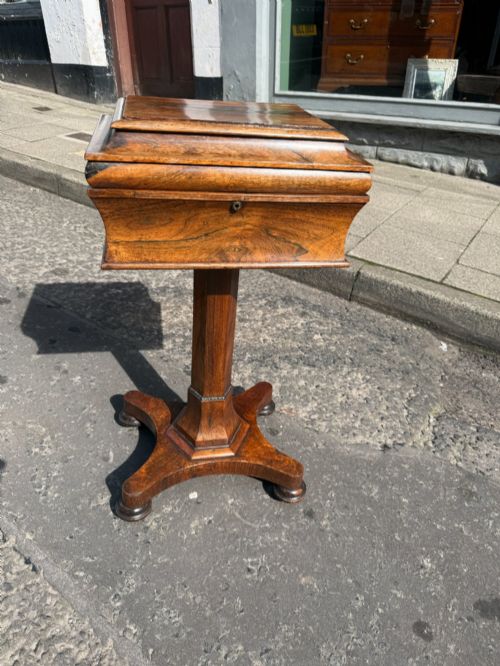
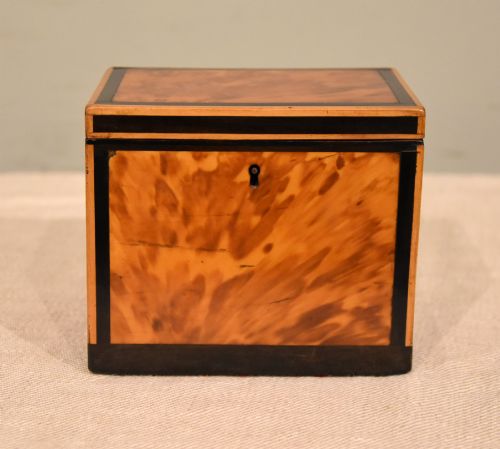
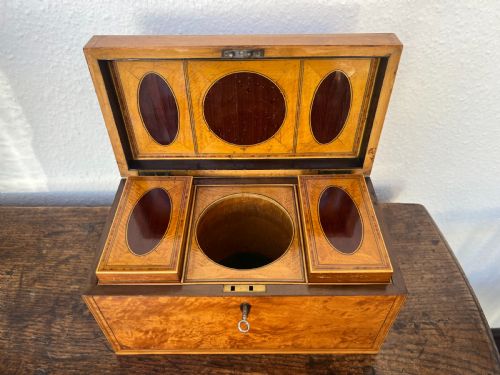
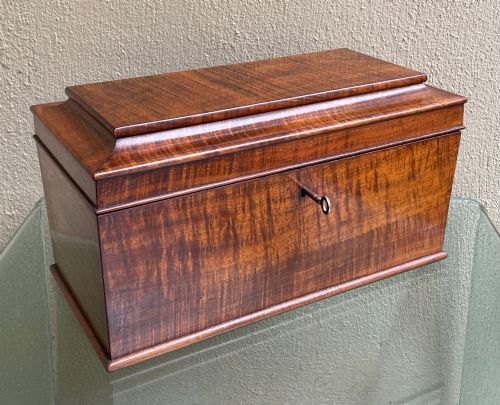
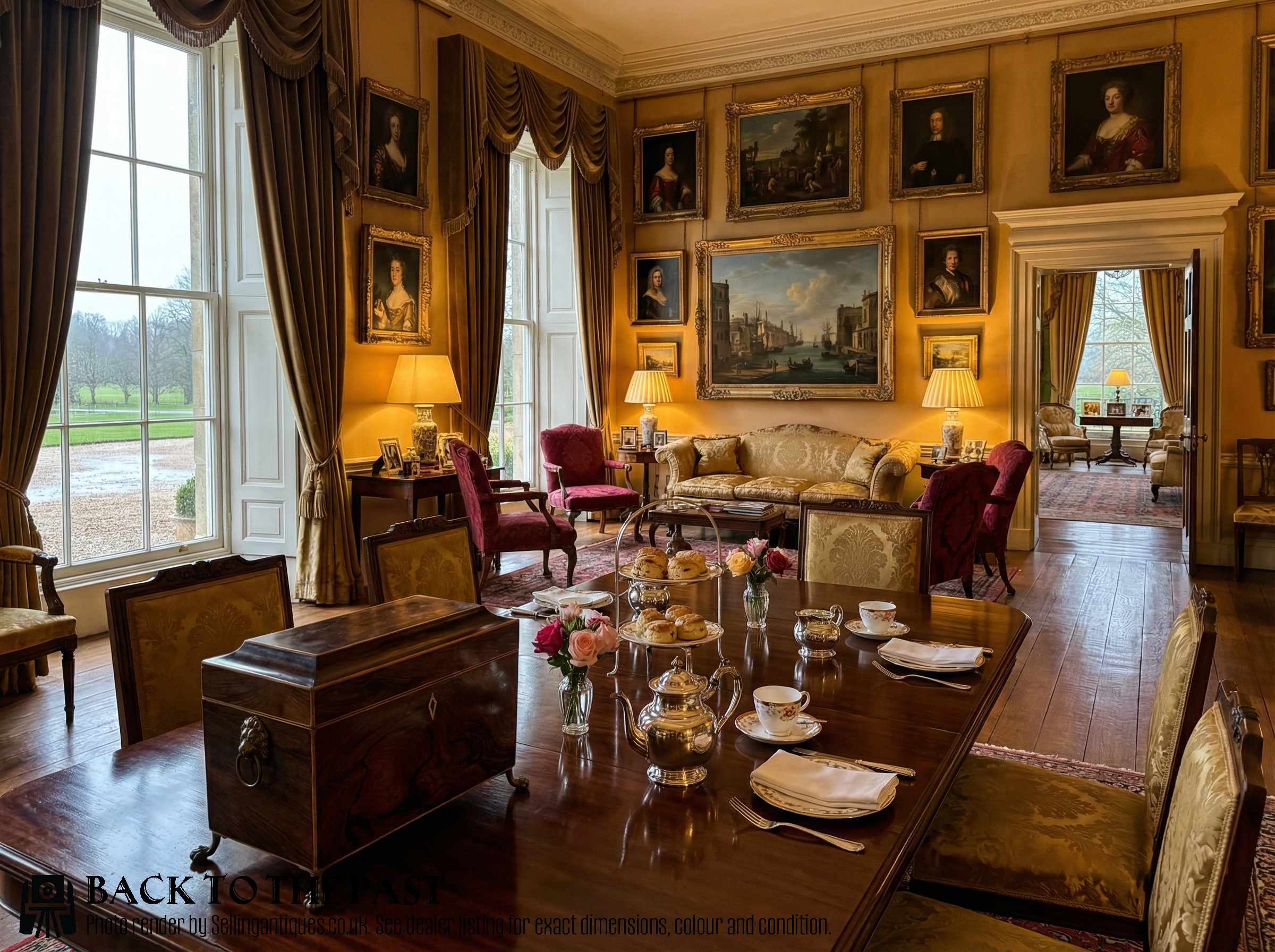
A regency tea chest encompasses tea caddies, teapoys, and boxes formed in architectural profiles ranging from sarcophagus shapes to miniature sideboards. These pieces originate predominantly from the Regency, Georgian, and Victorian periods, reflecting a time when dry leaves held immense domestic value.
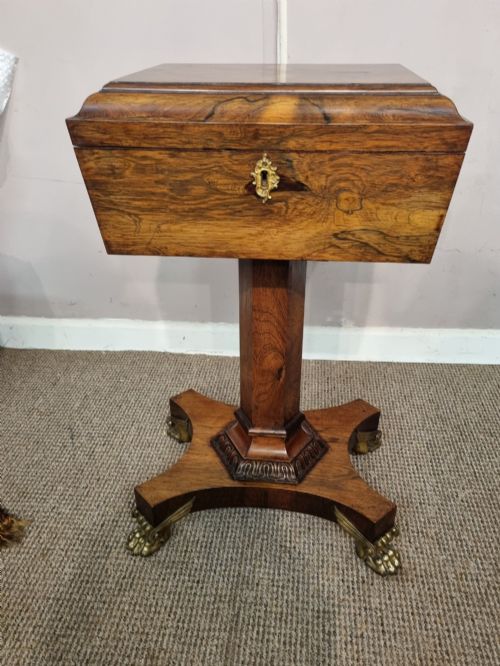
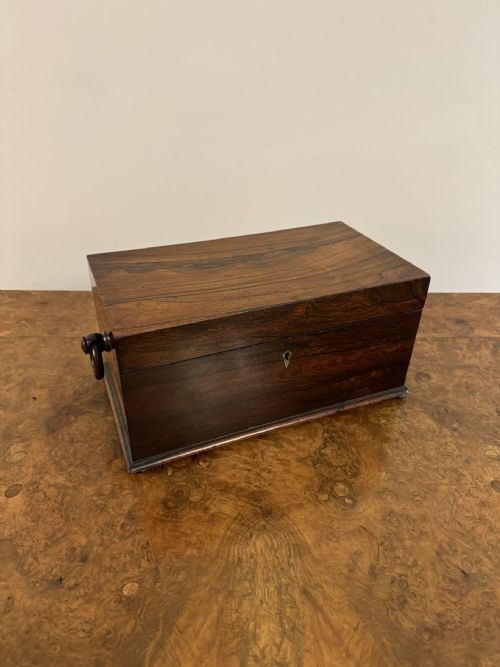
Buyers meet rosewood and mahogany varieties most frequently on this page, often featuring brass inlay or sarcophagus forms. Examples range from simple double compartments designed for distinct leaf varieties to elaborate teapoys supported on pedestals.
How they were made
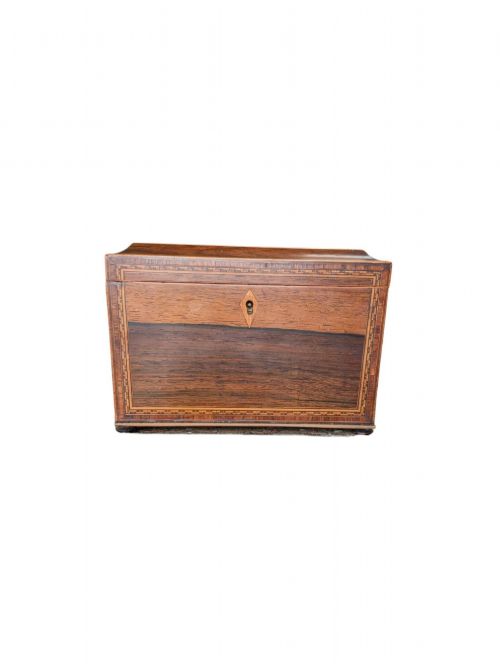
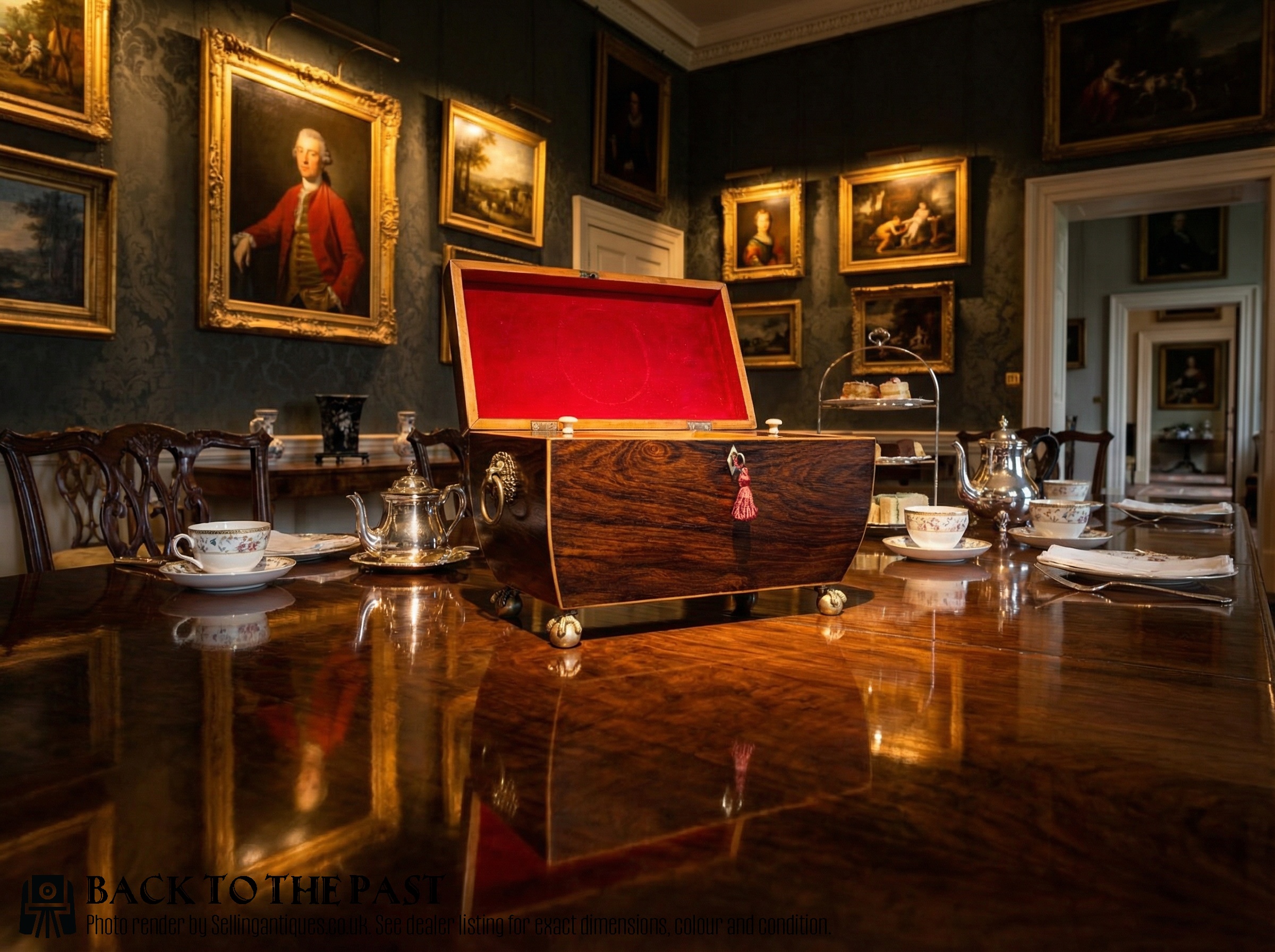
Cabinet makers utilised dense exotic timbers including rosewood, mahogany, coromandel, and gonçalo alves, often over a softer carcase. Surfaces display detailed stringing, parquetry, or brass inlay set flush into the grain.
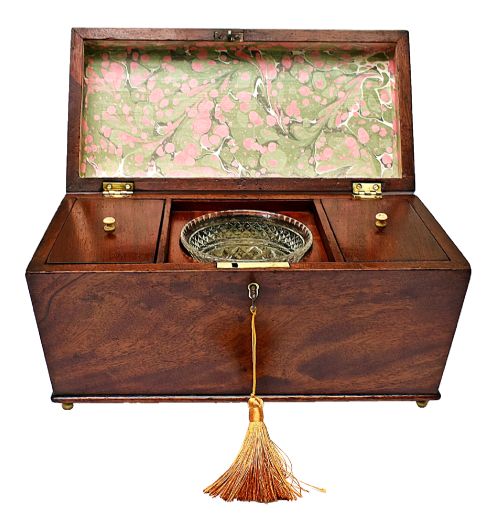
Interiors frequently incorporate bone escutcheons, glass mixing bowls, and secondary lidded compartments designed to protect delicate leaves from moisture and light.
Regency Tea Chest Retail Price Guide 2026
Typical asking prices for regency tea chest among the pieces listed under this phrase on Sellingantiques today, from the lower quarter to the upper quarter. They describe what is for sale here now, not the wider market.
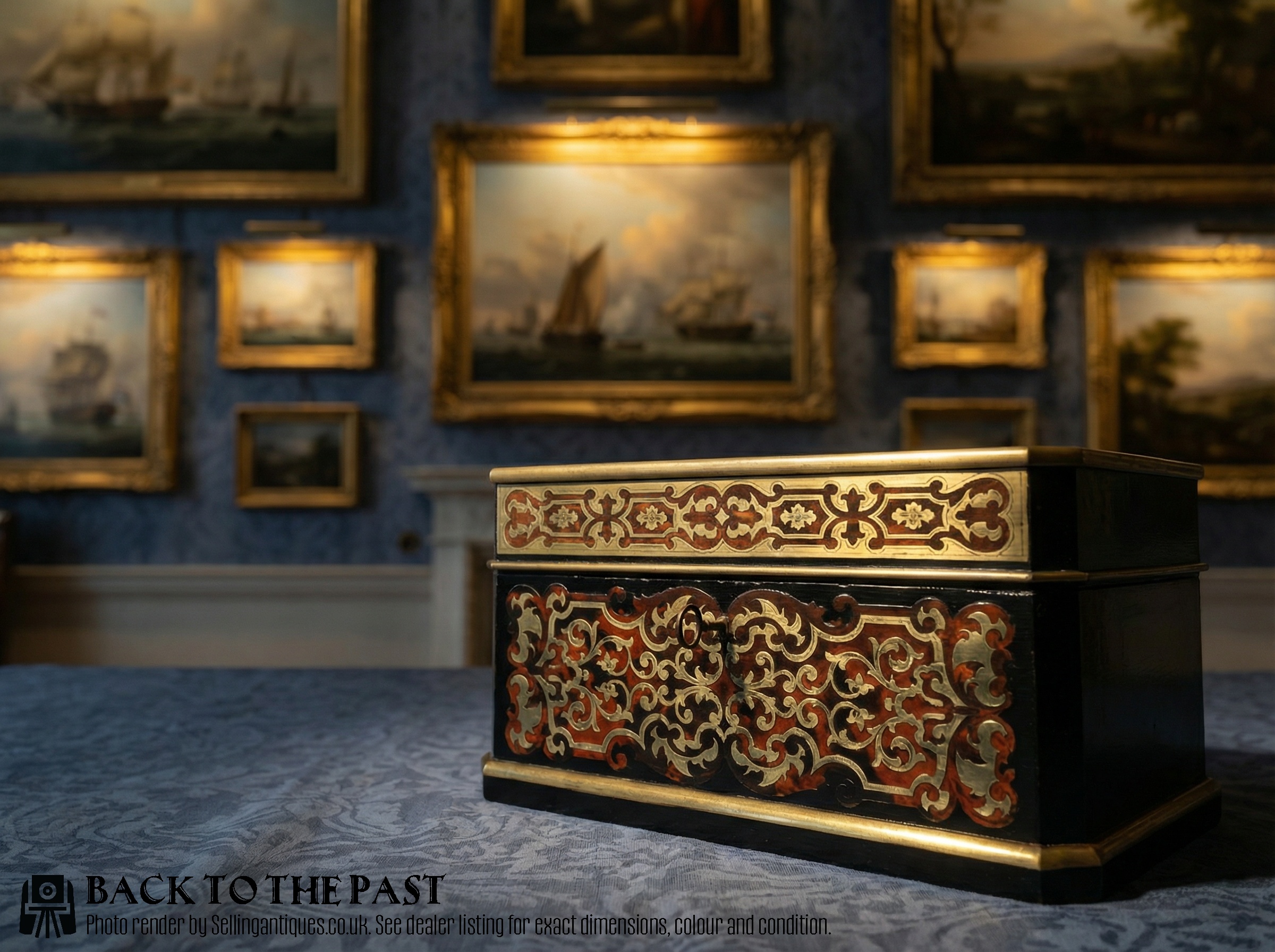
Listings feature rosewood, mahogany, tortoiseshell, and coromandel timbers across Regency, Georgian, and Victorian periods.
What varies in quality
The refinement of the timber selection and the precision of the parquetry or brass inlay distinguish finer examples from standard production. Grain matching across complex sarcophagus curves demonstrates high cabinet-making skill.
The survival of original internal fittings, such as glass mixing bowls, mixing sticks, and matching inner canisters, elevates the integrity of a piece.
Strahan of Dublin
The Regency Tea Chest Glossary
- Teapoy
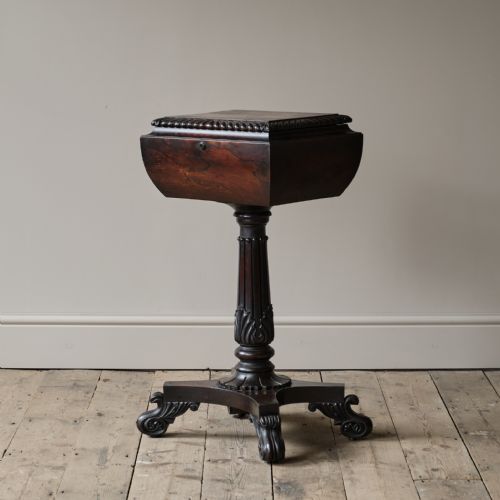
- A pedestal table or large stand fitted with a lidded box for storing tea. These pieces often stand on central pillars with platform bases.
- Sarcophagus
- A box form featuring a sloping convex lid and tapered sides resembling a stone coffin. Cabinet makers adopted this classical shape widely during the Regency period.
- Parquetry
- Geometric mosaic woodwork formed from small pieces of veneer arranged in patterns. Makers applied this technique to exterior lids to display varied timber tones.
- Stringing
- Thin inlay lines of contrasting wood or bone set into the surface of a box. This linear detail defines the edges and panels of finer caddies.
- Escutcheon
- A small protective plate surrounding a keyhole, frequently fashioned from bone, ivory, or brass. These elements secure the locking mechanism of the tea chest.
Regency Tea Chest: Frequently Asked Questions
What was inside a regency tea chest?
These chests contained two or three lidded compartments for storing distinct varieties of black and green tea leaves. A central glass bowl sat between them for rinsing leaves or blending infusions.
Additional items often included small mixing spoons or sticks tucked into dedicated slots within the lining.
How do I date a tea chest?
Dating relies on timber choices, exterior profiles, and internal construction methods. Regency examples frequently employ rosewood with brass inlay and sarcophagus proportions.
Earlier Georgian pieces lean toward mahogany or satinwood veneers, while Victorian iterations introduce heavier proportions and distinct mouldings.
Were these boxes locked?
Tea was an expensive commodity in domestic households, making security a primary concern for the owner. Most chests feature working brass locks and matching keys to restrict access to the leaf.
Keys were kept by the mistress of the house to control daily distribution.
What is the difference between a caddy and a teapoy?
A tea caddy is a portable box designed to sit upon a table, sideboard, or tea table. A teapoy is an independent piece of furniture supported on its own pedestal or legs.
Teapoys often incorporate internal compartments similar to caddies but stand as permanent fixtures in drawing rooms.