
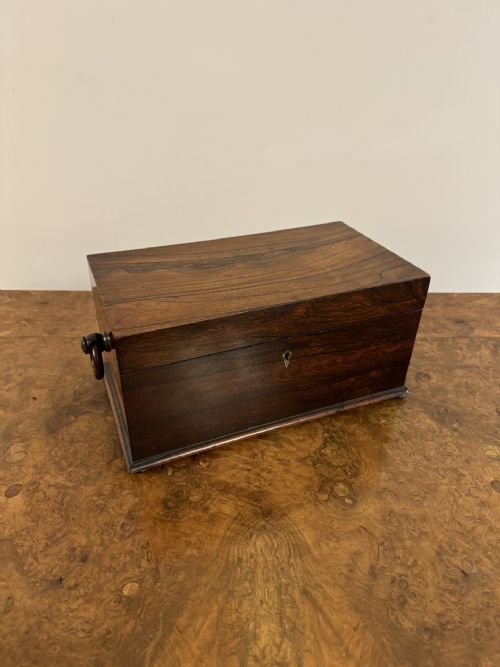
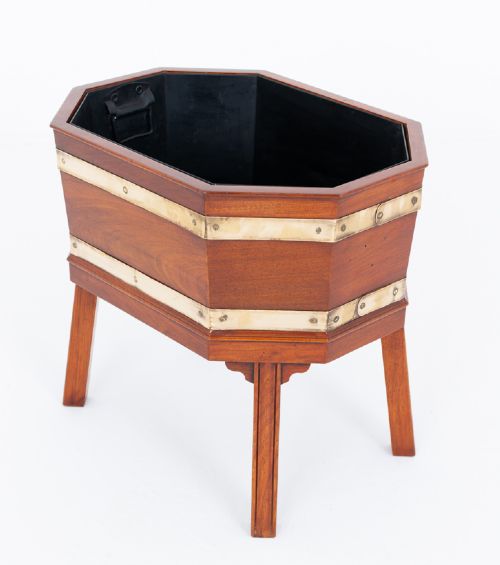
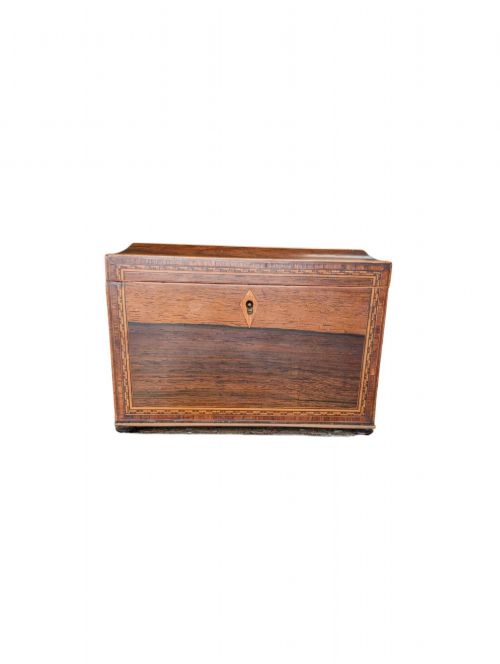
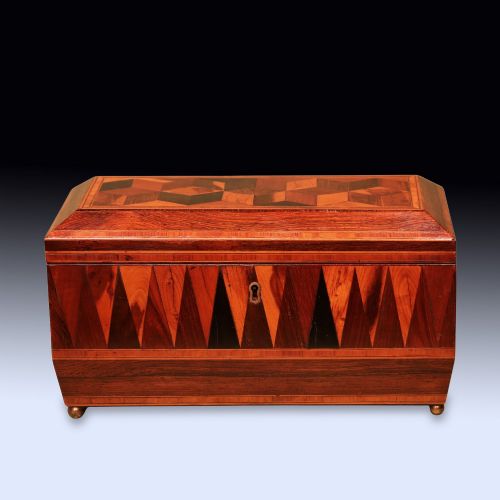
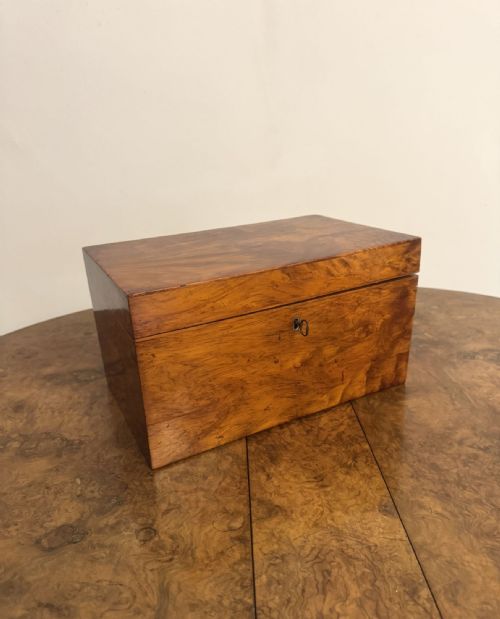

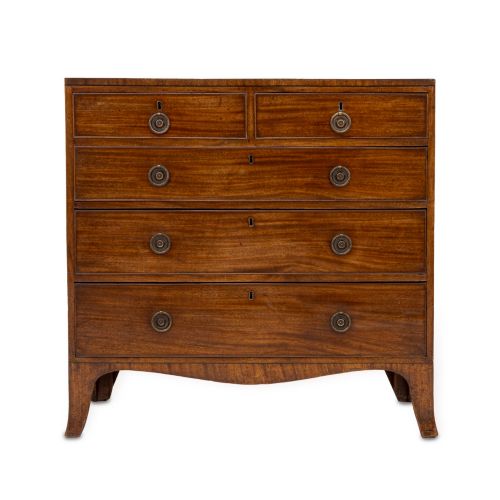

Regency Wooden Caddy
A regency wooden caddy brings tactile warmth and period elegance to a room, storing dry leaf in handsome mahogany or rich rosewood.
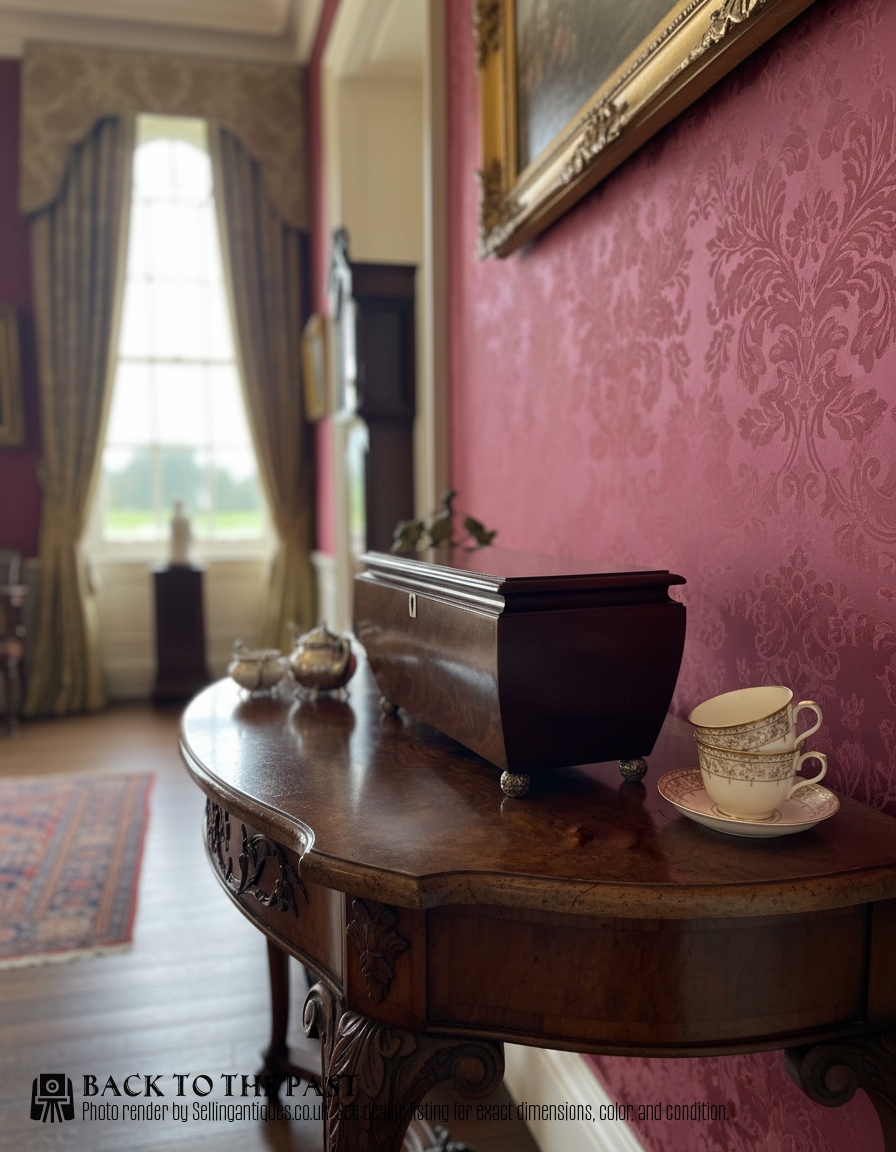
What a regency wooden caddy is
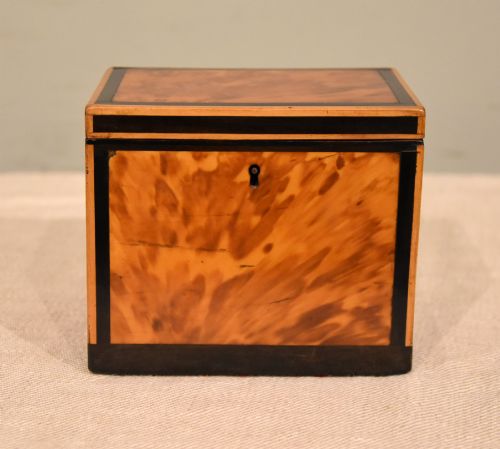
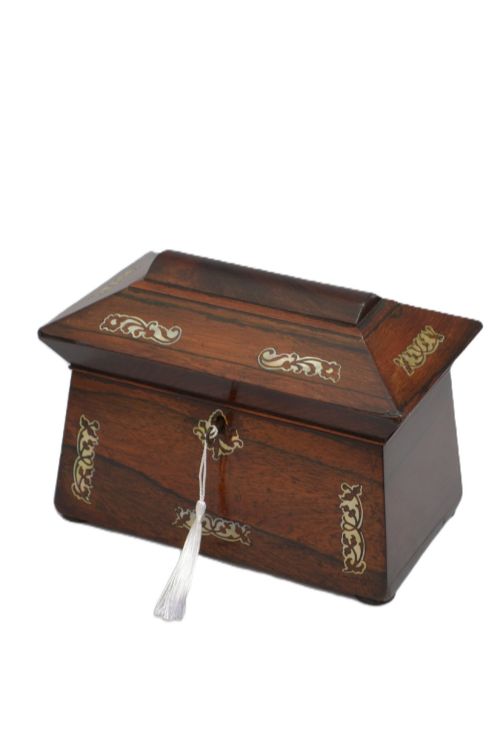
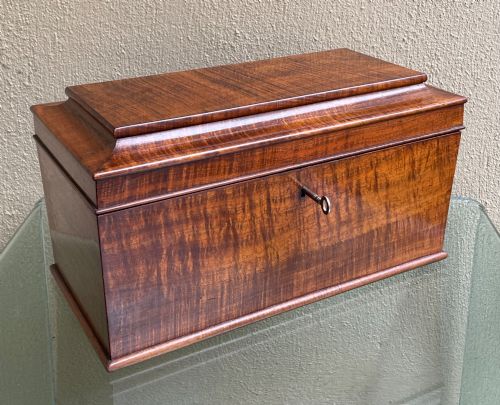
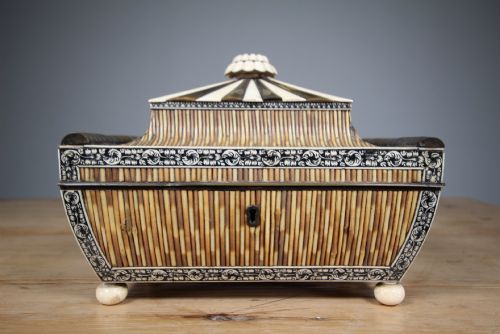
A regency wooden caddy takes the form of a lidded box designed for storing loose tea leaves, appearing in shapes that range from oblong and tapered to bombé. These pieces emerge from the nineteenth century, carrying the stylistic hallmarks of the Regency and Georgian periods.
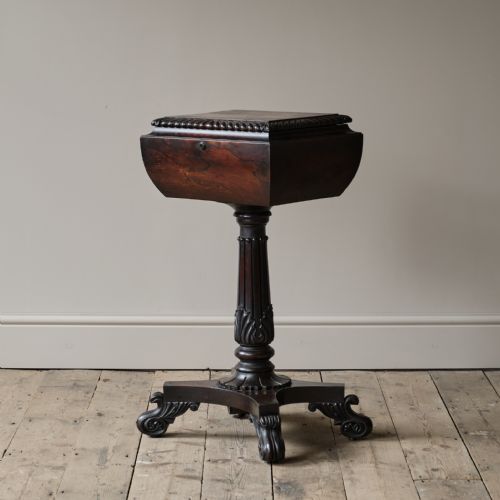
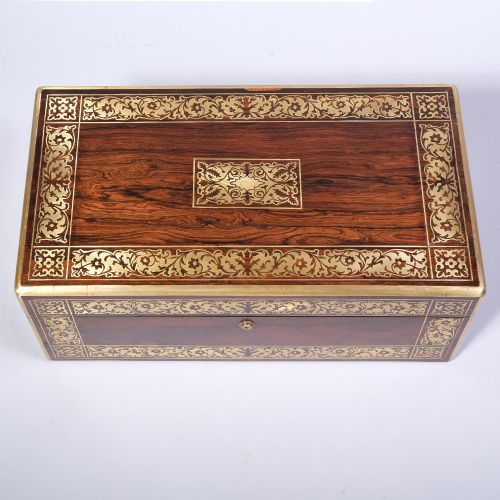
The version most commonly met on this page is constructed from mahogany or rosewood, often enhanced with brass inlay. Examples include miniature sideboards and teapoys alongside traditional tea caddies.
Makers of this era shaped these wooden containers with distinct geometric lines and rich grain patterns. Each piece reflects the social rituals of tea drinking during the early 1800s.
How they were made
Craftsmen built these containers using timber veneers laid over a solid wooden carcase, selecting mahogany and rosewood for their deep tones and striking grain. Ebony and brass inlay provided sharp contrast and decorative borders along the edges and lids.
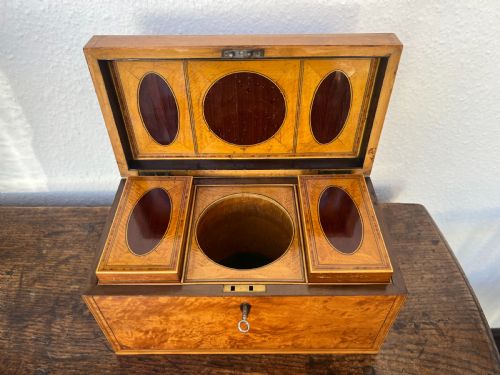
Internal fittings frequently incorporated glass mixing bowls, lead foil linings, and bone elements to handle and preserve the loose leaf. Metal components like brass hinges and escutcheons were cast and fitted by hand.
Retail Price Guide 2026
Typical UK retail prices for regency wooden caddy, calculated from the Sellingantiques database of over a million retail prices indexed since 2003. This retail price guide relies exclusively on Sellingantiques data; no external sources or auction records are used, so the figures do not describe the wider market.
Listings across this site span the nineteenth century, focusing on the 1800s and Regency periods with mahogany and rosewood builds.
What varies in quality
The distinction between standard examples and the finest pieces lies in the choice of timber veneer and the precision of the brass inlay. Figured mahogany and highly figured rosewood display superior natural movement and depth across the surface.
Construction details such as a bombé profile or the inclusion of original internal glass and lead foil components elevate a piece. The integration of contrasting ebony stringing demonstrates greater skill in the cabinetmaker's work.
The Regency Wooden Caddy Glossary
- Tea caddy
- A small box or chest intended for the secure storage of loose tea leaves. These containers often featured internal compartments and lids.
- Teapoy
- A freestanding piece of furniture on a pillar or legs, functioning as a tea caddy at a convenient height for serving.
- Bombé
- A swelling, outward-curved profile seen on certain cabinetwork and boxes of the period. This shape requires advanced woodworking skill to execute properly.
- Veneer
- A thin layer of finely figured wood applied over a secondary timber base. This technique allowed makers to display rich grain patterns without using solid costly woods throughout.
- Escutcheon
- A protective plate surrounding a keyhole. On these boxes, they are typically made of brass.
Frequently Asked Questions
What is a regency wooden caddy used for?
These boxes served to store valuable loose tea leaves securely under lock and key during the nineteenth century. Tea was an expensive commodity at the time, requiring careful measurement and protection.
Today, collectors use them to store small keepsakes or display them as decorative objects on sideboards and tables.
How do I identify a Regency period caddy?
Look for distinct stylistic indicators such as brass inlay, tapered oblong forms, and the use of rosewood or mahogany veneers. Dates generally cluster around the early 1800s.
Construction methods, including hand-cut dovetails and period brass hardware, further help anchor a piece to the Regency era.
What materials are common in these caddies?
Mahogany and rosewood form the primary wooden structures, often finished as veneers with contrasting ebony and brass inlay. Internal fittings frequently include glass mixing bowls, bone elements, and lead foil.
These materials reflected the taste and global trade connections of the early nineteenth century.
Are teapoys different from standard tea caddies?
A teapoy operates on a larger scale as a freestanding pedestal table rather than a box meant to sit on a tabletop. Both serve the same primary function of storing tea leaves.
Teapoys provide a distinct silhouette within a room while incorporating the same fine cabinetmaking found in smaller caddies.