




Rosewood Tea Chest
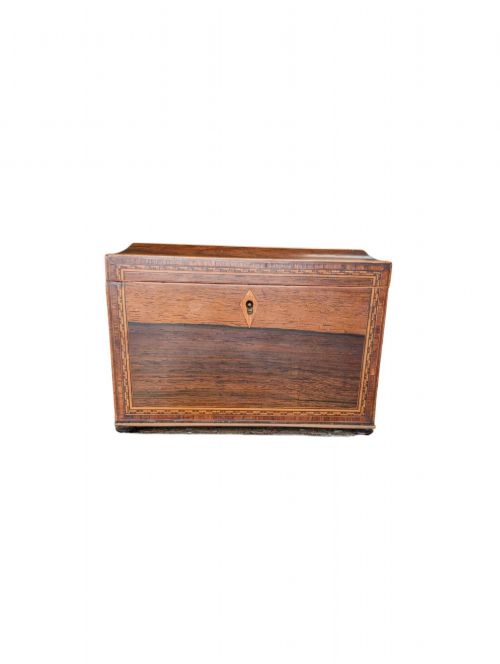
A rosewood tea chest is a substantial timber box designed to store precious leaves, offering collectors a rich grain and deep colour.
What a Rosewood Tea Chest Is
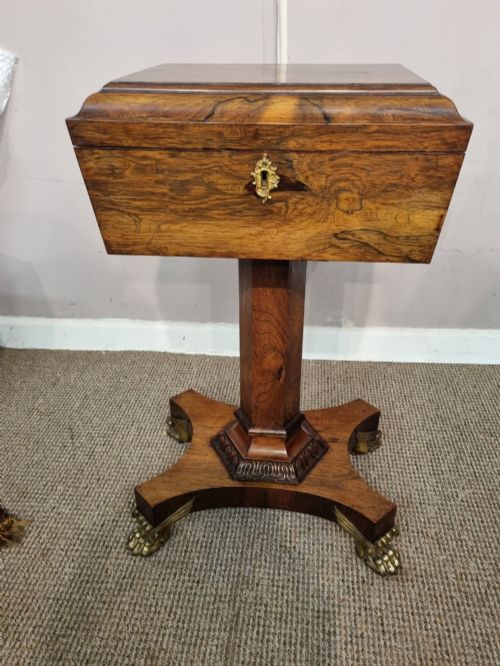
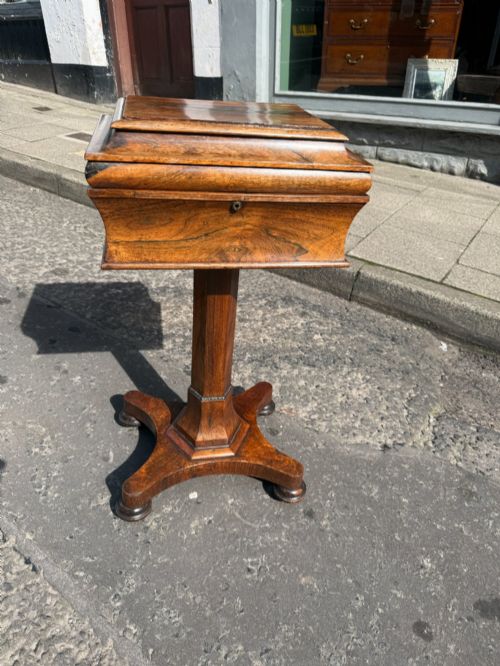
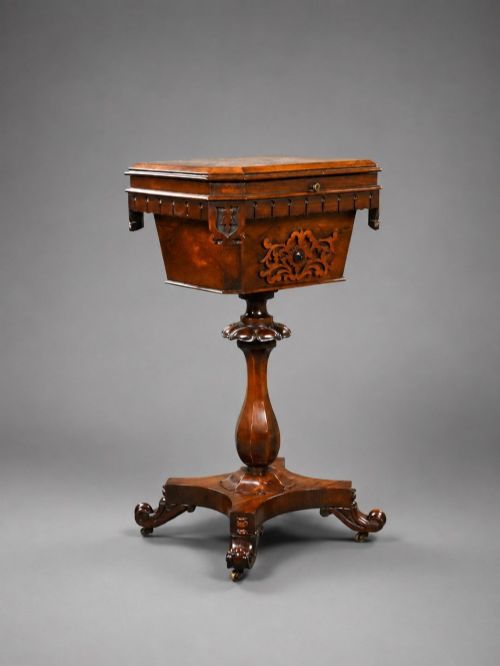
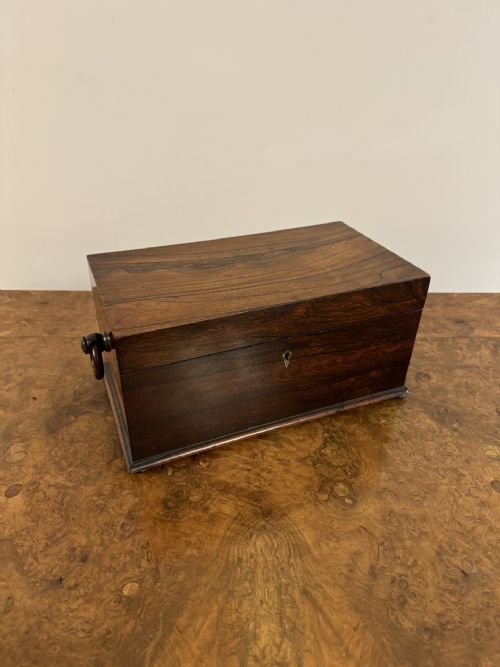
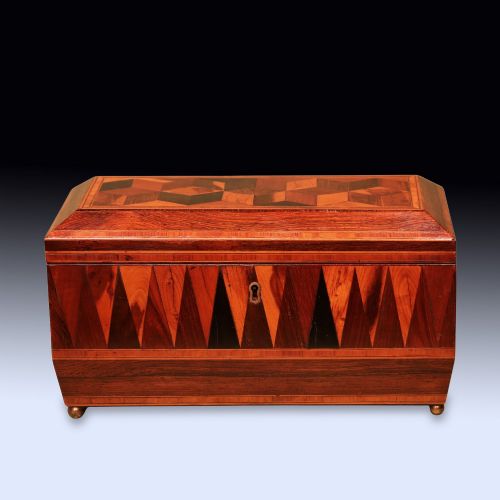
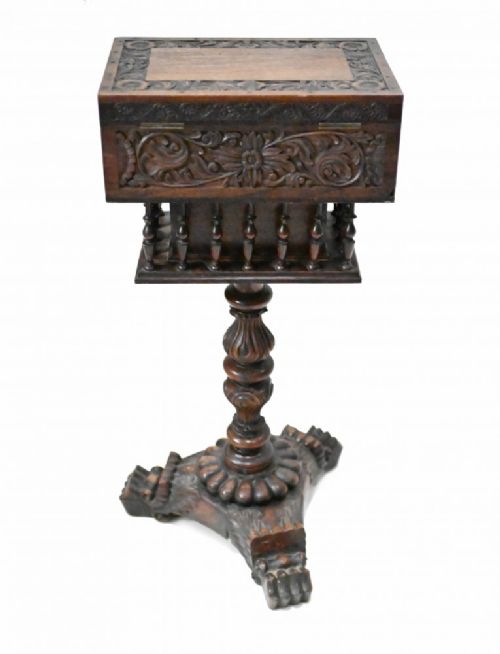
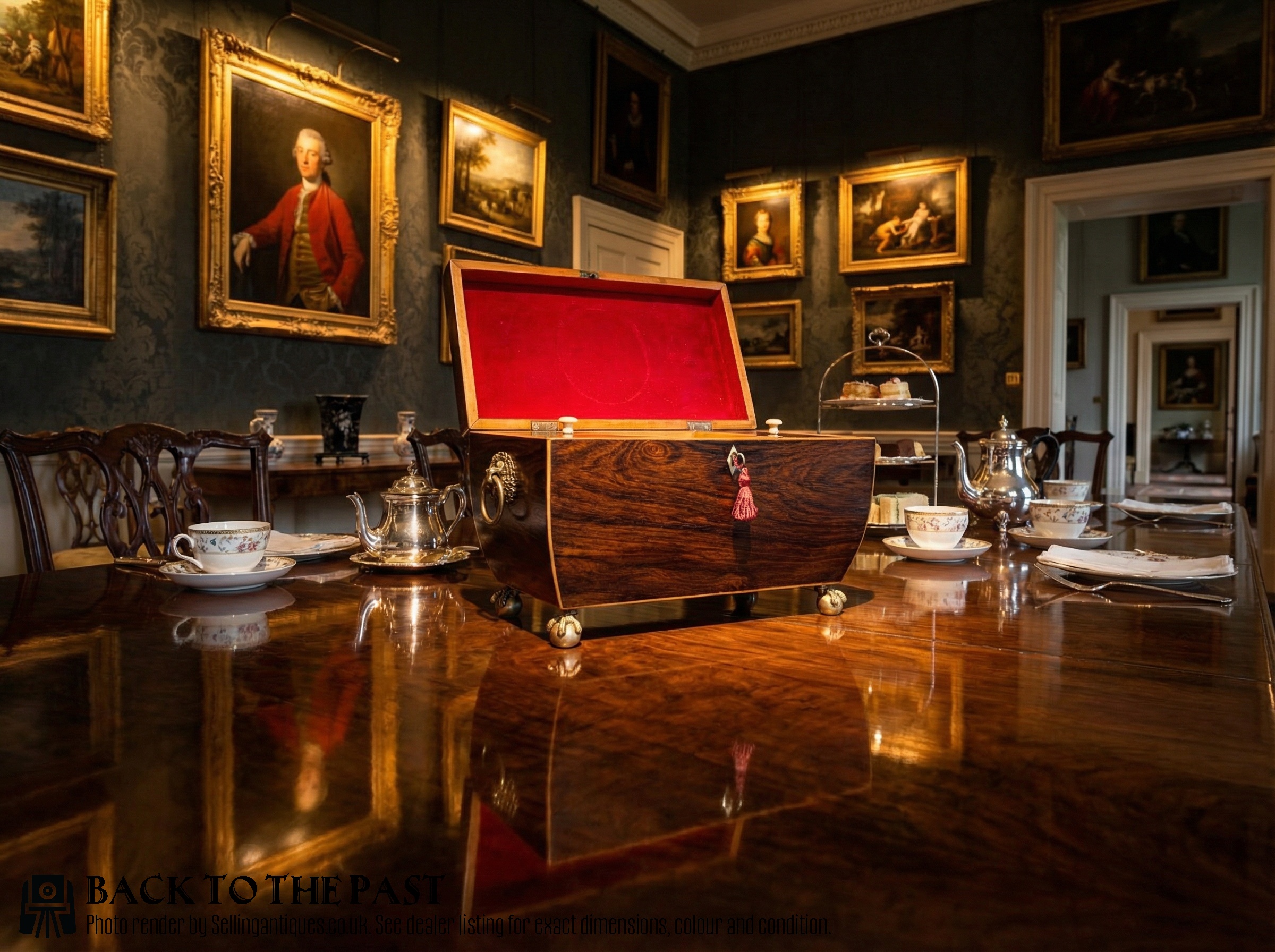
When you search for a rosewood tea chest, you encounter a refined storage container designed during the Regency, Georgian, and Victorian eras. These pieces take the form of tea caddies, teapoys, and oblong tapered chests used to keep dry leaves secure and aromatic.
The versions most commonly met on this page span the Regency and 19th Century periods, often featuring classical sarcophagus shapes or clean geometric lines. English and French workshops produced these containers in substantial timbers to protect valuable imports from moisture and light.
Makers shaped these objects to sit prominently in domestic parlours, reflecting the high status of tea as a social commodity. Surviving examples demonstrate the enduring appeal of dense exotic hardwoods combined with careful internal compartmentation.
Materials and Construction
Craftsmen built these chests using dense rosewood timber, frequently complemented by boxwood stringing and brass mounts. Internal fittings often incorporate glass mixing bowls, fabric linings, and bone or metal details alongside secure wooden compartments.
Joiners employed solid timber construction and fine parquetry patterns to create stable, decorative surfaces that showcase natural grain variations. Metal handles, escutcheons, and hinges provided functional security and structural reinforcement for heavy lids.
Retail Price Guide 2026
Typical UK retail prices for rosewood tea chest, calculated from the Sellingantiques database of over a million retail prices indexed since 2003. This retail price guide relies exclusively on Sellingantiques data; no external sources or auction records are used, so the figures do not describe the wider market.
Some chests retain tiny bone knobs on their internal leaf canisters, designed so cold metal would not bruise delicate fingers.
Distinctions in Quality
The finest examples display crisp parquetry work and deeply figured rosewood grain that has matured with an even patina. Superior pieces maintain integrated internal lids and matching mixing vessels that survive intact within the fitted interior.
Lower tiers of quality tend to show simpler construction with plainer timber selection and replacement hardware. The refinement of the brass mounts and the precision of the boxwood stringing separate standard utility pieces from high-status salon containers.
The Rosewood Tea Chest Glossary
- Tea caddy
- A container designed specifically to store loose tea leaves securely. These boxes often feature internal divisions and lids.
- Teapoy
- A pedestal-supported chest or table used for holding tea and brewing equipment. They frequently incorporate internal canisters.
- Parquetry
- A geometric mosaic of wood pieces used for decorative veneer on furniture surfaces. This technique creates patterned lids and panels.
- Sarcophagus
- A monumental casket shape with a domed lid popular during the Regency period. This architectural form elevated small storage boxes.
- Escutcheon
- A protective plate surrounding a keyhole on a cabinet door or lid. They are typically cast in brass.
Frequently Asked Questions
What is a rosewood tea chest used for?
These chests served historically to store expensive loose tea leaves under lock and key in the parlour or dining room.
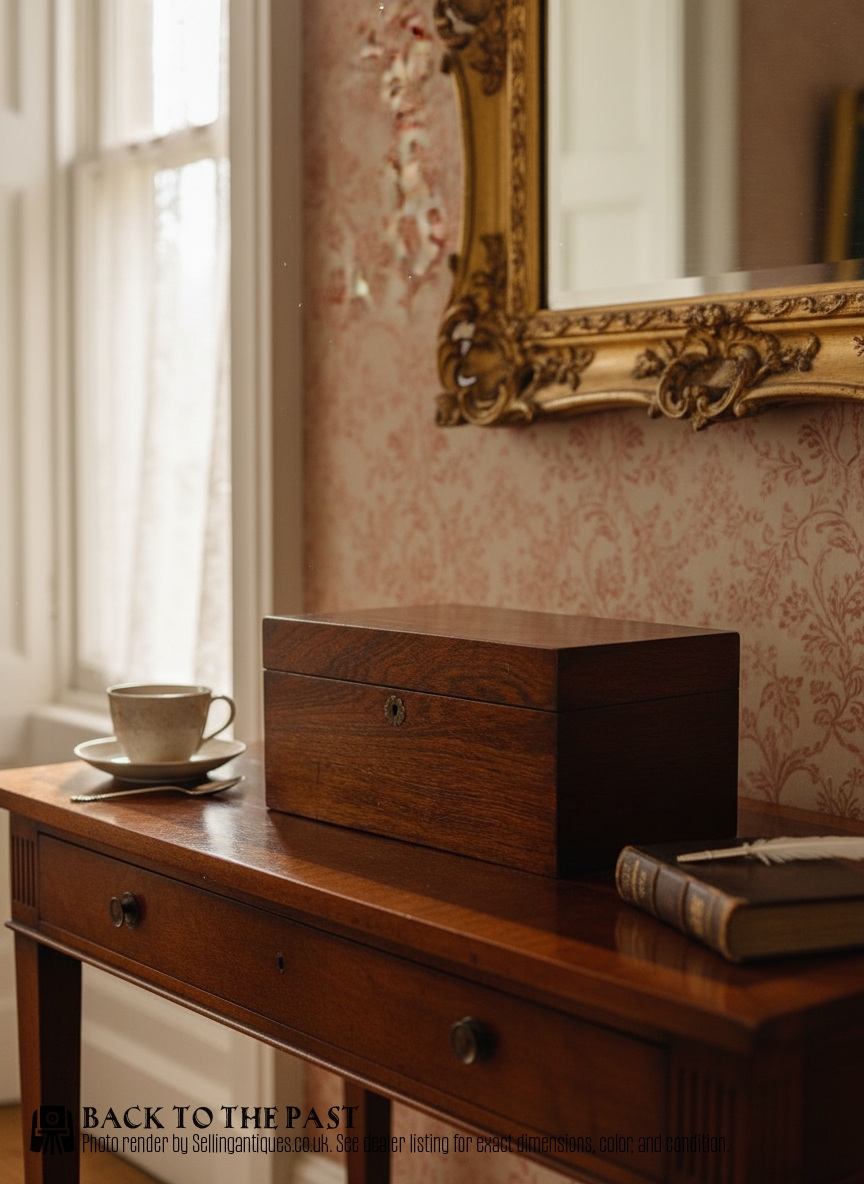
Today, collectors utilise them as decorative decorative boxes for letters, jewellery, or small keepsakes.
How do I tell Regency from Victorian chests?
Regency pieces often display classical architectural proportions, sarcophagus forms, and refined brass paw feet or ring handles. Later Victorian examples tend to feature plainer rectangular or tapered profiles with simpler internal layouts.
Timber selection and decorative stringing also shift across these periods to reflect changing domestic tastes.
Did all tea chests include glass bowls?
Many caddies and teapoys incorporate a central glass mixing bowl flanked by two lidded compartments for different tea varieties.
The bowl allowed hosts to blend black and green teas before serving, though many surviving examples now lack the original glass.
How do I care for antique rosewood?
Rosewood requires stable humidity and protection from direct sunlight to prevent timber shrinkage and fading.
Regular dusting with a dry cloth preserves the finish, avoiding heavy silicone polishes that damage antique patination.