

English Tea Caddy
An english tea caddy stores precious loose leaf leaves securely under lock and key, combining fine cabinetmaking with daily domestic ritual.
Forms and Eras
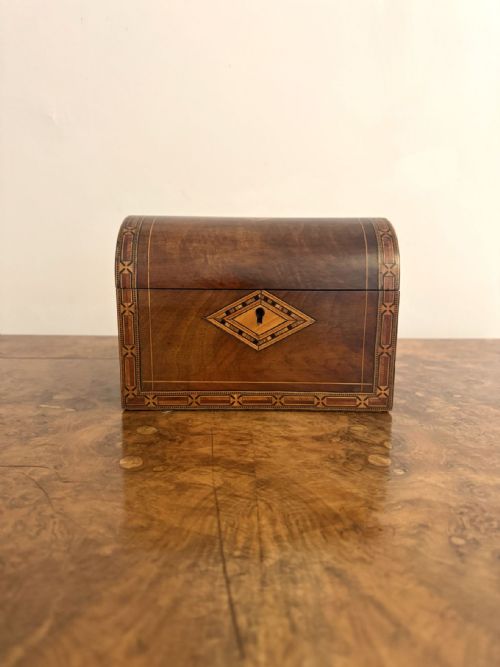
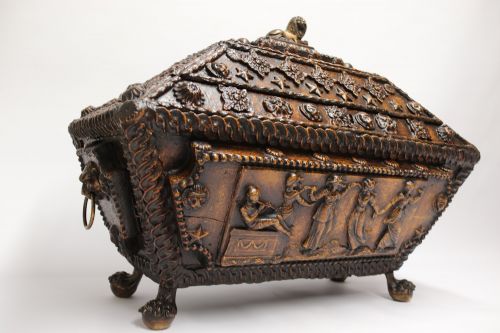
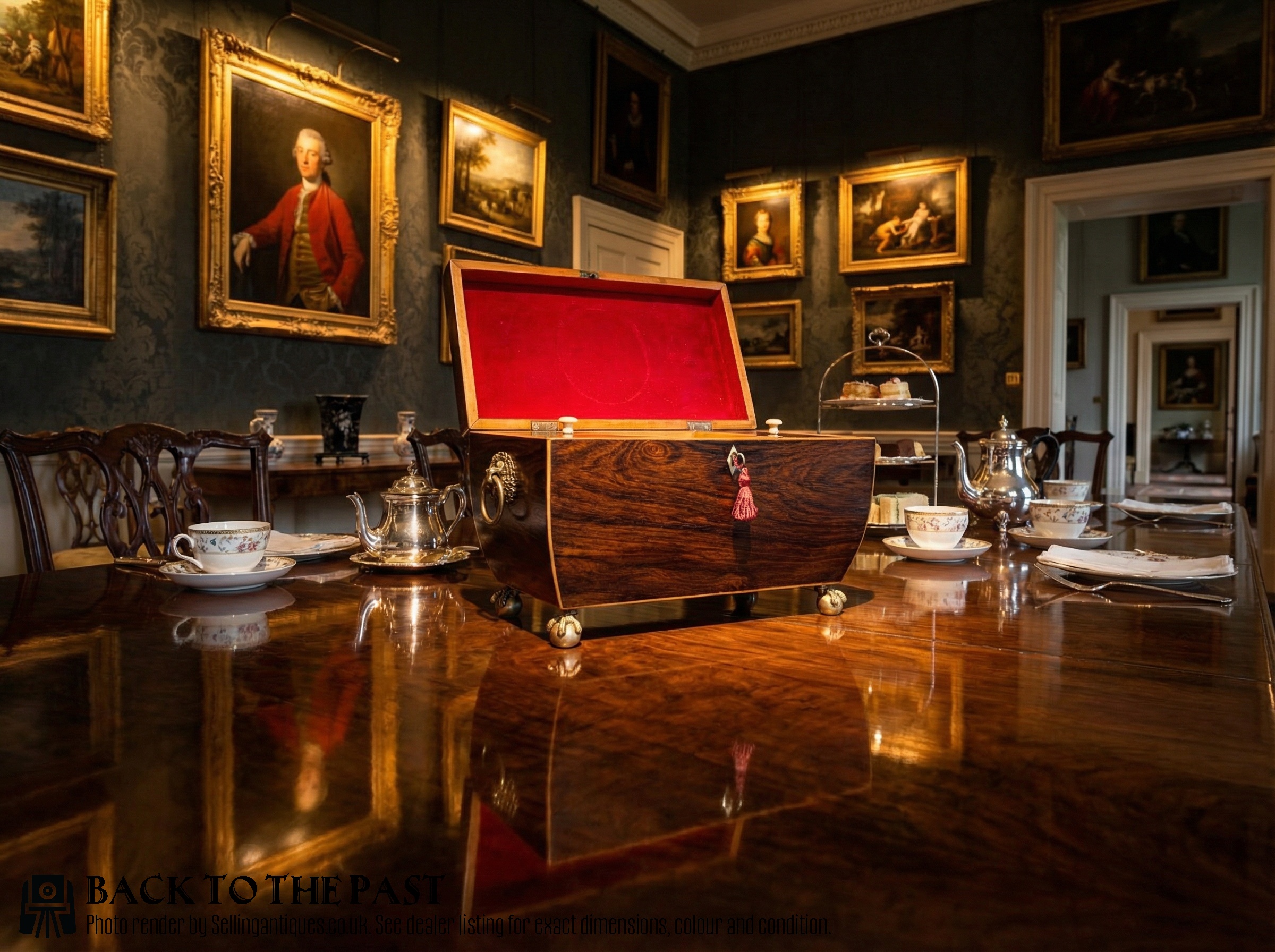
An english tea caddy appears in various forms across the Georgian, Regency, William IV, and Victorian periods, often taking sarcophagus shapes, double compartments, or fruit forms like pears and melons. Cabinet boxes dominate the current selection, constructed from walnut, rosewood, mahogany, and fruitwood.
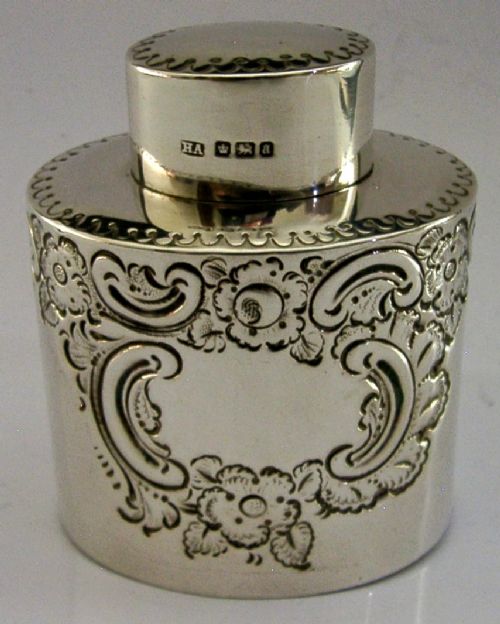
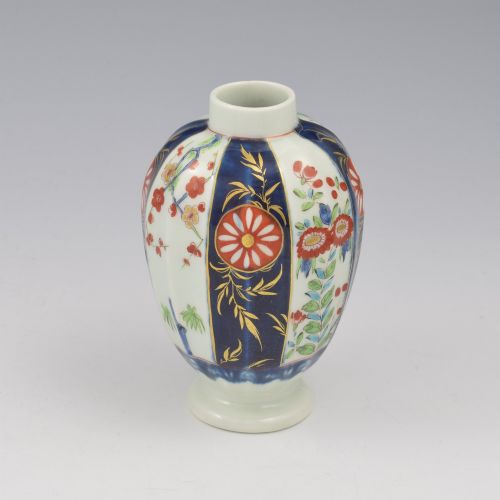
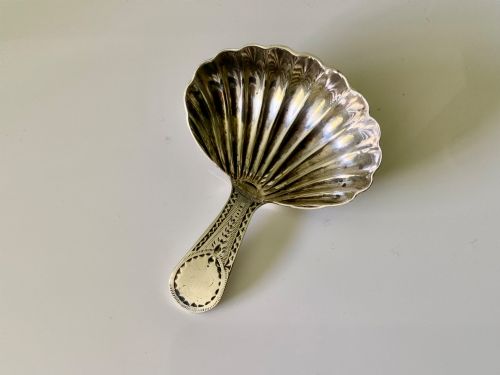
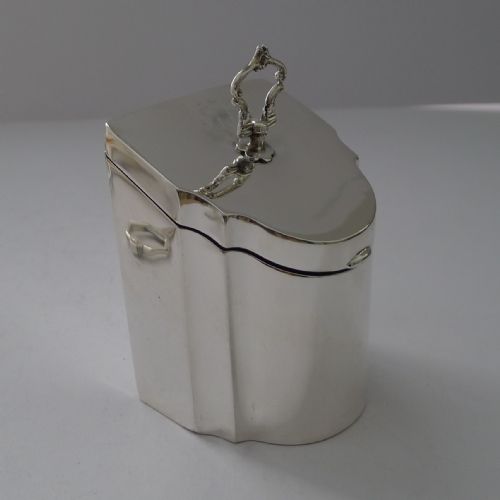
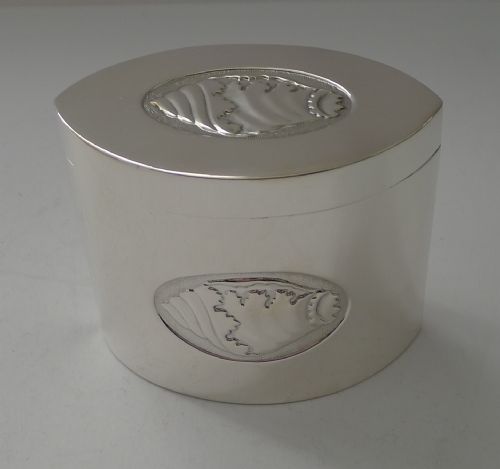
Earlier domestic examples include creamware pottery and pewter canisters alongside silver boxes from later eras up to the twentieth century. Sarcophagus and dome top boxes with interior mixing bowls or loose leaf cases represent the standard domestic containers found in drawing rooms.
Materials and Technique
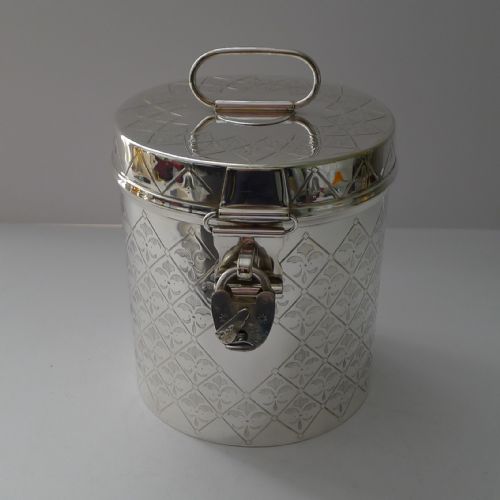
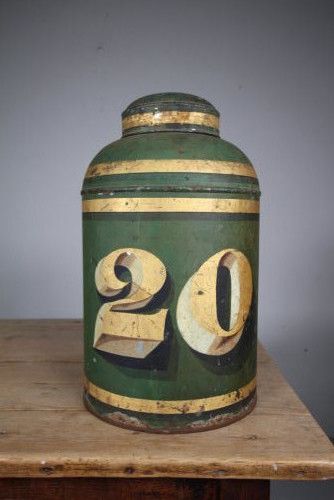
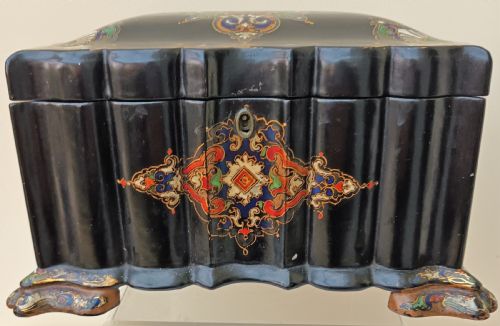
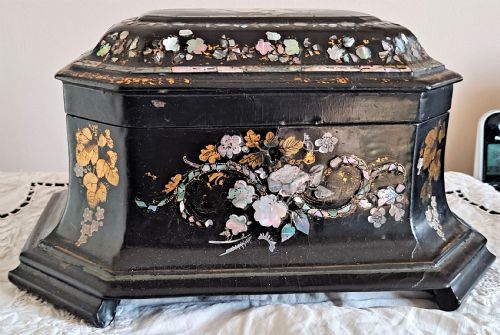
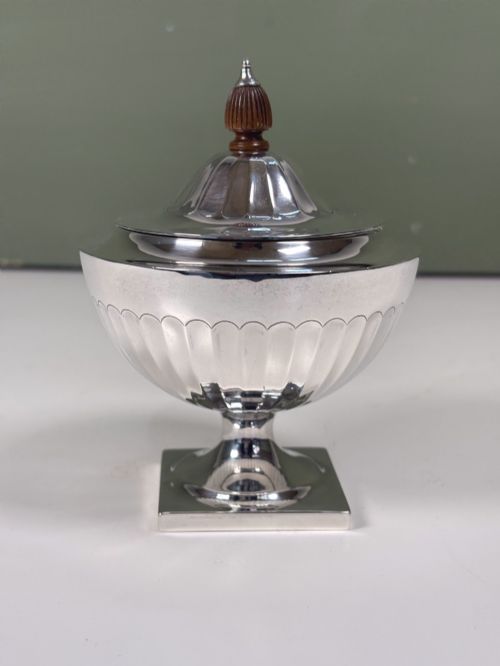
Wood caddies utilise walnut, rosewood, mahogany, oak, and fruitwood substrates, embellished with intricate wood inlay, boxwood stringing, penwork, and Tunbridge mosaic work. Metal examples employ sterling silver, silver plate, pewter, brass, and toleware.
Papier-mâché and mother of pearl form decorative surfaces on specific Victorian boxes, while specialised fruitwoods undergo turning to achieve naturalistic fruit shapes.
Retail Price Guide 2026
Typical UK retail prices for english tea caddy, calculated from the Sellingantiques database of over a million retail prices indexed since 2003. This retail price guide relies exclusively on Sellingantiques data; no external sources or auction records are used, so the figures do not describe the wider market.
Fruitwood caddies shaped realistically as pears and melons let owners conceal their dry leaves inside convincing wooden orchards.
Assessing Distinction
Quality rests in the precision of the cabinetmaking, particularly the execution of Tunbridge mosaic work, wood inlay, and penwork details. The integrity of internal partitions and original mixing bowls elevates a piece.
Subtle proportions in sarcophagus designs and the choice of dense burr timbers separate standard containers from finer drawing room chests.
Whieldon·Harrods
The English Tea Caddy Glossary
- Sarcophagus
- A box style featuring a stepped or domed lid reminiscent of a stone coffin, popular during the Regency and William IV periods.
- Tunbridge inlay
- Tiny coloured wood fragments assembled into mosaic pictorial bands, characteristic of nineteenth-century decorative boxes.
- Penwork
- Surface decoration created using ink applied by pen to wood or papier-mâché, depicting classical or floral scenes.
- Creamware
- A refined earthenware developed in the eighteenth century with a pale yellowish lead glaze.
- Toleware
- Lacquered or enamelled metalware produced to mimic Asian lacquer or fine ceramics.
Frequently Asked Questions
How were tea caddies used?
Tea was an expensive commodity in the eighteenth and nineteenth centuries, kept locked inside these boxes by the lady of the house.
Servants brought the caddy to the drawing room where the tea was measured out for each service.
What is a sarcophagus tea caddy?
This style borrows its architectural shape from ancient stone tombs, featuring a tapered body and a heavy domed or pedimented lid.
Cabinetmakers built these large boxes in rosewood and mahogany during the Regency and William IV eras.
How do I date an english tea caddy?
Dating relies on combining timber choices, decorative techniques such as Tunbridge inlay or penwork, and overall box architecture.
Georgian and Regency pieces favour mahogany and rosewood with simple lines, while Victorian examples often introduce papier-mâché and complex mosaic surfaces.
What is Tunbridge inlay?
This decorative technique uses thousands of tiny blocks of naturally coloured wood glued together to form geometric or floral mosaic patterns.
Workers applied these intricate bands directly onto rosewood or walnut box surfaces during the nineteenth century.