





George III Tea Caddy
A george iii tea caddy represents an era when tea was a costly dry good kept under lock and key in exquisitely crafted wooden or silver receptacles.
George III Tea Caddy
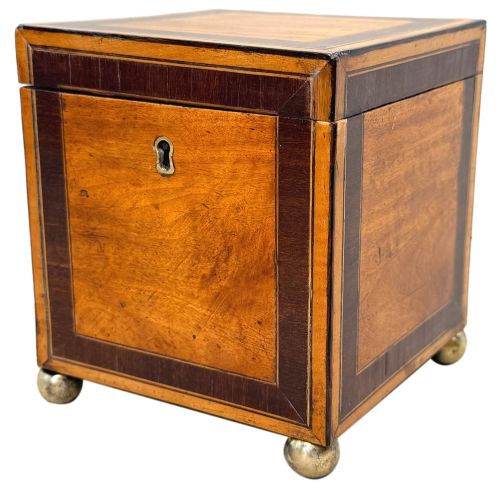
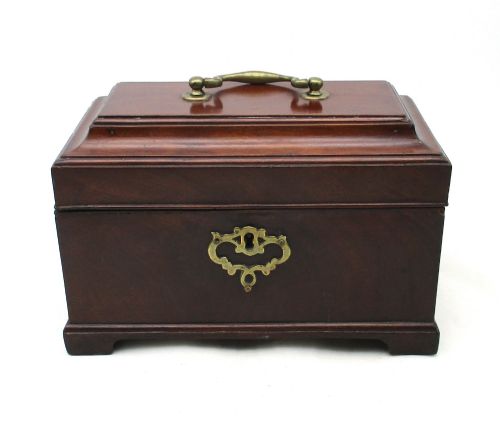
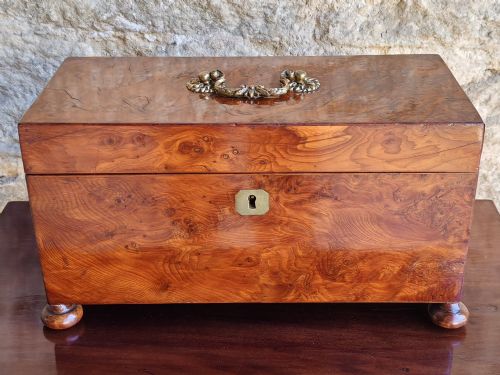
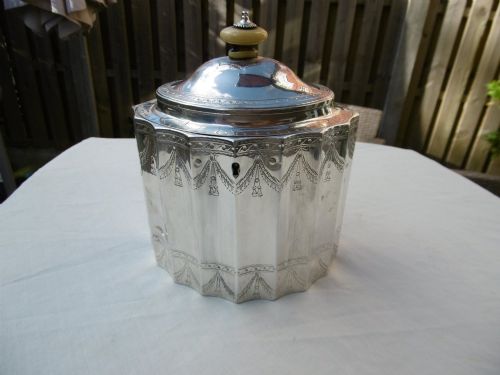
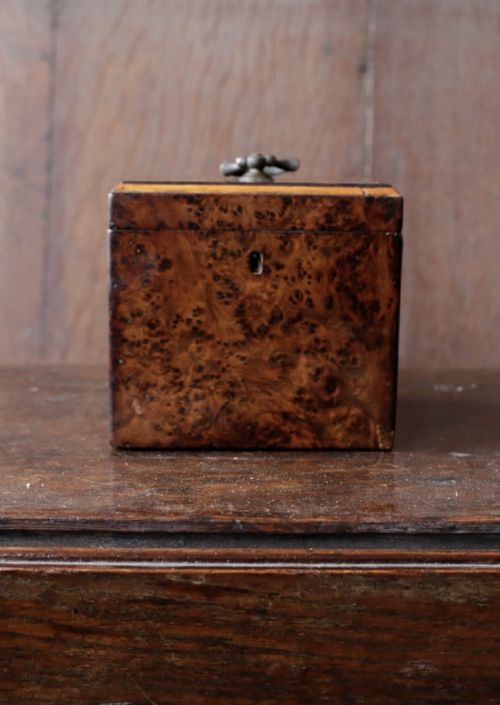
A george iii tea caddy is a domestic container made to store valuable tea leaves during the Georgian period, typically taking the form of a small lidded box. On this page, the version you are most likely to encounter is a wooden storage box fashioned from mahogany, satinwood, yew, or rosewood, frequently shaped as an oval, cube, octagon, or rectangle.
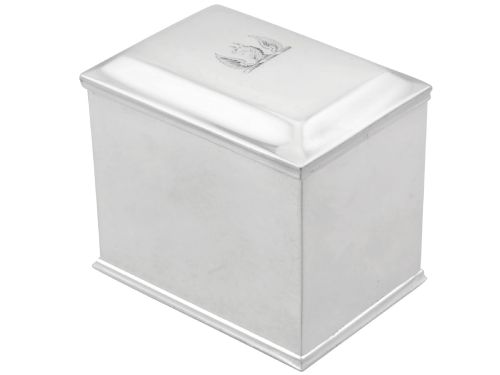
Beyond simple wooden boxes, the selection encompasses elaborate silver caddies, caddy spoons designed for measuring the leaves, and occasional multi-compartment tea chests. These objects reflect the high social status of tea drinking in the eighteenth century, where dry leaves required secure storage away from servants.
The evidence shows these containers arriving in various geometric forms, including hexagonal and decagonal shapes, alongside pieces featuring secret drawers or specialised compartments. Makers utilised exotic timbers and detailed veneers to elevate these functional boxes into decorative accessories for the parlour.
Materials and construction
Cabinetmakers constructed these boxes using solid native timbers like mahogany or oak as a foundation, then applied fine decorative veneers such as satinwood, burr yew, harewood, and partridge-wood. Wood inlay, marquetry, and boxwood stringing were frequently employed to create contrasting geometric borders and decorative motifs upon the surfaces.
George III Tea Caddy Retail Price Guide 2026
Typical asking prices for george iii tea caddy among the pieces listed under this phrase on Sellingantiques today, from the lower quarter to the upper quarter. They describe what is for sale here now, not the wider market.
Listings feature mahogany, satinwood, tortoiseshell, and sterling silver applied to forms ranging from simple rectangles to architectural houses.
Distinctions in craftsmanship
The calibre of a george iii tea caddy rests upon the selection of timber veneers and the precision of the marquetry work. Finely figured grains, complex geometric shapes like serpentine or hexagonal outlines, and intact original hardware distinguish superior examples from plain utility boxes.
Interior completeness also dictates quality, with top-tier pieces retaining their original internal compartments, fitted lids, and functioning locks with working keys. The integration of specialty materials like tortoiseshell, mother-of-pearl, or fine silver hallmarks elevates certain items above standard production.
Robert Hennell·Charles Aldridge·Thomas Shepherd·Joseph Willmore
The George III Tea Caddy Glossary
- Caddy spoon
- A small handled spoon specifically designed for measuring loose tea leaves into a pot. These were typically made from sterling silver and matched the tea caddy set.
- Marquetry
- Decorative veneer work formed by fitting together small pieces of different coloured woods to create pictorial or geometric patterns on the surface of the box.
- Satinwood
- A pale, lustrous exotic timber imported from the West Indies and heavily utilised by Georgian cabinetmakers for fine decorative veneers and stringing.
- Stringing
- Thin inlay lines of a contrasting wood, such as boxwood, used to edge panels and outline the geometric forms of Georgian tea caddies.
- Sarcophagus
- A box shape featuring a domed or sloping lid resting on a rectangular base, frequently adopted for larger storage containers and tea chests during the late Georgian era.
George III Tea Caddy: Frequently Asked Questions
What is a george iii tea caddy?
A george iii tea caddy is a specialised storage box created during the Georgian era to hold expensive tea leaves securely under lock and key.
These boxes evolved into refined decorative items for the home, utilising fine timbers and precious metals to reflect the high status of tea.
Why do some caddies have two compartments?
Double tea caddies were constructed to store two distinct varieties of tea, typically green tea and black tea, in separate lidded sections.
A central mixing compartment was sometimes included between the two canisters to blend the leaves before brewing.
How do you identify a Georgian wood?
Georgian cabinetmakers utilised native woods like mahogany and oak alongside imported tropical hardwoods including satinwood, rosewood, and harewood.
Visual inspection of the grain pattern, colour depth, and veneer thickness helps identify the specific timber used in construction.