

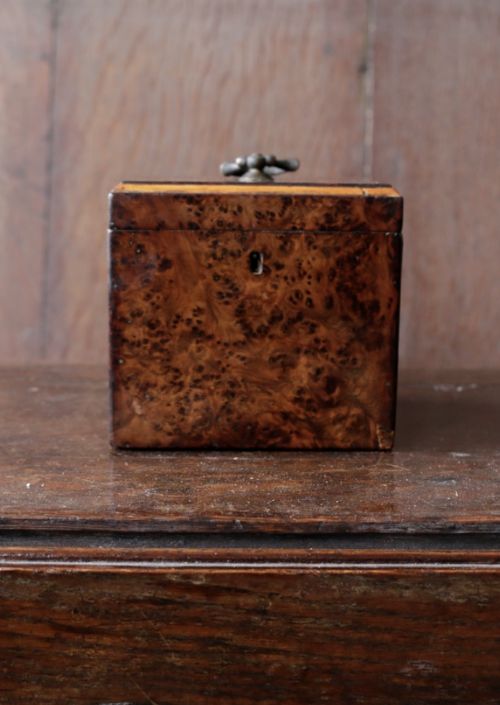


Marquetry Tea Chest
A marquetry tea chest brings together intricate timber work and the social rituals of the past.

Marquetry Tea Chest
When you search for a marquetry tea chest, you look at decorative vessels designed to store dry tea leaves safely under lock. The pieces found here span the 18th century, the Georgian era, the Regency period, and the Victorian age. They appear in forms such as tea caddies, teapoys, and boxes with fitted interiors.
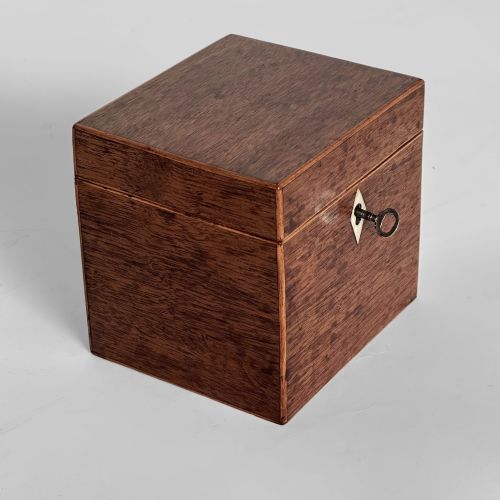
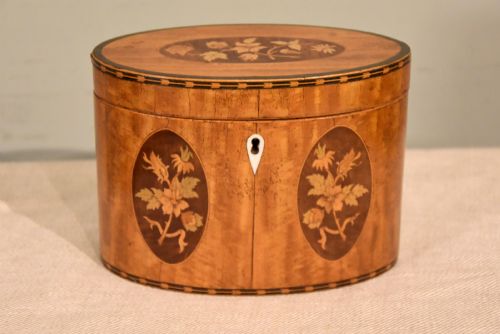
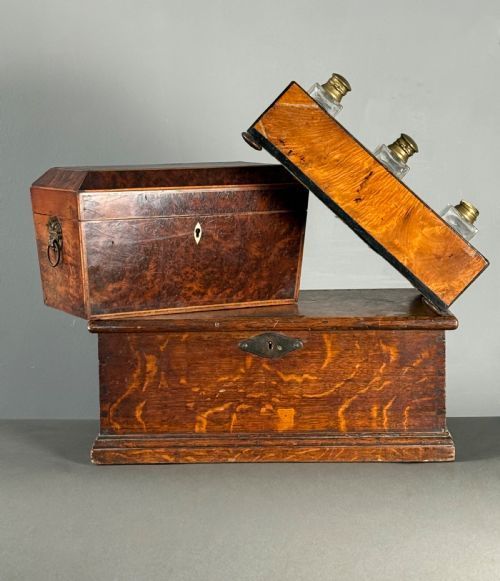
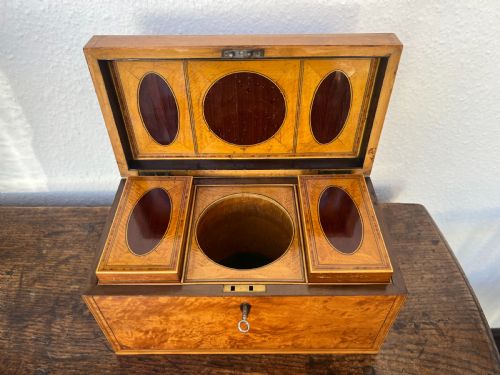
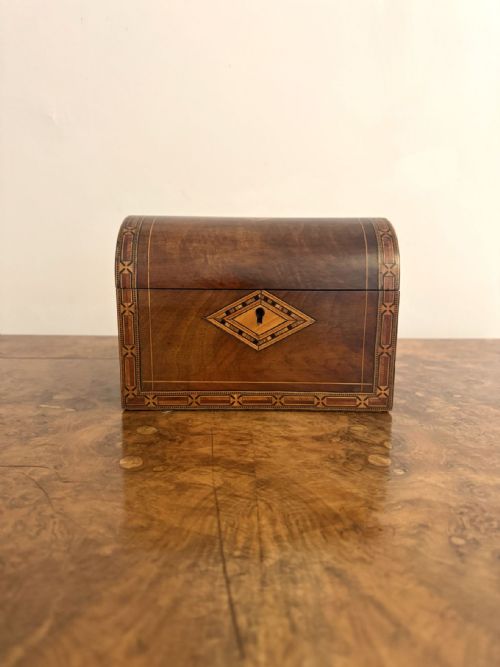
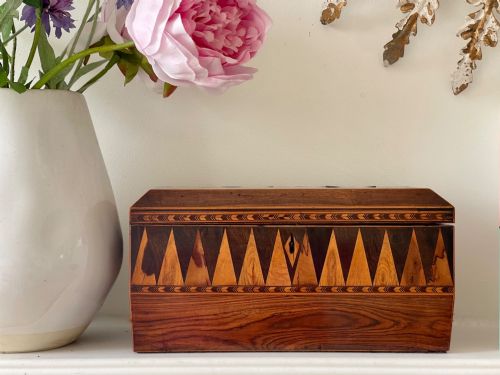
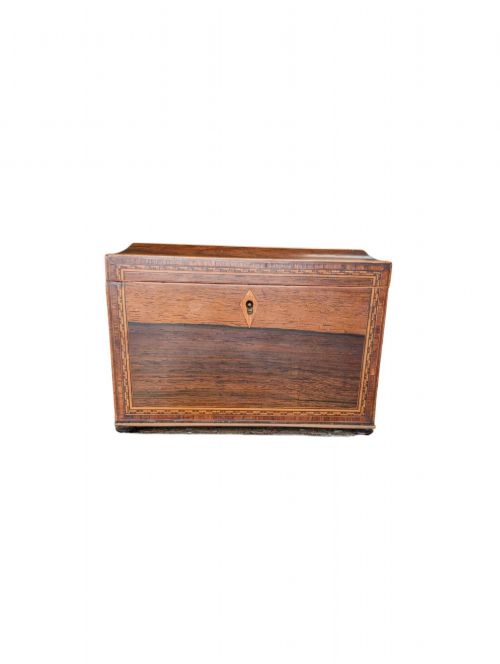
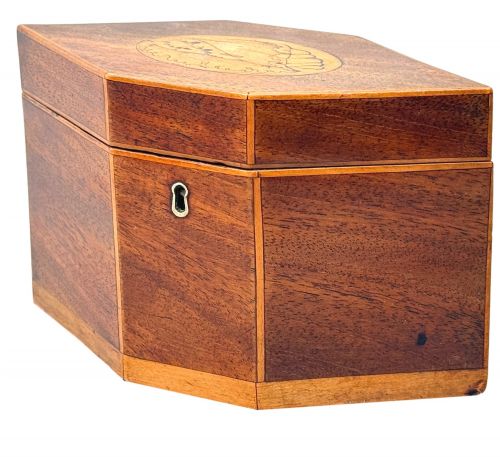
The version you are most likely to meet on this page is a box fashioned from rosewood, satinwood, mahogany, or walnut, detailed with wood inlay or Tunbridge ware. Many examples adopt rectangular, hexagonal, or oval shapes, often housing inner canisters or sugar dishes.
Makers constructed these objects to preserve the aroma of expensive leaves while displaying wealth in a drawing room. The survival of keys and internal compartments indicates how owners kept prized teas secure.
Craft and materials
Crates and carcases rely on dense timbers like mahogany, rosewood, and walnut, providing a stable foundation for decorative surfaces. Cabinet makers applied fine veneers of satinwood, harewood, and burr yew over these base woods.
Craftsmen utilised wood inlay, marquetry, and parquetry, cutting contrasting timbers to form floral motifs, geometric patterns, and butterfly designs. Details in bone, boxwood, mother of pearl, and brass added further contrast to the exterior surfaces.
Specialised techniques such as Tunbridge ware created mosaic pictures from thousands of tiny coloured wood segments. Interiors often incorporated fitted wooden lids, sometimes alongside compartments for mixing blends.
Marquetry Tea Chest Retail Price Guide 2026
Typical asking prices for marquetry tea chest among the pieces listed under this phrase on Sellingantiques today, from the lower quarter to the upper quarter. They describe what is for sale here now, not the wider market.
Listings feature woods including rosewood, satinwood, mahogany, walnut, burr yew, partridge wood, and gonçalo alves across the Georgian and Victorian periods.
Distinctions in quality
The standard of a marquetry tea chest rests on the precision of the timber cutting and the complexity of the design. Master craftsmen achieved seamless joins in multi-toned wood inlay, where lesser pieces rely on simpler painted or stamped decoration.
The choice of primary wood and secondary veneers dictates the prestige of the object, with burr timbers, tortoiseshell, and finely figured satinwood marking out superior examples. Intricate geometric parquetry and pictorial Tunbridge ware demand high levels of carpentry.
Original internal fittings, functional locks with keys, and well-preserved hinges elevate an example from a standard container to a high-status collector piece.
Henry Hollamby
The Marquetry Tea Chest Glossary
- Marquetry
- The art of applying pieces of veneer to a structure to form decorative patterns and pictures. Craftsmen cut various coloured woods to fit together precisely.
- Teapoy
- A pedestal table or large box designed to hold tea canisters. They frequently stand on a central pillar or four legs.
- Tunbridge Ware
- A form of woodworking peculiar to Kent involving small mosaic tiles of natural coloured woods. Makers arranged them to form intricate geometric or pictorial scenes.
- Harewood
- Sycamore wood treated to take a greenish-grey stain. It was popular in polite furniture during the late 18th century.
- Sarcophagus
- A container shape with a sloping lid reminiscent of an ancient stone coffin. Regency makers favoured this bold silhouette for storage boxes.
Marquetry Tea Chest: Frequently Asked Questions
What is a marquetry tea chest?
A marquetry tea chest is a decorative wooden box ornamented with inlaid wood veneers, built to store dry tea leaves securely.
These boxes date primarily from the Georgian, Regency, and Victorian periods, reflecting a time when tea was an expensive commodity stored under lock and key.
How were tea chests used?
Owners used them to keep loose tea safe from moisture, light, and theft in the formal rooms of a house. The mistress of the house typically held the key and measured out the leaves for each pot.
Inside, divided compartments separated different varieties of black and green tea, alongside a central mixing bowl for blending leaves.
How do I date a tea chest?
Dating relies on combining the timber species, the style of the marquetry, and the construction of the interior. Georgian examples often feature satinwood and shell motifs, while Victorian pieces lean towards burr walnut and Tunbridge ware.
Hardware such as hinges, escutcheons, and lock mechanisms also provide clues to the decade of manufacture.
How do I care for wooden inlay?
Keep wooden inlay away from direct sunlight and sources of heat to prevent the delicate veneers from lifting or splitting. Maintaining a stable room temperature protects both the structural timbers and the tiny pieces of contrasting wood.
Dust gently with a dry, soft cloth and avoid applying modern polishes or liquid cleaners directly to the surface.