
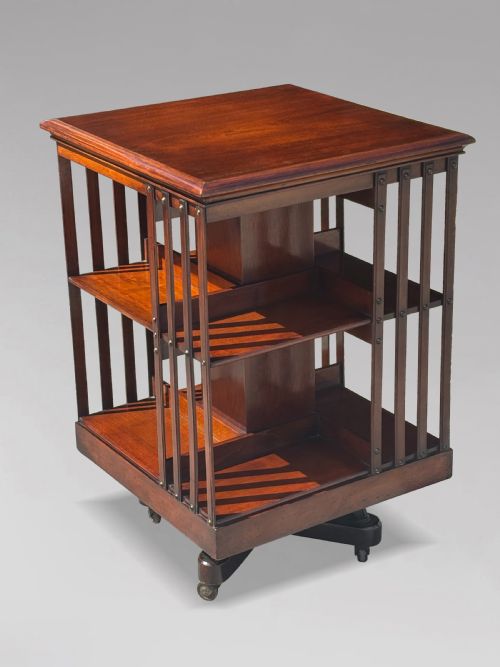
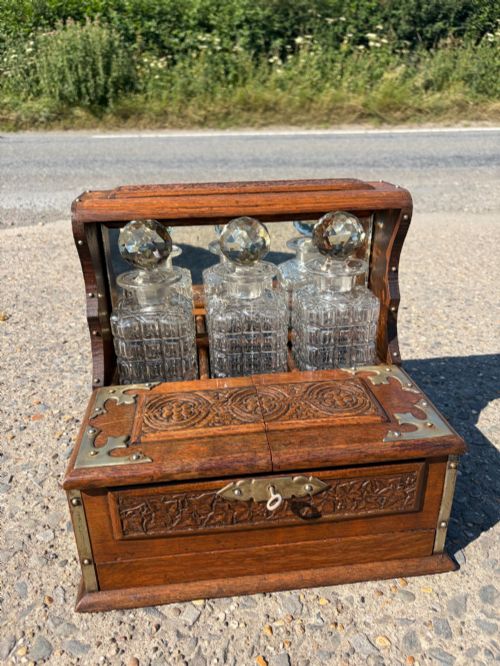
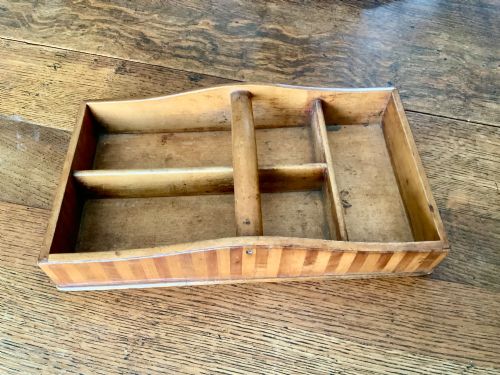
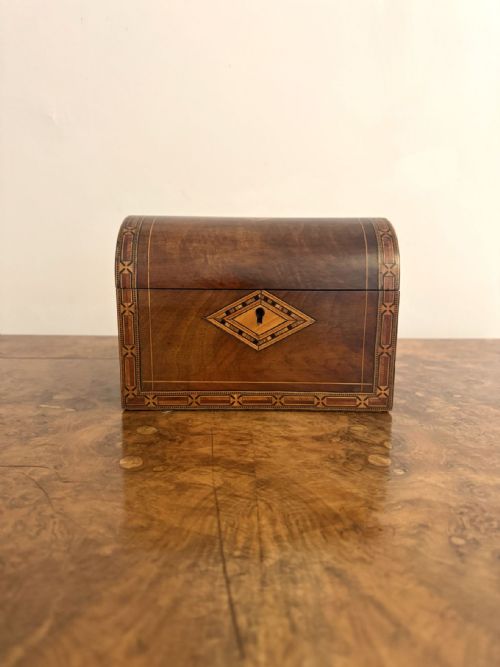




Victorian Wooden Caddy
These Victorian wooden caddy pieces offer sturdy housing for precious leaves, bringing rich timbers and careful brass work straight to the table.
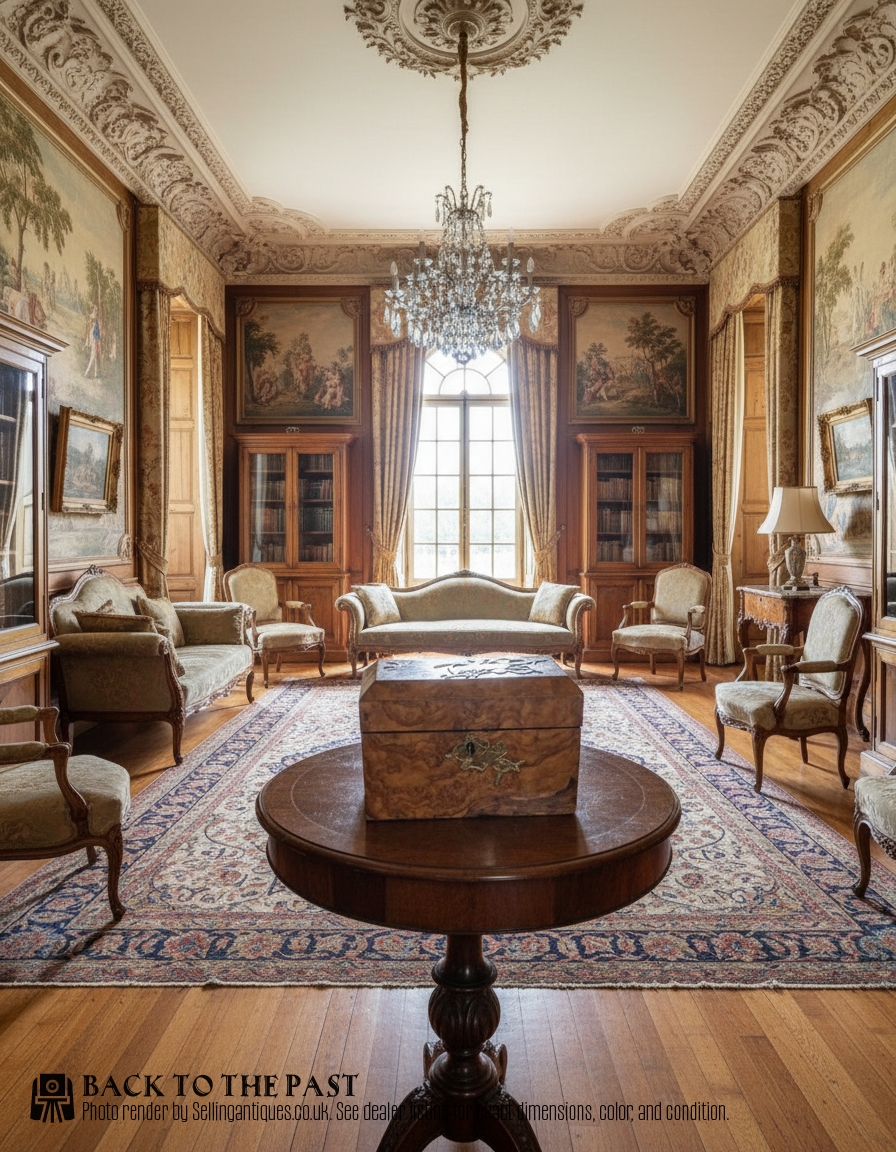
Victorian Wooden Caddy
Beyond tea storage, the selections on this page span related wooden boxes including correspondence boxes, stationery boxes, and occasional work boxes. Mahogany, rosewood, and walnut dominate the offerings, matched with occasional oak and coromandel timbers.
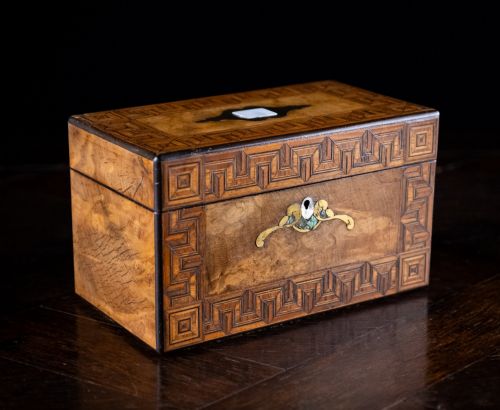
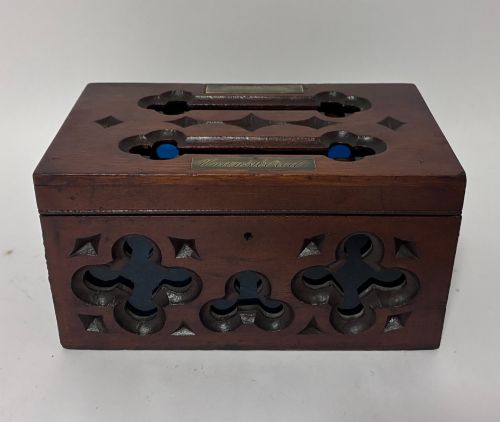
Origins stretch from English workshops to Scottish items and occasional continental pieces like French oak examples. Buyers encounter styles varying from plain flame mahogany to Gothic Revival adaptations and intricate Tunbridge Ware.
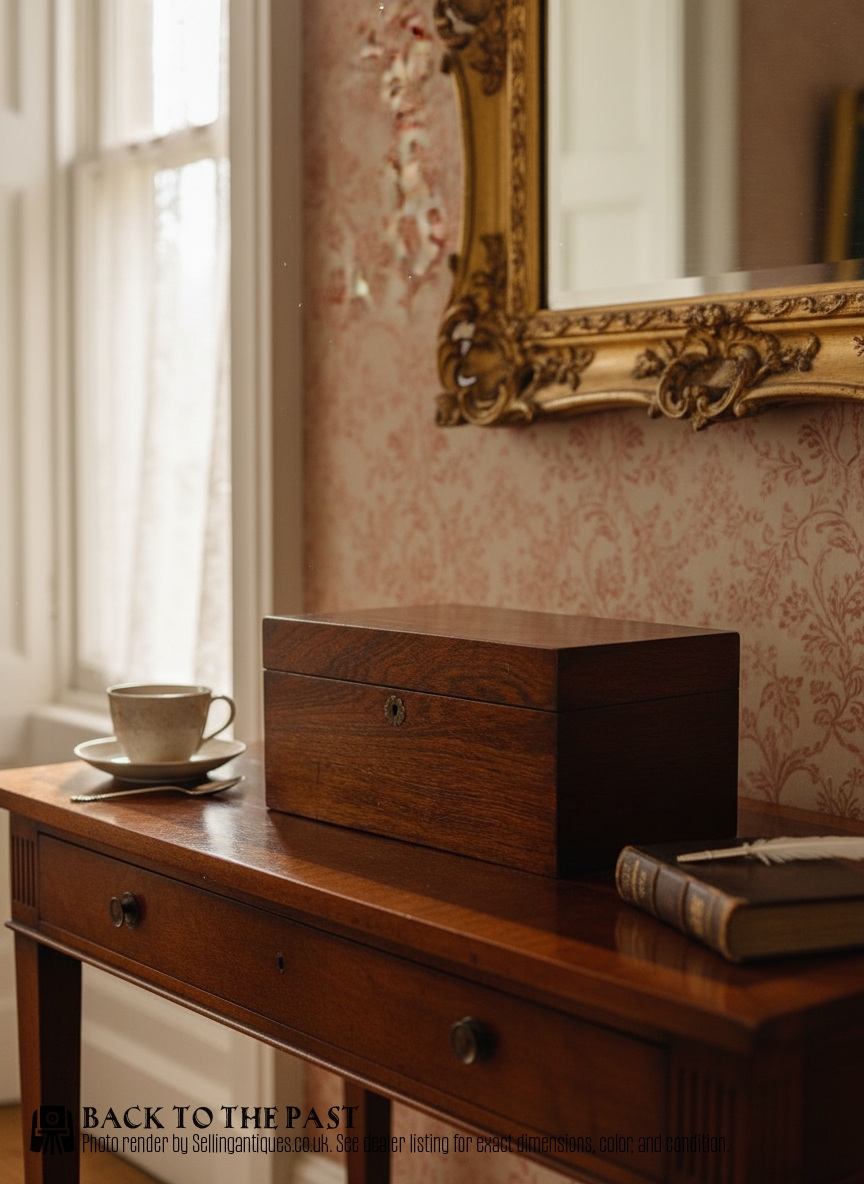
How They Were Made
Cabinet makers utilised dense hardwoods such as mahogany, rosewood, and walnut as the structural foundation for these boxes. Timber selection relied on attractive grain patterns, visible in flame mahogany veneers and burr walnut surfaces.
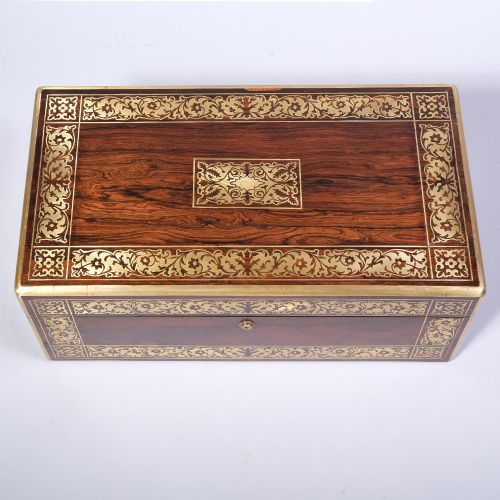
Decoration involved contrasting inlays including brass, mother-of-pearl, and multi-coloured wood mosaics known as Tunbridge Ware. Metal mounts, hinges, and escutcheons were secured by hand to reinforce corners and support locking lids.
Victorian Wooden Caddy Retail Price Guide 2026
Typical asking prices for victorian wooden caddy among the pieces listed under this phrase on Sellingantiques today, from the lower quarter to the upper quarter. They describe what is for sale here now, not the wider market.
What Varies in Quality
Construction standards separate standard utilitarian boxes from finer pieces designed for affluent parlours. Superior examples display precise mitre joints, well-matched veneer grains across the lid, and substantial brass hardware.
The complexity of internal fittings dictates the tier of the piece. Top examples retain original mixing bowls, fitted canisters with inner lids, and working locks with matching keys.
Henry Hollamby·Tahan of Paris
The Victorian Wooden Caddy Glossary
- Tea Caddy
- A small box or chest once used for storing loose tea leaves. They often featured internal lidded compartments to keep different tea varieties separated.
- Sarcophagus Form
- A box design tapering towards the base with a domed or peaked lid, mimicking ancient stone coffins. This popular nineteenth-century silhouette sat upon small bun feet.
- Tunbridge Ware
- A form of British woodwork characterised by mosaic decoration created from tiny wood blocks. Artisans arranged thousands of dyed and natural timbers to form geometric or pictorial scenes.
- Coromandel
- A dense, heavily figured exotic timber imported from Asia. Cabinet makers prized its dark grain with contrasting light streaks for luxury boxes.
- Escutcheon
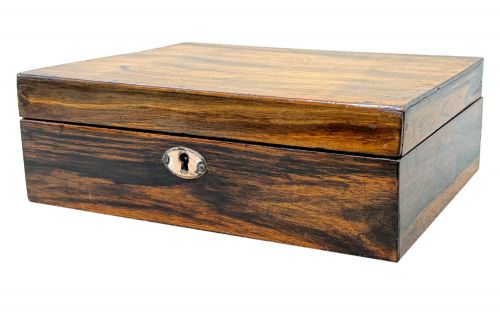
- A flat plate of brass surrounding a keyhole. It protected the surrounding wood from wear and added decorative contrast.
Victorian Wooden Caddy: Frequently Asked Questions
What were tea caddies used for?
Tea caddies served as secure storage containers during periods when tea was an expensive commodity requiring protection from moisture and theft.
Servants or householders kept the boxes locked, measuring out leaves as needed for social gatherings in the parlour.
How do I date a wooden caddy?
Dating relies on examining the timber species, construction methods, and decorative styles typical of specific decades. For instance, sarcophagus shapes on bun feet point firmly toward the earlier nineteenth century.
Later Victorian examples often incorporate heavier brass mounts or distinct parquetry patterns associated with the final decades of the century.
How do I care for antique wood?
Keep wooden boxes away from direct sunlight and sudden temperature shifts to prevent timber shrinkage and veneer splitting. Gentle dusting with a dry cloth maintains the surface.
Avoid modern liquid polishes containing silicone, relying instead on traditional wax applied sparingly when the wood appears dry.
What is the difference between a tea caddy and a teapoy?
A tea caddy is a portable box designed to sit upon a table or sideboard for serving tea. It contains internal compartments for leaves.
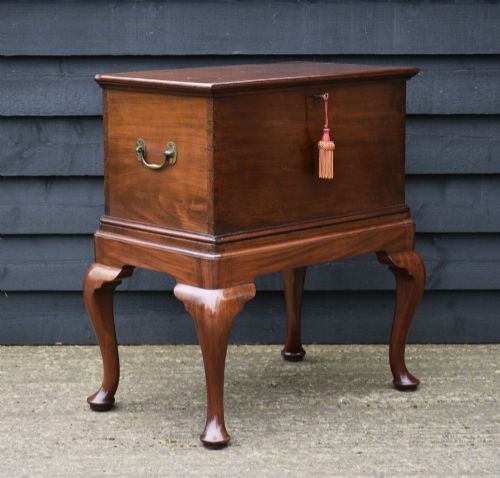
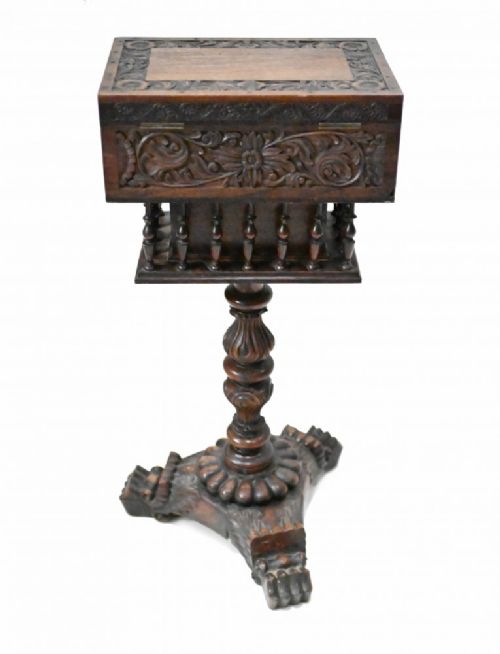
A teapoy is an independent piece of furniture featuring a tea box mounted on a pillar and claw feet or a small cabinet stand.
Are keys usually included?
Original keys are occasionally present with surviving boxes, though many have been lost over generations of use. Working locks remain common even when the original key is absent.
Specialist locksmiths can sometimes provide replacement keys if required for the lock mechanism.