



Inlaid Tea Caddy
When you handle an inlaid tea caddy, you hold the social history of the Georgian and Victorian drawing room in your hands.
Inlaid Tea Caddy
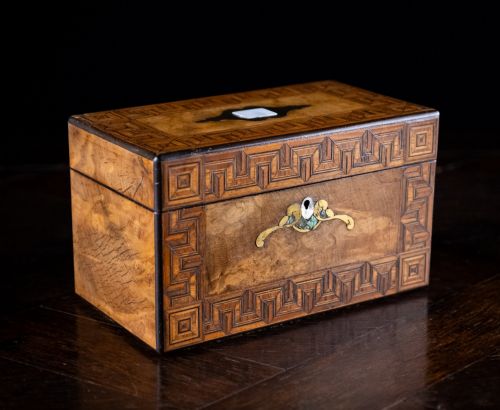
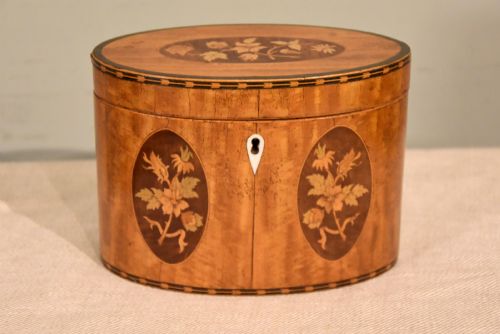
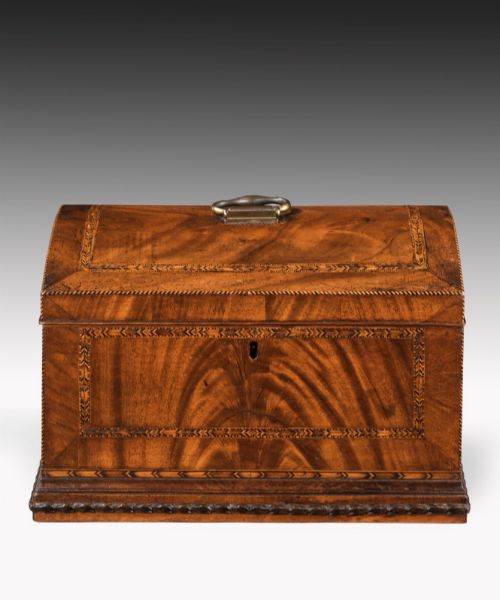
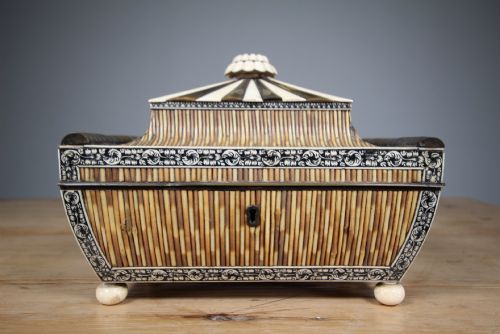
An inlaid tea caddy is a decorative timber box designed to store precious dry tea leaves under lock and key, reflecting the high status of tea in past centuries. The pieces available span Georgian, Regency, and Victorian periods, taking forms from simple rectangular boxes to grand sarcophagus shapes and oval cylinders.
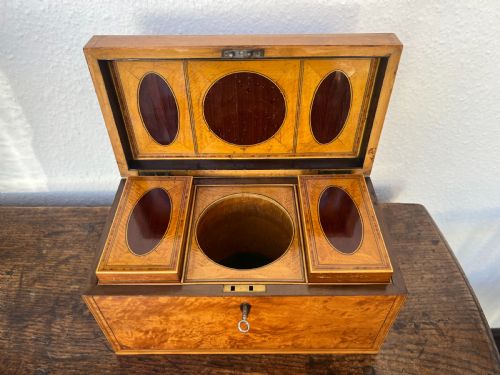
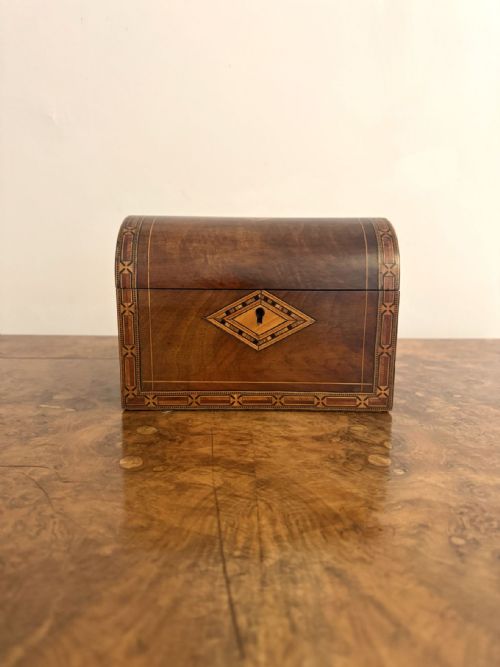
Most examples meet you as mahogany, rosewood, or satinwood containers enriched with contrasting wood veneers, brass stringing, or shell motifs. They often contain fitted interior compartments, sometimes retaining their original glass mixing bowls or ivory-knobbed lids.
How They Were Made
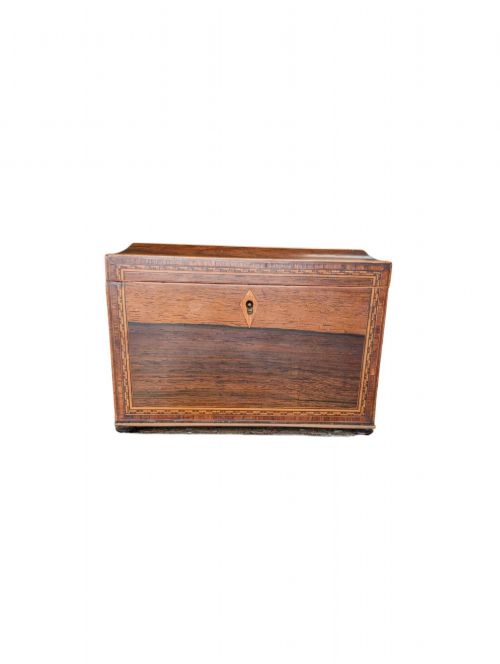
Cabinetmakers constructed these boxes using dense primary timbers such as mahogany, rosewood, walnut, and harewood over sturdy pine or oak carcases. They applied intricate veneers by hand, cutting fine geometric patterns, butterfly motifs, and floral sprays from contrasting woods like boxwood, ebony, and satinwood.
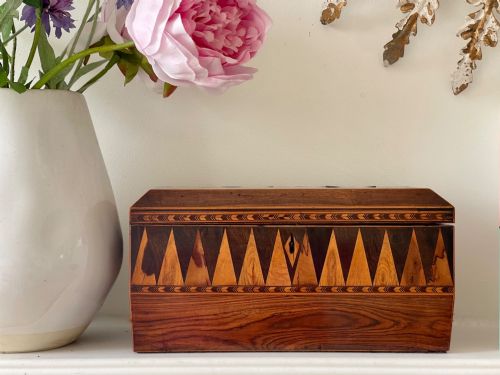
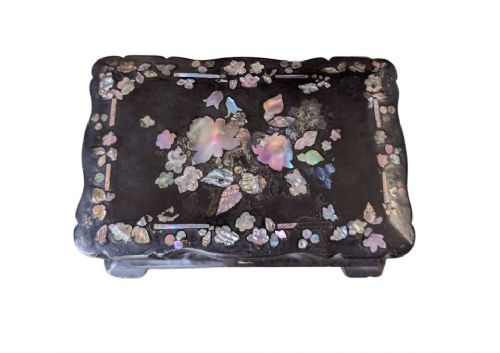
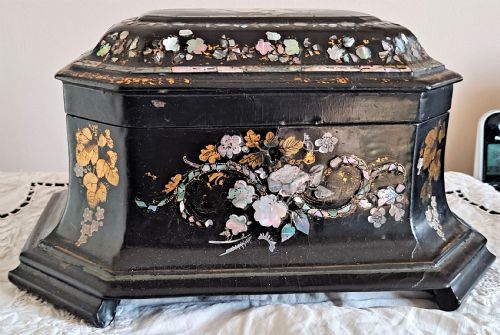
Specialised decoration required patience, utilising brass inlay, mother-of-pearl, and tortoise shell set flush into the wooden surface. Makers of Tunbridge ware built complex pictorial mosaics from thousands of tiny, natural-coloured wood blocks assembled grain by grain.
Listings feature mahogany, rosewood, and satinwood among the most frequent primary timbers, spanning the Georgian, Regency, and Victorian periods.
What Varies in Quality
The standard of an inlaid tea caddy rests upon the precision of the cabinetwork and the complexity of the decorative scheme. Superior pieces feature finely balanced timber figuring, sharp mitres, and meticulous execution of contrasting stringing or pictorial parquetry.
Original interior fittings, functional locks with matching keys, and intact mixing bowls elevate an example above plain replacements. The ambition of the form, moving from simple square boxes to sarcophagus shapes with lion mask handles, dictates the maker's original investment of time and skill.
Henry Hollamby·Jennens and Bettridge
The Inlaid Tea Caddy Glossary
- Sarcophagus
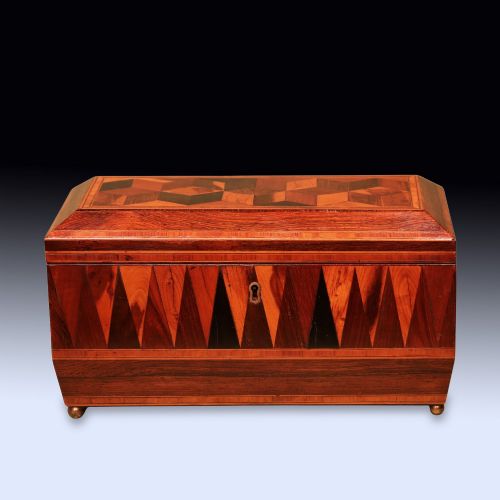
- A box form with a sloping lid and pedestal base popular during the Regency period. It mimics ancient stone coffins but provides generous internal storage.
- Tunbridge Ware
- A type of woodwork featuring mosaic designs made from small blocks of naturally coloured timbers. It originated in Kent and often depicts castles, flowers, or geometric bands.
- Escutcheon
- A small protective plate surrounding the keyhole, typically cast in brass or carved from bone. It prevents the timber from splitting around the lock.
- Stringing
- Thin lines of contrasting wood or metal inlaid into the surface of a box to create geometric borders. It defines the edges of panels and lid margins.
- Parquetry
- A geometric mosaic of wood veneers arranged in regular patterns like cubes or triangles. It creates a textured, three-dimensional visual effect across the flat surfaces of the box.
Inlaid Tea Caddy: Frequently Asked Questions
What were tea caddies used for?
Tea was an expensive luxury in the eighteenth and nineteenth centuries, kept under lock to prevent domestic theft by servants. The caddy stored different blends securely, often featuring separate internal compartments and a central bowl for mixing black and green leaves.
Wealthy households displayed these boxes prominently in the parlour or dining room as symbols of hospitality and status. Guests would watch the hostess measure the precious leaves before brewing began.
How do I date an inlaid tea caddy?
Georgian examples tend to favour elegant oval or rectilinear forms in mahogany and satinwood with delicate shell or butterfly inlay. Regency boxes often adopt sarcophagus shapes, heavy rosewood veneers, and bold brass inlay or lion mask handles.
Victorian pieces frequently introduce complex Tunbridge ware mosaics, burr walnut veneers, or papier-mâché with mother-of-pearl embellishments. Examining the secondary timbers inside the box and the style of the lock helps confirm the period of manufacture.
Did all tea caddies have glass bowls?
Many larger caddies, particularly from the Regency period, included a central glass bowl used for blending different teas together before steeping. Some bowls also served for holding sugar lumps or rinsing the teapot between infusions.
Finding a caddy with its original glass bowl intact is unusual because these fragile elements suffered breakage over generations of daily use. Replacements are common, so surviving original glassware adds significantly to the historical interest of the piece.
How should I care for a wooden tea caddy?
Keep wooden boxes away from direct sunlight, central heating radiators, and damp environments to prevent the delicate veneers from lifting or warping. Natural beeswax applied sparingly helps nourish old polish and preserves the grain of the rosewood or mahogany.
Avoid using modern liquid polishes or chemical sprays, which can damage aged shellac and seep into tiny inlay gaps. Gentle dusting with a dry, soft cloth is sufficient for routine maintenance.