



Parquetry Tea Caddy
A parquetry tea caddy is a small wooden chest decorated with geometric wood mosaic, built to keep expensive leaf secure.
Parquetry Tea Caddy
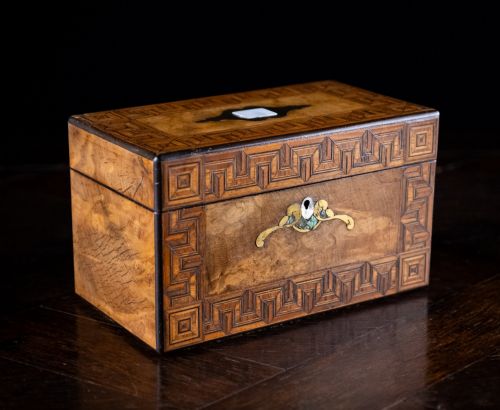
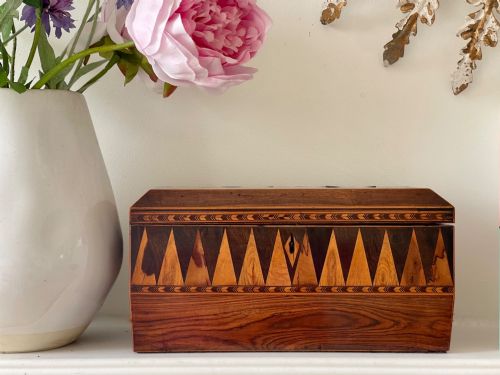
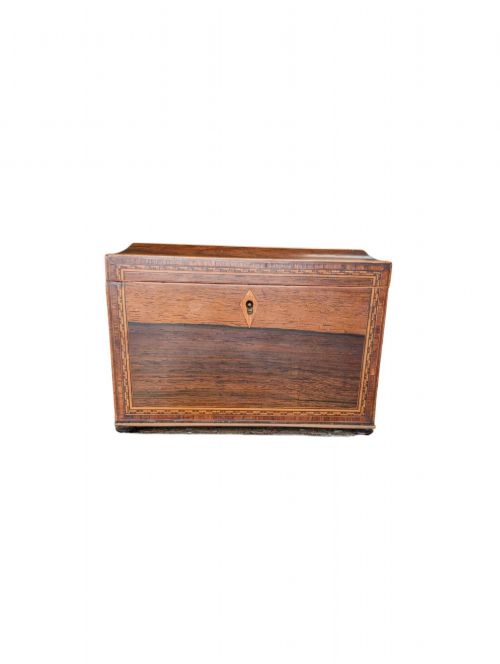
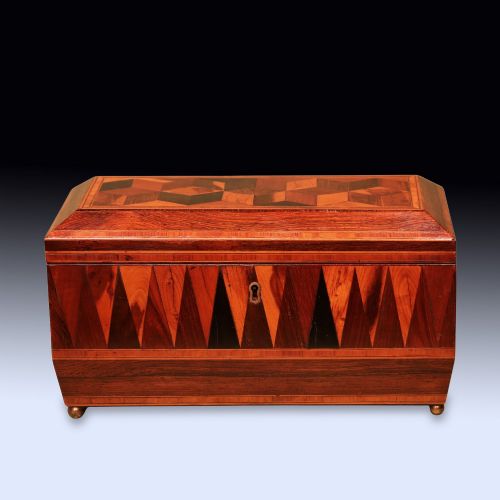
When you search for a parquetry tea caddy, you are looking at small wooden boxes surfaced with geometric wood veneers. The pieces seen here span the Georgian, Regency, and Victorian periods, often taking the form of sarcophagus boxes or rectangular chests.
You are most likely to meet Victorian and Regency examples finished in rosewood or walnut, frequently incorporating Tunbridge Ware mosaic panels. These containers originally held tea behind lidded compartments, protecting a valuable household commodity under lock and key.
How they were made
Cabinetmakers constructed the carcase from timbers such as rosewood, walnut, or laburnum, applying thin geometric veneers across the exterior surfaces. Mixed wood inlays, boxwood, holly, and mother of pearl were cut and fitted by hand to create intricate patterned panels.
Specialised makers utilised mosaic techniques, assembling thousands of tiny tinted wood blocks to form pictorial or geometric motifs. Fitted interiors often included glass mixing bowls and lidded canisters constructed from matching secondary woods.
Parquetry Tea Caddy Retail Price Guide 2026
Typical asking prices for parquetry tea caddy among the pieces listed under this phrase on Sellingantiques today, from the lower quarter to the upper quarter. They describe what is for sale here now, not the wider market.
Rosewood and walnut appear as the primary carcase timbers across the recorded inventory.
What varies in quality
The distinction between ordinary and exceptional examples rests upon the precision of the geometric veneer work and the complexity of the wood mosaic. Finer boxes display microscopic tesserae arranged in elaborate perspective cubes or floral bands without gaps in the joinery.
Material selection separates standard production from superior pieces, with rich timbers like burr walnut or figured rosewood paired with original brass lock plates and intact fitted interior compartments.
Henry Hollamby
The Parquetry Tea Caddy Glossary
- Parquetry
- Geometric mosaic woodwork formed by fitting small wooden veneers together in repeating patterns. This technique creates the decorative surface characteristic of these caddies.
- Tunbridge Ware
- A specialised form of woodwork originating from Kent, featuring mosaic designs made from naturally coloured British timbers. Many notable examples incorporate these detailed floral or geometric panels.
- Sarcophagus form
- A box shape featuring a domed or inverted-pyramid lid resting on a rectangular base, popular during the Regency period. This architectural profile elevates the presence of the container.
- Tesserae
- The individual tiny blocks of coloured wood used by mosaic workers to build up complex geometric designs. Artisans arranged these elements meticulously to achieve striking optical illusions.
Parquetry Tea Caddy: Frequently Asked Questions
What was a parquetry tea caddy used for?
These boxes stored dry tea leaves securely when tea was an expensive and heavily taxed commodity. The lockable lid and divided interior kept different varieties separated and protected from moisture in the main rooms of the house.
Inside, lidded compartments kept black and green teas fresh while a central glass bowl allowed the host to blend leaves before brewing. The containers sat prominently on side tables in the parlour or dining room as a display of hospitality and refined taste.
How do I date a parquetry tea caddy?
Dating relies on combining the overall shape, timber choices, and construction methods visible in the box and its interior fittings. Georgian and Regency examples often feature crisp architectural lines and sarcophagus profiles, while later Victorian pieces frequently employ busier mosaic patterns and walnut carcases.
Looking inside provides further clues through the style of the veneered canisters, hinges, and lock mechanisms. Early pieces use handmade brass hardware, whereas late 19th-century boxes may incorporate machine-stamped components and simpler interior layouts.
How do I care for a wooden tea caddy?
Keep the box away from direct sunlight and strong heat sources to prevent the delicate geometric veneers from drying out and lifting. Stable indoor humidity protects both the timber carcase and the tiny mosaic tesserae across the exterior.
An occasional application of appropriate furniture wax maintains the finish without building up heavy residues. Avoid harsh chemical cleaners and moisture on the antique wood surfaces.
What is the difference between marquetry and parquetry?
Marquetry uses varied wood veneers to create pictorial scenes, figurative subjects, or flowing naturalistic scrolls. The craftsperson cuts curved and organic shapes to depict flowers, birds, or landscapes across a flat surface.
Parquetry sticks strictly to geometric arrangements, using angular shapes like triangles, squares, and diamonds to build repeating mathematical patterns. This structured approach creates the characteristic optical depth seen on these caddies.