

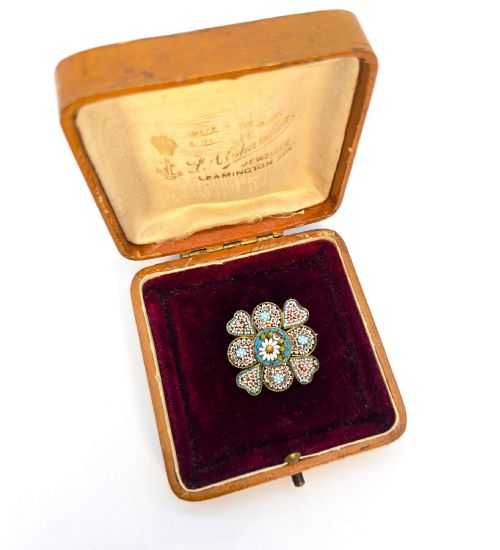


Micro Mosaic Box
A micro mosaic box brings together microscopic glass tesserae and precise woodwork to hold small treasures on a dressing table.
Micro Mosaic Box
A micro mosaic box combines intricate mosaic panels with wooden or gilt metal structures, originating from Victorian Britain and 19th century Italy. Buyers searching for a micro mosaic box encounter objects designed for collectors and travellers, varying from British Tunbridge Ware to Italian Grand Tour souvenirs.
The form appears most frequently as a small collectors box, trinket box, or tea caddy. These pieces range from rosewood and native wood constructions featuring geometric wood inlay to gilt metal boxes set with pictorial mosaics.
British examples often utilise Tunbridge Ware techniques in rosewood, boxwood, and walnut, sometimes depicting specific landmarks like Hever Castle. Italian versions typically showcase architectural views such as St Marks Square executed in coloured glass tesserae.
How they were made
Craftsmen built the carcasses from rosewood, walnut, boxwood, and other native woods, frequently applying precise wood inlay or Tunbridge Ware mosaic banding. Italian makers utilised gilt metal, ormolu, and brass structures to frame detailed pictorial mosaics.
The micro mosaic panels consist of thousands of tiny coloured glass rods fused together and sliced to form pictorial or geometric scenes. These minute tesserae were set into a mastic base on the lid or top of the box to create durable, highly detailed surfaces.
Micro Mosaic Box Retail Price Guide 2026
Typical asking prices for micro mosaic box among the pieces listed under this phrase on Sellingantiques today, from the lower quarter to the upper quarter. They describe what is for sale here now, not the wider market.
Workers sliced tiny glass threads like loaves of bread to make thousands of identical mosaic tiles.
What varies in quality
The fineness of the mosaic work dictates the distinction between standard production and superior craftsmanship. Tighter packing of smaller glass tesserae and greater pictorial clarity separate exceptional Italian views from simpler geometric patterns.
Woodwork execution and timber selection define the standard of British pieces. Mastery in assembling varied native woods to form complex perspective cubes or architectural vistas marks the upper tier of Tunbridge Ware production.
Henry Hollamby
The Micro Mosaic Box Glossary
- Tessera
- Individual small block of coloured glass used to build up the mosaic image. These tiny elements form the pictorial details on Italian boxes.
- Tunbridge Ware
- British woodworking tradition characterised by mosaic tile pictures made from multiple natural woods. Craftsmen glued thousands of vertical wood strips together to create geometric and pictorial designs.
- Ormolu
- Gilded bronze or brass mounting applied to decorative boxes and furniture. This material frames and protects the edges of metal and mosaic boxes.
- Grand Tour
- Cultural journey undertaken by 19th-century Europeans visiting continental sites like Italy. Travellers purchased souvenir micro mosaic boxes depicting local architectural monuments.
Micro Mosaic Box: Frequently Asked Questions
What is a micro mosaic box?
A micro mosaic box is a small container decorated with tiny glass tesserae arranged to form pictures or geometric patterns. These pieces date from the 19th century and include both British wooden boxes and Italian metal souvenirs.
Craftsmen set the glass panels into the lids of rosewood, walnut, or gilt metal boxes designed to hold trinkets, pills, or tea.
Where were micro mosaic boxes made?
These boxes originate primarily from 19th-century Italy and Victorian Britain. Italian workshops produced gilt metal and ormolu pieces featuring architectural landmarks.
British makers, particularly in Tunbridge Wells, created wooden boxes using native woods and micro mosaic wood inlay techniques.
What did people store inside them?
These boxes served multiple domestic and personal purposes on 19th-century dressing tables and drawing rooms. Smaller examples held pills, stamps, or small trinkets.
Larger variations functioned as tea caddies or dedicated collectors cabinets for storing small specimens and keepsakes.