




Victorian Tea Chest
A victorian tea chest brings nineteenth-century refinement to a modern room, offering a secure wooden or papier-mâché vault once used for storing precious dry leaves.
Victorian Tea Chest
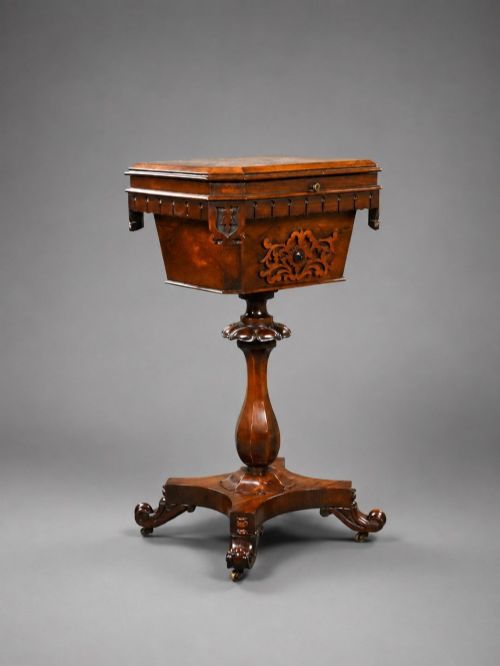
When browsing for a victorian tea chest, buyers encounter tabletop caddies, sarcophagus forms, and occasional tables known as teapoys. These pieces originate primarily from nineteenth-century British workshops, alongside continental European examples executed in similar taste.
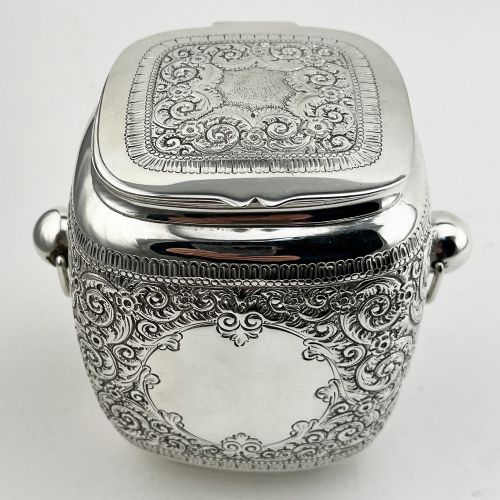
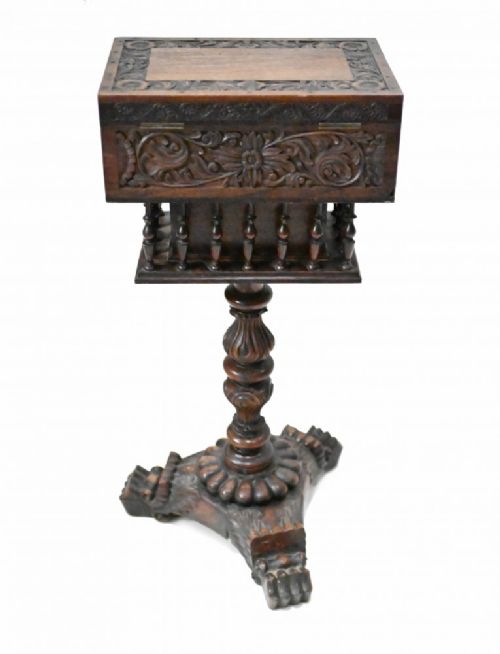
The domestic tea caddy dominates the selection, featuring hinged lids, internal lidded compartments, and occasional glass mixing bowls. Larger variants stand on dedicated pillar supports or form substantial tabletop cabinets with fitted interiors.
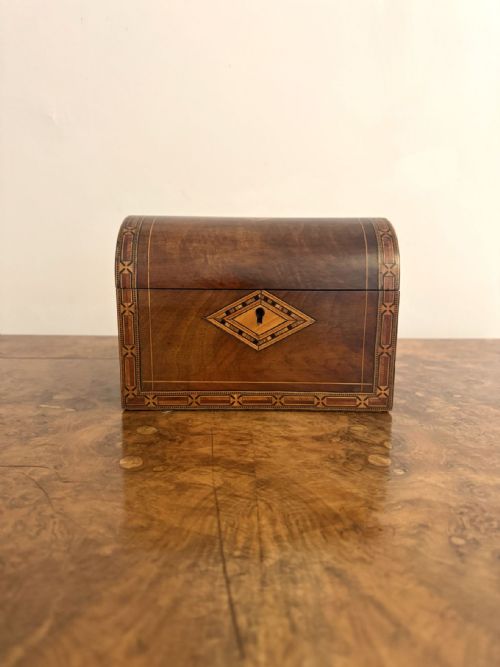
Makers utilised resilient timbers and decorative finishes to signal status in the nineteenth-century parlour. Buyers will find rectangular boxes, dome-top coffers, and sarcophagus shapes sitting alongside occasional furniture pieces.
Materials and Construction
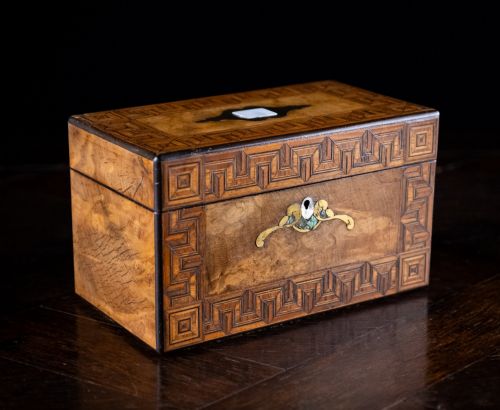
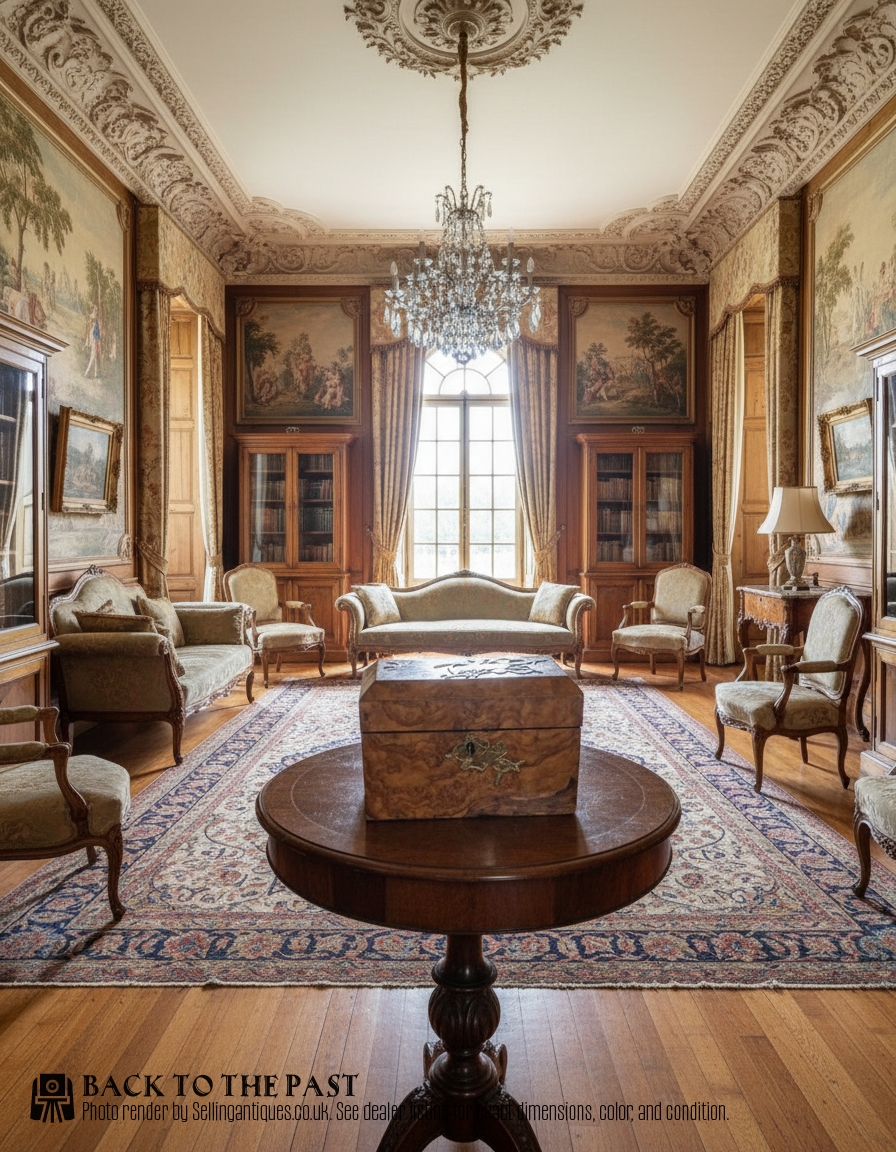
Cabinet makers constructed these vessels from dense hardwoods including rosewood, mahogany, walnut, and exotic coromandel, often applying burr walnut or flame mahogany veneers to the primary surfaces.
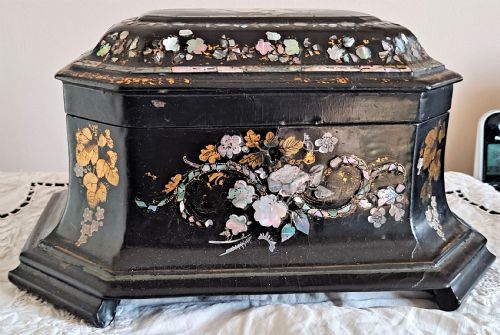
Decoration relied on precision craftsmanship, incorporating brass stringing, mother-of-pearl inlay, parquetry, and detailed Tunbridge Ware mosaic patterns created from natural coloured woods.
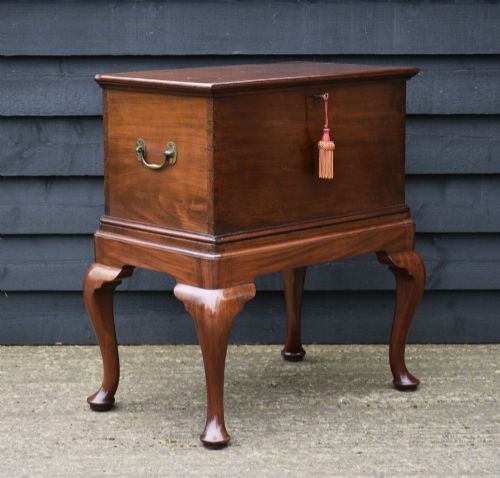
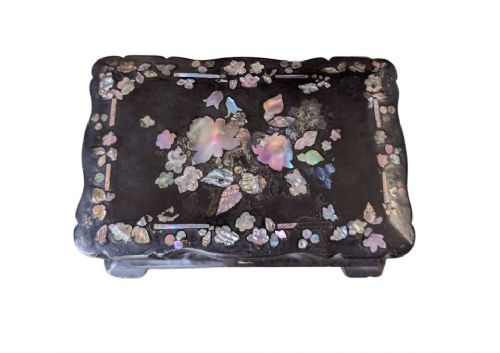
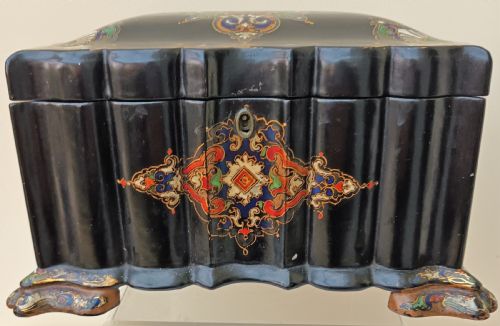
Papier-mâché examples received multiple layers of dark lacquer and hand-painted or inlaid ornamentation, while campaign-style storage chests utilised solid teak combined with heavy brass binding and flush handles.
Victorian Tea Chest Retail Price Guide 2026
Typical asking prices for victorian tea chest among the pieces listed under this phrase on Sellingantiques today, from the lower quarter to the upper quarter. They describe what is for sale here now, not the wider market.
Craftsmanship and Survival
Superior examples display precise joinery, intact interior foil or lining, and matching timber grains across the lid and body. The complexity of the parquetry, micro-mosaic work, or mother-of-pearl inlay dictates the tier of the piece.
The survival of original fitted interior lids, working locks with matching keys, and undamaged veneer determine the standing of an individual box. Inferior pieces suffer from warped timber, replacement feet, or extensive veneer lifting.
Martin Hall & Co·Henry Hollamby·Tahan of Paris·Berthold Muller
The Victorian Tea Chest Glossary
- Tea Caddy
- A small box or chest designed specifically for storing dry tea leaves. These containers typically featured lockable lids to protect expensive imported tea.
- Teapoy
- A small occasional table or pedestal stand featuring a storage compartment for tea on top. They often stood beside parlour chairs in nineteenth-century drawing rooms.
- Sarcophagus Form
- A tapered, pedestal-mounted box style popular during the nineteenth century. The profile mimics ancient stone coffins with inverted curved sides and heavy plinths.
- Tunbridge Ware
- A distinct type of decorative woodwork originating from Kent. Artisans glued thousands of tiny tinted wood prisms together to form intricate mosaic pictures.
- Parquetry
- A geometric mosaic of wood strips arranged in repetitive patterns on furniture surfaces. Makers utilised contrasting timbers to create three-dimensional optical effects.
Victorian Tea Chest: Frequently Asked Questions
What was inside a tea chest?
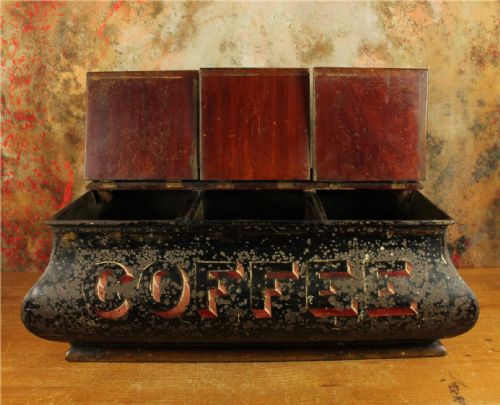
These vessels contained two or three internal compartments fitted with individual hinged lids to keep green and black tea leaves separate. Many also housed a small glass bowl in the centre used for blending infusions.
Because tea remained an expensive luxury commodity during the nineteenth century, the entire chest remained locked when not in use by the master of the house.
How do I tell rosewood from mahogany?
Rosewood displays a heavy, dark grain with distinct purple or black streaks running through a deep reddish-brown base. It tends to feel heavier and denser than standard cabinet timbers.
Mahogany exhibits a warm golden-brown to deep reddish tone with a straight or flame-figured grain pattern that catches the light differently as you move around the piece.
Can I use these for modern storage?
These boxes function exceptionally well for holding jewellery, letters, small trinkets, or modern tea bags on a sideboard. The velvet or paper-lined compartments protect delicate items from dust and abrasion.
Owners should keep antique wooden boxes away from direct sunlight and radiators to prevent the dry atmosphere from cracking old veneers.
What is Tunbridge Ware?
Tunbridge Ware refers to decorative wooden objects embellished with microscopic mosaic tiles. Craftsmen assembled thousands of tiny geometric wood pieces to depict flowers, butterflies, or architectural views.
This intricate technique reached its peak popularity during the Victorian period, appearing primarily on the lids of rosewood and mahogany boxes.