

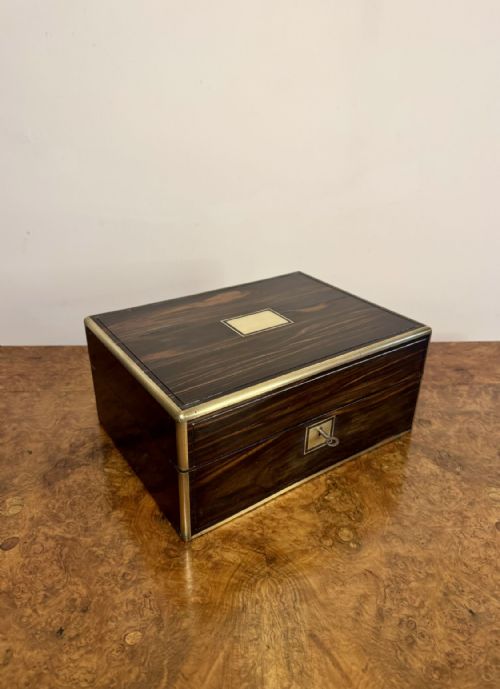

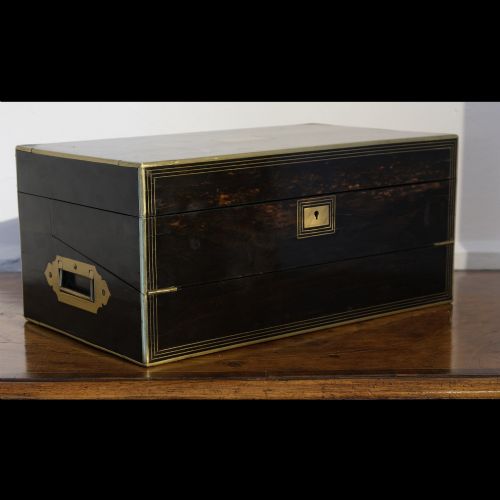
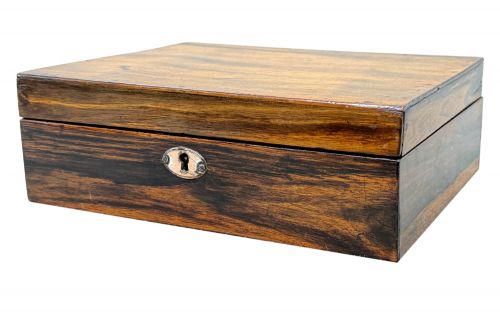


Coromandel Wood Box
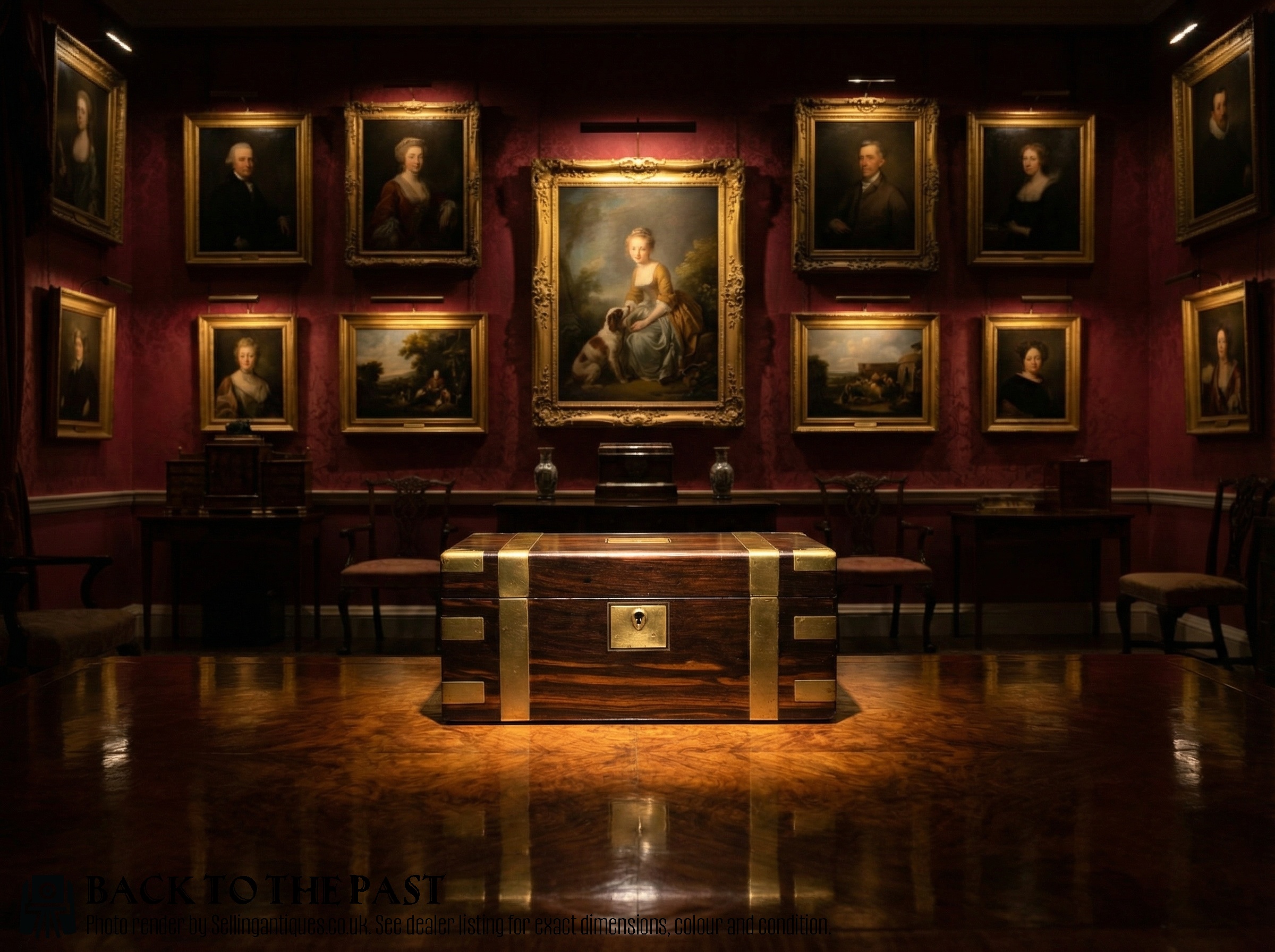
A coromandel wood box brings dense grain and rich colour to a desk, holding letters, jewels or tea with nineteenth-century weight.
Coromandel Wood Box
A coromandel wood box encompasses desk accessories, writing slopes, tea caddies and vanity cases shaped during the nineteenth century. These items served domestic and travel needs for affluent households, housing correspondence, cosmetics or valuables.
Victorian examples dominate the selection, spanning simple work boxes to heavily fitted dressing cases with secret drawers and cut crystal bottles. Pieces from the Regency period also appear, alongside Gothic Revival and Aesthetic styles.
The primary forms found here are writing slopes, stationery cabinets, sewing boxes and jewellery caskets. Many retain velvet linings, fitted trays and brass mounts characteristic of nineteenth-century luxury manufacture.
How They Were Made
Cabinet makers built these pieces from dense coromandel wood, valued for its dark brown grain and contrasting striations. They frequently applied brass banding, ormolu mounts and mother-of-pearl inlay to accentuate the timber.
Interiors required complex joinery to house secret drawers, velvet-lined compartments and fitted spaces for glass bottles and silver items. Working locks with keys and brass campaign handles completed the construction for travel use.
Coromandel Wood Box Retail Price Guide 2026
Typical asking prices for coromandel wood box among the pieces listed under this phrase on Sellingantiques today, from the lower quarter to the upper quarter. They describe what is for sale here now, not the wider market.
The selection includes specialised forms such as decanter boxes, tantalus sets, stationery cabinets and travelling vanity cases.
What Varies in Quality
The standard of a coromandel wood box depends on the complexity of its internal fittings and the precision of its brass or mother-of-pearl inlay. Fully fitted interiors with matching cut crystal bottles and working secret mechanisms indicate superior workshop production.
Makers' marks stamped into the brass hardware or leather interiors elevate a piece, separating standard retail stock from bespoke commissions by notable makers.
H Mitchell·Briggs·Asprey·Houghton and Gunn·Mechi and Bazin·Edwards·Lund of London·Betjemann
The Coromandel Wood Box Glossary
- Coromandel wood
- A dense, heavy timber from Asia featuring dark brown and black banding over a light brown ground. It was favoured for high-end nineteenth-century boxes and furniture.
- Writing slope
- A box with a hinged sloping lid that opens to reveal a velvet or leather writing surface and compartments for stationery. They were designed for portable correspondence.
- Tantalus
- A locking beverage caddy that holds decanters in a frame to prevent unauthorized access while displaying the contents. The bottles cannot be removed until the locking bar is released with a key.
- Secret drawer
- A concealed compartment built into a box behind false bottoms or sliding panels. They were used to secure small valuables and hidden papers.
- Ormolu
- Gilded bronze mounts applied to the exterior corners and edges of furniture and boxes. This decorative technique added structural reinforcement and visual contrast.
Coromandel Wood Box: Frequently Asked Questions
How were writing slopes used?
Writing slopes provided a portable desk surface for writing letters while travelling or at home. The hinged lid opened to form an inclined writing board covered in velvet or leather.
Internal compartments held inkwells, pens, stamps and stationery. Many writing slopes also included secret drawers for private papers and money.
How do I date a coromandel box?
Dating relies on architectural styles, brass hardware, locks and maker signatures. Regency pieces often exhibit simpler Regency lines, whereas Victorian examples favour Gothic Revival motifs or elaborate brass mounts.
Makers' stamps, hallmarked silver fittings and patent locks help narrow the production date to a specific decade within the nineteenth century.
How do I care for coromandel wood?
Care for coromandel wood involves keeping the timber away from direct sunlight and extreme temperature shifts. Natural wax applied sparingly helps maintain the lustre of the dense grain.
Internal velvet and silk linings require gentle dusting with a soft brush to preserve the fabric without disturbing historical wear.