

Antique Brass Bound Box
An antique brass bound box brings travel and utility into a room, fashioned from dense timbers and reinforced for movement.
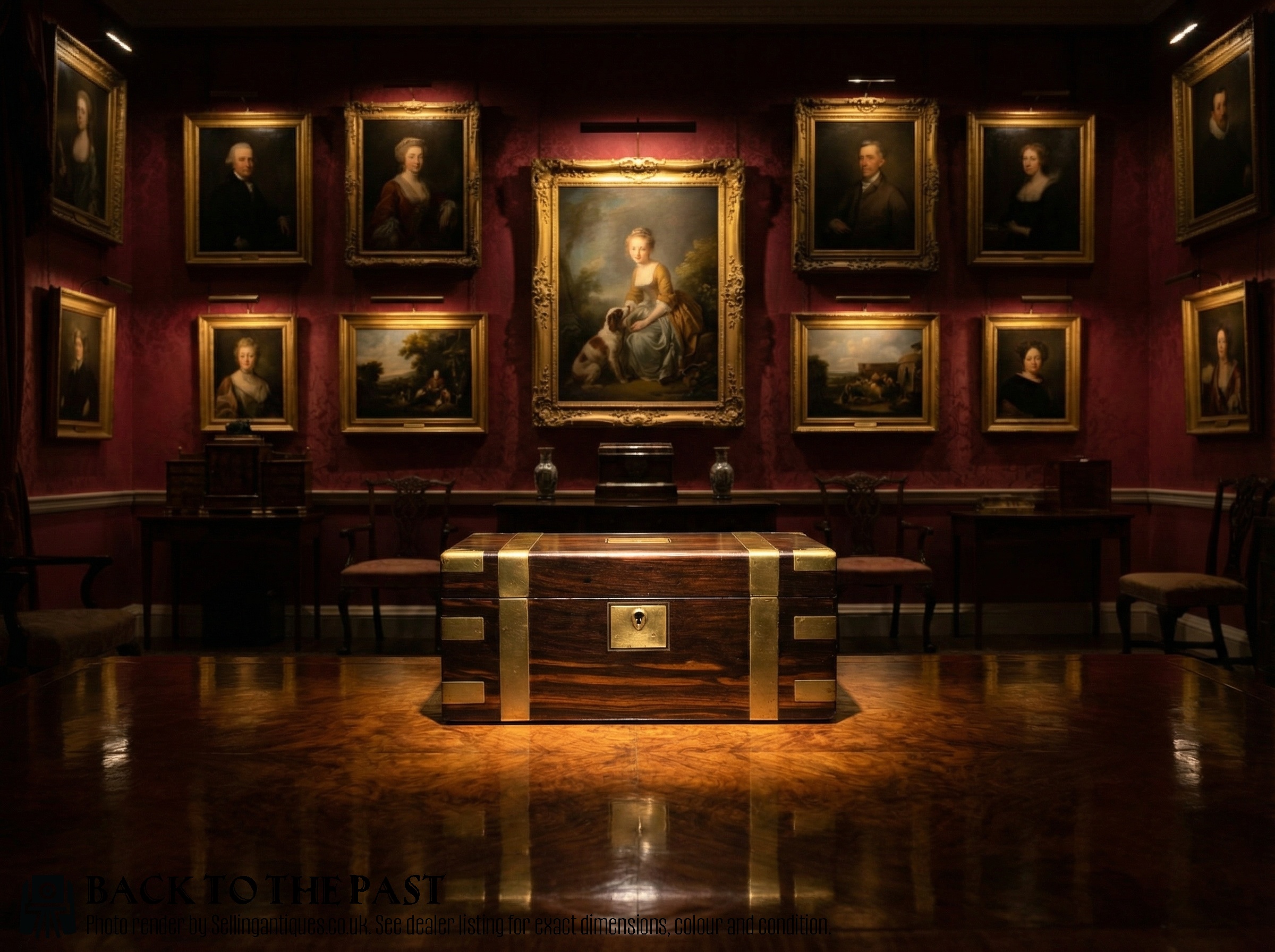
Antique Brass Bound Box
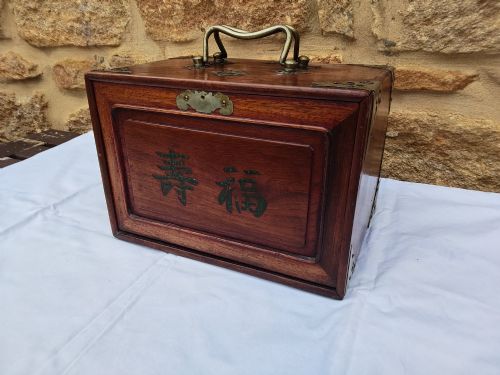
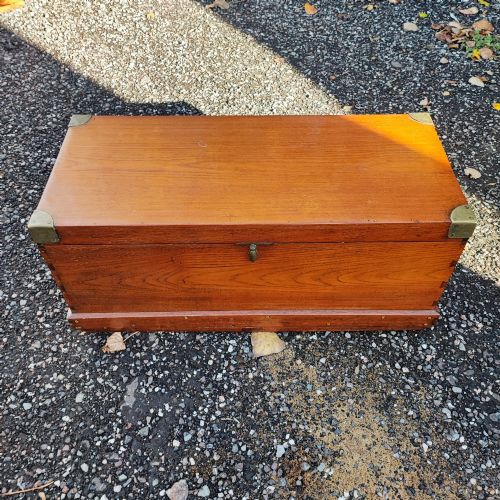
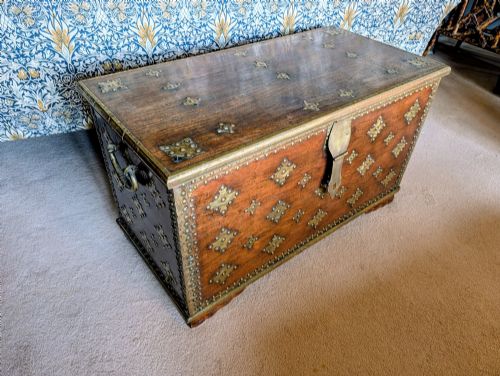
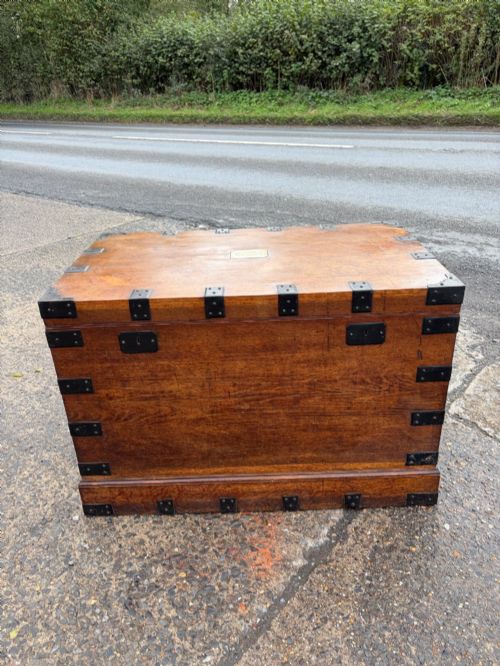
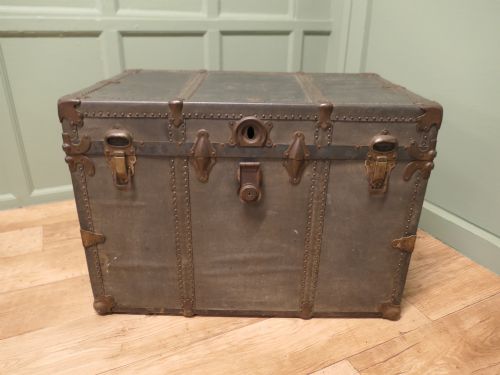
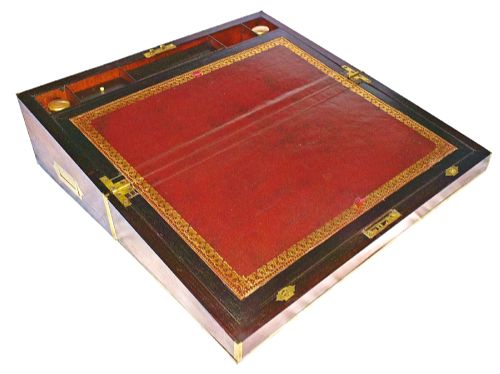
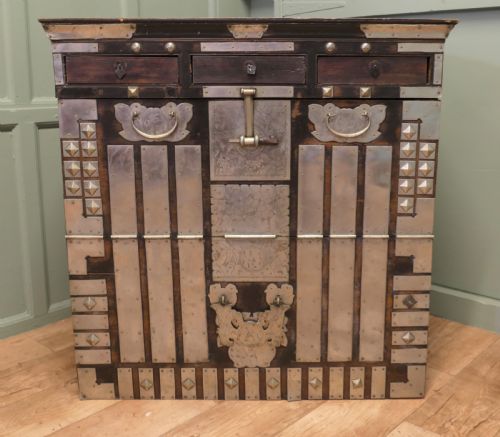
An antique brass bound box encompasses durable campaign chests, writing slopes, and travelling trunks designed for officers and long journeys. These pieces range from substantial 17th-century Portuguese colonial chests to Victorian camphorwood trunks and Georgian mahogany cellarettes.
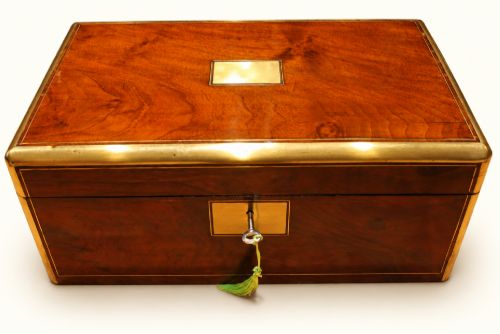
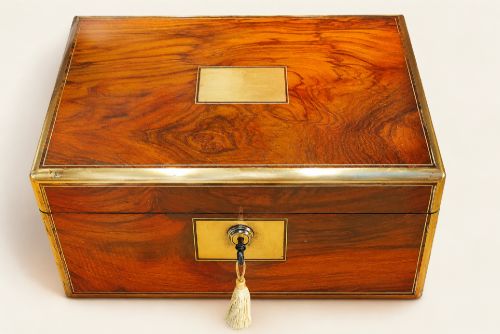
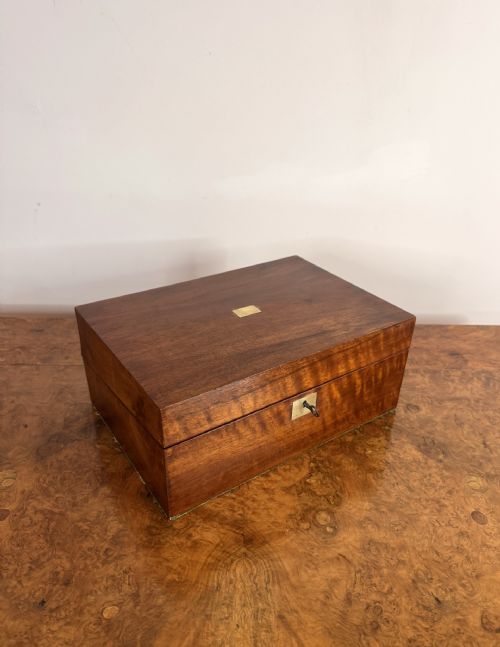
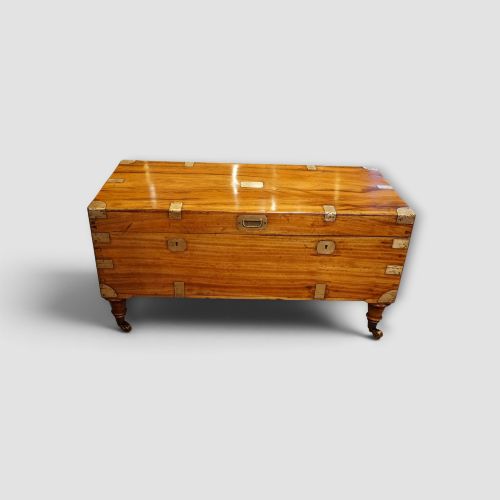
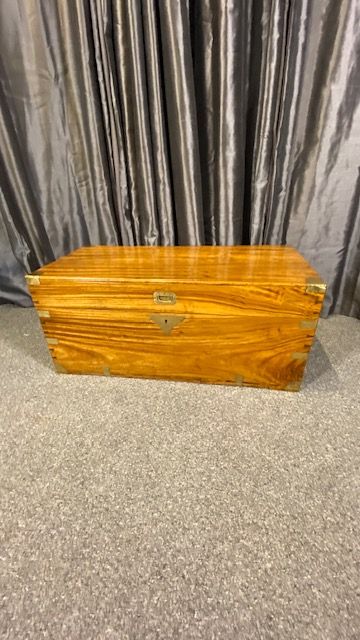
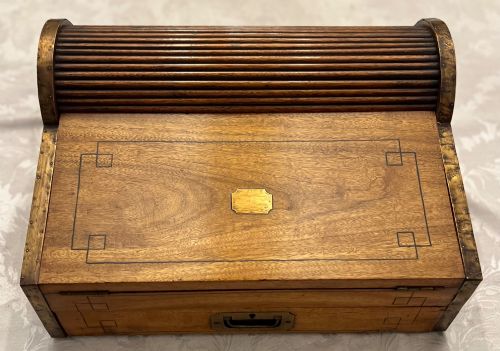
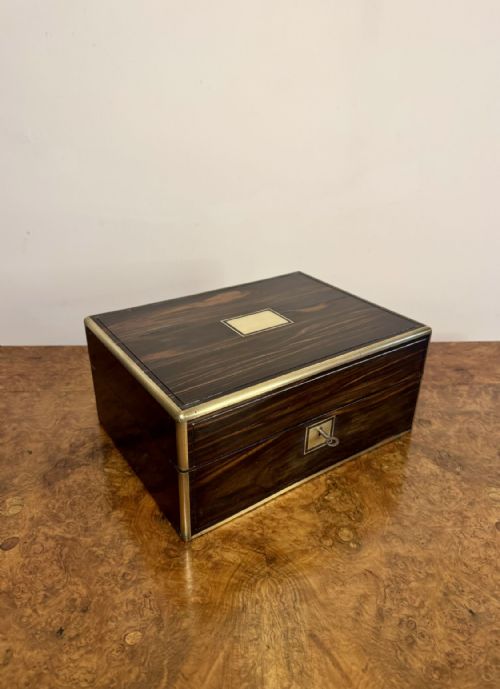
The most common examples on this page are 19th-century campaign chests and writing slopes constructed in mahogany, camphor wood, and padouk. They combine storage with robust metal reinforcement intended to withstand rough transit.
Origins stretch across British colonial routes, incorporating Anglo-Indian, Regency, and Victorian workshops that utilised exotic hardwoods alongside native British timbers. Each form served a distinct domestic or travelling purpose, from holding blankets to securing valuable papers.
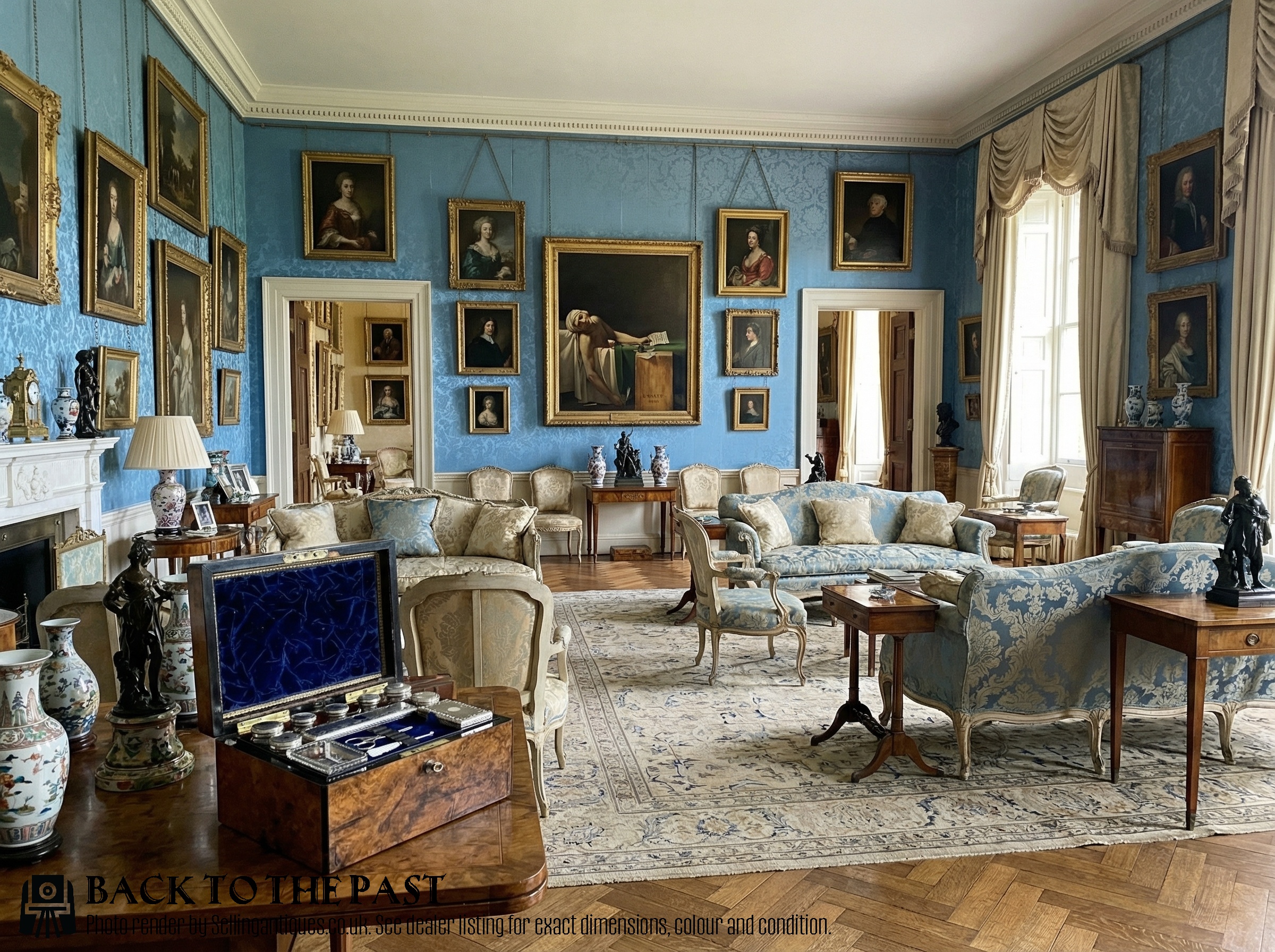
How they were made
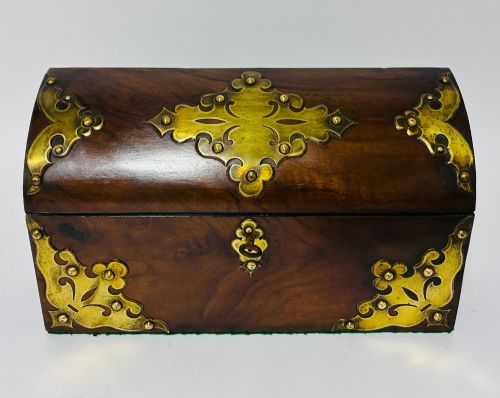
Cabinetmakers built these containers using dense timbers such as mahogany, camphor wood, padouk, and walnut to resist splitting in varying climates. Joints were reinforced with brass corners, straps, and flush-fitting inset handles designed to endure knocks during military campaigns and sea voyages.
Surfaces were finished with natural oils or polishes, while leather, iron, and studs appeared on travelling trunks and early 17th-century boxes for added protection. Brass strapping was secured with numerous small screws or pins, binding the wooden panels tightly together at the seams.
Antique Brass Bound Box Retail Price Guide 2026
Typical asking prices for brass bound box among the pieces listed under this phrase on Sellingantiques today, from the lower quarter to the upper quarter. They describe what is for sale here now, not the wider market.
Sir Randolph Isham Routh carried an iron-bound trunk during the Battle of Waterloo.
What varies in quality
The standard of a piece depends on the choice of timber and the precision of the brass work, with superior examples showing tight, hand-cut dovetail joints and well-fitted internal compartments. Lesser pieces often display simpler secondary woods or replacement brass mounts rather than original hardware.
Proportion and the integrity of the timber influence the distinction between standard utility boxes and finer campaign pieces made for high-ranking officers. Subtle details like secret drawers, working locks with original keys, and finely figured mahogany or burr walnut elevate the standing of a box.
Samuel Pratt
The Antique Brass Bound Box Glossary
- Campaign trunk
- A heavy storage chest built in sections or fitted with carrying handles for military officers on the move. These boxes utilised brass corners to protect edges during transit.
- Writing slope
- A portable desk with a hinged sloping lid that opens to reveal compartments for stationery and inkwells. They often featured fitted leather writing surfaces.
- Cellarette
- A lockable container designed to hold wine bottles safely during travel or for dining room storage. Georgian and Victorian examples frequently employed brass banding and octagonal forms.
- Camphor wood
- An aromatic timber prized for military trunks because its natural scent repelled insects. It is soft yet durable, commonly found in 19th-century colonial pieces.
- Padouk
- A heavy, reddish-brown tropical hardwood utilised in Anglo-Indian furniture and campaign boxes for its exceptional strength and rich colour.
Antique Brass Bound Box: Frequently Asked Questions
What is an antique brass bound box used for?
These boxes served as portable storage for officers, travellers, and households requiring secure containment for documents, valuables, or personal belongings during transit.
Today, they function as decorative coffee tables, blanket chests, or desktop organizers in domestic interiors, preserving their historical utility.
How do I identify a military campaign box?
Military campaign boxes typically feature brass corners, flush-fitting inset carrying handles, and sturdy timbers like camphor wood or mahogany built to withstand rough movement.
They are frequently constructed in modular sections or fitted with reinforced straps to allow easy dismantling and transport on ships or horses.
Why was camphor wood used for trunks?
Camphor wood was chosen by cabinetmakers because its strong natural aroma naturally repelled insects and protected stored textiles from damp conditions during long sea voyages.
Its light weight relative to its durability made it ideal for officers travelling through tropical colonial climates.
How can I tell the period of a box?
Dating relies on observing timber choices, construction methods, brass mount styles, and hardware fasteners such as screws and locks characteristic of specific centuries.
Early pieces from the 17th and 18th centuries often display hand-beaten iron or early brass mounts, whereas 19th-century Victorian and Regency examples utilise machine-finished flush brasswork.