


Antique Coromandel Box
An antique coromandel box brings dense, dark timber and gleaming brass mountings together to hold your letters, jewellery and secrets.
Understanding the antique coromandel box
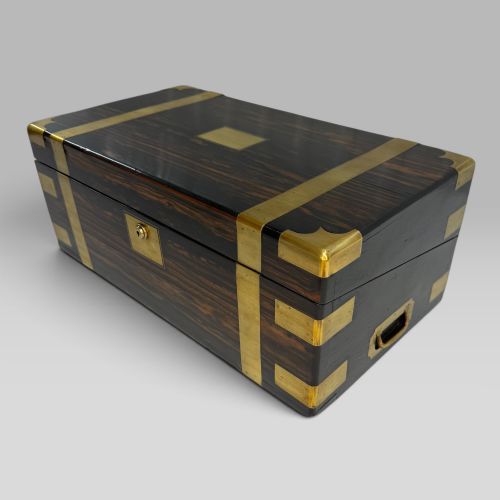
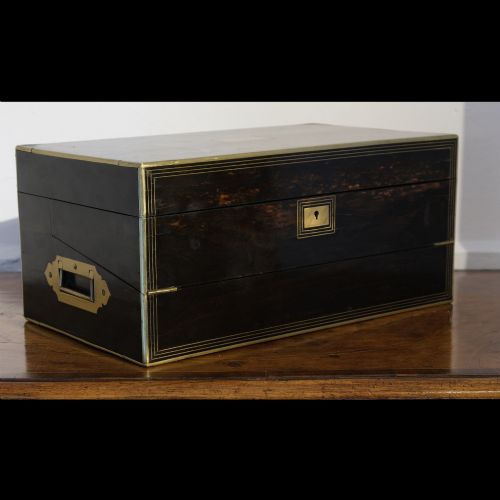
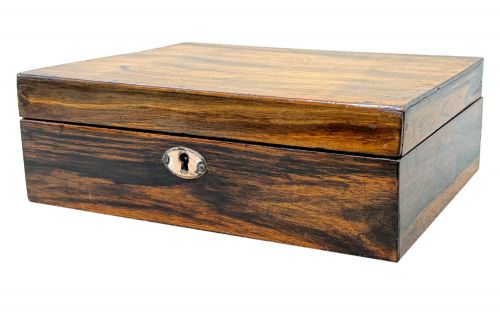
An antique coromandel box is a heavy, dark-grained receptacle designed to hold personal treasures, writing materials or tea. The pieces on this page span the Regency and Victorian periods, often taking the form of writing slopes, jewellery caskets, stationery boxes and tea caddies.
The most common examples you will meet here date from the nineteenth century, including specific 1860s iterations. These utility and luxury items reflect an era when personal administration and valuable possessions demanded secure, handsome containment.
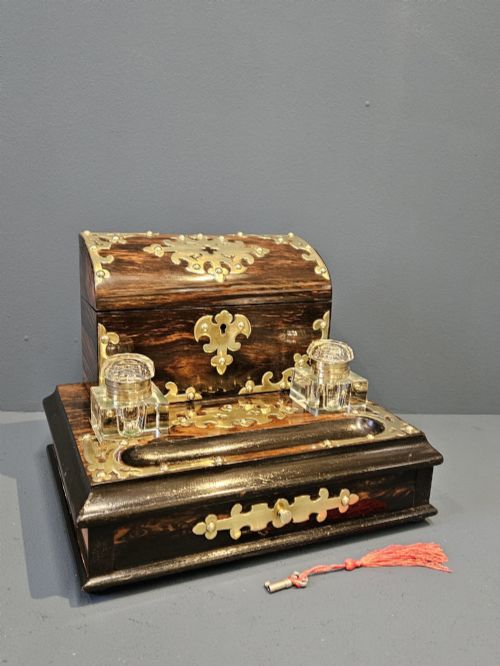
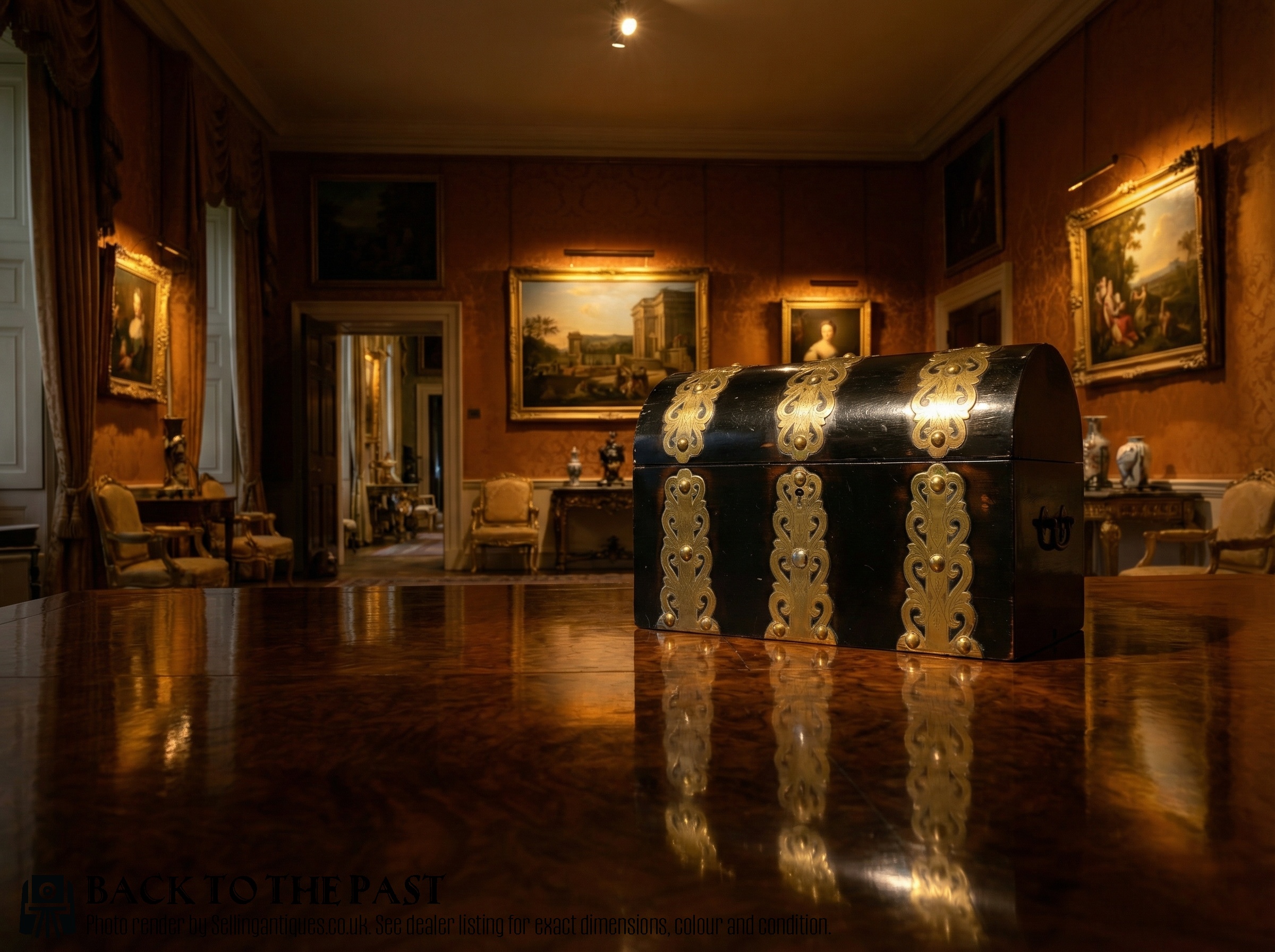
Makers constructed these caskets to sit proudly upon a gentleman's desk or a lady's dressing table. Their robust forms range from rectangular work boxes to elaborate dome-topped stationery cabinets.
Materials and construction
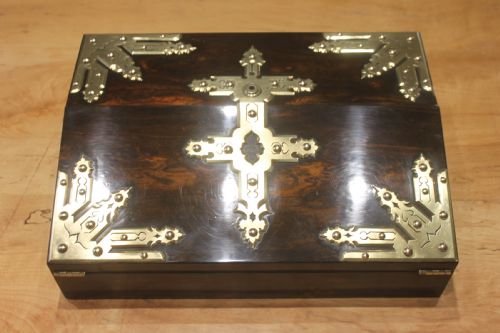
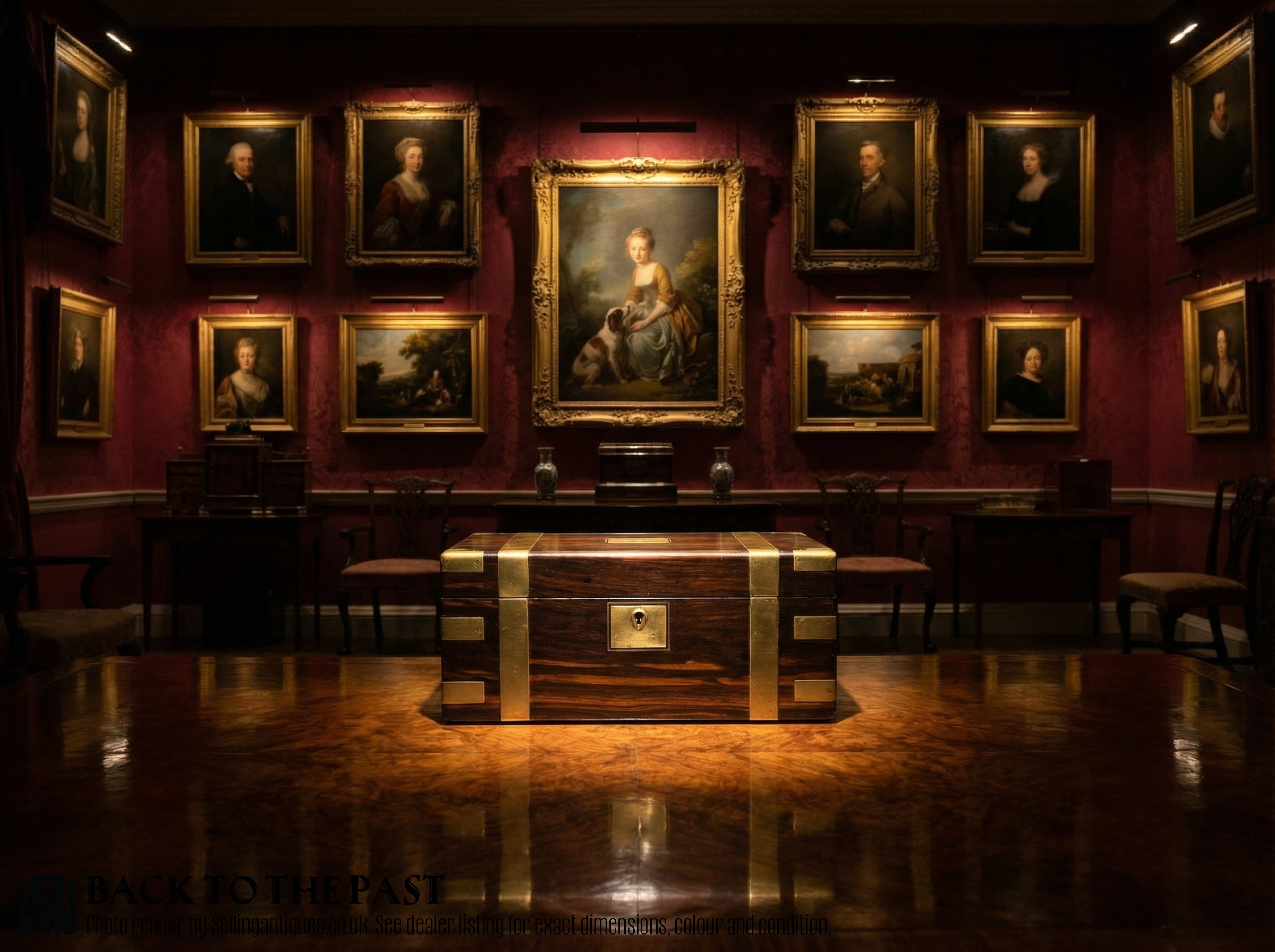
The primary material, coromandel wood, provides a rich, heavily figured dark brown grain with dramatic contrasting streaks. Craftsmen reinforced these dense timbers with substantial brass banding, strapwork and mountings to protect the corners and edges.
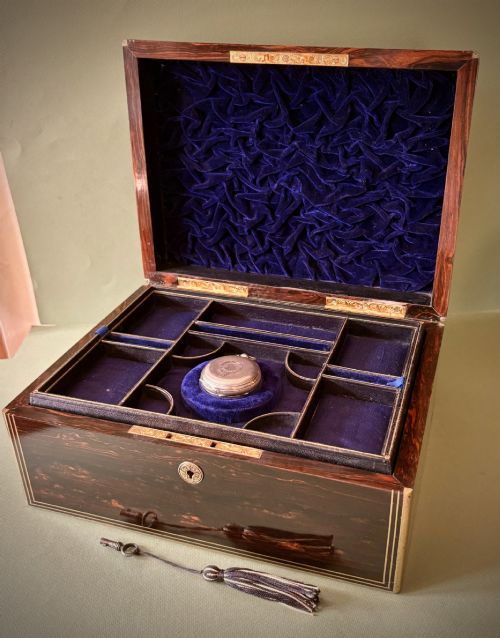
Interiors often feature secondary woods alongside fitted compartments lined in velvet or leather, occasionally incorporating secret drawers. Inlaid elements utilise mother-of-pearl, pietra dura, porcelain plaques and metal details to elevate the decorative scheme.
Retail Price Guide 2026
Typical UK retail prices for coromandel box, calculated from the Sellingantiques database of over a million retail prices indexed since 2003. This retail price guide relies exclusively on Sellingantiques data; no external sources or auction records are used, so the figures do not describe the wider market.
Listings feature coromandel boxes spanning the Regency and Victorian eras, utilising brass, mother-of-pearl, and pietra dura materials.
Distinctions in quality
The finest specimens display exceptional figuration in the coromandel timber, paired with heavy, deeply cast brass mounts rather than thin plated alternatives. Superior examples often include complete internal fittings such as original glass inkwells, silver mounts or velvet trays.
Construction heft and the precision of joinery separate standard items from grand pieces housing games compendiums or elaborate secret mechanisms. The integration of specialty decorative elements like hand-painted porcelain or pietra dura panels denotes elite nineteenth-century production.
P & F Schafer·Lund, London·Betjemman·Parkins & Gotto, London·Howell, James & Co., London
The Antique Coromandel Box Glossary
- Coromandel
- A dense, heavily figured exotic hardwood imported from Asia, prized for its dark brown colour and striking black grain lines. It was heavily utilised for luxury nineteenth-century boxes.
- Writing Slope
- A desk accessory featuring a hinged, sloping lid that opens to reveal a slanted writing surface, pen trays and small storage compartments. Many include secret drawers released by hidden latches.
- Pietra Dura
- An artistic technique using cut and fitted polished coloured stones to create pictorial designs on tabletops or box lids. This painstaking mosaic work appears on select high-end nineteenth-century caskets.
- Stationery Box
- An upright desk cabinet with a sloping or dome top, designed to hold writing paper and envelopes in tiered internal slots. They frequently showcase Gothic revival brass strapwork.
- Tantalus
- A locking beverage cabinet holding decanters visible behind a metal bar, preventing guests from pouring drinks without a key. This mechanism occasionally pairs with coromandel wood construction.
Frequently Asked Questions
How do I use a writing slope?
A writing slope opens outward to provide an inclined wooden surface covered in leather or velvet for writing letters. Inside, you will find slots for nibs, inkwells and stationery.
Many slopes include a folding mechanism that creates a flat writing desk when fully extended. Secret compartments often hide beneath the stationery partitions.
How do I care for coromandel wood?
Protect your box by keeping it away from direct sunlight and sudden temperature shifts, which can cause the dense wood to split. Dust gently with a dry, soft cloth.
Avoid applying modern silicone polishes or heavy oils to the surface. A light application of quality wax paste occasionally will help preserve the antique polish.
How do I date an antique box?
Examine the construction methods, secondary internal woods, and style of the brass mounts to determine the period. Regency pieces display clean classical lines, while Victorian examples often embrace Gothic revival strapwork or heavy brass banding.
Makers' stamps, patent brass locks and associated paper labels inside the fitted compartments also provide precise historical markers.