





Coromandel Lap Desk
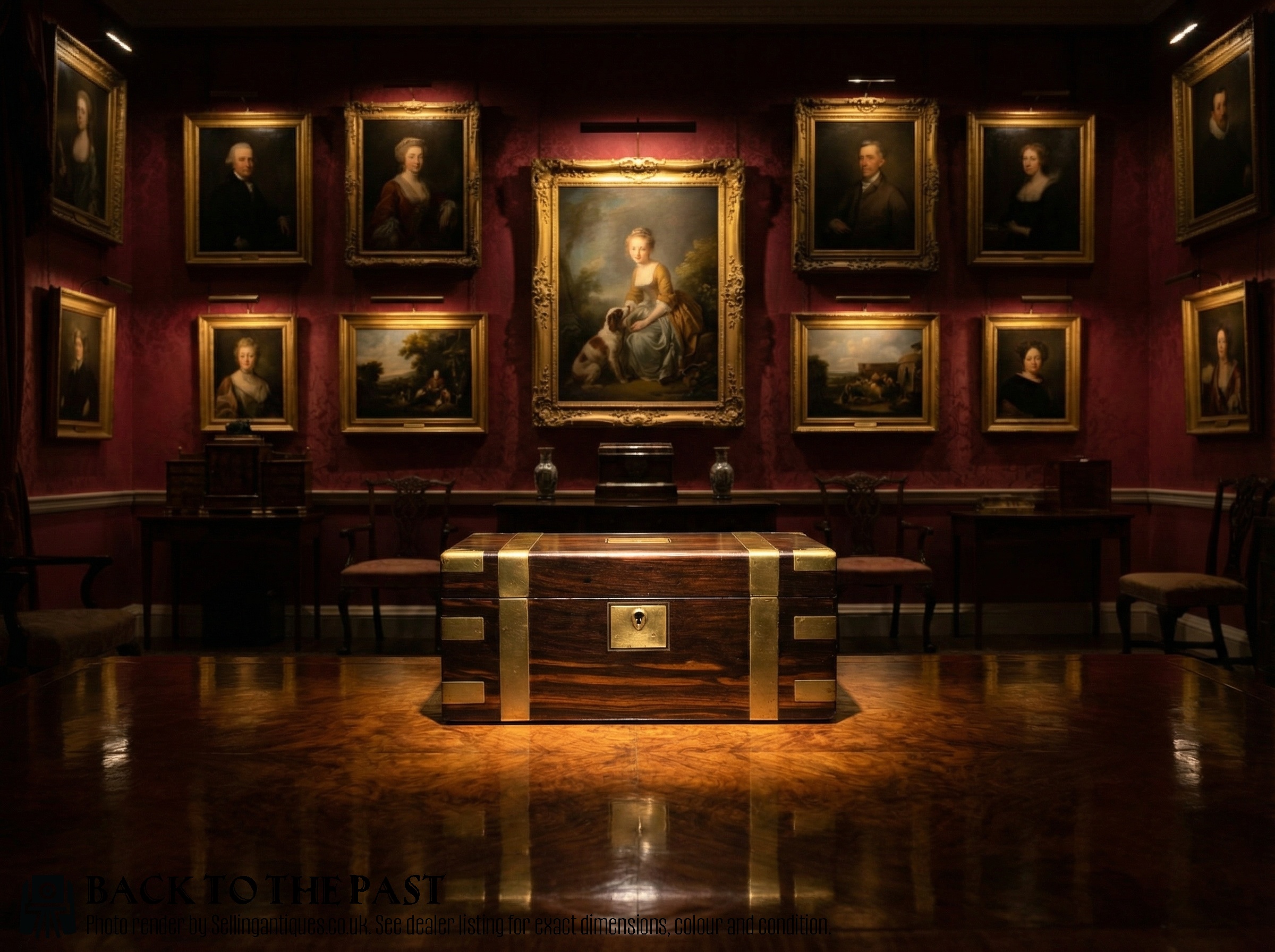
A coromandel lap desk is a portable Victorian writing box clad in dense, richly figured timber that rewards close daily use.
Coromandel Lap Desk
A coromandel lap desk is a substantial portable writing box fashioned from exotic timber and designed for correspondence during the nineteenth century. These pieces appear frequently in Victorian iterations from around eighteen hundred and fifty to eighteen hundred and sixty, alongside occasional Regency examples.
The primary forms take shape as writing slopes, correspondence boxes, and stationery boxes intended for use on a table or travelling desk. Makers shaped these objects into hinged cases that fold open to reveal angled writing surfaces and inner compartments.
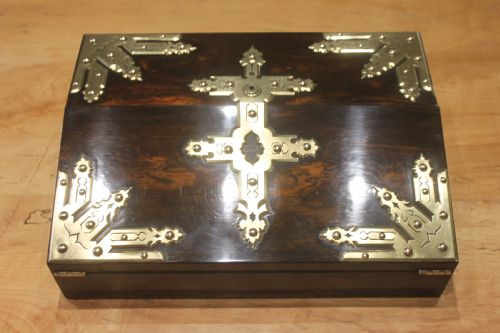
Victorian variations often include internal secret drawers and fitted compartments for inkwells and pens. Examples on this page span several stylistic influences, including Gothic Revival and Anglo-Indian designs.
How they were made
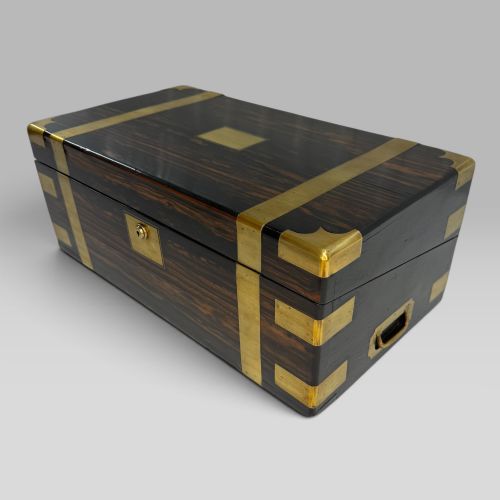
Craftsmen built these boxes using solid or veneered coromandel wood over a secondary timber carcass, applying dense grain patterns across the exterior surfaces. Metal reinforcement in the form of brass banding provided structural strength for travel.
Surface ornamentation involved intricate inlay work utilising mother of pearl, abalone, and pietra dura plaques. Workshops also incorporated gilded bronze mounts and Wedgwood plaques into the exterior decoration.
Internal elements relied on concealed spring mechanisms to secure secret drawers behind removable partitions. Woodwork joints remained tight and precise to withstand regular movement.
Coromandel Lap Desk Retail Price Guide 2026
Typical asking prices for coromandel lap desk among the pieces listed under this phrase on Sellingantiques today, from the lower quarter to the upper quarter. They describe what is for sale here now, not the wider market.
Several boxes contain cunning spring-loaded secret compartments designed to hide love letters from prying eyes.
What varies in quality
The density and figuring of the coromandel veneer determine the visual impact of the exterior. Richly contrasted grain patterns separate standard production boxes from exceptional examples commissioned from prominent makers.
The complexity of the interior fittings dictates the standing of the piece. Elaborate secret drawers, multiple compartments, and high-grade mother of pearl or pietra dura inlay reflect superior craftsmanship.
Maker attribution alters the distinction of a box. Signed maker plaques from established retailers like Lund of London or Mechi and Bazin indicate higher workshop standards.
Briggs 27 Piccadilly London·Mechi and Bazin·Lund of London
The Coromandel Lap Desk Glossary
- Coromandel wood
- A dense, heavy tropical Asian timber characterised by dark brown colouring and dramatic black striping. It was favored by nineteenth-century cabinet makers for luxury boxes.
- Pietra dura
- An artistic technique involving the inlay of cut and fitted polished coloured stones to form pictures or geometric designs. These plaques appear on high-end Victorian stationery boxes.
- Writing slope
- A portable box with a hinged, slanted lid that folds down to form a writing surface. Inside, compartments hold paper, pens, and ink.
- Abalone
- The iridescent inner shell layer of marine molluscs, used for decorative inlay work on nineteenth-century boxes. It produces shimmering greens and pinks when caught by the light.
- Gothic Revival
- An architectural and decorative style drawing inspiration from medieval forms. Pieces in this style feature pointed arches and structural ornamentation.
Coromandel Lap Desk: Frequently Asked Questions
What is a coromandel lap desk?
A coromandel lap desk is a portable nineteenth-century writing box made from heavily grained tropical timber. These pieces feature hinged lids that open to create a firm writing plane.
Inside, the boxes house fitted compartments for inkwells, stationery, and hidden drawers. They served as luxury writing equipment for home and travel during the Victorian period.
How do I find the secret drawers?
Secret drawers in these boxes are usually concealed behind internal partitions or false panels. Removing the pen tray or sliding out the inkwell surround often releases the spring mechanism.
Cabinet makers designed these compartments to secure correspondence and valuables. Checking for small wooden pins or hidden catches reveals the release mechanism.
Are these boxes suitable for daily writing use?
These boxes provide a stable, angled surface that accommodates modern notebooks and pens. The interior compartments keep writing instruments organised.
Care must be taken to protect the historic timber and interior velvet or leather linings from moisture and heavy wear.
How do I distinguish a Regency piece from a Victorian one?
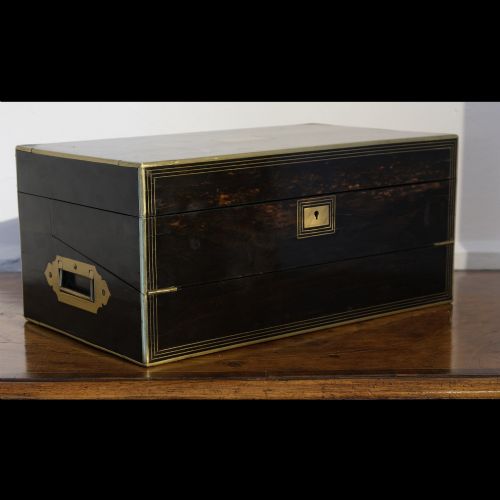
Regency pieces typically date from the early nineteenth century and lean toward restrained classical lines. They often utilise brass stringing rather than heavy brass corner mounts.
Victorian boxes from eighteen fifty onward frequently display more ornate inlay, including mother of pearl and pietra dura. Maker stamps inside the box also help confirm the production period.