




Antique Letter Slope
An antique letter slope organises correspondence using timber and brass fittings, offering a practical writing surface or storage box.
Antique Letter Slope
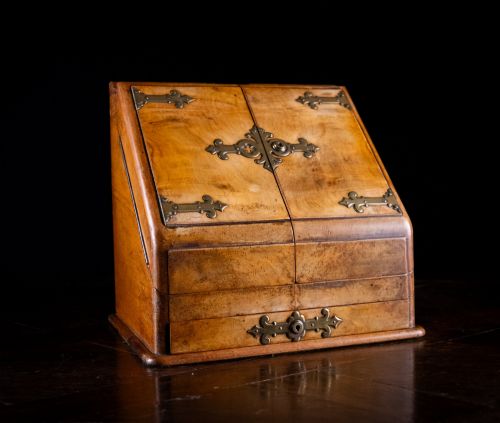
The antique letter slope category comprises various timber writing boxes, stationery cabinets, and desk tidies originating from the Georgian, Victorian, and Edwardian periods.
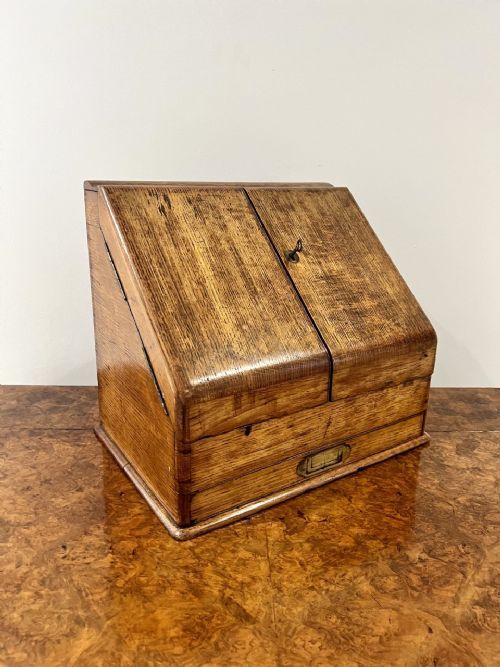
Buyers mostly encounter Victorian oak or mahogany stationery boxes and writing slopes fitted with compartments for paper, pens, and ink.
Pieces range from simple English oak desk boxes to elaborate Anglo-Indian carved wood boxes, Japanese lacquer writing boxes, and Tunbridge ware.
Materials and construction
Craftsmen built these boxes primarily using hardwoods such as mahogany, oak, walnut, rosewood, and coromandel, occasionally employing satinwood or ebony.
Construction involved precision joinery, hinged lids, and fall fronts, frequently reinforced with brass corners, campaign mounts, or ormolu.
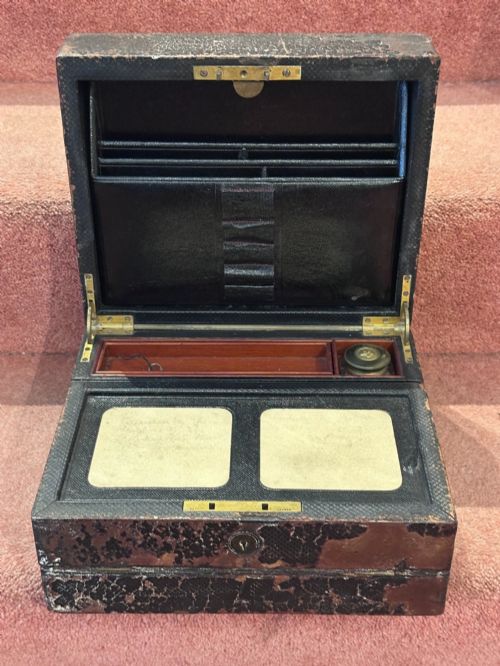
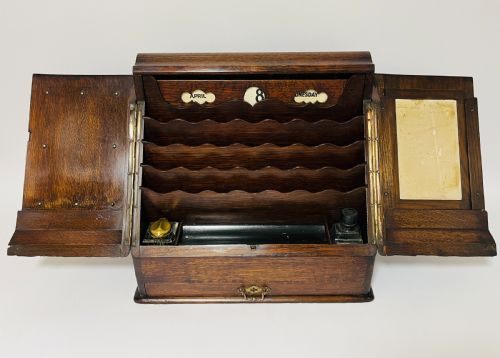
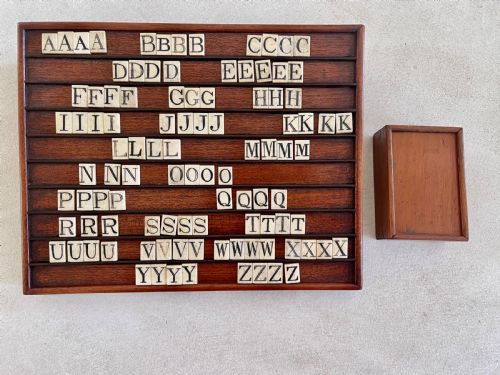
Internal layouts often incorporated leather inserts, glass ink bottles, bone details, and marquetry or inlaid decoration.
Several Victorian correspondence boxes feature novelty mail slots labelled answered and unanswered to keep orderly track of daily post.
Determining quality
Quality rests on the selection of figured timber veneers, the precision of marquetry or inlaid detail, and the substance of brass hardware.
Better examples feature fitted interiors by known makers, retaining original glass inkwells, leather surfaces, and working locks with keys.
Briggs 27 Piccadilly London·Mechi and Bazin·Houghton and Gunn·F Waller
The Antique Letter Slope Glossary
- Writing slope
- A box with an angled lid that folds down to provide a slanted writing surface, housing storage compartments inside. These pieces date predominantly from the Georgian and Victorian eras.
- Stationery cabinet
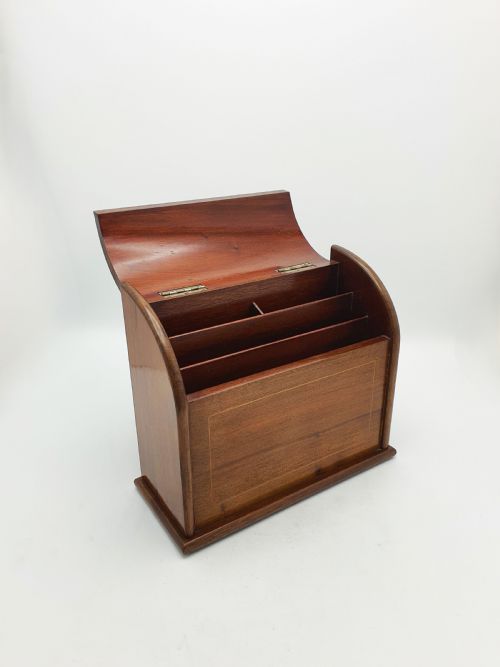
- An upright desk accessory with doors or a fall front designed to hold paper, envelopes, and letters in vertical tiers. They often feature multiple internal partitions.
- Tunbridge ware
- Small wooden decorative items ornamented with mosaic patterns built from tiny wood blocks of different natural colours. This technique created pictorial or geometric designs on box lids.
- Campaign
- Portable furniture and accessories designed for travel, typically fitted with flush brass handles, corner brackets, and robust locks. These pieces originate from military or colonial contexts.
- Ormolu
- Gilt bronze mounts applied to furniture and decorative boxes for structural reinforcement and visual enrichment. This finish appears frequently on French caskets.
Antique Letter Slope: Frequently Asked Questions
What is an antique letter slope?
An antique letter slope is a portable wooden box designed to hold writing paper and correspondence supplies. Many versions feature a hinged writing surface that folds down at an angle for writing.
These pieces served as personal desks before fitted stationery cabinets and stationary writing desks became common in homes.
How do I date an antique writing box?
Dating relies on timber choices, construction techniques, and hardware styles. Georgian pieces often use straight-grained mahogany, whilst Victorian examples frequently showcase coromandel, walnut, or oak with brass mounts.
Maker labels, brass lock stamps, and specific decorative styles like Tunbridge ware or Arts and Crafts provide further chronological markers.
What is the difference between a writing slope and a stationery box?
A writing slope incorporates a slanted writing bed that opens to reveal a compartment for pens and ink. It prioritises the act of writing over upright paper storage.
A stationery cabinet or box stays upright on a desk, using shelves or slots to organise envelopes, letters, and paper.
How do I care for antique wood stationery boxes?
Keep wooden boxes away from direct sunlight and radiators to prevent the timber and veneers from splitting. Maintain stable indoor humidity levels.
Apply occasional appropriate wax polish to nourish the wood and preserve the finish without damaging brass mounts or leather interiors.