




Coromandel Desk Box
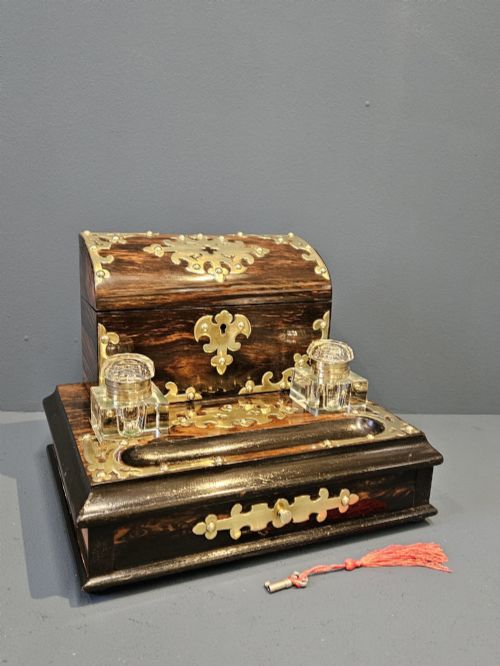
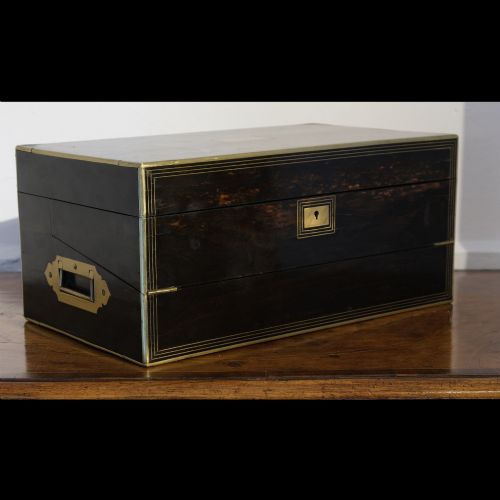
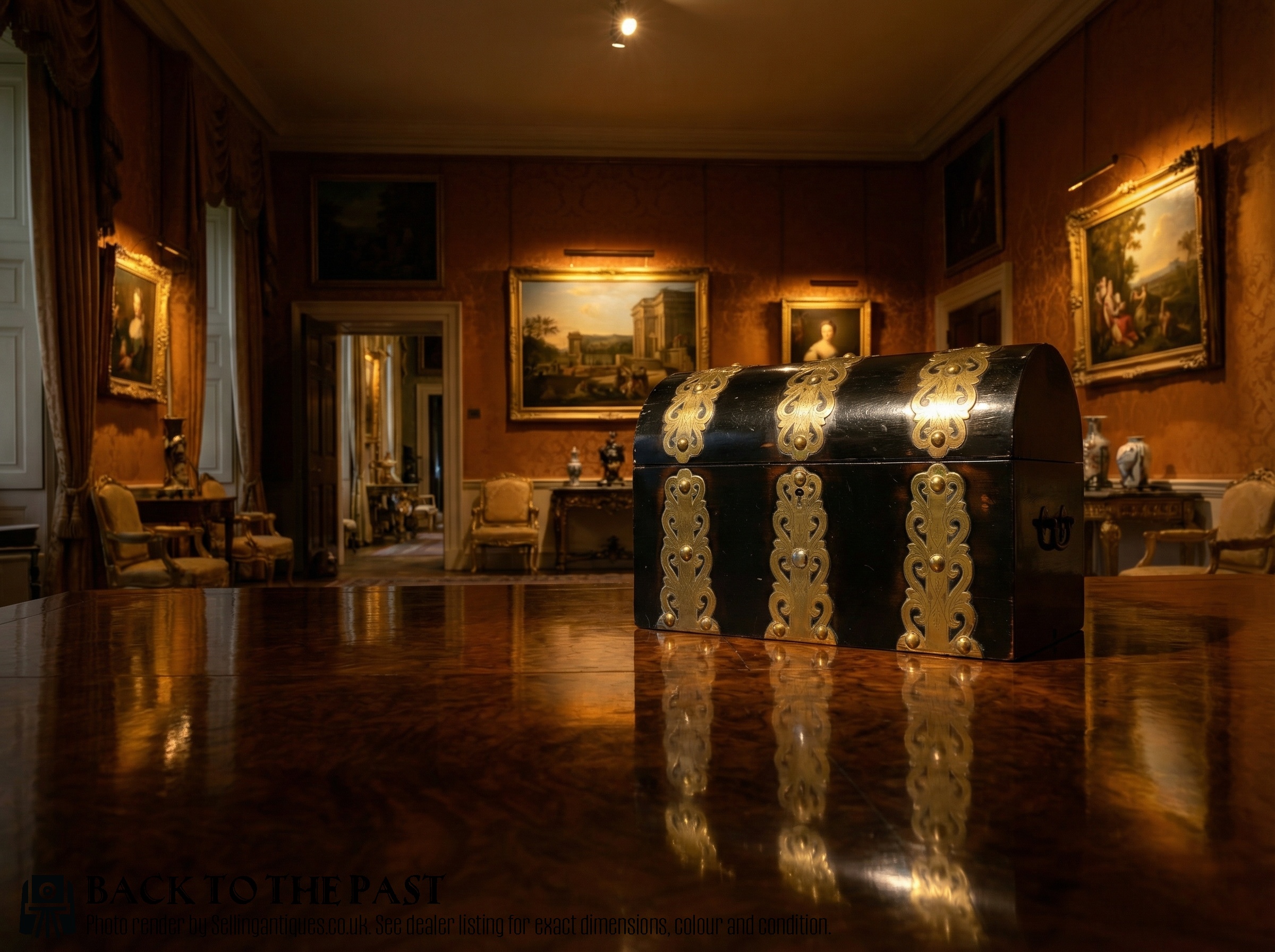
Coromandel desk box pieces are substantial Victorian and Regency containers built from exotic timber to organise correspondence.
Coromandel Desk Box
A coromandel desk box serves as a portable writing surface or stationery storage for the nineteenth-century household. The forms seen across these listings include writing slopes, stationery boxes, inkstands, and letter caskets.
Victorian examples dominate the selection, alongside items from the Regency period and specific decades like the eighteen fifties, sixties, and eighties. Makers such as Lund of London and Mechi and Bazin created several of these luxury goods.
Buyers also encounter related desk accessories and keepsake boxes sharing the same dense tropical timber and metal mounts. These objects reflect the heavy correspondence culture of the nineteenth century.
Materials and technique
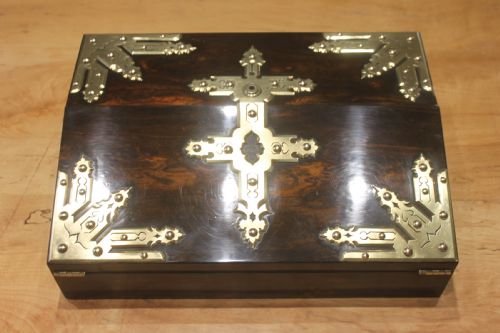
The foundation of every piece is coromandel wood, an exotic timber prized for its dark grain and rich colour. Craftsmen combined this heavy wood with solid brass mounts, banding, and campaign hardware.
Surface decoration frequently incorporates mother of pearl, abalone, and pietra dura inlay to create striking contrast against the dark timber. Interiors often feature fitted compartments, secret drawers, glass inkwells, and ceramic components.
Secret drawers concealed within these writing slopes continue to hide stray nineteenth-century paper scraps left behind by original owners.
Quality and craftsmanship
The distinction between standard boxes and the finest work lies in the precision of the brass binding and the complexity of the internal fittings. Superior items include secret drawers, matched glass or ceramic inkwells, and complex stationery arrangements.
Makers known for retail excellence, such as Houghton and Gunn or Briggs of Piccadilly, demonstrate higher execution in their joinery and metalwork. The integration of specialty inlays like pietra dura or extensive mother of pearl marks the upper tier of production.
Briggs 27 Piccadilly London·Houghton and Gunn·Mechi and Bazin·C G Hope Hastings·Lund of London
The Coromandel Desk Box Glossary
- Coromandel wood
- A dense, heavily grained tropical timber imported from Asia and used for luxury nineteenth-century boxes. Its rich brown colour and dark striping distinguish it from walnut or rosewood.
- Writing slope
- A hinged box that opens to reveal a slanted writing surface lined with leather or velvet. These pieces usually contain concealed compartments for stationery and ink.
- Stationery box
- An upright cabinet or desk accessory designed to hold envelopes, paper, and letters. Many feature drop fronts or dome tops with internal dividers.
- Pietra dura
- An artistic technique involving the inlay of cut and fitted polished coloured stones to create pictures or geometric designs. This work appears on the finest Victorian desk boxes.
- Ormolu
- Gilded bronze mounts applied to the corners and edges of wooden boxes for structural reinforcement and decoration. This material catches the light against dark coromandel.
Coromandel Desk Box: Frequently Asked Questions
How do I date a coromandel box?
Dating relies on the style of the brass mounts, the presence of specific maker signatures, and the overall construction methods. Regency examples display different proportions compared to later Victorian Gothic Revival pieces.
Makers active during the mid-nineteenth century often stamped their locks or incorporated specific hardware that helps narrow down the decade of production.
Were these boxes used for travel?
Many writing slopes and campaign pieces were built specifically for travel by military officers and wealthy gentlemen. They featured secure locks and flush brass handles to withstand journeys.
Stationery cabinets and large inkstands remained stationary on heavy library desks rather than accompanying owners on voyages.
What is the difference between coromandel and calamander?
Both terms describe dense Asian timbers used interchangeably by nineteenth-century cabinet makers for luxury goods. Coromandel typically exhibits darker, bolder striping against a warm background.
Both woods provide the heavy weight and striking grain pattern characteristic of high-end Victorian desk accessories.