


Victorian Brass Mounted Box
A victorian brass mounted box is a solid timber container strengthened with metal corners and straps, designed to hold letters, jewels or papers securely.
Victorian Brass Mounted Box
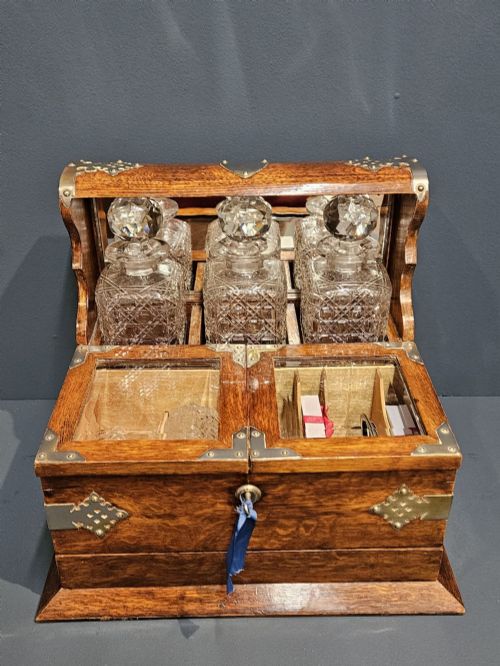
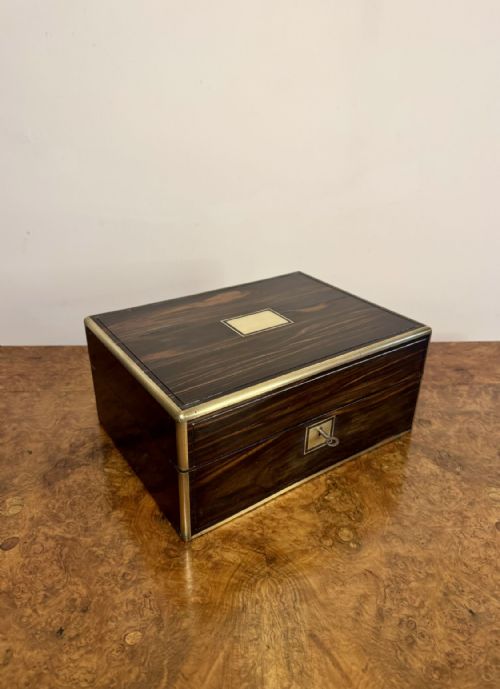
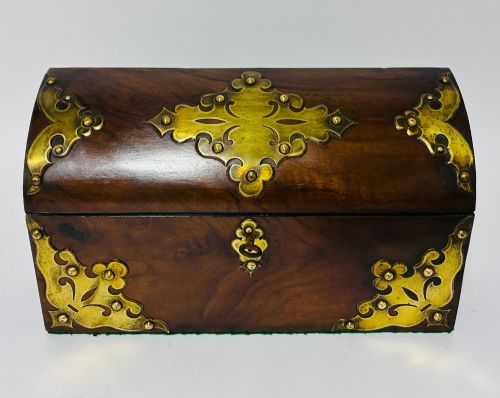
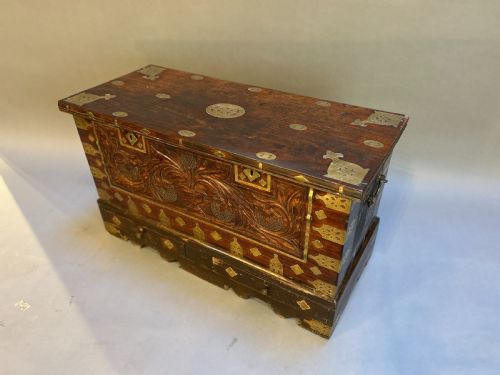
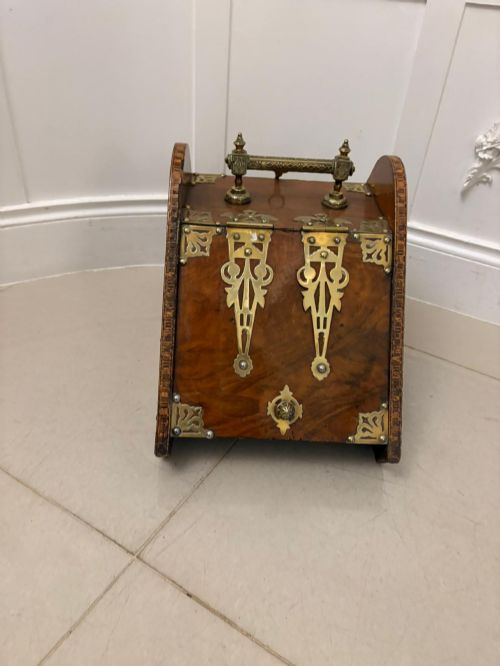
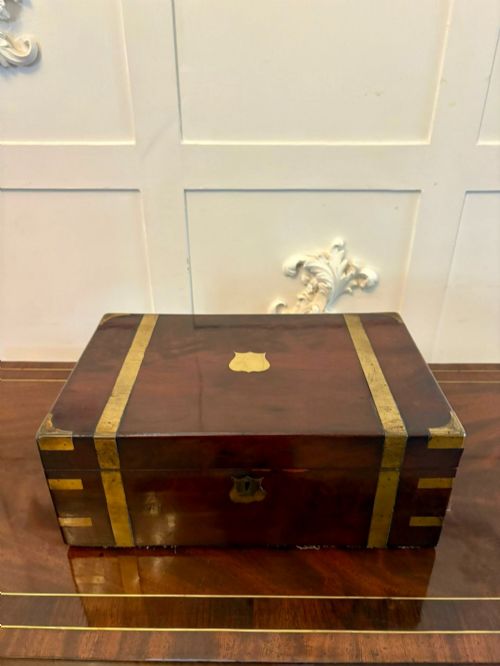
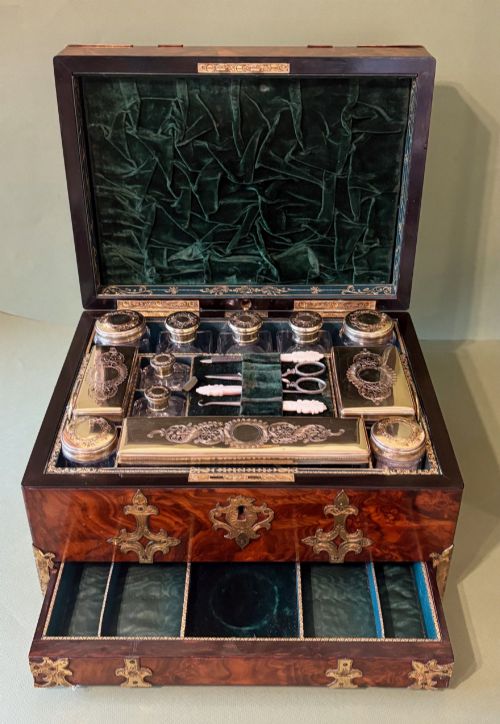
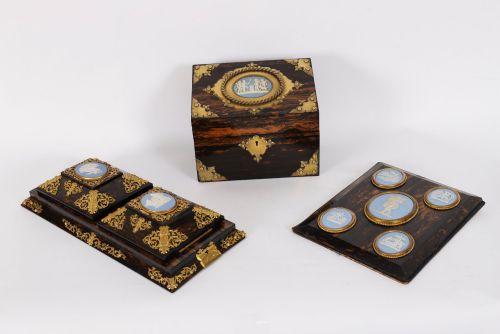
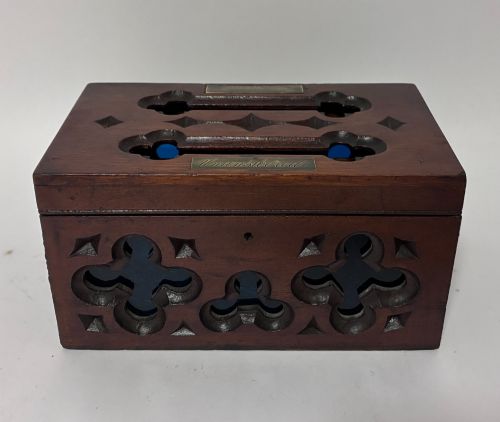
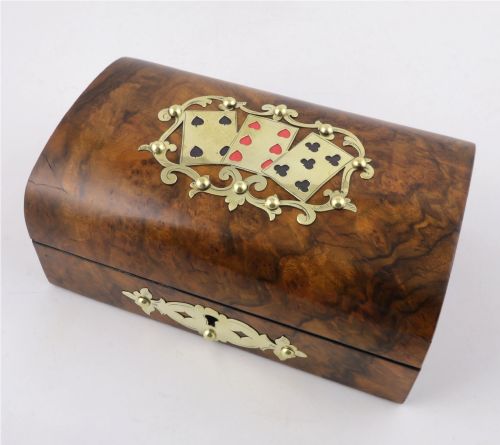
When you search for a victorian brass mounted box, you look at containers fashioned from woods such as walnut, oak, mahogany and coromandel, typically accented with metal corner braces, straps and escutcheons. The selection includes stationery cabinets, correspondence boxes, jewellery caskets and military campaign pieces originating from the nineteenth century.
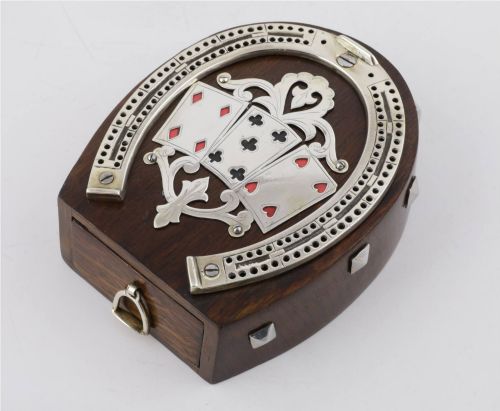
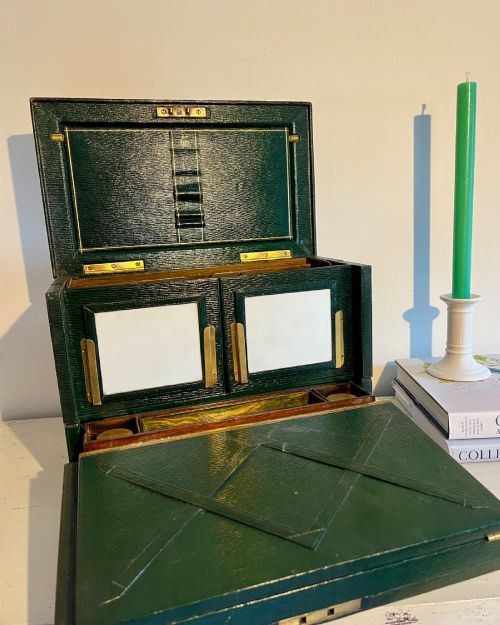
Stationery boxes and correspondence cabinets dominate the pieces seen here, alongside writing slopes and games caskets. These items served functional roles in period writing rooms and offices, housing paper, ink, cards and valuables.
The objects span the Victorian and Edwardian periods, stretching from the mid-nineteenth century through to the early twentieth century. Makers utilised sturdy domestic and exotic timbers, equipping them with heavy brass fittings designed to endure travel or daily desk use.
How They Were Made
Cabinet makers constructed these containers using dense hardwoods like walnut, teak, oak and camphor wood, often applying burr walnut or coromandel veneers to exterior surfaces. The timber was selected for durability and grain pattern, then jointed to house fitted compartments, drawers and sloping writing surfaces.
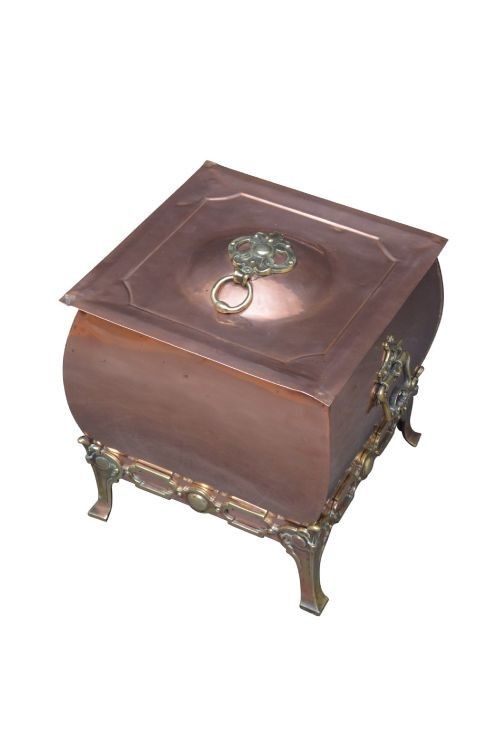
Brass formed the primary metal component, utilised for corner brackets, carrying handles, lock escutcheons and strapwork designed to protect edges from impact. Artisans also incorporated ormolu, copper and glass elements depending on the specific form of the box or casket.
Victorian Brass Mounted Box Retail Price Guide 2026
Typical asking prices for victorian brass mounted box among the pieces listed under this phrase on Sellingantiques today, from the lower quarter to the upper quarter. They describe what is for sale here now, not the wider market.
The listings show a strong presence of walnut and camphor wood, with stationery boxes and campaign chests forming the majority of the surviving forms.
What Varies in Quality
The calibre of a piece rests on the selection of timber veneers and the precision of the brass hardware integration. Superior examples display carefully matched burr walnut or figured coromandel grain across every surface, with brass mounts flush-set into the wood rather than simply screwed to the exterior.
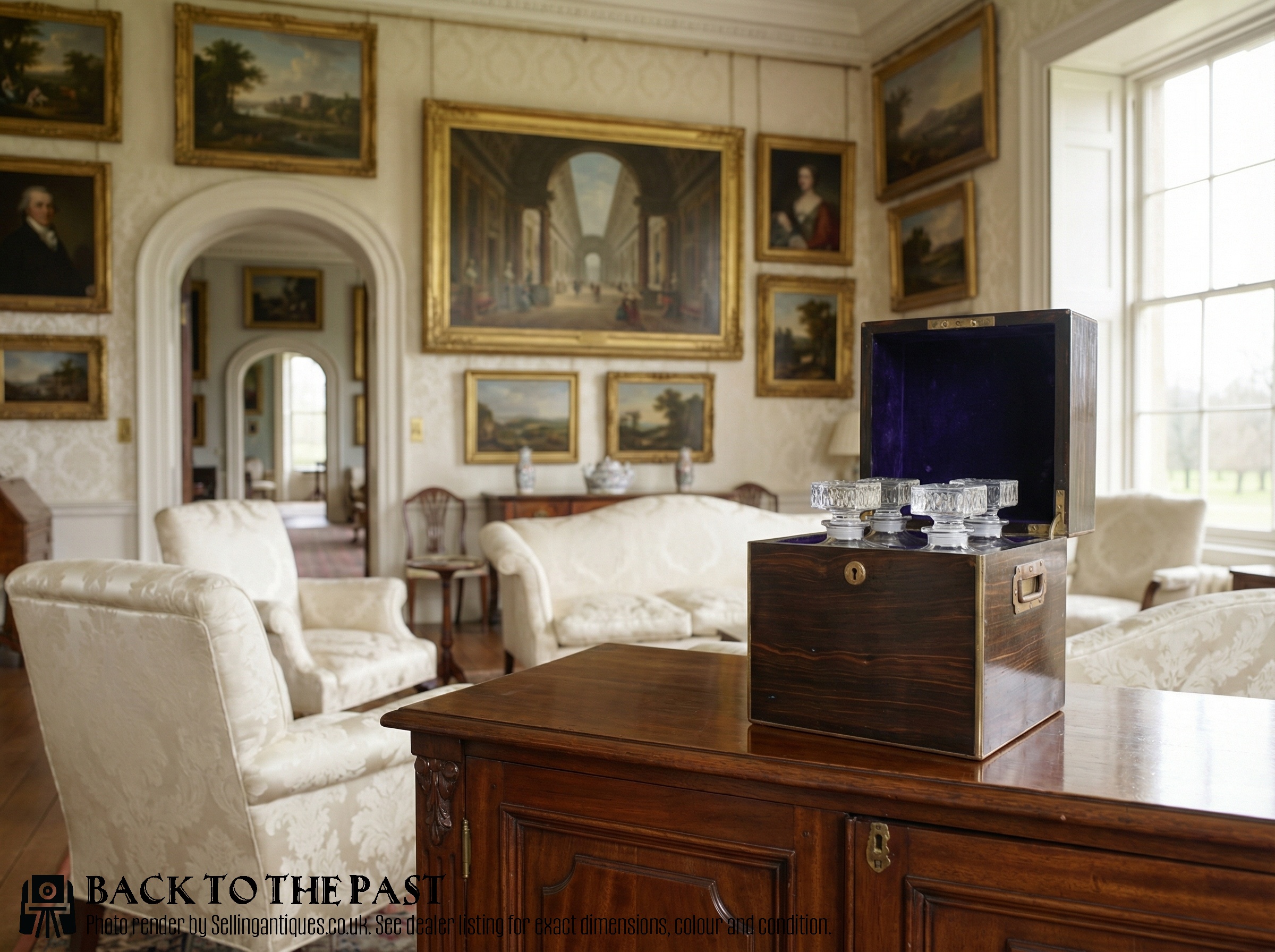
Internal appointments separate standard utility items from luxury pieces. Higher grade items feature velvet linings, fitted inkwells, secret drawers and secondary locking mechanisms operating through complex brass hardware.
The Victorian Brass Mounted Box Glossary
- Campaign
- Furniture and boxes built for military officers on active service, featuring recessed brass handles and reinforced corners for transport. These items dismantled or packed away efficiently.
- Escutcheon
- A protective brass plate surrounding a keyhole. It prevents the wood from splitting around the lock mechanism.
- Ormolu
- Gilded bronze applied as a decorative mount or foot on luxury nineteenth-century boxes. The finish provides a bright golden appearance.
- Coromandel
- A dense, heavy timber imported from Asia, featuring dark brown grain with dramatic lighter streaks. It was favoured for high-end Victorian luxury boxes.
Victorian Brass Mounted Box: Frequently Asked Questions
What are victorian brass mounted boxes?
These pieces are wooden containers reinforced with brass corners, straps and hinges, produced during the nineteenth century for domestic or travel use.
They encompass a range of functional forms including writing slopes, stationery cabinets, jewellery caskets and correspondence boxes designed to organise personal effects.
How were these boxes used?
Owners used them to store private correspondence, writing materials, playing cards, cigars or jewellery in period drawing rooms and offices.
Campaign versions accompanied officers on military postings, protecting fragile contents against rough handling during transit.
How do I date a brass mounted box?
Dating relies on identifying the timber species, construction methods and stylistic markers such as Gothic Revival motifs or Napoleon III influences.
Mid-century pieces often feature campaign styling and camphor wood, while late examples frequently incorporate oak or walnut stationery interiors.
How do I care for wood and brass?
Keep the timber away from direct heat sources and sudden humidity changes to prevent the veneers from lifting or splitting.
Clean the brass fittings gently with a dry cloth, avoiding harsh metal polishes that can stain the surrounding wood surfaces.