



Brass Mounted Casket
When you handle a brass mounted casket, you hold a sturdy container designed to secure letters, trinkets, and valuables using metalwork reinforcement.
Brass Mounted Casket
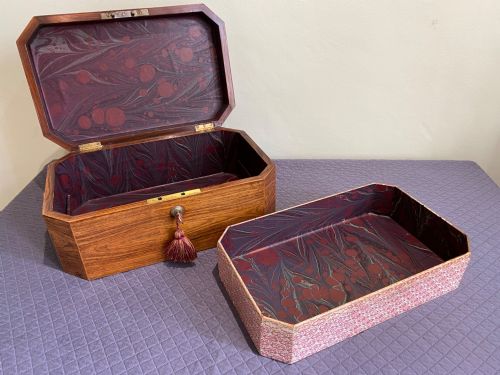
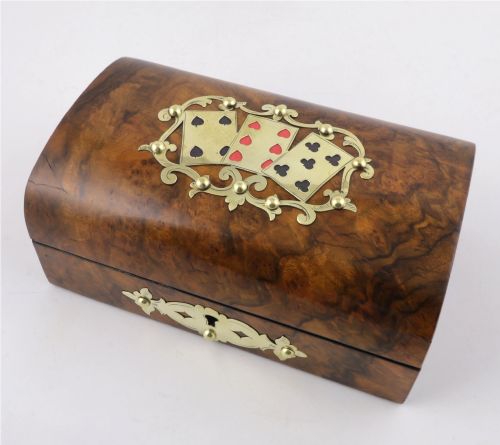
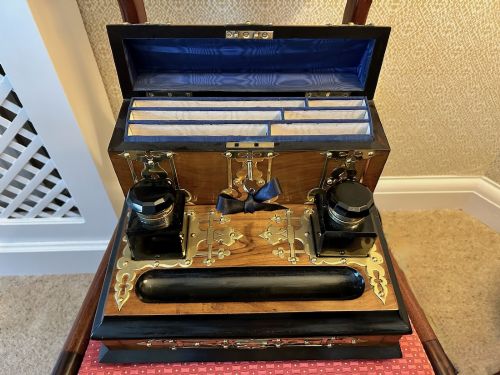
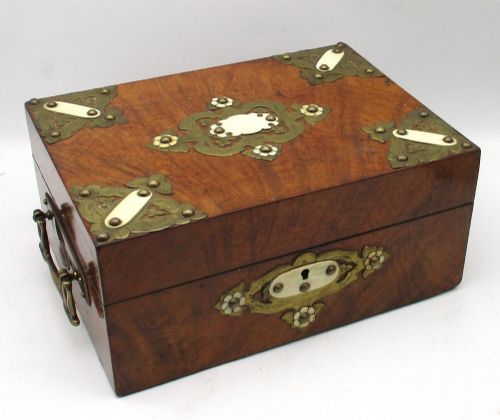
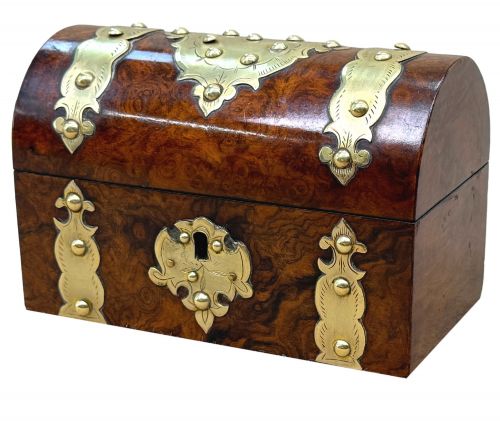
A brass mounted casket is a rigid container designed for domestic storage, encountered most frequently in nineteenth-century walnut, burr walnut, and mahogany forms. These items served specific functions on desks and dressing tables, functioning as stationery boxes, jewellery caskets, and writing slopes.
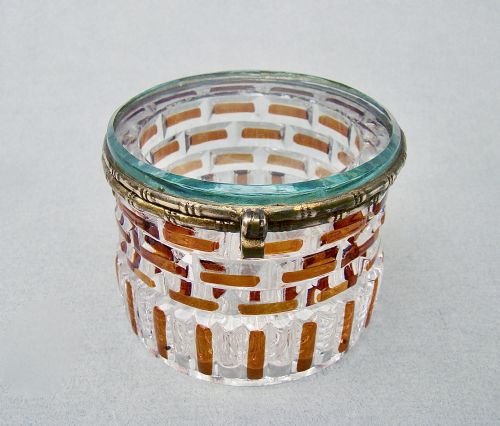
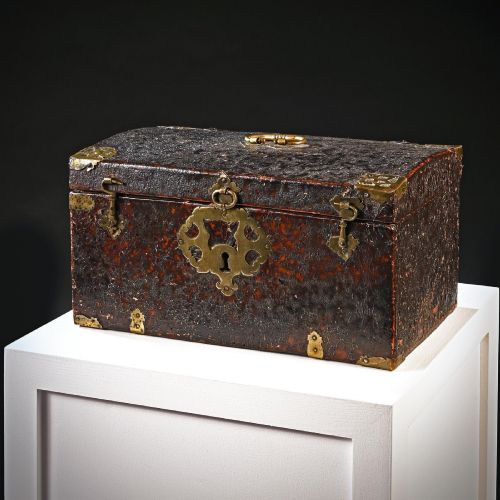
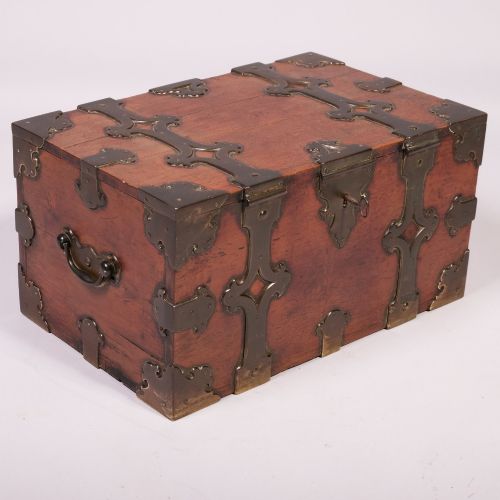
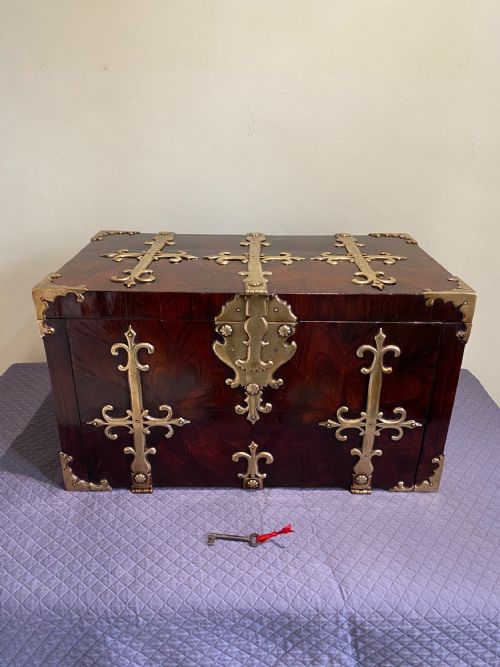
The materials span from the seventeenth century through the Victorian era, encompassing woods such as coromandel, rosewood, and oak alongside leather, porcelain, and glass. Pieces range from plain travelling boxes to elaborate Gothic Revival and Art Nouveau items adorned with metal strapwork.
How They Were Made
Cabinetmakers constructed the wooden carcasses utilising dense hardwoods like walnut, mahogany, and coromandel, often applying burr veneers to display rich grain patterns. Metal mounts, hinges, and lock plates were secured to the exterior using small brass screws to reinforce the corners and edges.
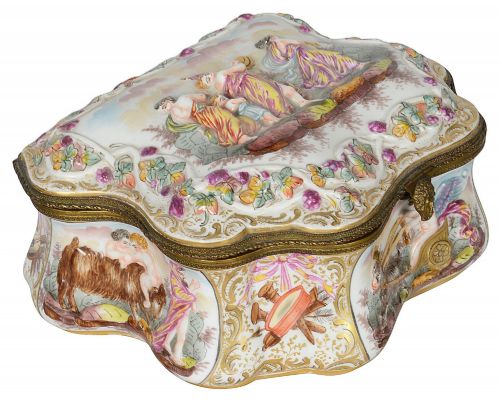
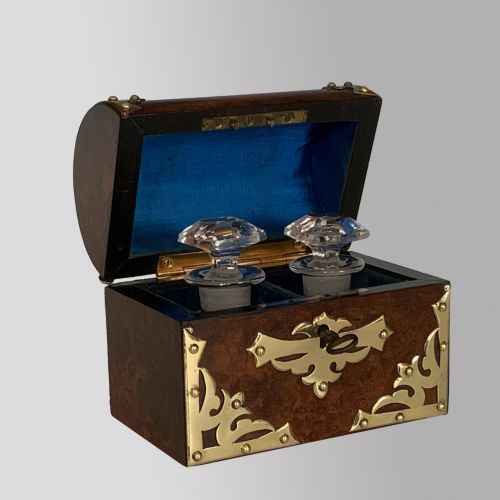
Decorative elements combined different media, integrating glass, porcelain plaques, and leather bindings alongside cast or pierced brass mounts. Interiors were lined with velvet, silk, or paper, fitted with compartments for bottles, cards, or writing instruments.
Brass Mounted Casket Retail Price Guide 2026
Typical asking prices for brass mounted casket among the pieces listed under this phrase on Sellingantiques today, from the lower quarter to the upper quarter. They describe what is for sale here now, not the wider market.
Several Victorian boxes contain secret compartments designed to keep private correspondence entirely hidden from prying eyes.
What Varies in Quality
The standard of a brass mounted casket depends upon the choice of timber and the precision of the cabinetwork. Dense burr walnut, coromandel, and amboyna veneers matched across curved surfaces indicate higher production values than plain secondary woods.
Quality reveals itself in the execution of the metalwork, where heavy cast brass mounts, flush-fitting hinges, and intricate engraving distinguish superior examples from simpler utilitarian boxes.
Halstaff and Hannaford
The Brass Mounted Casket Glossary
- Casket
- A decorative box used for holding jewellery, letters, or small valuables. These containers often feature secure locks and internal partitions.
- Brass mount
- Metalwork fitted to the exterior corners, edges, and lids of a box. It provides structural reinforcement and visual contrast against the wood.
- Stationery box
- A desk accessory designed to hold writing paper and envelopes. They frequently incorporate sloping lids and internal dividers.
- Burr walnut
- Timber taken from the wart-like growth on a walnut tree, yielding highly figured patterns. Cabinetmakers used these veneers on high-status nineteenth-century boxes.
- Gothic Revival
- A design style inspired by medieval architecture. Pieces in this manner display pointed arches, heavy strapwork, and ecclesiastical motifs.
Brass Mounted Casket: Frequently Asked Questions
What were brass mounted caskets used for?
These boxes held valuable items, correspondence, and personal possessions securely on household desks and dressing tables.
Specific interiors accommodated stationery, sewing tools, playing cards, and glass scent bottles.
How do I identify a Victorian casket?
Victorian examples often utilise burr walnut, coromandel, or oak combined with heavy brass banding and fitted interiors.
Stylistic markers range from Gothic Revival architectural details to plain rectangular stationery boxes.
Are these boxes made of solid wood?
Most pieces feature decorative veneers such as burr walnut, rosewood, or kingwood applied over a stable secondary timber carcass.
Solid woods appear more frequently in earlier centuries, such as seventeenth-century camphor and eighteenth-century mahogany.
How should I care for a wooden casket?
Keep wooden boxes away from direct sunlight and sudden temperature changes to protect the delicate veneers and interior linings.
Light dusting preserves the finish without damaging the brass mounts or leather elements.