






Walnut Sewing Box
A walnut sewing box brings tactile warmth and domestic history to a room while keeping small treasures orderly.
What a walnut sewing box is
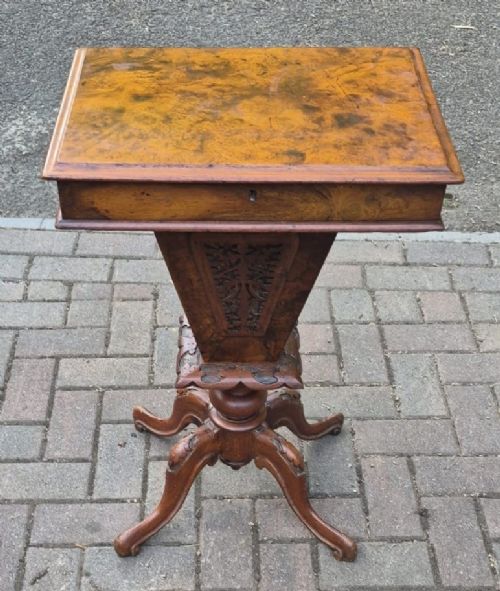
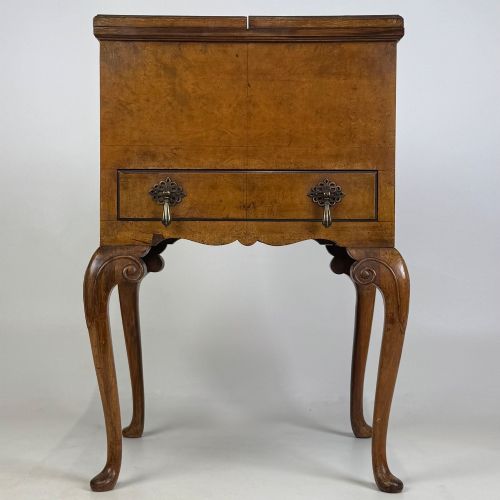
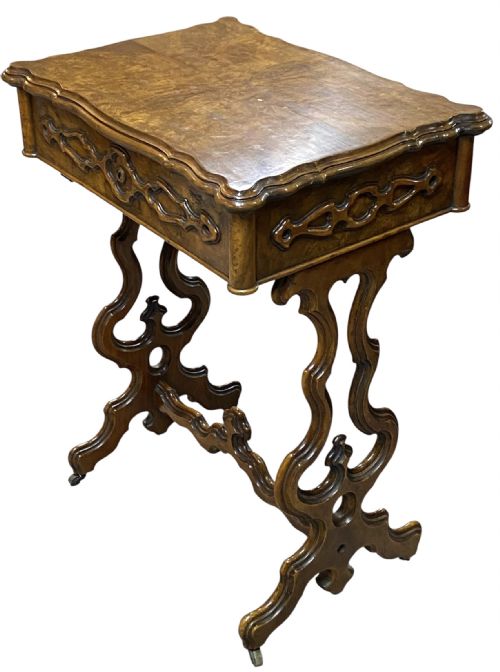
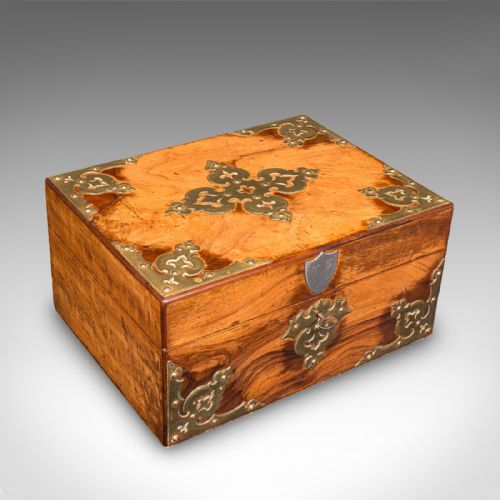
A walnut sewing box is a functional container designed to hold needlework supplies, threads, and small tools, appearing in forms ranging from tabletop caskets to larger freestanding work tables. The walnut sewing box most commonly encountered on this page originates from the Victorian period, often utilising burr walnut veneers for rich surface figuring.
Makers produced these pieces as essential accessories for nineteenth-century households, frequently combining them with writing slopes or games compartments. Later examples extend into the twentieth century with Art Deco work box tables.
The assortment includes domed caskets, trumpet-shaped sewing tables, and fitted boxes complete with internal trays for spools and pins.
How they were made
Craftsmen built these pieces using solid wood carcasses covered in thin layers of walnut veneer, particularly burr walnut for its swirling grain patterns. They frequently embellished the surfaces with contrasting wood inlay, parquetry, Tunbridge ware, and delicate brass stringing.
Interior fittings involved secondary timbers such as satinwood and rosewood, alongside silk linings, mirrors, and fitted compartments for spools and needles. Metal hinges, locks, and escutcheons in brass completed the construction, securing the lids and internal trays.
Retail Price Guide 2026
Typical UK retail prices for walnut sewing box, calculated from the Sellingantiques database of over a million retail prices indexed since 2003. This retail price guide relies exclusively on Sellingantiques data; no external sources or auction records are used, so the figures do not describe the wider market.
Some nineteenth-century boxes secretly doubled as games tables, hiding cribbage boards beneath the sewing trays.
What varies in quality
The distinction between ordinary and exceptional examples rests upon the selection of timber veneers and the precision of the decorative inlay. Richly figured burr walnut and intricate Tunbridge ware or marquetry indicate a higher level of workshop skill.
Internal complexity also dictates quality, separating simple storage boxes from elaborate fitted interiors with removable trays, silk linings, and integrated games boards or writing slopes. The preservation of original brass hardware and fitted components elevates the standing of a piece.
The Walnut Sewing Box Glossary
- Burr walnut
- A veneer taken from the wart-like growths on walnut trees, prized for its dense, swirling grain patterns. It creates highly decorative surfaces on Victorian boxes.
- Tunbridge ware
- A form of mosaic woodwork created by gluing together many tiny slivers of coloured wood to form geometric or pictorial mosaics. Makers used this technique to decorate box lids.
- Trumpet sewing table
- A freestanding work table featuring an octagonal or flared body resembling a trumpet shape, often set on a pillar and tripod base. It opens to reveal storage for sewing materials.
- Parquetry
- Geometric patterns formed by small pieces of wood veneer fitted together on a surface. It appears on the lids and panels of nineteenth-century boxes.
- Work box
- A historical term for a portable container used to hold sewing implements, threads, and crafting tools. These boxes often feature lift-out internal trays.
Frequently Asked Questions
How old are these sewing boxes?
Most pieces found here date from the nineteenth century, particularly the Victorian era between the 1840s and 1900. Some examples extend into the Art Deco period around 1930.
Earlier nineteenth-century pieces often feature elaborate marquetry and burr walnut, while later twentieth-century variants adopt clean lines.
How were these boxes used originally?
Victorian households relied on these boxes to keep needlework, embroidery floss, and pins neat and accessible in the parlour or drawing room. Ladies used them during domestic leisure hours.
Freestanding versions allowed crafting materials to remain close to seating areas. Fitted interiors ensured delicate tools stayed protected when not in use.
How do I care for a walnut sewing box?
Protect the polished wood surface by keeping the box away from direct sunlight and sudden temperature fluctuations. Gentle dusting with a dry cloth maintains the finish.
Avoid placing damp items or liquid containers directly onto the veneer. Periodic waxing preserves the natural lustre of the walnut and decorative inlays.