



Burr Walnut Casket
A burr walnut casket holds small treasures, stationery and games, bringing rich timber grain and polished brass to a desk or dressing table.
Burr Walnut Casket
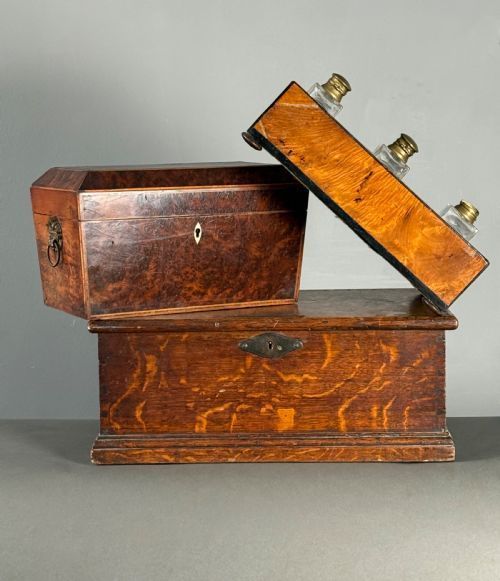
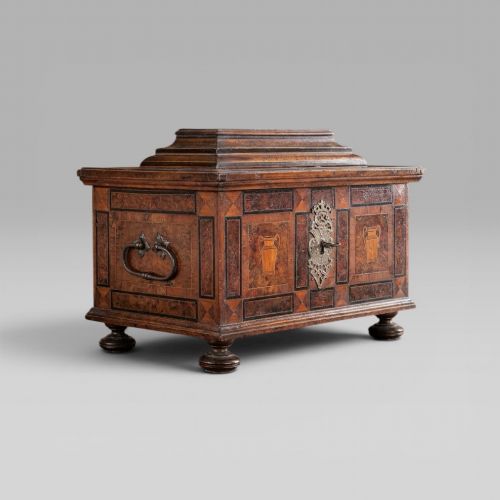
When you examine a burr walnut casket, you encounter a wooden container shaped for specific duties, ranging from stationery boxes and jewellery cabinets to games compendiums and small tea or scent caskets. The pieces available here originate mostly in the Victorian era, spanning decades from the mid-nineteenth century to 1900, alongside earlier Georgian and seventeenth-century examples.
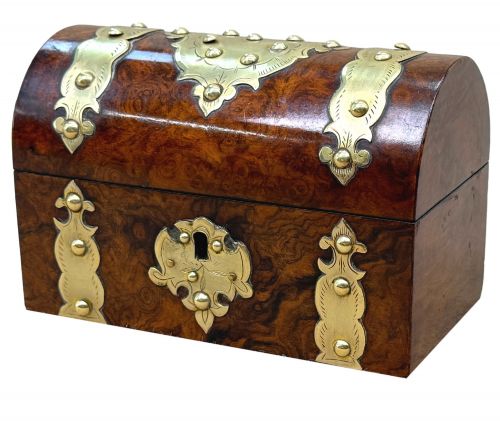
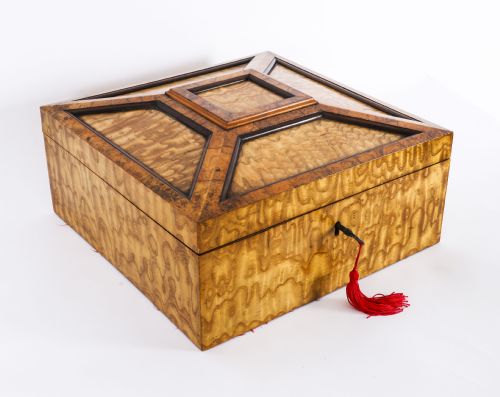
The form is defined by its timber figure, displaying the swirling, knotted grain of burr walnut, sometimes complemented by plain walnut, fruitwood or hardwood. Most take a rectangular or domed shape, resting on tables or desks to hold personal possessions.
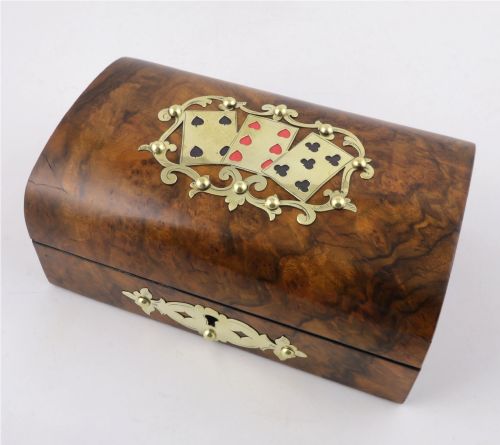
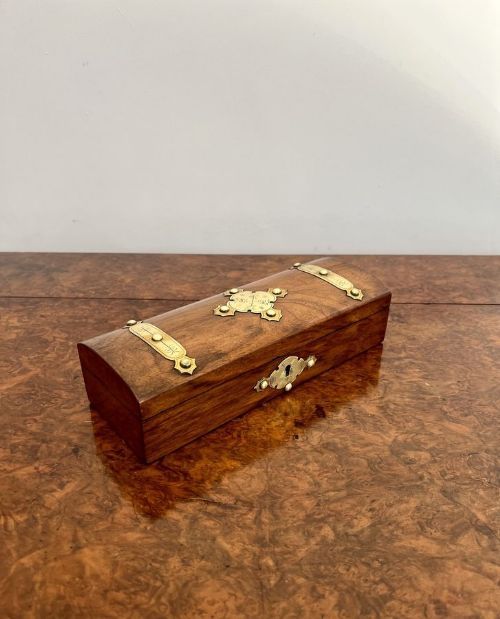
Stationery boxes, jewellery cases with fitted interiors, and games boxes fitted for cards and dice dominate the selections. Makers built these containers to organise domestic life with considerable visual presence.
How they were made
Cabinetmakers applied thin slices of burr walnut veneer over a solid secondary wood carcass, aligning the dramatic grain patterns to create symmetrical panels on lids and fronts. They reinforced corners and fitted hinges, escutcheons and carrying handles in solid brass.
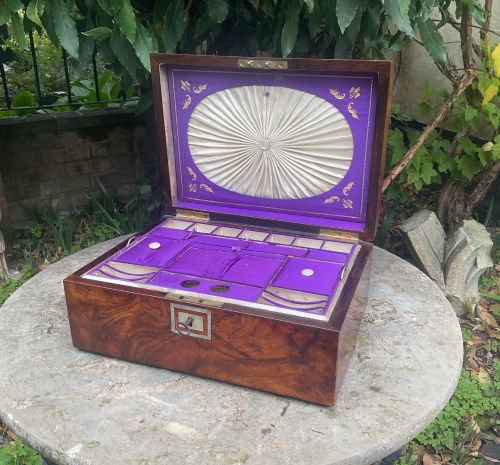
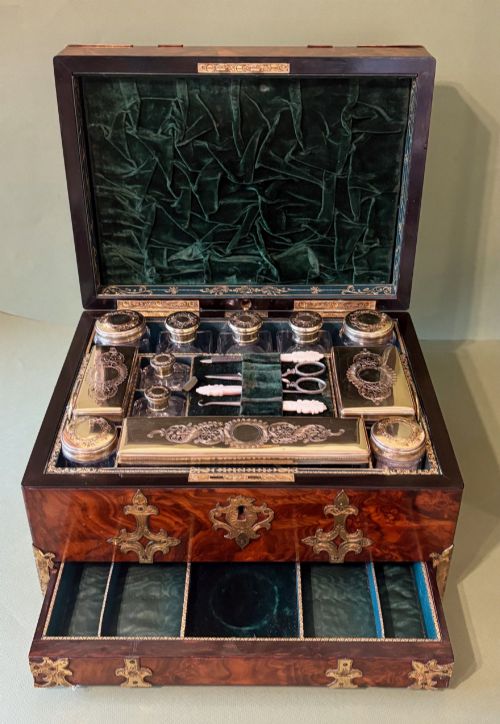
Interiors required precise joinery to build lifting trays, velvet or silk linings, mirror glass panels and compartments for stationery, writing implements or gaming counters. Decorative flourishes included Tunbridge ware inlay, ormolu mounts, mother-of-pearl, porcelain plaques and painted enamel panels.
Burr Walnut Casket Retail Price Guide 2026
Typical asking prices for burr walnut casket among the pieces listed under this phrase on Sellingantiques today, from the lower quarter to the upper quarter. They describe what is for sale here now, not the wider market.
Some games boxes conceal poker dice and card markers beneath velvet trays designed to keep domestic secrets safe from prying eyes.
What varies in quality
The distinction between standard containers and finer productions rests on the density and symmetry of the burr walnut grain, together with the crispness of the brass mounts and stringing. Superior examples integrate specialised fitted interiors with working locks, original velvet linings and integrated compartments rather than simple open spaces.
Excellence shows in the joinery of domed lids and tambours, where wood movement is controlled and veneers remain flush across complex curves. Maker attribution, through stamped locks or retailer signatures, separates standard commercial items from workshop pieces.
Trussell Brighton·Parkins & Grotto·Aspreys
The Burr Walnut Casket Glossary
- Burr walnut
- A veneer sliced from the gnarled growth on a walnut tree. It produces complex, swirling patterns of grain.
- Stationery box
- A desk accessory designed with tiered slots or compartments for writing paper, envelopes and correspondence.
- Tunbridge ware
- Small wooden objects decorated with mosaic patterns built from tiny blocks of naturally coloured wood. This technique produced geometric bands and pictorial scenes.
- Ormolu
- Gilded bronze used for decorative mounts, feet and handles on nineteenth-century boxes and caskets.
- Compendium
- A multi-purpose box fitted to hold equipment for several different games, such as cards, chess and dice.
Burr Walnut Casket: Frequently Asked Questions
What were burr walnut caskets used for?
These containers served specific domestic duties in nineteenth-century homes, holding jewellery, letters, writing paper or gaming equipment like cards and dice. They kept valuable or easily misplaced personal items organised on dressing tables and library desks.
Many featured fitted velvet compartments, mirrors and locks to secure private correspondence or trinkets away from dust and visitors.
How do I date a burr walnut casket?
Dating relies on construction methods, hardware styles and secondary woods visible inside the box. Pieces from the Victorian period often feature brass mounts, domed lids and cedar or mahogany linings.
Earlier examples from the seventeenth and eighteenth centuries show different carcass construction and simpler hinges, while marked locks or retailer stamps can point to specific decades and makers.
Are keys usually included with these boxes?
Many antique boxes survive without their original keys, though some listings include working replacements or original keys with shaped barrels. Because locks were standardised within production batches, replacement keys can often be fitted by a specialist.
The presence of an operational lock adds utility, but collectors frequently acquire boxes primarily for their timber grain and exterior finish.
How should I clean burr walnut?
Maintain the polished wood surface using a soft, dry cloth to remove dust without disturbing the thin walnut veneer. Avoid chemical sprays, excessive water and direct sunlight, which can dry out old timber and fade the grain.
An occasional application of high-quality furniture wax helps nourish the antique finish and preserves the lustre of the burr figures.