

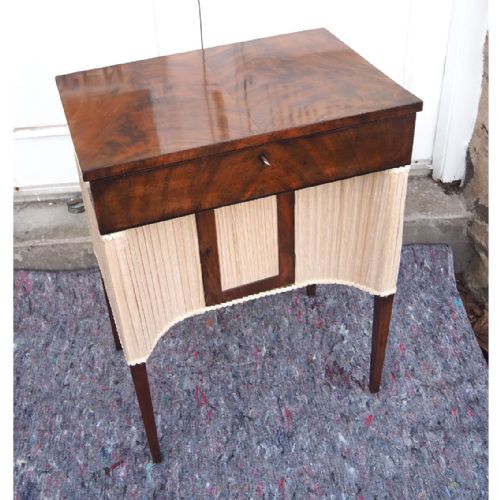


Vintage Needlework Table
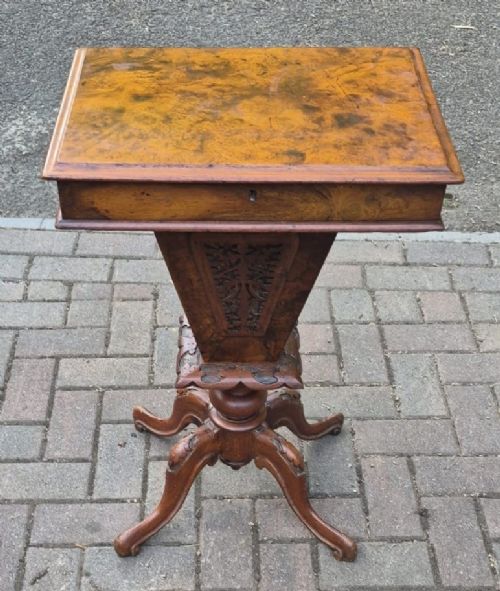
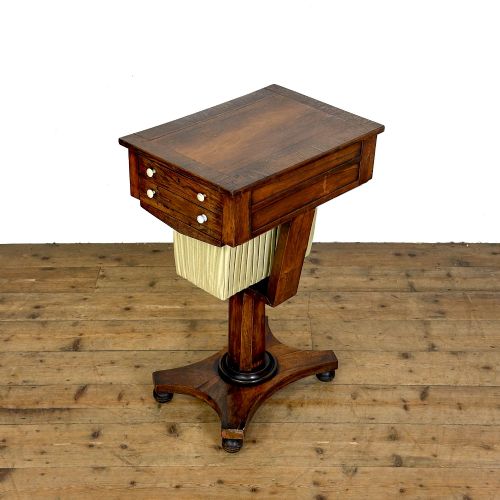
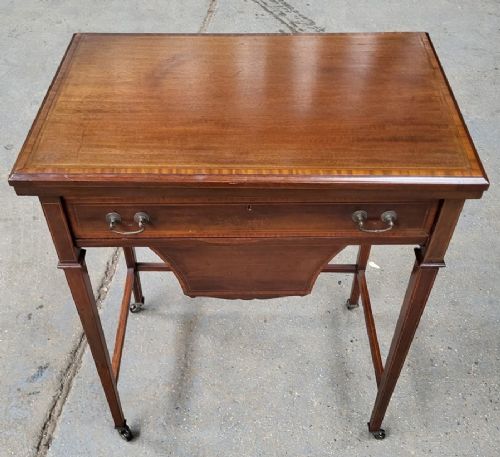
A vintage needlework table is a dedicated piece of furniture designed for domestic craft, combining concealed storage with a neat surface.
Vintage Needlework Table
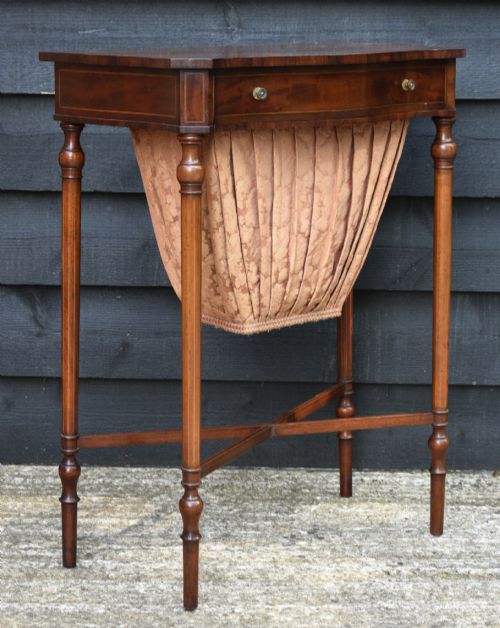
A vintage needlework table functions as a dual-purpose item, offering a stable top for writing or display alongside fitted compartments below for textiles and sewing tools. Buyers searching for a vintage needlework table encounter forms ranging from drop-leaf sewing stands to octagonal lamp tables with integrated silk baskets.
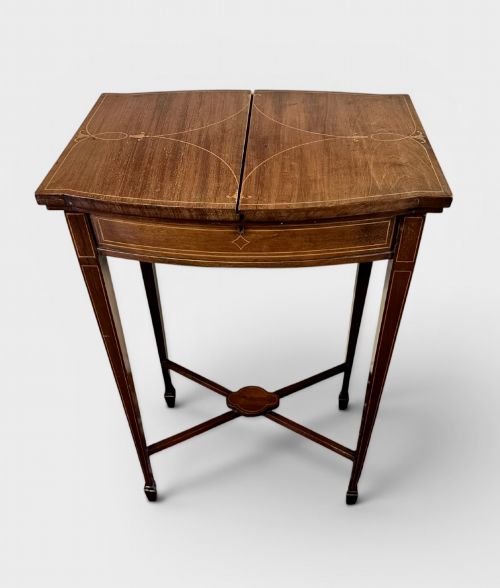
The materials and construction reflect the domestic priorities of the nineteenth and early twentieth centuries, spanning periods from the Georgian era through to the Edwardian period and the 1920s. Rosewood, mahogany, and walnut appear frequently, often enhanced by marquetry inlay, cross-banding, or satinwood detailing.
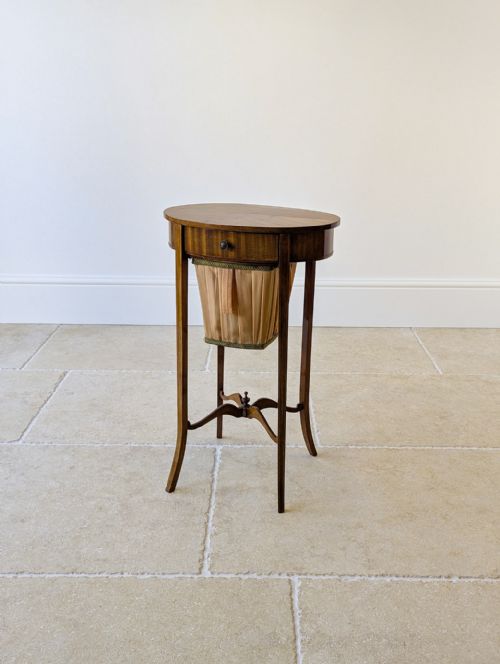
Internal arrangements define the category, featuring partitioned trays, lift-out boxes, and suspended fabric bags designed to keep threads and needles orderly. These pieces served as essential companions in the parlour or drawing room, where gentle handiwork took place.
Materials and Construction
Cabinetmakers utilised dense hardwoods such as mahogany, rosewood, and walnut for the primary frames, frequently selecting figured veneers like flame mahogany or burr walnut for the top surfaces. These timbers provided the structural stability needed for lidded compartments and folding drop-leaves.
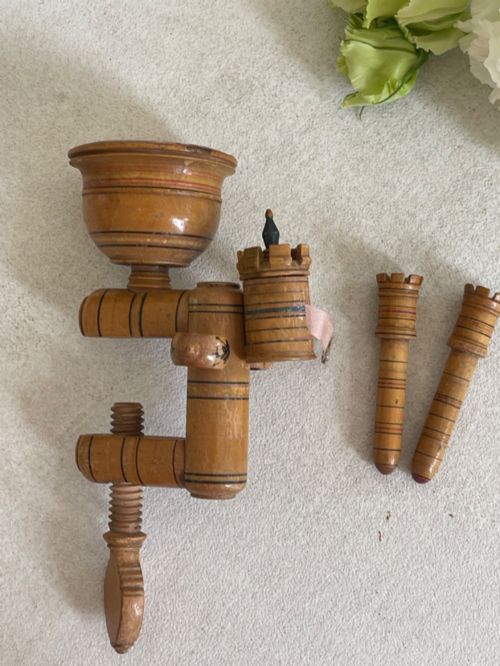
Inlaid decoration relied on contrasting woods and Tunbridge ware techniques, embedding fine geometric or floral motifs into satinwood and mahogany panels. Silk, fabric, and felt appear in the fitted interiors and suspended baskets, completing the construction of the workspace.
Some tables hide tiny compartments designed specifically for ivory spools and wax blocks.
Assessing Quality and Execution
Excellence in a work table lies in the precision of the cabinetwork, the sharpness of the marquetry inlay, and the retention of the original fitted internal trays. Superior examples preserve their delicate silk baskets and complex compartments intact.
Proportion and wood selection distinguish finer pieces, particularly where flame mahogany or finely figured rosewood is matched across the surfaces. The smoothness of lyre ends, turning, or serpentine edges indicates the skill invested by the maker.
Waring & Gillow
The Vintage Needlework Table Glossary
- Work table
- A small movable table with internal compartments or a suspended bag for sewing materials. These items were also known as sewing tables or ladies worktables.
- Tunbridge ware
- A form of decorative woodwork characterised by tiny mosaic tiles assembled from different coloured woods to form pictorial or geometric designs. It appears on small boxes and sewing accessories.
- Marquetry
- The art of applying pieces of veneer to a structure to form decorative patterns and pictures. It is frequently seen on Victorian and Edwardian rosewood and walnut tables.
- Drop-leaf
- A table top with hinged flaps on one or both sides that can be raised to extend the surface area or lowered when space is limited. This mechanism provides flexibility in smaller rooms.
- Serpentine
- A curved line or edge that waves gently inward and outward, typical of finer cabinet design. This contour adds elegance to the profile of Edwardian tables.
Vintage Needlework Table: Frequently Asked Questions
What is a needlework table used for?
These tables were designed to hold threads, fabrics, and sewing implements while providing a functional surface for daily tasks.
Today, they serve equally well as side tables, lamp tables, or compact storage units in living spaces.
How do I identify an Edwardian sewing table?
Edwardian examples often feature lighter timbers such as satinwood or inlaid mahogany, slender proportions, and stringing details.
They frequently incorporate octagonal tops or integrated silk baskets rather than heavy enclosed wooden boxes.
Are the silk baskets original?
Many tables retain their original suspended fabric bags or silk baskets, though some have been restored or refitted over time.
Inspecting the interior reveals whether the wooden runners and sliding trays remain undisturbed.
What is the difference between a work table and a sewing table?
The terms are largely interchangeable in antique furniture, both describing tables built with internal compartments for needlework.
Regional preferences and cataloguing traditions generally determined which label a dealer applied.